Company News Industry News

Pre Cut Tarp Panels & Blanks for OEM Fabricators | DERFLEX

Skip to panel specifications
DERFLEXCOATED FABRICS / OEM SUPPLY

Material-to-assembly supply / OEM fabricators

Pre Cut Tarp Panels and Blanks for OEM Fabricators

Start your next cover with a defined panel specification. Source pre cut tarp panels and PVC tarp blanks for local welding, sewing and final assembly, with the supply stage agreed before production.

DERFLEX supplies coated-fabric rolls, semi-finished panels and custom tarp formats. Send the part drawing, material requirements and quantity to discuss cut geometry, finishing allowances, fabric direction and bulk packing for your OEM program.

For tarp converters, cover manufacturers, industrial curtain workshops and private-label sourcing teams.

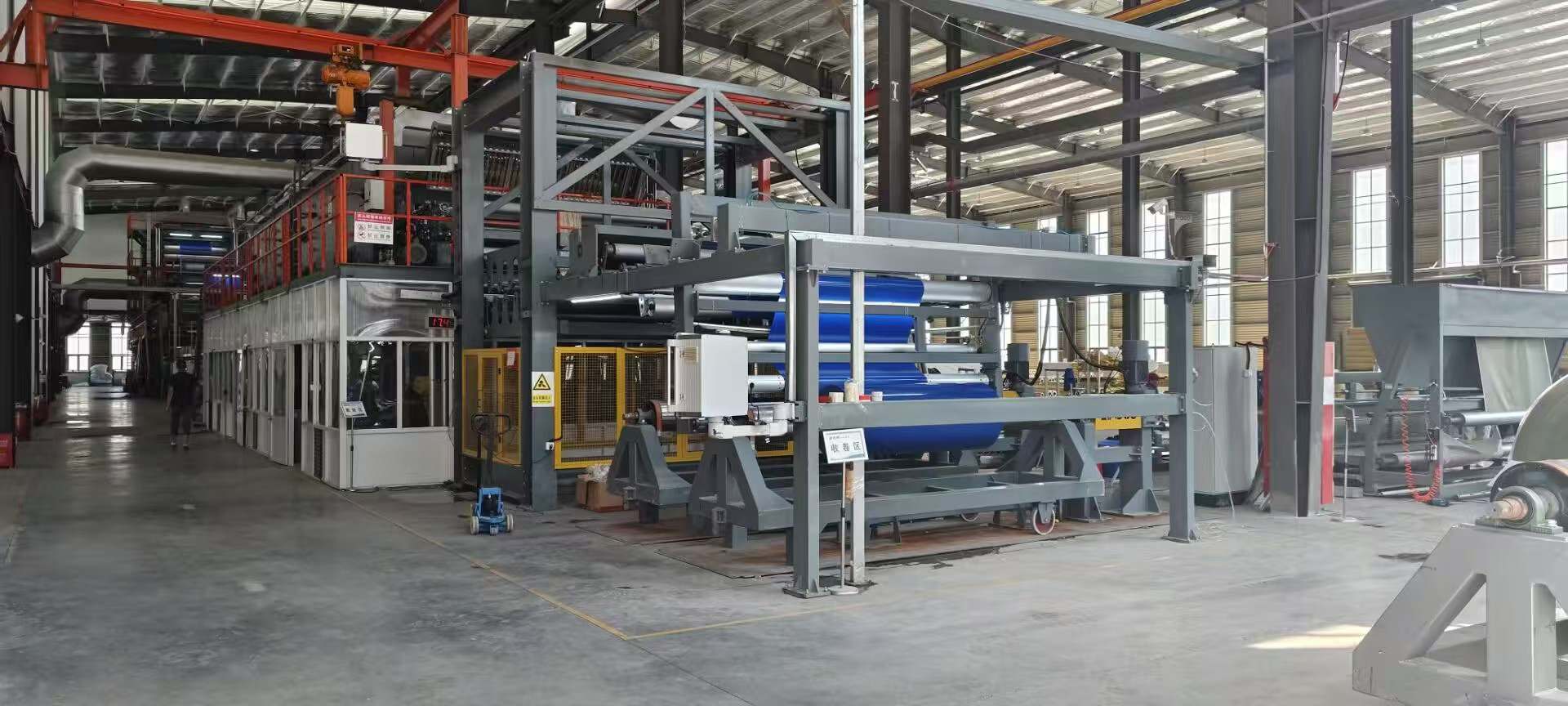
DERFLEX coated-fabric manufacturing line with blue PVC roll material
The material comes first.DERFLEX coated-fabric production. Panel dimensions and finishing scope follow the approved project drawing.
ROLL → PANEL
Specify the handoffRaw cut · Joined blank · Selected finishing
Control the geometryRevision · Direction · Allowance · Acceptance
Plan the assemblyPart identity · Matched sets · Packing sequence
The direct answer

What are pre cut tarp panels?

Pre cut tarp panels are pieces of tarp fabric cut to an agreed size or pattern for later fabrication. A tarp blank may be a single raw panel or an assembled sheet awaiting finishing. Specify whether the order includes joining, hems, reinforcement or hardware: the term “blank” alone does not define a ready-to-install cover.

01 / Choose the supply stage

Decide where our work ends
and your assembly begins.

Buying panels can move cutting or selected joining upstream. It works when the delivered geometry matches your next operation. Use a written operation list so each quoted part has a clear completion state.

A / RAW CUT PANEL

Cut to an approved pattern

A single-layer piece for your workshop to join, hem or reinforce. Suitable when you retain control of the finished construction.

Define: cut perimeter, face, fabric direction, part reference and permitted edge condition. No hems or hardware unless listed.

B / JOINED TARP BLANK

Assembled sheet for finishing

A larger sheet formed by joining panels, with the perimeter left for later processing. Discuss this route when required width exceeds usable roll width.

Define: seam map, overlaps, seam acceptance, overall blank dimensions and remaining edge allowances.

C / SEMI-FINISHED PANEL

Selected operations completed

A panel with specified hems, reinforcement or other agreed details while your factory completes the remaining assembly.

Define: every completed and outstanding operation, including which edges must remain accessible for welding.

Need an installable cover instead? Review custom finished tarp options when the order needs completed seams, reinforced edges and attachment hardware. A raw cut edge is not a tie-down detail.

02 / Purchase specification

One part number.
One agreed definition.

A panel quotation needs more than length, width and GSM. The following fields connect material selection to the condition your production team expects to receive.

Pre cut tarp panel specification — confirm project feasibility and acceptance with DERFLEX.
ControlSpecify for quotationWhy it affects the order
Material referencePVC coated polyester grade, approved sample, coating construction and surface finish.Controls the material your welding or sewing process must handle.
GSM and thicknessTotal coated-fabric weight and gauge, with separate limits where critical.Neither value alone establishes tear strength, stiffness or seam behavior.
Cut geometryDimensions, units, corners, radii, cut-outs and reference edges.A perimeter drawing removes ambiguity from irregular and handed parts.
Allowance ownershipIdentify who adds folds, joint overlaps, trimming stock and process compensation.Prevents allowances being omitted or added twice.
Usable width and seamsSeamless requirement or approved seam positions, including excluded zones.Determines whether the pattern fits the material or requires a joined blank.
Direction and faceWarp/weft orientation, outward face and any restrictions on pattern rotation.Preserves the intended directional and appearance requirements.
Panel acceptanceDimensional limits, measurement condition, edge quality and sampling plan.Creates a repeatable release decision for both factories.
Part identity and packingPart/revision labels, left/right quantities, set contents and folded or rolled format.Keeps the correct parts together through receiving and assembly.
Commercial scopeQuantity per part, repeat demand, delivery country, target schedule and required documents.Enables review of price, MOQ, sample arrangements and lead time.

No universal cutting tolerance, panel size limit or material grade is implied by this checklist. Use the approved project specification for production.

Build the material section using DERFLEX’s tarpaulin technical specification guide.

03 / Match the material to the operation

A panel that cuts cleanly must also assemble correctly.

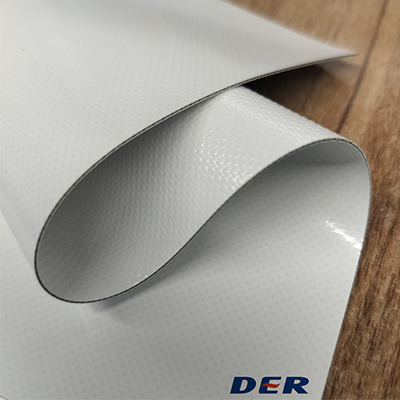
PVC coated polyester combines a woven polyester reinforcement with a polyvinyl chloride coating. The textile, coating and finish all matter when selecting material for a tarp converter.

Begin with the end use and your joining process, then select the grade. A coating suitable for one weld setup may need different settings on another line. Approve a representative joint using material from the intended construction.

Review PVC tarpaulin roll and material options before fixing the panel drawing.

Application-to-specification starting points — validate the selected construction.
Fabricator’s applicationMaterial questions to resolvePanel detail to control
Equipment-cover assemblyFlexibility, abrasion at contact points, outdoor exposure and coating compatibility.Corner geometry, reinforcement locations and clean joint bands.
Industrial curtain productionOpacity or visibility, cleaning exposure and any required flame-performance evidence.Top/bottom identity, joining edges and later pocket or hem construction.
Truck-cover conversionDirectional strength, repeated folding, weathering and the intended fastening design.Fabric orientation, seam position and allowance at high-stress edges.
Replacement sectionsCompatibility with the existing coating and joining method; color and condition of adjacent material.Mating dimensions and retained overlap on the sound existing panel.
04 / Drawing-to-panel handoff

Make the cut line unambiguous.

Cut size describes the supplied piece. Finished size describes the result after downstream operations. Release the cut pattern together with an edge schedule so the workshop can see how one becomes the other.

  1. Set the file authority. Identify the controlling drawing, revision and units. If a CAD file is proposed, confirm the accepted format and verify its scale against a dimensioned reference.
  2. Assign each edge an operation. Mark edges A–D with “leave raw,” “fold later,” “join later” or the exact supplier-completed operation. Show the material consumed by each operation.
  3. Preserve orientation. Add a direction arrow and face reference. For mirrored parts, mark left/right from a defined viewing side; flipping the drawing can reverse the outward face.
  4. Show critical geometry. Locate cut-outs and alignment features from named datums. Define acceptable radii and do not add notches in a stressed edge without design review.
  5. Approve the first assembly. Confirm mating edges, available overlap and finished fit after welding or sewing. A correct raw panel does not prove the completed cover will fit.

Use the warp and weft cutting-direction guide when rotation or matched-pair behavior matters.

Raw panel and finishing allowance diagramA solid outer rectangle shows the cut perimeter. A dashed inner rectangle shows the nominal finished outline. Each edge has its own material allowance. A vertical arrow identifies warp direction.CUT PERIMETERA · finishing allowanceC · finishing allowanceNominal finished outlineafter the defined operationsWarpSchematic only · not a cutting patternD · allowanceB · allowance
The shaded perimeter represents material reserved for subsequent operations. Actual hems, folds and joined-panel seams need their own cross-sections and allowance schedule.
Cut dimension = target finished dimension + material consumed at the two opposing edges + validated process compensation

Apply separately to each axis for a simple rectangular panel. Use signed, trial-derived compensation where needed; do not add a generic shrinkage percentage.

Wider than the usable roll? Choose an approved seam map or review another material width. Show seam-free areas, joining direction and the required blank size after joining. Roll-width claims alone do not establish the usable width of your selected grade.

05 / Panel acceptance

Inspect the part you receive,
then prove the part you make.

Agree separate checks for incoming panels and completed assemblies. Record how the panel is supported, its measurement condition and the critical dimensions; fabric held under tension can give a different result from a relaxed part.

Use an agreed sampling and release plan; these are inspection topics, not published DERFLEX test results.
Incoming checkWhat to inspectAcceptance basis
Document identityMaterial reference, part number, drawing revision and batch reference.Matches the released purchase specification and packing list.
Released geometryLength, width, critical radii, cut-outs and reference features.Agreed limits and measurement state; diagonals where rectangularity matters.
Face and directionOutward face, warp arrow and left/right identification.Approved orientation, including restrictions on rotated nesting.
Perimeter and surfacesIncomplete cuts, yarn tails, damaged coating and contamination in joining bands.Defined permissible edge and surface condition for the next process.
Supplied joinsSeam location, overlap and the joined blank’s overall geometry.Approved seam construction plus the agreed performance checks.
Set completenessCounts by part, handed pairs and associated reinforcement pieces.Bill of materials and agreed bundle or kit contents.

Agree measurable limits with the tarp production tolerance guide. A raw panel has no automatic right to inherit a finished cover’s tolerance.

Qualify the next operation

Trial your intended weld or sewn seam with the selected coating and surface finish. Check overlap, seam strength and leakage where the application requires it. Do not treat GSM or a visually neat cut as proof of assembled performance.

Agree the cutting route

Ask DERFLEX to confirm the suitable process for the actual grade and shape. A requested CNC file does not establish the available machine, tool or tolerance. The PVC tarp cutting methods guide explains what a representative cutting trial should resolve.

06 / Protect the production handoff

Packing is part of the panel specification.

A correctly cut piece can still slow assembly if bundles mix revisions, face labels mark a welding zone or folds pass through a visible finished area. Discuss packing at quotation, alongside the drawing.

Identify every part

Request a part and revision reference, quantity and orientation method. Agree label placement and removability so adhesives, ink or residue do not contaminate a joint surface.

Choose folds or rolls

Balance carton size and handling cost against curl, creases and the appearance requirements of the final product. For crease-sensitive panels, review rolled or flat packing and validate a packed sample.

Discuss matched sets

For multi-part covers, define one set with a bill of materials. Confirm whether packing by assembly set, part number or cutting batch suits your line, and agree any requested batch traceability.

07 / Commercial review

Compare cost per usable assembly.

Pre-cut panels are worth evaluating when repeated geometry, limited cutting space or assembly bottlenecks make in-house preparation expensive. Full rolls may remain practical when patterns change often and your factory already has an efficient cutting operation.

What changes the panel price?

Material construction, usable width, part yield, orientation restrictions, shape complexity, joining, inspection and packing all affect the quotation. A narrower seam-free requirement or a restriction on rotating parts can change the cutting layout and material usage.

Ask for quotations against the same drawing and completion stage. Separate material, conversion and freight assumptions when comparing suppliers.

What should the sample establish?

Request representative panels and relevant joined sections, then run them through your actual assembly process. Check fit, allowances, seam behavior, marking and handling after unpacking.

Confirm sample cost, MOQ, lead time and repeat-order arrangements after the material and part list are reviewed. Neither a single sample nor the term “wholesale” defines a production commitment.

08 / Prevent avoidable rework

Four details to settle before release.

“The listed size is the cut size.”

Mark the measurement stage explicitly. If the buyer sends only a finished-cover drawing, agree who develops and approves the cut pattern before material is cut.

“Rotate parts to improve yield.”

Authorize rotation only after checking fabric direction, surface appearance and face orientation. Material savings should not silently change the approved part.

“Any edge can be the reference.”

Choose datums for mating features and cut-outs. Checking a hole from a different reference edge can conceal a fit problem even when the overall panel size passes.

“Use the latest file.”

Record the exact released revision and the change it replaces. For repeat orders, review changes to material, seams, labels and set contents as well as the perimeter.

09 / Buyer questions

Pre cut tarp panels FAQ

Practical answers for OEM buyers preparing a panel or blank order.

What is the difference between a tarp panel, a tarp blank and a finished tarp?

A panel usually means one cut piece. A blank can mean a raw piece or a joined sheet awaiting final operations. A finished tarp includes the specified seams, edges and attachments. Industry usage varies, so define the completed operations and delivery condition on the order.

Should I order cut size or finished size?

Order the dimensions of the stage being supplied. For raw panels, approve a cut pattern with allowances already identified. For joined blanks, state whether dimensions apply before or after joining. Keep the finished-product drawing available so the panel can be checked against its intended assembly.

Can large tarp blanks be supplied without seams?

Only when the approved pattern fits within the usable width of a suitable material. If it does not, review a wider compatible grade or a joined blank. State seam-free zones and approve any seam map before production; overall panel area alone does not determine feasibility.

What cutting tolerances can DERFLEX offer?

Request confirmation against the material, dimensions, shape and inspection method for your project. There is no universal tolerance on this page. Specify critical mating features, the measurement condition and permitted deviation separately from finished-cover tolerances, then approve representative panels.

Can panels include hems, reinforcement or grommets?

DERFLEX’s custom tarp formats include finishing options that can be discussed for semi-finished supply. List the required operations edge by edge and confirm feasibility. Leave access for your later assembly; reinforcement or hardware added too early can obstruct a welding path.

What information is needed for a bulk OEM quote?

Send the application, material reference or sample, part drawing and revision, cut dimensions, allowances, quantity by part, required performance evidence, packing and destination. Include your planned welding or sewing process and target schedule. DERFLEX can then review the supply format, sample, price, MOQ and lead time.

10 / Put the next order on paper

Bring the pattern.
Define the panel.

DERFLEX’s coated-fabric and custom-tarp supply formats let your team discuss the material and the level of fabrication together. Choose the operations you want supplied, then confirm the drawing, sample and acceptance plan for the order.

Send your requirements for pre cut tarp panels, joined PVC tarp blanks or semi-finished pieces. A clear handoff gives both production teams the same part to work toward.

Subject: OEM tarp panels / blanks — drawing review 

Application and assembly process: 
Supply stage and operations included: 
Material / sample / color / GSM / thickness: 
Part numbers / drawing revision / units: 
Cut geometry and allowance ownership: 
Face / warp direction / left-right parts: 
Seams / excluded zones / critical tolerances: 
Quantity by part / repeat demand: 
Packing / labels / set contents: 
Destination / target schedule / documents: 
Review requested: feasibility, sample, price, 
MOQ and lead time.

© DERFLEX · Coated fabrics and custom tarp supply

Project drawings, material selection and acceptance criteria require confirmation before production.

Copyright © 2015 DERFLEX ( PVC tarpaulin manufacturer )All Rights Reserved.