


Fabrication field guide · PVC-coated polyester
Cutting PVC Tarp Fabric:Hand Tools, Hot Knives and CNC Options
A clean cut is the start of a usable panel. For tarp fabricators, truck-cover workshops and equipment OEMs, the cutting method must protect the coating, preserve the pattern and leave the correct allowance for welding or hems. This guide compares cold hand tools with CNC knife cutting and explains why a generic hot knife is unsuitable for PVC-coated fabric. DERFLEX supplies PVC tarpaulin roll material and custom tarp formats; send your drawing, fabric requirements and quantity to discuss the supply route.
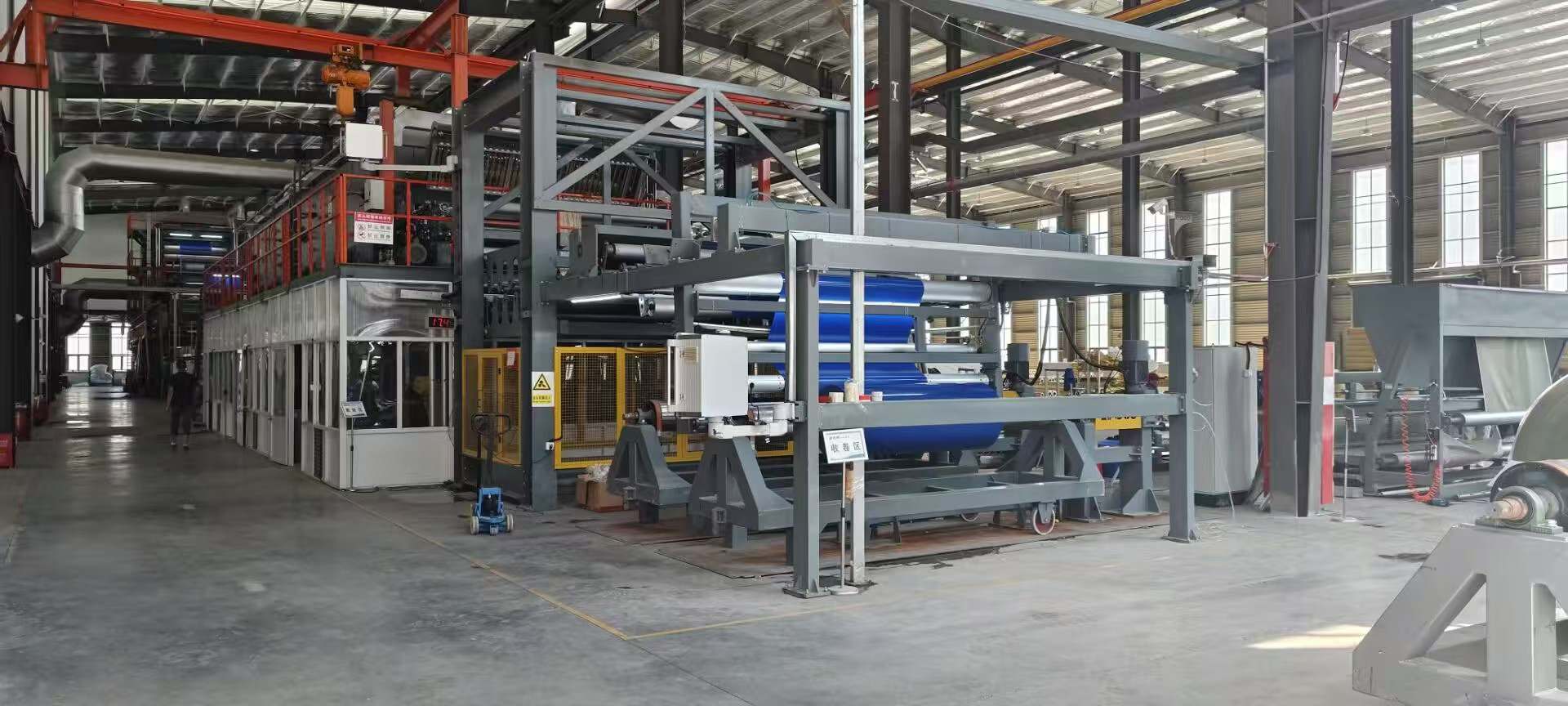
Sharp blades, full support and relaxed fabric.
Plan the weld, hem and reinforcement before cutting.
Check geometry and edge quality on a representative trial.
How should PVC tarp fabric be cut?
Use sharp shears, a rotary cutter or a guided utility knife for small jobs; consider a CNC knife cutter for repeated or complex panels. Keep the fabric supported and free of stretch, include finishing allowances, and inspect the cut edge. Do not assume a hot knife approved for synthetic textiles can cut PVC-coated tarpaulin.
01 / Match the method to the job
Hand tools or CNC? Decide by geometry and repeatability.
The relevant questions are panel size, shape, order frequency, material handling and the next fabrication step. Fabric weight alone does not select a cutting tool.
| Method | Useful starting point | Main control | Limitation to check |
|---|---|---|---|
| Heavy-duty shears | Samples, short runs, gentle curves and local trimming | Sharp blades; support both sides of the cut | Hand fatigue and repeated snips can reduce consistency on long edges |
| Rotary cutter | Single-layer panels on a cutting mat | Stable mat, secure guide and suitable blade | May miss scrim yarns if the blade is worn or support is uneven |
| Utility knife + straightedge | Long straight edges and rectangular panels | Fresh blade, sacrificial surface and restrained material | Fabric movement or excessive pressure can distort the line |
| Powered cold knife | Workshop production beyond comfortable hand cutting | Equipment approved for the material and layup | Do not infer stack capacity or curve capability from a hand-tool trial |
| Generic hot knife | Only compatible materials permitted by its manufacturer | Read the exact tool manual and material restrictions | Unsuitable as a default PVC tarp method; some manuals expressly prohibit PVC |
| CNC knife cutter | Repeated shapes, nesting, matching panels and digital revisions | Hold-down, roll feed, blade selection and approved pattern | Machine positioning accuracy does not establish relaxed panel accuracy |
“CNC” describes machine control. For PVC tarp fabric, specify a mechanical knife system when requesting a cutting trial.
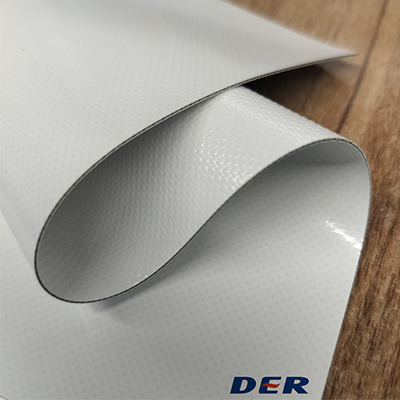
Confirm what is inside the roll.
PVC-coated polyester contains a flexible coating and a woven reinforcement. A blade has to sever both. A heavier coating, a different weave, a surface treatment or a colder workshop can change how the same tool behaves.
- Record the material reference, thickness, GSM, coating structure and face orientation.
- Assess flatness and surface condition on material from the intended production roll.
- Preserve warp/weft orientation where the design requires directional performance.
02 / Controlled manual cutting
How to cut PVC tarpaulin by hand
For a prototype or a few straightforward panels, a supported single-layer cut is a useful starting point. Prove the pattern and edge quality before repeating it.
Prepare the cutting surface.
Use a stable table large enough to support the panel, with a mat or sacrificial board suited to the tool. Support overhanging material so its weight cannot pull the cut line sideways.
Let the material lie flat.
Unroll without pulling it tight. Allow roll curl to settle and follow any supplier conditioning instructions. Use weights or suitable clamps outside the cutting path, avoiding damage to the coating.
Mark the cut pattern.
Confirm the units, face, fabric direction and drawing revision. Use a marker tested on an offcut and keep marking away from weld surfaces. Check long dimensions and diagonals before cutting.
Guide the blade, not the fabric.
Use a secure straightedge for straight cuts and a template for curves. Keep hands clear of the blade path. Cut with controlled pressure; if yarns remain joined, check the blade and support instead of tearing the panel free.
Inspect, identify and protect.
Check dimensions after releasing hold-down. Inspect the perimeter for missed yarns, coating lift and unintended notches. Label each panel without contaminating its weld band; store it flat or rolled as appropriate.
03 / Important processing limits
Can you cut PVC tarp fabric with a hot knife?
A general-purpose textile hot knife should not be treated as a suitable PVC cutting option. Tool approval for polyester or nylon does not establish compatibility with a PVC coating.
Hot knives: compatible textile ≠ compatible coating.
Heat cutting can fuse the edges of certain approved thermoplastic fabrics or webbing. PVC-coated tarpaulin needs a separate compatibility decision. Sailrite’s Edge Cordless Hotknife manual instructs users not to cut PVC or PVC-coated material.[1]
For this guide, the recommended starting point is cold cutting. Do not attempt to establish PVC compatibility by increasing blade heat or by burning a test edge. If an industrial thermal process is proposed, obtain the exact material and equipment approval, process instructions and exposure controls from the responsible suppliers.
Laser cutting: unsuitable for PVC.
PVC and vinyl appear on Trotec’s list of plastics unsuitable for laser processing because hazardous gases can be released.[2] A “fabric laser” description does not establish suitability for a PVC-coated tarp.
Why can PVC still be heat welded?
Welding is a separate fabrication operation with compatible material, a defined joint and controlled process conditions. The ability to weld a PVC-coated fabric does not mean every heated cutting tool is appropriate. Confirm the welding route on the approved grade and inspect the completed seam.
04 / Digital production
CNC knife cutting for repeated tarp panels
Consider CNC when repeat orders, curved geometry, mirrored parts, print alignment or pattern revisions make manual setup difficult to control. Ask the equipment supplier to cut your exact material and representative shapes.
Tool selection
Oscillating knife
A candidate for reinforced coated fabrics that benefit from a reciprocating cutting action. Check yarn separation, curve quality and any marking of the coating on a trial panel.
Tool selection
Rotary or wheel knife
A candidate for flexible textile layups where a slicing action is useful. Check hold-down, turning behavior and the achievable internal radii on your pattern.
Tool selection
Tangential or drag knife
Suitability depends on material stiffness, blade geometry and path control. Trial small details and corners; a tool that cuts straight strips may not reproduce the entire design.
Static table or conveyor?
A static table can suit sheets and panels contained within its working area. A conveyor can support continuous roll handling and longer patterns, but feeding and indexed movement must preserve registration. Confirm usable working width, roll support and part-removal space.
Usable roll width determines whether a pattern fits without a seam. Keep selvage exclusions, direction constraints and panel spacing in the nesting plan.
Discuss PVC tarpaulin roll supply and width →Request a realistic acceptance trial.
Include a long straight edge, a curve, the smallest required radius and any critical notch or hole. Test the intended ply count rather than assuming multiple layers will behave like one.
Measure released panels and matched pairs. For long conveyor jobs, check dimensions across indexing positions. Agree the inspection condition, acceptable edge defects and tolerance on the drawing before buying equipment or releasing bulk material.
05 / Work backward from the finished tarp
Cut size must include the finishing plan.
Finished tarp dimensions describe the completed product. Cut dimensions describe the raw panel. Folding, seam overlap, reinforcement and pockets can consume material, so the two drawings should be distinguished.
A simple panel-planning example
Suppose a flat rectangular tarp must finish at 2,000 × 3,000 mm. If the approved construction consumes 50 mm of raw material at each edge, the initial rectangular blank is 2,100 × 3,100 mm, before any separate process compensation.
These figures illustrate the arithmetic only. A double fold, joined panel, rope hem or sleeve needs its own cross-section and allowance schedule. The fabricator should establish any compensation from the approved process.
Clarify custom-tarp dimensions before quoting, then define the welded or sewn seam construction.
06 / Cut quality and downstream readiness
Inspect more than a straight-looking edge.
Acceptance should cover relaxed geometry, intact coating and readiness for welding or sewing. The observations below guide troubleshooting; persistent coating separation also needs a material investigation.
| Observation | Possible process cause | Useful check |
|---|---|---|
| Joined yarns or ragged edge | Worn blade, unsuitable tool or incomplete penetration | Replace or inspect the blade; verify support and settings on an offcut |
| Wave or curve in a straight cut | Material movement, unsupported weight or roll tension | Release the panel, inspect the guide and improve hold-down or roll support |
| Coating lifts at the edge | Blade drag or an adhesion-related material issue | Compare a fresh-blade cut; isolate the affected roll and request review if it persists |
| Matched panels differ | Orientation, scaling, feeding, stretch or revision mismatch | Verify units, direction and file revision; measure after releasing restraint |
| Sharp internal notch | Pattern geometry or cutting-path overrun | Review the radius and load path; inspect critical corners before assembly |
| Weld band is dirty or scratched | Marker, table debris, handling or uncontrolled trimming | Protect joint surfaces; verify cleaning compatibility and trial the intended seam |
Write a useful tolerance.
State the cut-panel dimensions and finished-product dimensions separately. Agree how the panel is supported and whether it is measured relaxed, installed or under a specified load. Record critical corners, seam offsets and hole centers as drawing requirements.
Approve a trial assembly.
Check that paired panels align and the intended overlap remains available. Weld or sew a representative joint and evaluate it against the project requirements. A visually clean raw cut does not by itself prove seam strength or waterproof performance.
07 / Procurement checklist
Specify the material and the handoff.
A clear RFQ tells the PVC tarp fabric supplier which operations your workshop will complete and which dimensions need to arrive ready for assembly.
- Application and environmentTruck cover, industrial curtain, enclosure or equipment cover; exposure, handling and relevant performance requirements.
- Material referenceSample or grade, coating, base fabric, color, GSM and thickness requirements. Confirm the selected specification with DERFLEX.
- Supply format and roll geometryFull rolls, cut panels, semi-finished sheets or completed tarps; usable width, roll length and handling limits.
- Pattern and finishing planDrawing units and revision, cut versus finished dimensions, seam locations, folds, pockets and reinforcement.
- Cutting and acceptance conditionsHand or CNC process, intended ply count, face and direction, critical tolerances and permitted edge condition.
- Order and sample approvalQuantity, destination, packing, required documents and target schedule. Request a representative sample before bulk release.
Use DERFLEX’s tarpaulin RFQ checklist to prepare your enquiry →
Discuss roll goods, panels or completed covers.
DERFLEX’s published custom-tarp offering includes material selection, dimensions, edge reinforcement, welding, hardware and OEM packing. Buyers who convert locally can discuss roll supply; projects seeking less in-house fabrication can discuss cut panels, semi-finished sheets or completed tarps.
Confirm the actual cutting route, file requirements and inspection criteria for your order. MOQ, quotation, sample arrangements and lead time depend on the agreed material and format.
Explore custom tarp supply formats →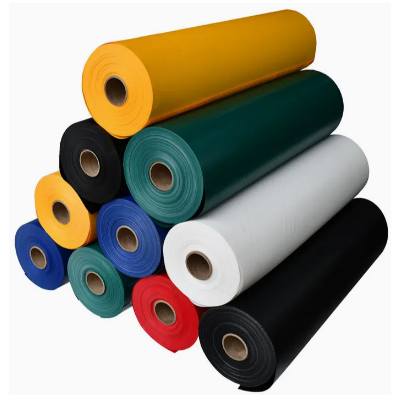
Questions fabricators ask
PVC tarp cutting FAQ
Can you cut PVC tarp fabric with scissors?
Yes. Sharp heavy-duty shears can be useful for samples, short runs and curved trimming. Support the material and inspect the edge for missed reinforcement yarns. For long straight panels, a secure guide and a knife or rotary cutter may make the line easier to control.
Will PVC-coated tarpaulin fray after cutting?
The coating can restrain the woven reinforcement, but a raw edge may still expose yarns or develop damage during handling. Do not assume every grade is fray-free. Inspect a cut sample and specify a hem, binding or reinforcement where the finished edge needs protection or load-bearing performance.
Is a hot knife suitable for PVC-coated fabric?
A generic textile hot knife is not a default PVC cutting tool. Sailrite’s Edge Cordless Hotknife instructions specifically prohibit PVC and PVC-coated materials. Use cold mechanical cutting and follow the exact equipment restrictions. Any proposed specialist thermal process needs separate documented material and equipment approval.
Can a laser cutter cut PVC tarpaulin?
PVC-coated tarp fabric is unsuitable for ordinary fabric-laser processing. Trotec identifies PVC and vinyl as unsuitable because hazardous gases can be released. Specify a mechanical knife system when evaluating CNC cutting of PVC-coated fabric.
Which CNC blade should be used for PVC tarp fabric?
Oscillating, rotary and tangential knife tools are candidates, depending on the grade and pattern. Ask the equipment supplier to test the actual coating, reinforcement, thickness and intended ply count. Approve straight edges, curves, small details and released dimensions before fixing production settings.
How much extra fabric should be allowed for hems and welds?
Use the allowance schedule derived from the approved edge and seam construction. Cut dimensions include the material consumed by each relevant fold or overlap, plus any validated process compensation. A double-fold hem, sleeve or welded multi-panel tarp needs its own calculation; there is no universal allowance.
Does CNC cutting guarantee the finished tarp dimensions?
No. The final tarp also depends on roll feeding, material restraint, pattern scaling, seam assembly and edge finishing. Specify cut-panel and finished-product tolerances separately, with clear measurement conditions, and validate a representative assembly.
Can DERFLEX supply rolls or pre-cut tarp panels?
DERFLEX’s published supply options include PVC tarpaulin rolls, cut panels, semi-finished sheets and custom finished tarps. Send the application, material requirement, drawing, quantity and destination to confirm the available format, cutting route, tolerances, sample arrangements and quotation for your project.
Make the next cut a specified cut
Bring your pattern.
Define your supply format.
Send DERFLEX your application, cut or finished dimensions, coating requirements, quantity and destination. Include the drawing and intended welding or sewing process so the material and fabrication requirements can be reviewed together.