


Supplier of Materials for Inflatable Boats
DERFLEX supplies PVC and TPU materials for inflatable boats, dinghies, RIB tubes, rescue rafts, inflatable kayaks, and marine OEM projects that require more than a generic roll of fabric. We help buyers source the right inflatable boat material structure for airtight performance, weldability, abrasion resistance, marine-weather durability, certification-focused supply, and commercially stable repeat orders.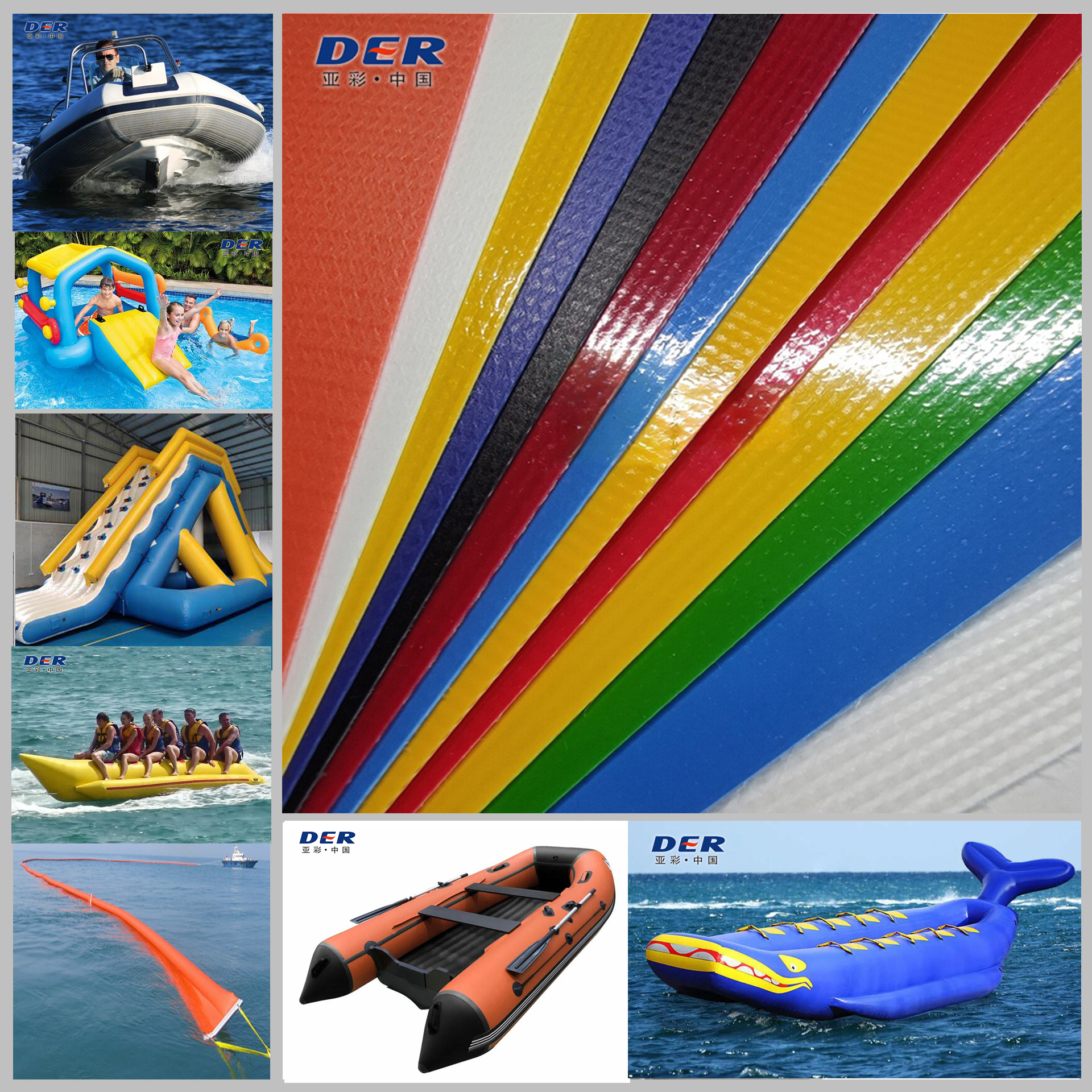
If your team is comparing an inflatable boat material supplier, a PVC fabric for inflatable boats manufacturer, or a custom marine fabric partner for OEM production, the real purchasing decision is not just about price per meter. It is about whether the material can keep air pressure reliably, weld cleanly in production, resist saltwater and UV exposure, maintain good adhesion over time, and arrive on schedule with predictable quality from one batch to the next.
What Is Inflatable Boat Material?
Inflatable boat material is the engineered textile system used to create the airtight, load-bearing, weather-resistant body of an inflatable boat. In most commercial applications, that means a reinforced base fabric combined with a polymer coating or lamination system that delivers air retention, strength, flexibility, and resistance to harsh outdoor or marine conditions.
In practical sourcing language, buyers may use many closely related terms: inflatable boat fabric supplier, marine inflatable fabric manufacturer, PVC coated fabric for inflatable boats, inflatable raft material supplier, RIB tube material supplier, rescue boat fabric supplier, or TPU inflatable fabric manufacturer. These terms often point to the same purchasing need: a reliable material source that understands how the fabric will behave during welding, folding, inflation, deflation, transport, storage, and long-term use on the water.
For most standard recreational and commercial inflatable boats, reinforced PVC coated polyester remains one of the most common solutions because it provides a strong balance of airtightness, weldability, durability, and commercially efficient cost control. For more premium or application-specific requirements, TPU coated or TPU laminated fabric may be chosen for lower weight, cleaner flexibility, better cold performance, and a higher-end product feel. A serious supplier of materials for inflatable boats should be able to explain when PVC is the more practical choice, when TPU is worth the upgrade, and how specification details affect both product performance and the final business case.
The material itself is only part of the picture. Boat makers also need dependable seam behavior, surface treatment logic, dimensional stability, consistent roll quality, usable widths, and reliable export handling. That is why professional buyers tend to search for a real manufacturer or supplier rather than a generic trading source. The purchasing decision is connected to production efficiency, warranty risk, brand reputation, and the long-term repeatability of the supply chain.
What Serious Buyers Usually Need
- A material that keeps air pressure reliably over time rather than only looking good when new.
- Good welding compatibility for clean, efficient, repeatable boat fabrication.
- Resistance to saltwater, UV exposure, abrasion, oils, and everyday marine stress.
- Stable adhesion between coating and base cloth so the product performs beyond the sample stage.
- Options for OEM color, embossing, finish, packaging, and specification matching.
- A supplier that understands delivery planning, export packaging, and commercial repeat orders.
The best inflatable boat material supplier is not simply the source with the lowest meter price. It is the partner that helps reduce production waste, post-sale complaints, and supply uncertainty while keeping the boat commercially competitive in its market.
Need a Better Material Match for Your Inflatable Boat Program?
Send your target boat type, required weight range, base fabric preference, welding method, color, quantity, and destination market. DERFLEX can recommend a more suitable PVC or TPU structure for OEM production, new product development, or distributor sourcing.
Key Features Buyers Expect from a Professional Supplier of Materials for Inflatable Boats
Inflatable boats are not light-duty consumer textile products. Even when the end product is designed for leisure use, the fabric still operates under repeated internal pressure, sunlight, friction, folding, and exposure to water, sand, fuel residue, and temperature fluctuation. That is why buyers who search for an inflatable boat material supplier are often evaluating technical reliability just as carefully as they evaluate price.
1. Airtight Performance
A material for inflatable boats must support dependable air retention. If the polymer layer, coating uniformity, or seam behavior is weak, the finished boat loses pressure faster, performs less safely, and generates avoidable warranty issues. Airtight stability matters at the material stage, not only after final boat assembly.
2. Tensile and Tear Strength
Inflatable boats experience force from passengers, motors, docking contact, towing, wave action, and repeated handling. A reinforced base cloth helps the structure maintain shape and resist tearing under dynamic stress. This matters for dinghies, inflatable fishing boats, tender craft, rescue rafts, and RIB tube systems alike.
3. Peel Adhesion
Strong adhesion between the coating layer and the base fabric helps prevent separation during long-term use. Adhesion quality is especially important when the product is exposed to flexing, heat, humidity, repeated inflation cycles, or physical stress around seams and fittings.
4. Weldability and Processing Efficiency
Boat manufacturers do not only buy material properties. They buy production behavior. A fabric that welds cleanly, consistently, and efficiently supports faster manufacturing, cleaner seam appearance, lower scrap rates, and more stable finished product quality.
5. UV and Weather Resistance
Marine environments are unforgiving. Sunlight, moisture, heat, and temperature swings can quickly damage low-grade material. Marine-grade inflatable boat fabric should keep flexibility, color stability, and structural integrity after real outdoor exposure rather than only during short-term warehouse evaluation.
6. Saltwater and Chemical Resistance
Inflatable boats used near the coast or in working environments may contact saltwater, fuel, lubricants, cleaners, and dock grime. A good material structure should hold up against these conditions without becoming brittle, sticky, or unstable too quickly.
7. Flexibility in Folding and Handling
Portable inflatables are often folded, packed, shipped, and stored repeatedly. The right inflatable dinghy material supplier should understand that flexibility is part of functional performance. Material that feels too hard, too memory-prone, or too crack-sensitive may create trouble long before end-of-life.
8. Finish and Surface Control
Matte, semi-gloss, embossed, anti-slip, or custom finish options affect both the visual identity and use behavior of the product. A strong OEM inflatable boat fabric supplier should provide appearance flexibility without sacrificing core performance.
9. Supply Stability
The best sample in the world does not help if production rolls become inconsistent later. Commercial buyers need a supplier that can maintain repeatability across batches, communicate clearly during quotation, and support long-term supply planning instead of one-off opportunistic sales.
When buyers compare suppliers of materials for inflatable boats, they are usually asking an even bigger question: which source will protect my margin, my production efficiency, and my customer reputation over time? That is why the fabric decision should be treated as both a technical choice and a business choice. The right supplier helps you do both well.
Technical Specifications
Below is a practical specification framework for buyers sourcing inflatable boat materials. Final recommendations should always be adjusted according to boat size, structural design, chamber pressure, welding method, use scenario, and market positioning.
| Item | Typical Range / Option | Commercial Meaning |
|---|---|---|
| Material Type | PVC coated polyester / TPU coated fabric / TPU laminated fabric | Different material routes for cost control, flexibility, weight, premium feel, and durability goals. |
| Base Fabric | High-tenacity polyester 500D–1300D | Higher denier or stronger yarn structure can support more demanding boat and raft applications. |
| Total Weight | Approx. 650–1500 g/m² | Used to balance boat positioning, abrasion resistance, stiffness, and handling expectations. |
| Thickness | Approx. 0.7–1.5 mm depending on construction | Thickness affects durability, pressure stability, surface feel, and processing logic. |
| Standard Width | 1.0–3.2 m, custom handling depending on project | Useful for cutting efficiency, panel planning, and waste reduction in manufacturing. |
| Regular Weight Options | 650 / 750 / 850 / 1050 / 1200 gsm and nearby custom targets | Common checkpoints for buyers matching product level and target market. |
| Polyester Options | 1000D 23×23 / 1000D 28×26 / 1000D 30×30 and related constructions | Helps balance strength, stability, price, and fabrication fit. |
| Temperature Resistance | Typical reference around -40°C to 70°C depending on structure | Important for climate-sensitive export markets and storage conditions. |
| Surface Finish | Matte / glossy / semi-gloss / embossed / anti-slip options | Supports both performance identity and brand-level product appearance. |
| Performance Focus | Airtightness / peel adhesion / weldability / UV resistance / saltwater resistance | These usually matter more than a single headline GSM number alone. |
| Compliance Direction | REACH-focused supply; application-specific discussion for compliance needs | Useful for buyers serving regulated or quality-sensitive markets. |
| Order Mode | Make-to-order / OEM / project-based specification matching | Better fit for serious B2B buyers than standard low-flexibility catalog supply. |
Specification should always be confirmed against your end use: inflatable dinghy, RIB tube, rescue raft, kayak, marine recreational product, or custom inflatable structure. A lighter fabric is not automatically better, and a heavier fabric is not automatically safer. The right structure is the one that fits the job, production process, and sales logic.
Custom Specification Support for OEM Boat Makers and Material Buyers
Tell us the product category, target GSM, chamber pressure expectation, seam method, finish preference, and export market. DERFLEX can suggest a more commercially practical inflatable boat fabric structure for your next quotation or development cycle.
Applications
A professional supplier of materials for inflatable boats should speak to real end uses, because each application places different demands on the fabric system. Buyers who understand these differences usually source more successfully and reduce mismatch between sample approval and final product performance.
Inflatable Dinghies and Tender Boats
These products need a balanced combination of airtightness, practical weight, folding convenience, and stable outdoor performance. For many builders, PVC coated polyester remains the most commercially efficient solution.
Rigid Inflatable Boats (RIB Tubes)
RIB tube material needs better structural confidence, abrasion resistance, and long-term weather durability. The right RIB tube material supplier should help match performance level with positioning, from recreational to more demanding commercial use.
Rescue and Emergency Boats
Emergency-use products often require strong visibility, reliable seam performance, and better confidence under harsh operating conditions. Material choice here is tied directly to deployment reliability and end-user trust.
Inflatable Rafts
River rafts, safety rafts, and tourism-oriented inflatables need tear resistance, abrasion durability, and strong load behavior. The more contact the boat has with rough surfaces, the more important the material structure becomes.
Inflatable Kayaks and Leisure Watercraft
These applications often favor a cleaner balance of lightweight handling, visual quality, and flexibility while still maintaining airtight performance and commercial durability for repeated consumer use.
Marine OEM and Private Label Programs
Distributors and boat brands frequently need an OEM inflatable boat material supplier that can support color consistency, packaging logic, long-term repeat supply, and product-line differentiation rather than only generic roll availability.
Many buyers also use inflatable boat materials in nearby categories such as rescue equipment, floating devices, portable watercraft, inflatable sports products, air-holding structures, and protective inflatable systems. This is one more reason the supplier should understand the application and not only the keyword. A material that works well for an entry-level dinghy may not be ideal for a rescue raft, and a premium TPU inflatable fabric for a high-end lightweight craft may not be the best cost-performance choice for a larger-volume retail program.
Why Choose DERFLEX
When buyers search for a supplier of materials for inflatable boats, they are often already beyond casual research. They are comparing real capability. They want to know whether the supplier understands boat use conditions, whether the fabric can be customized intelligently, whether lead times can be discussed clearly, and whether the supply relationship is stable enough to support repeat business.
Marine and Inflatable Material Experience
DERFLEX works with coated technical textiles used in inflatable, marine, protective, and industrial applications. That experience helps us recommend material structures based on use logic rather than generic catalog selling.
OEM and Custom Development Support
We support adjustments in weight, base fabric, width, color, finish, embossing, and project-oriented supply details. This makes the page relevant not only to buyers searching for supplier, but also to those looking for manufacturer-level customization.
Stable Quotation and Communication Flow
Serious buyers need faster, clearer specification matching. Good communication early in the quote stage usually leads to smoother sampling, less rework, and better production outcomes later.
Quality-Driven Production Logic
We focus on the performance details that matter in inflatable boat material: airtightness, tear strength, adhesion, weldability, dimensional stability, and weather resistance. These are the factors that influence downstream satisfaction.
Export and B2B Supply Mindset
DERFLEX supports buyers across different regions and trade structures. For importers, converters, brands, and fabricators, that means a more practical conversation around packing, shipping, production windows, and commercial repeatability.
Certification-Focused and Market-Aware
Many buyers ask about REACH-related supply, environmental expectations, and application-driven material requirements. We help clarify which specification path is more suitable before order confirmation instead of leaving those questions unresolved until late in the process.
Above all, DERFLEX is positioned to support buyers who need more than a commodity roll supplier. We aim to be the kind of inflatable boat material manufacturer and supplier that helps customers buy more intelligently. That includes clarifying where a standard PVC solution is fully sufficient, where a TPU upgrade may create real value, where a lighter or heavier structure is more commercially reasonable, and how custom development can improve both the final boat and the production process behind it.
Comparison: Choosing the Right Material Path
Buyers often begin with a keyword such as supplier of materials for inflatable boats, but the better question is: which material path actually fits my product, market, and production logic? The comparison below helps frame that decision more clearly.
PVC Coated Inflatable Boat Fabric
- Widely used in recreational boats, dinghies, tender craft, and many commercial inflatable products.
- Strong balance of airtightness, weldability, durability, and cost control.
- Broad range of weights, denier levels, widths, colors, and surface finishes.
- Often the most practical choice for scalable OEM production and repeat wholesale programs.
- Good path for buyers who need dependable commercial performance without overengineering the cost.
TPU Coated or Laminated Inflatable Fabric
- Often selected for higher-end, lighter-weight, or more flexible inflatable products.
- Can offer a softer hand feel, strong cold flexibility, and premium positioning advantages.
- Useful when the product story and performance target justify a more advanced material route.
- May involve a different commercial balance in sourcing, production, and final price positioning.
- Best for buyers who clearly understand why the upgrade adds value in their market or application.
What Low-Grade Material Usually Gets Wrong
- Unstable coating thickness that creates inconsistent welding and pressure retention.
- Poor peel adhesion that may look acceptable in a sample but fail earlier in use.
- Weak outdoor aging behavior under UV, heat, and marine moisture.
- Limited width or finish options that reduce cutting efficiency and brand differentiation.
- Inconsistent rolls across batches, creating manufacturing headaches and avoidable quality claims.
What a Better Supplier Helps You Improve
- More accurate material matching based on actual boat design and target customer.
- Cleaner quotation logic around GSM, base cloth, finish, and production use.
- Better control of batch consistency, export handling, and repeat-order confidence.
- More useful OEM support for appearance, market fit, and product-line development.
- Lower risk of buying a cheap material that becomes expensive after complaints, waste, or rework.
From Sample Approval to Repeat Orders, Material Choice Changes the Outcome
If your current supplier gives you only meter price and very little guidance, there is a good chance the real sourcing cost is being paid later through scrap, slower welding, inconsistent appearance, or customer complaints. DERFLEX can help you review the specification with a more factory-oriented approach.
Case Study: Upgrading a Boat Fabric Sourcing Program from Price-Only Buying to Specification-Based Supply
The following case is representative of the commercial sourcing problems many buyers face when they start by comparing price only and later discover that inflatable boat fabric performance is determined by much more than the headline meter cost.
Background
A mid-sized marine equipment buyer was sourcing PVC coated boat fabric for an inflatable dinghy and rescue-support line sold through regional distributors. The purchasing team originally focused on getting a lower price from multiple general fabric sellers. Samples looked acceptable at first, but the production team later reported unstable welding behavior, variation in surface appearance between rolls, and inconsistent stiffness that affected handling during assembly. Field feedback then showed faster pressure loss than expected on certain batches and visible aging on products stored in high-sun environments.
Challenge
The buyer did not only need a cheaper supplier. They needed a better inflatable boat material supplier that could help redefine the specification. The original brief was too vague. It mentioned weight and color, but it did not clearly define adhesion expectations, finish consistency, outdoor exposure assumptions, or the relationship between fabric structure and the target product line. Because the request for quotation was incomplete, the buyer received prices for material that appeared similar but behaved differently in real production and use.
DERFLEX Approach
Instead of quoting by shorthand alone, the discussion focused on actual product use: inflatable dinghy size, intended market, folding frequency, storage conditions, expected sunlight exposure, seam process, target appearance, and repeat-order plan. The material path was narrowed to a more suitable PVC coated polyester structure with stronger attention to adhesion, welding compatibility, finish stability, and outdoor durability. Color and finish were also adjusted to support cleaner brand presentation and more consistent visual results after fabrication.
Outcome
By moving from price-only buying to specification-based sourcing, the buyer improved production efficiency, reduced internal rework, and gained a more reliable basis for repeat orders. The most important change was not that every meter became cheaper. It was that the total sourcing program became more stable. The fabric matched the application better, the production team gained more predictable processing behavior, and the downstream brand received fewer performance-related complaints.
Lesson for Buyers
When sourcing from a supplier of materials for inflatable boats, the correct first question is rarely “what is your cheapest fabric?” A better first question is “what should this fabric do in the finished boat, and what kind of production and market reality does it need to support?” That question leads to stronger purchasing decisions, better product outcomes, and healthier margins over time.
How Buyers Usually Evaluate an Inflatable Boat Material Supplier
Serious B2B buyers often use a shortlist approach. They may compare several suppliers of materials for inflatable boats at the same time, but the final decision usually comes down to a practical blend of performance confidence and commercial reliability.
Application Fit
Does the supplier understand whether the material is for a dinghy, raft, kayak, RIB tube, or special-use inflatable product?
Process Fit
Can the fabric support the buyer’s real manufacturing method, seam logic, appearance target, and efficiency expectations?
Commercial Fit
Is the supplier practical about MOQ, repeat orders, packaging, lead time, and price-performance balance?
Risk Control
Can the supplier help reduce uncertainty around adhesion, weathering, batch consistency, and market compliance expectations?
This is why phrases such as inflatable boat fabric manufacturer, marine inflatable fabric supplier, OEM inflatable boat fabric, and rescue boat material supplier are commercial-intent keywords. Buyers typing those phrases are often already preparing to compare vendors, request samples, or move toward a real purchasing decision.
Frequently Asked Questions
1. What material is commonly used for inflatable boats?
Most inflatable boats are made with reinforced PVC coated polyester fabric or TPU-based airtight fabric. The better choice depends on the product level, target market, required feel, expected climate exposure, fabrication method, and cost-performance goals.
2. Is PVC still a good option for inflatable boats?
Yes. PVC remains one of the most practical and widely used inflatable boat material options because it provides strong airtightness, good weldability, broad specification flexibility, and efficient commercial scalability for many boat categories.
3. When should buyers consider TPU inflatable fabric?
TPU is often considered when a buyer needs a lighter, softer, more premium-feeling structure, or when low-temperature flexibility and higher-end positioning are part of the product strategy. It is a performance and market-positioning decision, not just a material trend.
4. What technical values matter more than GSM alone?
GSM is useful, but buyers should also evaluate airtightness, tear strength, tensile behavior, peel adhesion, seam performance, UV stability, saltwater resistance, dimensional consistency, and width suitability for production efficiency.
5. Can DERFLEX support OEM or custom inflatable boat fabric?
Yes. DERFLEX can support custom requirements in color, width, surface finish, embossing, weight range, and project-oriented supply details. For OEM programs, clear application information helps make the recommendation more accurate and commercially useful.
6. What is the typical order mode for inflatable boat material?
For serious B2B buying, inflatable boat materials are usually sourced on a make-to-order or project-oriented basis. That allows the supplier to align the structure with the application instead of pushing a one-size-fits-all roll.
7. Does the supplier matter as much as the material?
Absolutely. A good supplier helps clarify the right construction early, supports cleaner quotation decisions, communicates more clearly during sampling, and maintains better consistency for repeat orders. That has a direct effect on product success.
8. What should I send when requesting a quote?
Share your boat type, material preference, target weight, base cloth or denier expectation, width, color, finish, quantity, welding method, shipping destination, and lead-time target. The more precise the input, the better the recommendation.
Ready to Source Inflatable Boat Materials with Better Technical and Commercial Clarity?
Whether you are building a new inflatable boat line, upgrading an existing material program, or comparing PVC and TPU paths for your market, DERFLEX is ready to review your requirement and recommend a more suitable structure.