


Temporary protection / Corridor & floor routes
Salvage Tarp Runners for Temporary Floor and Corridor Protection
Plan the protection route before choosing the sheet. DERFLEX supports PVC coated fabric and custom tarp fabrication projects for distributors, restoration suppliers and facility buyers. Develop salvage runners around finished width and length, floor contact, seam placement and storage requirements. Start with a route sketch and material brief, then approve the proposed construction on a representative floor before bulk ordering.
Custom PVC tarp development · Material or finished-panel supply · Project-specific sample approval
Clear width, doors, turns and junctions.
Footwear above. The existing floor below.
Edges, seams, handling and recovery.
The product, explained
What are salvage runners?
Salvage runners are long, narrow protective sheets laid along a temporary working route to help separate flooring from tracked dirt, loose debris and incidental water. Also called hall runners or salvage tarp runners, they are specified for corridors and access paths rather than broad-area property coverage.
For a coated-fabric runner, the polyester base provides reinforcement and the PVC coating creates a closed surface. Protection depends on the selected fabric, intact seams, clean underside and how the runner is deployed.
Need to shield furniture, stock or a wider room area? Review salvage covers for property protection alongside the route-specific runner brief.
Route before rectangle
Measure the path people actually use.
A corridor’s overall dimensions do not describe door swings, pinch points or changes of direction. Mark those details before deciding whether to use one continuous runner or separate sections.
- Record usable width, not wall-to-wall width.Allow for door movement, fixtures and the access that must remain available. State the required finished protection width and identify any exposed margins.
- Break the route at real changes.Show corners, thresholds, intersecting corridors and changes of floor. Agree how section ends will meet without leaving loose overlaps in the walking path.
- Draw the edges and hardware.Specify hem construction and any agreed restraint points. Reinforcement can add bulk; metal eyelets or straps need positions that avoid floor contact and foot traffic.
- Include recovery and storage.Choose section lengths that the team can deploy, lift for cleaning and recover. Confirm rolled or folded pack dimensions on a finished sample.
Use made-to-measure tarp dimension planning to distinguish the finished runner from the fabric blank before hemming.
Application-to-specification matrix
Match the runner to the working conditions.
The same coated fabric can behave differently on carpet, polished flooring or a damp substrate. Use the actual route conditions to define the approval trial.
On small screens, scroll the table sideways to read all columns.
| Intended task | Specification priorities | Check before approval |
|---|---|---|
| Restoration & controlled salvage routes | Coverage, manageable section mass, closed-surface construction and an agreed recovery procedure. | Wet and dry movement, underside contamination and how incidental water will be removed. |
| Facility maintenance corridors | Floor-finish compatibility, clear door operation, stable edges and practical cleaning. | Contact marking, trapped grit, edge curl and residue from any proposed fixing method. |
| Repeated distributor or OEM kits | Consistent finished dimensions, section identification, material reference and pack size. | A complete reference sample and a repeat-order drawing revision for each construction. |
| Routes with trolleys or sharp debris | Wheel contact, concentrated loads, puncture exposure and a suitable protective system. | Whether a flexible sheet is adequate. A tarp runner alone does not establish impact or load-spreading protection. |
Your procurement schedule
Specify the runner as a finished article.
DERFLEX’s PVC coated polyester material platform is a starting point. The runner brief also needs edge details, contact conditions and acceptance checks.
| Specification | Define in your request | Acceptance focus |
|---|---|---|
| Supply format | Fabric roll, pre-cut blank or finished runner; identify who completes fabrication. | Separate material dimensions from finished dimensions and included operations. |
| Fabric & surface | Proposed polyester base, PVC coating, color, areal mass in g/m² and thickness if required. | Approved material identity, both contact faces and agreed tolerances; GSM does not prove grip. |
| Finished dimensions | Length × width per section, units, tolerance and route labels. | Measure after seams and hems are complete, using the agreed method. |
| Seams & edges | Panel layout, joint construction, hem profile and reinforcement locations. | Surface profile, edge stability, joint integrity and water-barrier checks where required. |
| Performance evidence | Floor contact, traffic, moisture, cleaning and any contract-specific fire-performance requirement. | Relevant test or trial conditions and evidence matched to the chosen material and construction. |
| Identification & packing | Section number, artwork, quantity per size, rolled or folded storage and carton requirements. | Readable labels, actual pack dimensions and agreed finished mass. |
No universal stock size, weight, slip rating or fire classification is specified here. Fabric water resistance does not make open edges or a multi-section route watertight.
If your team will finish the runners, compare pre-cut tarp panels and fabrication blanks and identify which seams, hems and labels remain your responsibility.
Real DERFLEX material & fabrication references
Review the surface, edges and pack together.
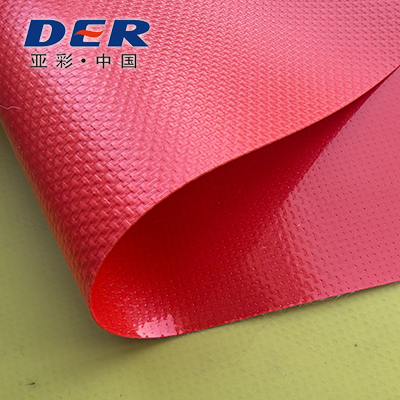
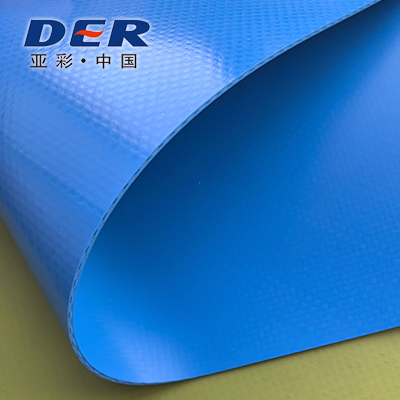
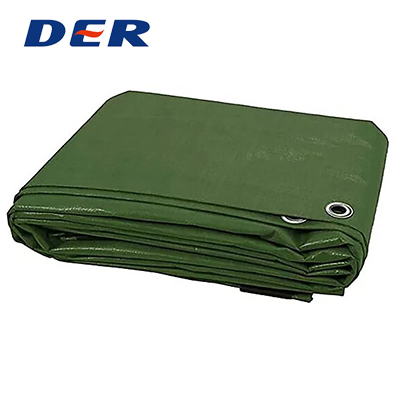
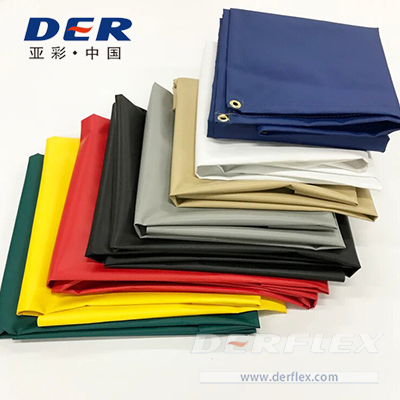
These photographs show existing DERFLEX fabrics and general custom tarps. They illustrate material and finishing discussions; they are not photographs of a validated salvage-runner installation.
Material identity
Record the approved grade, color and construction. Match required documents to that specification.
Deployed behavior
Check both contact interfaces, section joins, doors and edge stability under representative traffic.
Recovery & repeatability
Clean, dry and repack the sample. Retain the drawing revision and agreed inspection criteria.
Review DERFLEX material inspection and quality control, then agree the runner-specific checks rather than assuming roll inspection validates the installation.
Before you order / Application notes
Resolve the contact conditions first.
A representative trial is especially useful for polished finishes, newly installed floors, wet routes and repeated deployment. The floor owner’s requirements should form part of the purchasing brief.
Start with a clean, compatible surface.
Grit trapped beneath a runner can abrade the floor. Verify coating, color-transfer and moisture compatibility over the planned contact duration, particularly on sensitive or uncured finishes.
Keep edges, joins and thresholds controlled.
Agree an edge-restraint method with the site team and check that it does not damage the finish. Do not leave loose folds, raised overlaps or trailing straps in the route. Maintain door operation and required access.
Plan water removal and reuse.
A closed PVC surface does not absorb a spill. Remove water and contamination promptly, inspect the underside, and follow agreed cleaner compatibility and recovery procedures. Dry fully before packing.
Related purchasing questions
Salvage runner FAQs.
How is a salvage runner different from a salvage cover?
A runner is sized for a narrow access path, where width, edges, door clearances and section joins drive the specification. A salvage cover typically shields larger areas or objects. The material may be similar, but the finished construction and approval checks serve different tasks.
Can salvage tarp runners protect wood, tile and carpet?
They may be considered for temporary protection after checking the actual floor, its finish, moisture conditions and traffic. Clean the floor and underside, assess marking and movement, and trial the proposed sample. A fabric suitable on one floor should not be assumed suitable on another.
Are PVC salvage runners waterproof and non-slip?
An intact, suitable PVC-coated fabric can form a water barrier, while seams, damage and open edges affect the finished route. Non-slip performance is a separate question involving footwear, moisture, the upper surface and movement against the floor. No slip classification is claimed without relevant evidence.
What width, length and GSM should I order?
Specify the required finished coverage, route changes, traffic and storage limits first. Select the material and section size together, then review a sample. Heavier fabric increases base sheet mass but does not by itself establish grip, puncture resistance or suitability for wheeled equipment.
Can DERFLEX review custom sizes and OEM packing?
DERFLEX supports drawing-based PVC tarp fabrication and material supply. Send your finished size schedule, edge detail, label artwork and packing brief. Confirm runner-specific feasibility, material selection and the approved sample before placing a bulk order; a standard runner range is not assumed.
What affects price, MOQ and delivery time?
The proposed fabric, material utilization, total area, seam and hem work, reinforcement, identification, testing, order quantity and packing affect the quotation. MOQ, sample terms and lead time are confirmed for the agreed construction and production schedule. Include your destination and required date.
Start with your route sketch
Turn a temporary route into a clear production brief.
Send the corridor layout, finished section sizes and expected traffic. Add floor photographs, quantity and destination. DERFLEX can review the PVC material and fabrication requirements with you.
Agree the supply format, material, drawing, sample and acceptance criteria together. Any site fixing system or specialist protective layer should be identified separately in the quotation.
Or email sales@derflex.com with your drawing and procurement brief.
Edit or copy this brief, then send it through the quotation page. This checklist does not submit your information.