Base Fabric Strength
High-tenacity polyester scrim carries tensile load and helps control deformation when the tarp is repeatedly tightened, folded or exposed to movement.



 Custom finished tarps for global B2B supply
 Attachment-point engineering
DERFLEX manufactures custom grommeted tarps for distributors, contractors, fleet programs, equipment covers and OEM product lines. Material weight, hem construction, corner reinforcement, grommet metal and spacing are planned as one system so the finished cover is matched to the way it will be pulled, tensioned, installed and reused.
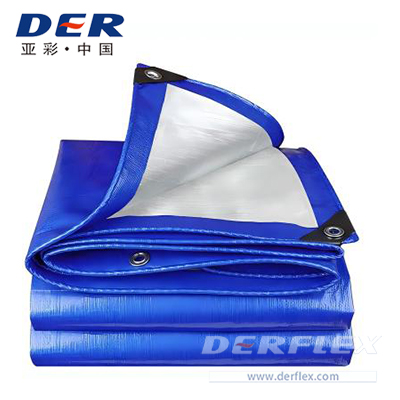
The attachment layout should follow the frame, load direction, wind exposure and installation method rather than being added as a final generic detail.
Product definition
A grommeted tarp is a protective sheet fitted with reinforced eyelets around the perimeter, corners or selected internal rows. Ropes, hooks, bungee cords, straps, cable systems or fixed hardware pass through these eyelets to secure the cover. The grommets make installation faster, but they also concentrate force in a small area of the tarp.
For that reason, a professional specification should not treat the eyelet as an isolated accessory. The grommet diameter, washer profile, hem thickness, webbing, corner patch and spacing pattern must work with the base fabric and coating. DERFLEX develops custom grommeted tarps around this complete load path.
This approach is useful for buyers sourcing grommeted tarps wholesale, building a private-label range, replacing fleet covers or commissioning repeat industrial covers with controlled dimensions and attachment locations.
Load-path design
Grommet pull-out often starts outside the metal ring. DERFLEX therefore reviews the fabric, edge and hardware together before confirming a finished tarp specification.
High-tenacity polyester scrim carries tensile load and helps control deformation when the tarp is repeatedly tightened, folded or exposed to movement.
Folded or welded hems, rope-in-hem and polyester webbing spread force beyond the punched hole and reduce dependence on a single layer of coated fabric.
Metal type, inside diameter, flange area and setting pressure should suit the tarp thickness, fastening tool and expected moisture or corrosion exposure.
Corners, door openings, leading edges and high-wind sides may need closer spacing, larger patches, D-rings or extra rows instead of a uniform perimeter pattern.
Material structure
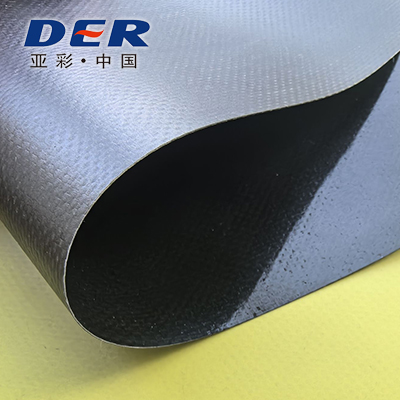
For demanding waterproof covers, PVC coated polyester provides a practical combination of textile reinforcement, weldable construction, cleanable surfaces and configurable outdoor performance.
Coating forms the waterproof barrier and can be specified with matte, glossy, lacquered, UV-resistant, anti-mildew or other project-based finishes.
Yarn denier and thread density are selected according to pulling force, expected handling, finished dimensions and the risk of tear propagation.
Edge construction may include folded coated fabric, rope, webbing or multiple layers. The method is chosen around material type and fabrication workflow.
Grommets can be positioned through reinforced zones, corner patches or webbing so that tie-down load is distributed over a wider area of the finished tarp.
Key performance
Performance options are selected by end use, climate, fixing method and documented requirements rather than presented as one universal grade.
PVC coated polyester and welded seam options can be specified for rain, road spray, snow, outdoor storage and reusable industrial cover programs.
Webbing, folded hems, rope edges, corner patches and additional layers can be placed where repeated tension or concentrated fastening loads are expected.
UV-resistant, anti-mildew, cold-flexible, flame-retardant and other formulations may be discussed according to target market and required testing direction.
Perimeter spacing, corner quantity, internal rows, oval eyelets, D-rings, straps, sleeves and pockets can be located from drawings or an approved sample.
Color matching, printed logos, sewn labels, barcodes, instruction sheets, cartons, bale packing and private-label programs can be planned for repeat orders.
Trial quantities, planned size ranges, master cartons, pallets and container programs can be discussed for distributors, industrial suppliers and project procurement.
Specification table
Use the following table to prepare an inquiry. Final construction, tolerances and test values should be confirmed in the approved specification or sample.
| Specification Item | Typical DERFLEX Direction | Buyer Selection Guidance |
|---|---|---|
| Product Format | Finished grommeted tarp, welded tarp sheet, cut panel, roll material or semi-finished cover. | Choose finished tarps for direct installation; choose rolls or panels when local fabrication is required. |
| Material | PVC coated polyester, vinyl laminated material, PE woven tarp, PVC mesh or treated canvas by project. | Select according to waterproofing, breathability, weight, abrasion, service life and budget. |
| PVC Weight Direction | Approximately 450–1200 gsm for many medium and heavy-duty programs; other structures can be discussed. | Higher weight may improve durability but also increases handling weight. Match GSM to the whole cover design. |
| Finished Size | Custom rectangular, square, shaped cover or drawing-based panel; large welded formats available. | Identify cut size, finished size and usable coverage size. Include overlap, side drop and tension allowance. |
| Grommet Metal | Aluminum, brass, stainless steel or market-specific hardware, subject to availability and requirement. | Consider corrosion exposure, appearance, cost, strength direction and compatibility with ropes or hooks. |
| Grommet Spacing | 300 mm, 450 mm, 600 mm or custom placement; closer rows and special zones available. | Base spacing on wind exposure, tarp size, tie-down method, installation frequency and supporting frame. |
| Edge Reinforcement | Folded hem, welded hem, sewn hem, rope-in-hem, polyester webbing, corner patches or double-layer strips. | Use stronger reinforcement around corners, leading edges, door areas and locations subject to repeated pulling. |
| Joining Method | Hot-air welding, high-frequency welding, thermal joining or sewing as appropriate for the selected material. | Confirm seam direction when water resistance, large-format construction or appearance is important. |
| Surface & Color | Glossy, matte, embossed, lacquered and custom colors according to MOQ and approved reference. | Surface affects cleaning, glare, friction, print compatibility and outdoor appearance. |
| Functional Options | UV, anti-mildew, flame-retardant, cold-flex, anti-static, abrasion or oil-resistant direction by request. | Specify required test method, value, destination regulation and documentation before sampling. |
| Branding & Packing | Logo printing, woven or sewn labels, barcode, carton, bale, pallet and private-label packaging. | Provide vector artwork, color reference, packaging layout, shipping mark and repeat-order requirements. |
Values above are sourcing directions, not guaranteed universal performance claims. Production feasibility, tolerances, minimum quantities and compliance documentation are confirmed during quotation.
Grommet spacing guide
Uniform spacing is convenient for standard products, while engineered covers may need closer spacing, different hardware or extra rows in selected stress zones.
A starting direction for smaller intervals, frequent fixing points or more demanding edge control. Reinforcement still needs to match the load.
Often considered when buyers need more attachment points than a broad utility-tarp pattern without moving to very close spacing.
Suitable as a quotation reference for lighter-duty covers or installations with moderate fastening frequency, subject to size and exposure.
Grommets, D-rings, straps or pockets can align with posts, hooks, rails, roller systems, machinery geometry or a supplied technical drawing.
Product & production images
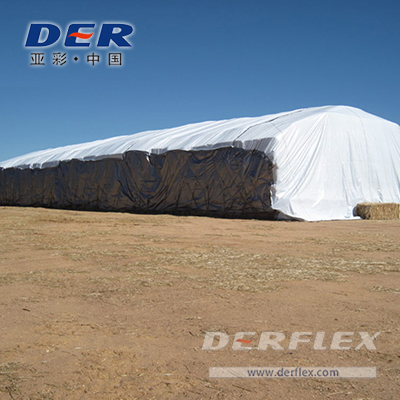
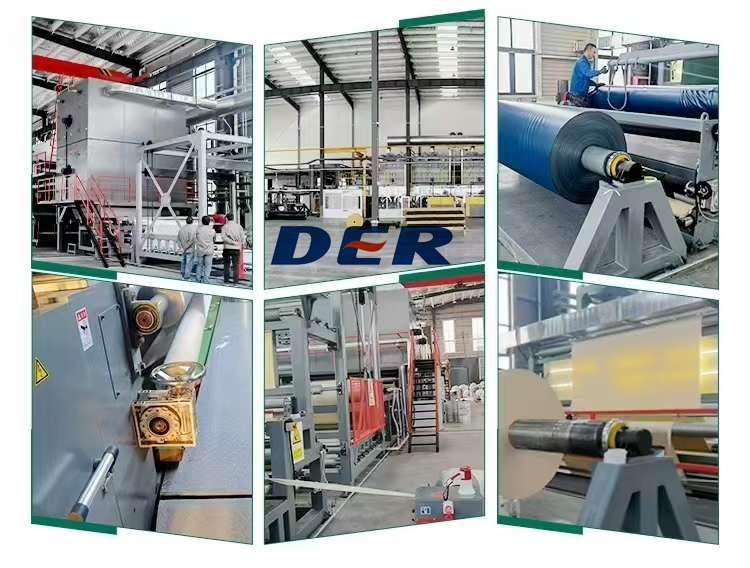
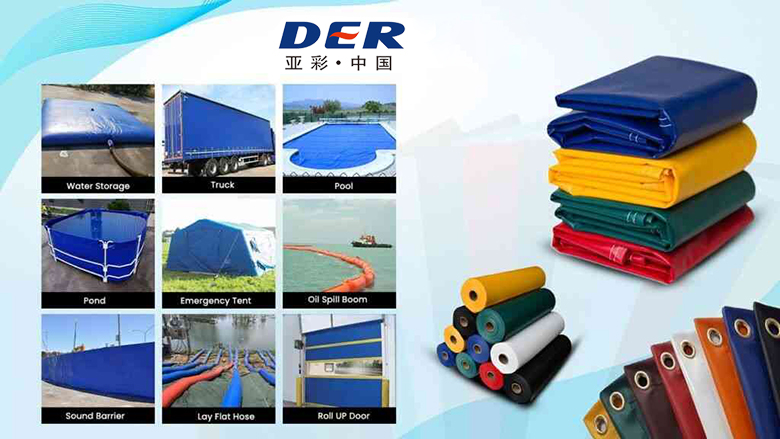
These DERFLEX website images show representative coated tarp materials, transport use, outdoor coverage and factory production. Final product appearance depends on the approved specification.

Processing & customization
Early confirmation of the load case and installation geometry reduces avoidable sample changes and helps keep repeat orders aligned with the approved construction.
Share the object or opening size, supporting frame, fastening method, exposure, installation frequency and current failure points.
Confirm tarp material, weight direction, surface, seam method, hem, webbing, rope, corner patches and functional options.
Provide grommet metal, inside diameter, spacing, distance from edge, corner quantity, special rows, straps, D-rings or pockets.
Review dimensions, hardware setting, color, logo, labels and packaging before bulk production and repeat-order control.
Applications
The finished construction should be adjusted for each use rather than applying the same eyelet pattern to every cover.
Flatbed covers, trailer side protection, fleet replacements and cargo sheets with reinforced lower edges, straps or application-specific fastening rows.
Weather barriers, scaffold covers, material protection and temporary enclosure sheets with planned fixing points for repeated jobsite installation.
Shaped or rectangular covers with grommets aligned to machine bases, frames, anchor points and maintenance access areas.
Hay, feed, equipment and stockpile covers using UV-resistant options, large welded formats and reinforced edges suited to seasonal exposure.
Sidewalls, patio curtains, market stalls, temporary dividers and replacement canopy panels with perimeter eyelets or custom frame-matched locations.
Planned size series, multiple colors, duty grades, printed branding, carton labels and repeatable grommet specifications for local distribution.
Quality & documentation
Terms such as “heavy duty,” “tear resistant” and “rust resistan, t” are useful product descriptions, but they do not replace an agreed material specification, test method or inspection plan. DERFLEX can coordinate project-based quality checks and available documentation according to the order.
Related DERFLEX resources
Use these related pages to compare material, manufacturing format, wholesale supply and reinforcement requirements before requesting a quotation.
FAQ
Practical answers for buyers comparing eyelet spacing, materials, finished sizes and wholesale production.
For many reusable truck, construction, equipment and outdoor cover programs, PVC coated high-tenacity polyester is a practical direction because it combines a reinforcing textile base with a waterproof, weldable surface. The final choice still depends on handling, abrasion, wind exposure, temperature, weight and budget.
Common quotation references include approximately 300, 450 or 600 mm, but there is no single correct spacing for every tarp. Large covers, high-wind installations, frequent tensioning and concentrated corner loads may need closer spacing or stronger local reinforcement. A frame-matched drawing is preferred for engineered covers.
Yes. Grommets, D-rings, straps, pockets and internal attachment rows can be positioned according to a technical drawing, frame dimensions or approved sample. Buyers should identify center-to-center spacing, distance from finished edge, inside diameter, metal type, orientation and allowed tolerance.
Aluminum is lightweight and widely used, brass is often chosen for appearance and corrosion resistance, and stainless steel may be considered for more demanding environments. The suitable option depends on exposure, tarp thickness, required hardware size, fastening method, cost and availability.
PVC coated tarps can provide strong waterproof cover performance, especially when seams are welded. The grommet hole is an attachment point rather than a sealed penetration, so installation should prevent water from collecting or being driven through hardware locations. Overall water protection also depends on slope, overlap, seam design and cover tension.
DERFLEX supports wholesale and OEM discussions for custom sizes, colors, duty grades, grommet layouts, printed logos, sewn labels, barcodes, cartons, bale packing and private-label supply. Minimum quantities and production feasibility are confirmed during quotation.
Send DERFLEX the application, finished dimensions, material or GSM direction, grommet metal and spacing, edge reinforcement, quantity, branding, packaging and destination. A drawing or current sample photo can help identify stress zones before the first sample is made.