What is the best material for a tear resistant tarp?
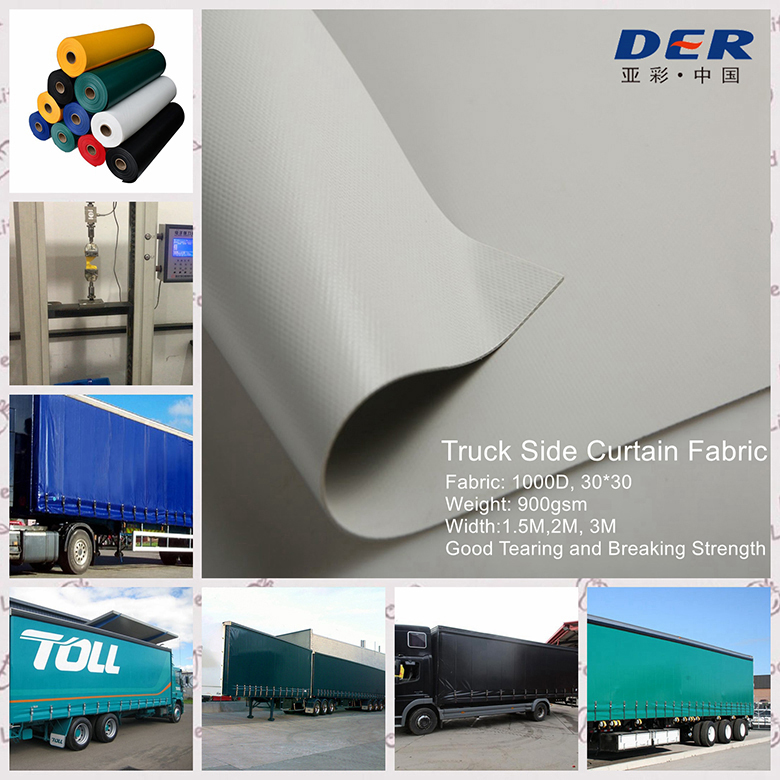
For many repeated-use industrial and transport applications, PVC coated high-tenacity polyester is a practical option because
the textile reinforcement carries load while the PVC surface supports waterproofing, abrasion protection and weldable fabrication.
The best construction still depends on the load case, temperature, exposure time and finished reinforcement.
Does a thicker tarp always have better tear resistance?
No. Weight and thickness can contribute to durability, but tear performance also depends on yarn strength, thread density,
coating adhesion, flexibility and the direction of the test. Finished-cover details may be even more important at grommets and corners.
Are tear resistant tarps puncture-proof?
No tarp should be described as puncture-proof without a narrowly defined test and use condition. Sharp metal, nails, broken glass
or concentrated cargo edges can damage coated fabric. Local wear pads and handling controls may be needed.
How is coated-fabric tear resistance tested?
Buyers may specify a recognized method such as ISO 4674-1 and require results in both fabric directions. The report should identify
the method, units, sample orientation and conditioning so that results can be compared correctly.
Can DERFLEX supply roll material instead of finished tarps?
Yes. Project discussions can cover coated fabric rolls, cut panels or finished custom tarps. Converters and distributors can specify
width, weight direction, color, surface, roll packing and other production requirements.
Which reinforcement details help prevent edge tearing?
Depending on the application, options may include folded or welded hems, polyester webbing, larger corner patches, closer attachment spacing,
D-rings, straps, sleeves and sacrificial wear panels. The correct layout should follow the actual load path.
Can tear resistant tarps be made in custom sizes and colors?
DERFLEX supports custom project discussions for dimensions, color, weight, reinforcement, hardware, logo, labels and packing.
Feasibility and minimum quantities are confirmed during quotation.
What information is needed for a quotation?
Send the application, required finished or cut size, estimated quantity, preferred weight or existing sample, operating temperature,
exposure conditions, reinforcement layout, attachment hardware, color, logo and packaging requirement.