Welded seam integrity
High-frequency or hot-air welded construction can be specified to reduce avoidable air loss at longitudinal and circumferential joints.




Project-configured flexible ducting for carrying fresh air from auxiliary fans to underground headings, production zones and advancing mine faces.
DERFLEX fabricates complete collapsible duct sections with welded bodies, selected couplings, reinforced suspension details and application-specific material options. Diameter, section length and construction are matched to the ventilation route rather than treated as a one-size product.

Useful airflow underground depends on the complete route: fan duty, duct diameter, route length, seam leakage, coupling losses, bends, suspension and the distance from the discharge end to the active zone. A suitable positive pressure mine ventilation duct therefore begins with system data—not only fabric weight.
The fan supplies the static pressure needed to inflate the layflat duct and move the required air volume.
Correct diameter and controlled leakage help preserve useful fan output along the underground route.
The final outlet position and extension plan should follow the mine ventilation design and local operating requirements.
Material selection matters, but pressure stability and practical service depend on how the complete duct is fabricated, connected, suspended and handled.
High-frequency or hot-air welded construction can be specified to reduce avoidable air loss at longitudinal and circumferential joints.
A correctly formed and tensioned duct helps limit folds, abrupt restrictions and turbulence that add resistance to long air runs.
Single or double suspension fins, webbing, patches and eyelets can be arranged around diameter, section weight and installation spacing.
Zipper, hook-and-loop, steel ring, sleeve and eyelet formats can be coordinated with fans, reducers and existing duct systems.
PVC-coated high-tenacity polyester construction can be selected for tensile, tear, flexing, moisture and abrasion demands encountered underground.
Flame-retardant, antistatic, cold-resistant or other formulations may be discussed against the tender specification and applicable local rules.
The ranges below are useful enquiry fields. Final values should be confirmed through the selected construction, test requirement, fan curve and ventilation plan.
| Selection field | Typical configurable range | Why it matters |
|---|---|---|
| Duct type | Layflat positive-pressure ventilation duct | Designed to remain open through internal fan pressure; not intended as an unsupported suction hose. |
| Diameter | 300–3000 mm | Must balance required airflow, air velocity, tunnel clearance, friction loss and available fan pressure. |
| Section length | 5, 10, 20, 30, 50, 100, 200 or 300 m options | Long sections reduce coupling count; shorter sections can simplify handling, repair and route changes. |
| Coated fabric | PVC-coated high-tenacity polyester; commonly 500–700 gsm configurations | Fabric construction is selected for tensile, tear, flexing, abrasion and handling requirements. |
| Pressure duty | Defined by diameter, fabric, seam, coupling and fan design | A pressure value should be confirmed for the finished duct system—not inferred from fabric weight alone. |
| Connection | Zipper, hook-and-loop cuff, steel ring, sleeve or eyelet format | Influences installation speed, air leakage, repair access and compatibility with existing equipment. |
| Suspension | Single fin, double fin, webbing tabs, grommets or custom reinforcement | Selected according to diameter, route geometry, support spacing and section mass. |
| Color | Yellow, orange, black, green or project color | Can support visibility, mine zoning, equipment identification or customer branding. |
| Performance treatment | Flame-retardant, antistatic, cold-resistant and other project options | Requirements should be tied to the named standard, test method and acceptance criteria in the tender. |
| Accessories | Reducers, adapters, tees, wyes, elbows, repair sections and fan cuffs | Fittings help form a complete route while controlling changes in direction, diameter and branching. |
The collapsible format is especially useful where the fresh-air line must be extended, repositioned or stored as development work progresses.
Extendable air-forcing lines for fresh-air delivery toward drilling, loading and excavation zones.
Suspended duct sections configured around gradients, vehicle clearance and periodic route changes.
Temporary or relocatable air routes for maintenance, equipment zones and confined underground tasks.
Fresh-air supply for mine development, civil tunnels, metro works, galleries and similar underground construction.
A mine duct should arrive in a format that can be integrated with the planned fan, route and installation practice.
Straight sections, reducers and transitions can be discussed where fan outlets or route clearances change.
Zipper, hook-and-loop, ring, sleeve and eyelet arrangements are selectable by installation method.
Single or double fins, grommet spacing, webbing and reinforcement can be configured to route loads.
Tees, wyes, elbows and adapters can support junctions, fan relocation and changing underground headings.
Repair sleeves, patches and replacement sections can be planned for sites where abrasion or mechanical contact is expected.
Section numbers, airflow direction, project codes and compact packing can assist underground logistics.
Images are sourced from the DERFLEX website and illustrate typical ventilation duct configurations. Final construction follows the confirmed project specification.
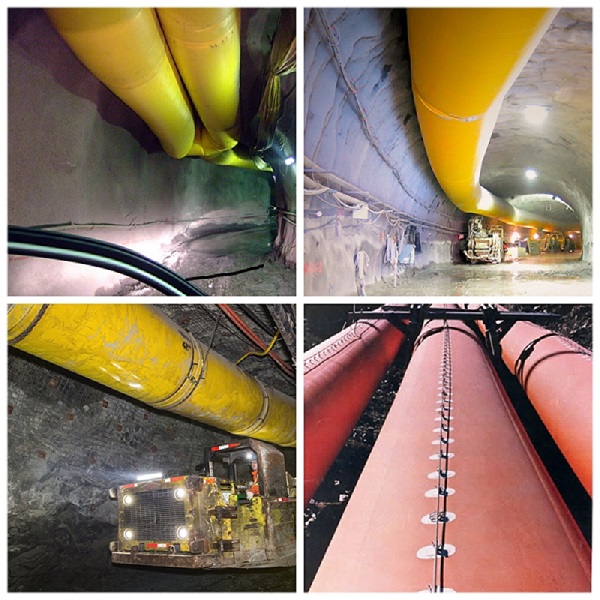
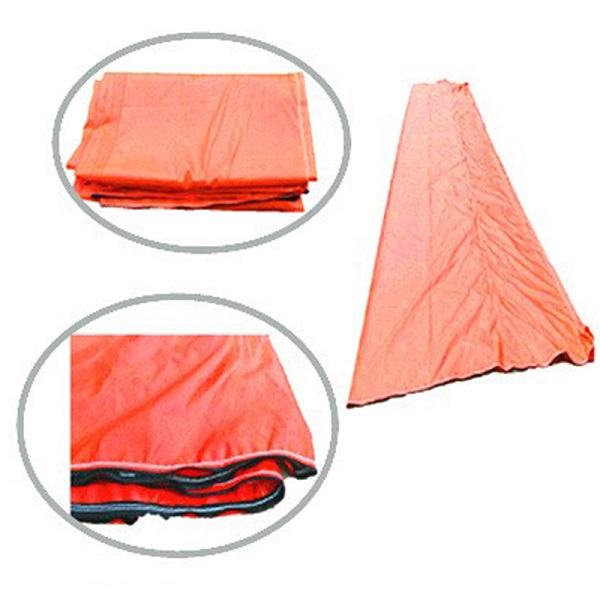
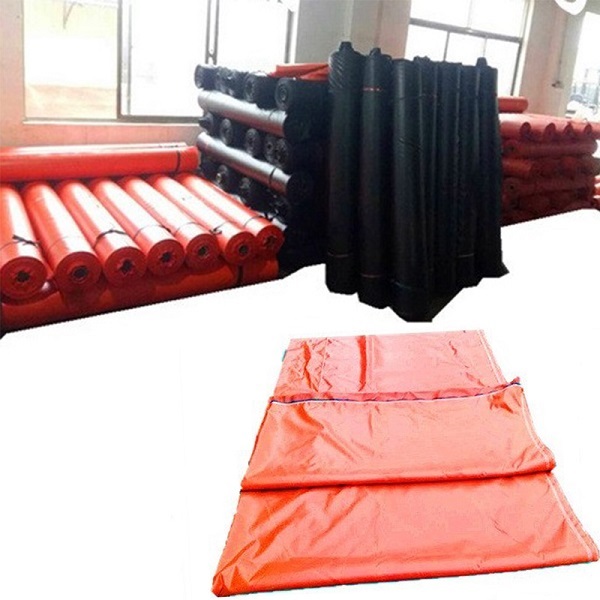
Project quality planning can include material records, fabrication checks and agreed finished-product verification.
Confirm coated-textile construction, color, weight and required treatment against the approved specification.
Control panel geometry, finished circumference and section length before welding and assembly.
Inspect longitudinal seams, end cuffs, suspension reinforcement and accessory attachment.
Check dimensions, connection compatibility, visible workmanship and agreed pressure or leakage criteria.
Mark sections, protect fittings and organize packing for delivery, storage and underground deployment.
DERFLEX project support
DERFLEX combines PVC-coated fabric experience with finished-product fabrication, allowing the enquiry to cover the duct body, connections, suspension, accessories and packing as one project package.
These six related pages cover finished ducts, ventilation materials and alternative duct configurations.
General finished-duct overview for tunnels, mines and underground construction.
Mine and tunnelBackground on flexible vent tubes and coated-fabric performance.
Configuration guideAlternative flexible duct arrangements for underground airflow systems.
Technical materialCoated textile selection for duct fabrication and industrial ventilation use.
Airflow comparisonBasic distinction between layflat forcing duct and reinforced suction duct.
Industrial rangeFlexible air movement solutions for industrial, construction and temporary ventilation.
It is a flexible air-forcing tube connected to an auxiliary fan. The fan pushes fresh air into the duct, internal pressure opens the layflat body, and the duct carries airflow toward an underground heading or work area.
Normally it should not. Without continuous structural reinforcement, a layflat duct can collapse under negative pressure. Exhaust or suction duties generally require a wire-reinforced or semi-rigid duct selected for vacuum service.
Diameter should be evaluated against required airflow, acceptable air velocity, route length, friction, leakage, bends, tunnel clearance and the available fan pressure. Providing the fan curve and route drawing allows a more useful product discussion.
Short sections can be easier to handle and repair, while long sections reduce the number of couplings and potential leakage points. DERFLEX can discuss lengths from 5 m to extended project sections, subject to diameter, site handling and production confirmation.
These options can be discussed for project-specific requirements. The enquiry should name the applicable standard, test method, acceptance value and documentation needed so the material and finished duct can be reviewed correctly.
Please provide the fan model or curve, target airflow, total route length, duct diameter or clearance limit, section length, connection and suspension format, required treatment, quantity and delivery destination. Photos or drawings of existing fittings are also useful.
Send the available fan data, ventilation route, target airflow, connection details and required test standard. DERFLEX can organize the quotation around the complete finished positive pressure mine ventilation duct.