


PU Leather Supplier for Upholstery, Automotive, Marine, Medical, Bags, and OEM Product Development
DERFLEX is a factory-oriented PU leather supplier supporting importers, furniture factories, converters, automotive interior programs, marine seating builders, medical product manufacturers, project buyers, and private-label brands that need more than a basic sample card. We help customers turn a target look, touch, thickness, grain, and price band into a commercially workable synthetic leather program with better specification clarity, stronger repeat-order control, and a more reliable quotation path.
Whether you are searching for a polyurethane leather supplier for sofa upholstery, a custom PU leather manufacturer for office chairs, a faux leather supplier for bags, or a synthetic leather factory for branded OEM development, the real requirement is usually the same: material consistency, process fit, export readiness, and a partner that understands that the wrong leather-look material causes returns, delays, color mismatch, fitting issues, and expensive downstream correction. This page is built to make that decision easier.
What Is PU Leather and Why Do Buyers Search for a Real Supplier Instead of a Generic Catalog Seller?
PU leather, also known as polyurethane leather, faux leather, or synthetic leather, is a man-made surface material engineered to deliver a leather-like appearance, controlled texture, repeatable color, and practical converting behavior for commercial manufacturing. For the buyer, however, the definition alone is not enough. The real question is how that material is built, what kind of substrate supports it, whether the surface can stay stable across production lots, and whether it will suit sewing, quilting, wrapping, bonding, lamination, upholstery, thermoforming, or decorative finishing in the intended product category.
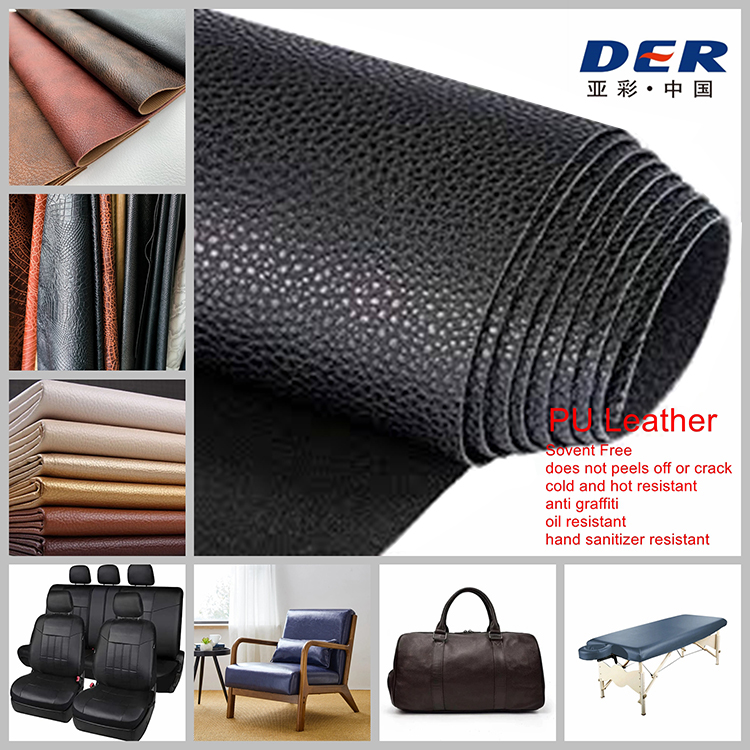
That is exactly why serious sourcing teams search for a PU leather supplier or PU leather manufacturer rather than only browsing for “cheap synthetic leather.” A furniture brand wants more than a soft-looking sample. It needs a material that remains visually consistent across collections and replenishment cycles. An automotive trim buyer needs a cleaner, more controlled face and dependable process fit. A marine seating producer needs a material direction that stays commercially sensible under moisture exposure and cleaning routines. A medical or mattress application may require a wipeable surface, precise thickness, and stable conversion behavior. In every one of those situations, supplier capability matters just as much as the material itself.
More Than a Leather Alternative
Buyers increasingly use PU leather not because it is merely a substitute for real leather, but because it gives them tighter control over appearance, cost structure, development speed, and production repeatability. It can be designed for matte, semi-matte, or subtle gloss finishes. It can be produced with lychee grain, napa grain, fine pebble grain, smooth minimal surfaces, or more decorative embossing effects. Backing can be adjusted according to product form, softness targets, and manufacturing method. That level of commercial engineering is exactly why PU leather remains relevant across upholstery, seating, bags, automotive trim, and OEM projects.
Why Manufacturer Capability Changes the Result
On paper, many suppliers may claim they sell polyurethane leather. In practice, the difference between a dependable PU leather manufacturer and a simple trader becomes obvious when the buyer needs sample matching, controlled hand feel, specific thickness, repeat color, structured quotation logic, and a realistic replenishment plan. A competitive synthetic leather supplier translates the application into a material program. That means matching texture, finish, backing, width, packaging, and commercial level to the real product requirement rather than pushing the same roll to every customer.
Need a custom PU leather program instead of a generic roll offer?
Send your target application, texture reference, thickness range, width, expected quantity, and destination market. DERFLEX can help identify a more suitable PU leather direction and build a faster quotation path for wholesale, OEM, or long-term supply.
Request A QuoteKey Features Buyers Expect from a Competitive PU Leather Supplier
When procurement teams compare a synthetic leather supplier, they do not only compare the first sample. They compare how the material will behave during development, production, sales presentation, warehouse storage, replenishment, and after-sales performance. A supplier that understands these commercial realities becomes more valuable than one that only provides broad marketing claims.
Surface Consistency
Grain repeatability, gloss balance, color stability, and overall visual coherence are essential when the material will be used across multiple SKUs or long-running product lines. Sofa brands, office furniture suppliers, hospitality seating programs, and bag labels all rely on a stable visual identity. That means the supplier must manage the relationship between sample approval and bulk output.
Touch and Comfort Positioning
PU leather is often chosen because buyers want a more refined, softer, or more premium hand feel than a rigid lower-end alternative. The right supplier helps define whether the project needs a soft drape, tighter body, cushioned touch, matte elegance, or a cleaner technical finish, then aligns the structure with that goal instead of leaving the buyer to interpret isolated stock names.
Processing Compatibility
A material that looks attractive on the roll but creates problems in cutting, sewing, quilting, panel wrapping, edge folding, laminating, or upholstery assembly is not commercially successful. Buyers therefore need a PU leather manufacturer that understands how the material will be processed and where dimensional or handling issues may appear in production.
Customization Flexibility
OEM projects frequently require more than a standard color list. Buyers may need a specific embossing mood, low-glare finish, different backing constructions, a certain thickness window, or export packaging aligned with distribution needs. A custom PU leather supplier helps translate those requests into practical production specifications and sampling steps.
Commercially Sensible Durability
Durability is not one universal number. Furniture, bags, automotive trims, medical surfaces, or decorative uses each prioritize a different balance of wear resistance, cleanability, flexibility, and visual retention. A capable supplier does not oversimplify durability. Instead, it defines a material level appropriate for the product category, usage pattern, and target price band.
Export and Replenishment Readiness
International buyers care about more than the first shipment. They care about packing reliability, roll labeling, repeat-order logic, approval history, color reference management, and whether the supplier can coordinate supply across future collections or replenishment needs. That is why the right PU leather supplier becomes part of the buyer’s operating system, not just a one-time vendor.
Technical Specifications for Custom PU Leather Programs
The table below shows a typical custom framework rather than a single fixed stock specification. PU leather is selected differently for upholstery, automotive trims, marine seating, decorative panels, bags, or medical surfaces. The best technical combination depends on the visual goal, converting method, target cost position, and end-use environment. DERFLEX supports specification-based development instead of one-size-fits-all quoting.
| Parameter | Typical Custom Range / Options | Why It Matters to the Buyer |
|---|---|---|
| Material Type | PU leather / polyurethane synthetic leather / leather-look coated textile | Defines the general surface system and sets the foundation for softness, appearance, and commercial positioning. |
| Thickness | Approx. 0.6 mm – 1.4 mm, with application-based adjustment | Influences hand feel, sewing behavior, wrapping performance, visual body, and perceived quality level. |
| Width | Common upholstery and conversion widths, often around 1370–1400 mm or as program permits | Affects cutting efficiency, nesting performance, and downstream material yield. |
| Backing | Knitted, woven, nonwoven, microfiber-inspired, or custom composite support layers | Determines softness, stability, cushioning effect, tear behavior, and converting suitability. |
| Surface Finish | Matte, semi-matte, soft-touch, subtle gloss, fashion sheen, or special effect finish | Shapes the final product image and impacts how premium, technical, soft, or commercial the item feels. |
| Grain / Embossing | Smooth, lychee, napa, pebble, fine grain, custom embossing, or sample-matched direction | Controls brand identity, collection differentiation, and consistency across multiple SKUs. |
| Color Development | Standard colors, customer sample matching, collection-based color families, or project-specific shades | Critical for collection integrity, repeat orders, replacement supply, and showroom consistency. |
| Performance Orientation | Wear-oriented, soft-touch, decorative, wipeable, or application-targeted programs | Helps avoid over-specifying or under-specifying the material for the product category. |
| Processing Fit | Options tuned for sewing, lamination, quilting, wrapping, upholstery, or general conversion | Reduces production friction and improves manufacturing efficiency. |
| Compliance Path | Project-oriented support for target market documentation or testing direction where required | Important for buyers who need a supplier that can align with destination-market expectations and approval routines. |
| Packing | Standard roll packing, customized labels, export-friendly packaging, or private-label coordination | Useful for wholesalers, brand owners, distributors, and container-based supply programs. |
| Order Model | Sampling, trial order, bulk order, repeat replenishment, OEM, or project supply | Supports more realistic quotation, production planning, and long-term commercial continuity. |
Want a specification recommendation based on your product rather than a generic catalog code?
Share your application, target hand feel, preferred grain, thickness range, monthly quantity, and destination market. We can recommend a more suitable custom PU leather structure and prepare a quotation path that reflects real production use.
Request A QuoteApplications: Where a Professional PU Leather Manufacturer Adds Real Value
One reason buyers continue to search for a dependable polyurethane leather supplier is that PU leather serves many end-use categories. However, application diversity does not mean one material suits everything. The most valuable supplier is the one that understands how the same base idea must be tuned for different industries.
Furniture Upholstery
In sofas, lounge seating, dining chairs, headboards, and residential furniture collections, buyers often prioritize hand feel, color depth, embossing quality, and stable collection identity. Here, PU leather is frequently chosen when the brand wants a refined leather look without the natural variation and sourcing complexity of real leather. A good supplier helps the buyer decide whether the program should lean soft, structured, matte, or decorative according to the retail position and expected selling environment.
Automotive Interior Programs
Automotive and mobility-related interior projects usually focus on surface cleanliness, controlled visual language, dimensional consistency, and the ability to support wrapping, trimming, stitching, or laminated structures. The correct PU leather program can help create a cleaner, more cohesive interior look, while supporting better consistency across larger production runs and part sets.
Marine Seating and Leisure Craft
Marine cushions, seating pads, and boating interiors commonly require a material direction that balances aesthetics with commercial practicality under moisture-oriented cleaning conditions. Buyers in this segment often compare PU leather with PVC leather or other synthetic alternatives and need guidance on where softness, appearance, wipeability, and project cost are best balanced.
Office, Hospitality, and Contract Seating
Contract environments care about repeatability and operational logic. The material has to look credible across multiple seats, tables, lounges, and fit-out elements, while remaining practical to source over time. A supplier with good approval and replenishment logic becomes especially important when projects may require more than one order cycle or phased delivery.
Bags, Accessories, and Decorative Products
Handbags, wallets, notebook covers, boxes, decorative panels, and accessory lines often choose PU leather for style flexibility. Surface design, grain precision, and finish control matter heavily here because the material is part of the product’s visual identity. The wrong choice can make the product feel cheaper than intended; the right choice can elevate the perceived value without pushing cost structure out of range.
Medical, Mattress, and Special Surface Uses
Healthcare-oriented surfaces, mattress covers, adjustable bed accessories, and selected protective or wipeable applications may need a more functional material direction. Buyers in this space often look for stable surface behavior, dependable fabricating performance, and supply partners that understand specification discipline. The best supplier knows when to prioritize tactile comfort and when to prioritize controlled utility.
In all of these categories, the underlying requirement is not simply “PU leather.” It is application-fit PU leather. That is why working with a real PU leather supplier or synthetic leather manufacturer is strategically different from buying from a price-only catalog. The supplier has to understand the product that will exist after the material leaves the roll.
Why Choose DERFLEX as Your PU Leather Supplier
Buyers who search for a PU leather manufacturer are rarely solving a simple purchasing task. They are trying to reduce risk while building a sellable product. That is why DERFLEX approaches synthetic leather supply as a combination of material selection, commercial alignment, and supply-chain communication rather than as a basic roll transaction.
Factory-Oriented Communication
We focus on the actual questions that affect outcomes: what the product is, what look the market expects, how the material will be processed, what thickness and backing make sense, what quantity pattern is realistic, and how repeat orders may be managed. This helps buyers move from vague sample discussion to more practical specification decisions.
- OEM and custom development for texture, grain, finish, width, thickness, and packing
- Support for importers, brands, converters, furniture factories, and project buyers
- Quotations built around application logic, not generic stock descriptions
Commercial Quality Thinking
Material quality is not only about lab language. It is about whether the final shipment matches the approved direction, whether the product line can stay visually coherent, and whether buyers feel confident placing repeat orders. DERFLEX works with the understanding that quality means commercial usability. A beautiful sample that cannot be repeated is not a successful material program.
- Sample approval discipline for better bulk-order alignment
- Focus on surface consistency, repeatability, and order continuity
- More structured communication for bulk and replenishment programs
Custom Development for Different Market Levels
Not every buyer sells to the same customer. Some need entry-commercial value. Others need a more premium furniture touch. Others need decorative effect, marine practicality, or medical-facing wipeability. DERFLEX helps segment the material according to sales channel, product tier, and cost target instead of assuming one leather-look finish can satisfy every application.
Lead Time and Order Planning Awareness
Buyers do not want surprises after launch planning has started. A dependable supplier supports clearer sampling flow, more realistic production sequencing, and better discussion around quantity, replenishment, and packaging. Even when lead time varies by program, that clarity helps customers protect their schedule and avoid preventable delays.
Export-Ready Support
Global buyers need more than material. They need labels, packing logic, shipment coordination, and communication that works for container-based purchasing, distributor supply, or private-label development. DERFLEX is positioned for export-oriented cooperation, helping bridge the gap between technical material selection and real-world purchasing operations.
Certification and Requirement Awareness
Different markets and industries may require different documentation or testing pathways. DERFLEX can work with buyers that need requirement-oriented development so that the material direction aligns more closely with their destination market, application type, and approval process. That is especially important when a buyer needs more than a standard sample and wants a safer sourcing path.
Looking for a supplier that understands OEM development, repeat orders, and export workflow?
Use DERFLEX as your direct contact for custom PU leather supply. We support application-based recommendation, sample matching, private label projects, trial orders, and scalable bulk programs for global buyers.
Request A QuoteComparison: PU Leather vs Other Material Paths
Good sourcing decisions are comparative by nature. Buyers rarely choose PU leather in isolation. They compare it with genuine leather, PVC leather, microfiber-style synthetic alternatives, or textile upholstery. The right answer depends on visual goals, comfort expectations, maintenance needs, processing method, and commercial positioning.
PU Leather vs Genuine Leather
Genuine leather carries a natural-material story and can be important for some premium market positions. However, it also introduces natural variation, different sourcing dynamics, broader cost movement, and less control over batch-to-batch visual consistency. PU leather is often selected when the buyer wants a more standardized material appearance, broader finish customization, easier product-line planning, and a tighter commercial structure. For many furniture, bag, decorative, and seating programs, that predictability is a major advantage.
PU Leather vs PVC Leather
This is one of the most common sourcing comparisons. PU leather is often preferred when the product needs a softer touch, a more refined visual impression, and a more premium-feeling hand. PVC leather may be considered when the project places stronger emphasis on rigid waterproof behavior, easy cleaning, or a different cost-performance position. The correct choice depends on whether the buyer values softness and surface elegance more, or whether the application leans more heavily toward specific practical-use conditions.
PU Leather vs Fabric Upholstery
Fabric offers its own design and tactile language, but it performs differently in terms of cleanability, finish consistency, and leather-look styling. PU leather is often chosen when the brand wants a smoother visual surface, faster wipe-down behavior, and a more controlled premium aesthetic without moving into the full complexity of genuine leather sourcing.
Direct Manufacturer vs Trading-Only Seller
A catalog trader may be sufficient when the buyer needs a one-time basic roll. A serious manufacturer relationship becomes more valuable when the project requires sample matching, thickness control, grain coordination, repeat-order planning, or OEM packaging. In other words, when the material must support a product strategy rather than a simple transaction, supplier capability matters significantly more.
Representative Case Study: How a Better Material Program Protects Margin, Launch Timing, and Product Identity
The examples below are representative supply scenarios based on common buyer needs in global synthetic leather sourcing. They are included to show how decision quality improves when specification, supply method, and application logic are handled together.
Case A: Upholstery Brand Replacing an Unstable Supplier
A mid-market furniture exporter had a recurring problem: the original PU leather source could supply attractive samples, but repeat orders showed visible variation in gloss level and grain mood. The issue created showroom inconsistency and forced the buyer to mix material lots across production planning. The real problem was not only surface quality. It was the absence of a more controlled approval and replenishment method.
In this scenario, the improvement came from redefining the material more clearly. The buyer narrowed the acceptable hand-feel band, clarified gloss direction, refined the thickness window, and aligned the backing with the upholstery process. Once the material was treated as a controlled program instead of a general PU leather order, the buyer could protect visual identity better and reduce internal friction across future orders. The result was not only a better-looking sofa line. It was more confident selling, easier collection management, and less waste caused by material mismatch.
Case B: Private-Label Seating Program Needing Faster Quotation Logic
A buyer developing a private-label seating line for hospitality and office distribution needed a supplier that could talk in product terms instead of only quoting stock codes. The customer wanted multiple coordinated colors, one premium-feel surface for upgraded products, and one more commercial option for large-volume programs. The challenge was not only sourcing the material. It was building a more usable range architecture that could support different price bands without losing collection identity.
The solution path began with application breakdown: which products required softer touch, which needed stronger commercial durability, and which colors had to remain available for repeat replenishment. Once the project was segmented properly, the quotation process became easier and the buyer could launch with more confidence. This shows why the right PU leather supplier adds value through structured development thinking, not just through material availability.
Have a current PU leather source that looks fine on paper but creates issues in repeat orders?
DERFLEX can review your target application, sample direction, order model, and quality concerns to recommend a more stable sourcing path for OEM, project, or distributor-oriented supply.
Request A QuoteFrequently Asked Questions
1. What is PU leather?
PU leather is a synthetic leather material built around a polyurethane surface system. It is widely used for upholstery, automotive trims, bags, decorative products, and many OEM applications where buyers want a leather-like appearance together with more controlled production variables.
2. Why choose a direct PU leather supplier instead of a generic reseller?
A direct supplier is generally better positioned to discuss backing, thickness, finish, texture, customization, repeat-order logic, packaging, and production alignment. This becomes especially important when the project involves OEM development or repeat supply rather than a one-time stock purchase.
3. Can DERFLEX support custom color, grain, and thickness?
Yes. DERFLEX supports custom PU leather development for texture direction, embossing mood, gloss level, thickness, backing, width, and pack-out according to the target application and market level.
4. Is PU leather good for sofa and chair upholstery?
Yes. PU leather is widely used in sofas, dining chairs, headboards, office seating, and hospitality furniture because it can combine a refined surface effect with collection consistency and commercial flexibility.
5. What is the difference between PU leather and PVC leather?
PU leather is often chosen when softness, elegant touch, and a more premium-feeling surface are priorities. PVC leather may be more attractive in certain programs that emphasize stronger waterproof behavior, easy cleaning, or a different cost-performance structure. The better option depends on the application.
6. Do you support OEM and private-label buyers?
Yes. DERFLEX works with brands, importers, converters, upholstery manufacturers, wholesalers, and product developers that need OEM supply, custom development, sample matching, and repeat-order support.
7. What should I send to get a faster quotation?
Please send the target application, preferred texture or sample reference, desired thickness range, width, color family, quantity, destination market, and whether the program is for wholesale, OEM, distributor, or project supply.
8. Can PU leather be used in marine, medical, or special applications?
It can, but the correct structure should be selected according to actual use conditions and process needs. That is why application-based recommendation is more useful than buying a general leather-look roll without technical discussion.
Related DERFLEX Resources
To help buyers compare material directions and understand adjacent synthetic leather topics, the following DERFLEX pages can be used as supporting internal links for this page and as additional reading during supplier evaluation.
A closely related core page focused on custom synthetic leather supply for upholstery, automotive, marine, medical, and OEM projects.
Useful for buyers comparing PU leather with PVC leather for upholstery, decorative, automotive, and commercial product use.
An educational comparison page that supports search intent around material selection and supplier comparison.
A practical reference page for procurement teams that need fast material differentiation during sourcing and sales discussions.
Helps reinforce search intent around PU leather benefits, value positioning, and application logic.
Useful for buyers exploring wipeable, healthcare-related, mattress, or special-surface synthetic leather requirements.