News
Company News

Custom Sandbox Covers for Schools & Play Areas | DERFLEX

Update:2026/10/18 17:40:01 Views:
Skip to content

Custom covers / School & commercial procurement

Custom Sandbox Tarp Covers for Schools and Commercial Play Areas

Specify a sandbox cover around the play area you actually operate. DERFLEX supports PVC coated fabric and custom tarp fabrication for buyers developing made-to-measure covers for schools, nurseries, daycare centers and commercial sand play areas. Start with the outside dimensions, rain or airflow requirements, edge restraint and daily handling routine. Use those details to agree the material, finished geometry and sample before a bulk order. Supply scope and any specialized edge construction are confirmed for each project.

PVC & mesh selectionCustom fitOEM procurement
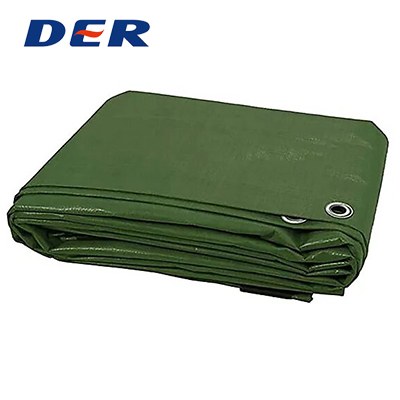
The fabric & finished edgeFolded green DERFLEX tarp with metal eyelets along its edge
DERFLEX finished tarp reference. This image shows fabric and eyelet construction; it is not a completed sandbox-cover installation.

A cover with a clear purpose

What is a sandbox tarp cover?

A sandbox tarp cover is a flexible sheet made to close over a sand play area when it is not being used. A well-fitted cover helps limit leaves, debris and animal access. Its performance depends on the material, perimeter fit, restraint and drainage arrangement.

Also called a sandpit cover, it can be a flat sheet with reinforced fixing points or a shaped cover with a side skirt. Solid PVC and open mesh serve different purposes: choose whether rain should be shed away or pass through before specifying the fabric.

Design for closure and reopening.

A school sandbox cover must also be practical for staff to remove, store and reinstall. Include that daily routine in the specification from the beginning.

01 / Material decision

Solid PVC or mesh?
Decide where the rain should go.

A waterproof fabric can shield the surface from rain, but a low, slack sheet can collect water. Mesh allows water through, so the sandbox beneath it needs suitable drainage. Neither approach replaces regular inspection of the sand and surrounding play area.

Material selection for a custom sandbox cover
DecisionSolid PVC coated polyesterOpen mesh fabric
Main purposeA continuous surface for rain shielding and debris coverage, with the seams and perimeter designed accordingly.Air movement and drainage through the fabric, with debris screening determined by the opening size.
Water managementPlan a supported slope or another reviewed way to shed water away from the pit. Inspect for pooling.Rain enters the pit. Confirm the underlying drainage and check that leaves do not block the mesh.
Moisture beneathReview ventilation and the reopening routine; an impermeable sheet does not dry damp sand.Openings permit airflow, but do not establish how quickly the sand will dry in the actual location.
What to sampleFlexibility, surface cleaning, edge reinforcement and a representative seam where required.Mesh opening, edge stability, snagging and how the selected weave screens the site's debris.
Handling choiceBalance fabric mass and reinforcement against the area staff need to lift and fold.Review the finished weight and snag resistance rather than assuming all mesh covers are light.

On a small screen, swipe the table to compare both materials.

02 / Measure the fit

Measure the outside edge.
Agree the finished cover separately.

Sandbox measurement plan, schematicTop view showing outside length A, outside width B, a dashed proposed cover outline, a corner seat and two diagonals used to check squareness. Cover overhang is agreed separately.A · Outside lengthB · Outside widthCheck both diagonalsDashed line = proposed cover outline
Schematic only; not an installation design. Record skirt depth, overhang, corner seats, posts and fixing positions on a separate side view or marked photograph.
  1. Record the actual sandbox.Measure outside-to-outside length and width at the rim, including projecting seats and trim. For a rectangle, record both diagonals to reveal an out-of-square frame.
  2. Map the details that change the pattern.For a round pit, measure the outside diameter in more than one direction. For a hexagon, octagon or irregular sandpit, provide a dimensioned plan, side lengths and reference diagonals. Mark every post or obstruction.
  3. Separate site dimensions from finished dimensions.Label each measurement in mm, cm or inches. Agree overhang, side drop, seam layout and manufacturing tolerance on the approval drawing; do not add an unexplained allowance.
  4. Review a representative fit.Check how the edge sits on the rim, how closures clear seats and how staff remove the cover. A worn old cover is a reference, not the sole source of dimensions.

03 / Perimeter design

The edge is part of the specification.

Match the cover to the available fixing locations and the way the area closes each day. A tight-looking perimeter does not establish a wind rating or a child-resistant barrier.

Reinforced fixing points

Use a coordinated plan for the hem, corner reinforcement and eyelet positions. Mark existing attachment points so staff do not need to pull the fabric sideways to reach them.

Fitted skirt or shaped perimeter

A side drop can help the cover follow the rim. Corner seats, nearby walls and protruding posts may require a different pattern. Show where any opening will be and how it closes.

Confirm that the finished cover can be lifted off without catching on the frame.

Weighted-edge concepts

Where fixed attachments are impractical, submit a contained ballast concept for review. Specify edge contact, retained inserts and the total handling mass. Ballast does not automatically prevent edge lifting.

Keep the play area clear when it reopens.

Remove the cover completely and store it, cords, detachable fasteners and any ballast away from children. Review accessible loops, small parts, protruding hardware and trip points with the facility's responsible person.

Daily operation / A useful weight check

Specify the weight staff will actually handle.

For a large school sandpit, handling can govern the design as much as material durability. Ask for the finished dry weight, packed dimensions and the proposed folding or rolling routine. Include hems, reinforcements, closures and any retained ballast.

Trial the full removal and replacement sequence with the intended staff. Wet surfaces, trapped debris and collected water can make a cover harder to manage. Remove accumulated water using a reviewed method before handling; do not lift a water-filled sheet over the sand.

Material & fabrication references

Look at the details behind the brief.

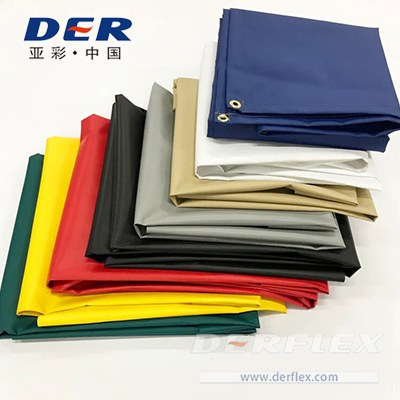
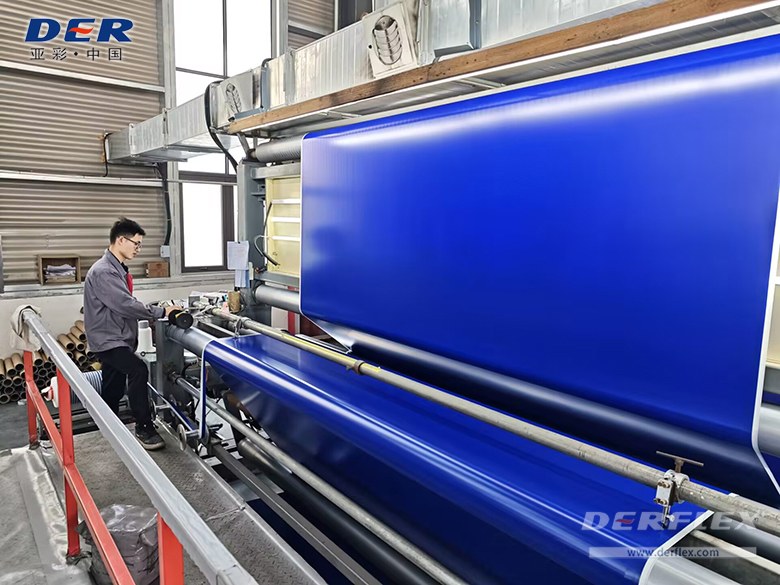
The photographs below are real DERFLEX website images of finished tarps, mesh and fabric production. They show reference materials and processes, not school projects or an approved sandbox-cover model.

Before you order

Application notes for schools and commercial sites.

Plan the cover together with the sandbox drainage, access and maintenance routine. Keep these requirements in the purchase brief and the on-site operating procedure.

  • Cover only when the play area is closed.Keep children away from a covered pit. A flexible tarp is not a surface for standing, sitting or climbing, or a substitute for access control and supervision.
  • Resolve water collection.Review the span and support for a solid cover; mesh needs drainage beneath. Keep runoff away from access paths and inspect after rain.
  • Match material documentation to the destination.Tell DERFLEX which chemical restrictions or facility purchasing requirements apply. Request evidence for the selected fabric and accessories; do not infer compliance from the PVC name or a general factory certificate.
  • Inspect the complete edge.Check seams, abrasion points, corners, eyelets and retained inserts. Stop using a damaged cover until it has been assessed and repaired or replaced.
  • Agree cleaning before selecting a grade.State the facility's cleaning products and method. Confirm material compatibility and drying/storage instructions rather than assuming every disinfectant is suitable.
  • Inspect the sand before reopening.A cover does not sterilize sand or remove existing contamination. Follow the facility's inspection and local hygiene procedures.

For context, the U.S. Office of Head Start recommends covering sand play areas when not in use and maintaining drainage across outdoor spaces. Read its outdoor safety guidance. This is operational guidance, not a certification of this cover.

From drawing to repeat order

A clear cover brief makes the quote useful.

DERFLEX's broader supply includes coated-fabric rolls and custom finished tarps. For sandbox-cover procurement, identify whether you need material for local fabrication, cut panels or a finished cover made to an approved drawing. Specify any hardware separately; sandbox frames, site supports and installation are outside the proposed fabric-cover scope unless expressly included in a quotation.

  1. Review: send the site photos, geometry and operating conditions.
  2. Define: agree material, seam positions, edge design, tolerances and supply inclusions.
  3. Approve: review a representative sample and fit before committing to repeat production.
  4. Control: retain the approved drawing revision, color reference, inspection points and packing requirements for reorders.

Importers, distributors and playground equipment brands can use the custom tarpaulin supply options to prepare an OEM or private-label brief. For material alternatives, compare the broader tarpaulin materials and cover types.

What changes the price?

Fabric choice, usable width and cutting yield, shaped corners, seam length, reinforcement, hardware, order quantity and packing all affect the quote. MOQ, sample terms, lead time and delivery conditions are agreed against the actual specification.

Related questions

Sandbox cover FAQs

Is mesh or a waterproof tarp better for a sandbox?

Choose according to water management. A solid cover can shed rain when its shape, support and seams are suitable. Mesh permits rain and airflow through the openings, so the pit must drain. Neither material alone guarantees dry or hygienic sand. Review the site and staff routine before deciding.

How do I measure for a custom sandpit cover?

Measure the actual outside rim, including seats and trim. Record length, width, diagonals and protrusions; use diameters and a dimensioned plan for other shapes. Label the units and distinguish sandbox measurements from requested finished-cover measurements. Agree any overhang or skirt depth on the approval drawing.

Can a sandbox tarp cover stop cats or other animals?

A securely fitted cover helps limit access, but gaps, lifted corners and damaged fabric can leave entry points. No animal-exclusion guarantee is made. Include perimeter fit in the sample review and inspect the sand before each reopening.

What fabric weight should a school sandbox cover use?

There is no single correct GSM for every pit. Consider the span, abrasion, exposure, restraint and the weight staff can handle. Ask for a representative material and finished-cover mass. Evaluate seams and edge reinforcement alongside fabric weight; GSM is not a child-safety rating.

Are weighted edges suitable for a commercial play area?

They require a site-specific review. Specify how ballast is enclosed, retained, moved and stored, and how the edge rests on the rim. A weighted perimeter adds handling mass and does not establish a wind rating. Confirm the specialized construction and ballast supply with DERFLEX before ordering.

Can DERFLEX quote bulk or OEM sandbox covers from a drawing?

Submit the drawing, photos, material preference, quantity, destination and required documents for a project review. The quotation should identify the fabric or finished-cover supply scope, sample requirements and included accessories. Pricing, MOQ and production timing depend on the approved specification.

Start with your sandbox

Send the dimensions.
Build a cover specification that fits.

Share a plan, a few site photographs and the quantity required. Include whether rain should be kept out or allowed through, and how the cover will be secured and stored.

Consulting Services
+86-021-54361792 / 54361798
Email
sales@derflex.com