Waterproof Barrier
Coated or laminated construction helps limit direct rain and splash exposure. Finished-cover performance also depends on seam design, slope and edge sealing.



 Industrial coated fabric and custom tarp supply
Custom waterproof covers for hay stacks, dry feed, grain, bale storage and outdoor agricultural handling.
DERFLEX supplies roll material and finished animal feed cover tarps for farm distributors, livestock operations, storage contractors, importers and private-label tarp programs. Material weight, reinforcement and fixing design are selected around the feed form, stack geometry, climate and handling cycle.
An animal feed cover tarp is a flexible weather barrier used over hay, straw, dry forage, feed bags, grain, bale stacks and temporary farm storage. Its practical job is to limit direct rain, snow, dust and sunlight while remaining manageable during installation, inspection and removal.
The most suitable construction depends on what is being covered. A low, compact grain pile places different stress on a tarp than a tall bale stack with exposed corners. A cover moved every week needs different flexibility and reinforcement from a seasonal cover that stays installed for months.
DERFLEX therefore develops a custom animal feed cover tarp around four connected factors: material structure, water-shedding layout, edge strength and the fastening method used on site. This reduces the risk of specifying an unnecessarily heavy cover or, in the opposite direction, a light cover that cannot tolerate wind movement and repeated pulling.
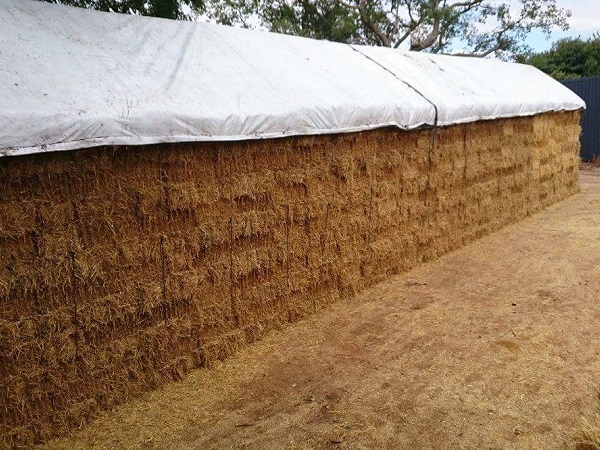
Competing market pages commonly focus on mil thickness, black-and-white film and standard sizes. For B2B projects, the base fabric, coating adhesion, weldability and edge design are equally important.
PVC coated polyester is suited to repeated handling, welded finished covers, reinforced fixing systems and applications where a longer reuse cycle is expected.
Reinforced PE tarpaulin is lighter and can be practical for large seasonal covers, price-sensitive stock programs and situations where easy manual deployment is the priority.
The cover should be selected as part of the storage setup, with realistic expectations for weather, movement, fastening and maintenance.
Coated or laminated construction helps limit direct rain and splash exposure. Finished-cover performance also depends on seam design, slope and edge sealing.
UV-stabilized formulations can be discussed according to region, exposure period, color and expected service cycle.
Reinforced base fabric supports pulling, tie-down tension and wind load. Extra reinforcement is placed where loads concentrate.
Corner patches, wear strips or webbing can be added where a tarp crosses bale edges, walls, frames or rough ground.
Heavier is not automatically better. Cover area, crew size, folding method and deployment frequency should guide the weight range.
Smoother coated surfaces are easier to wipe or wash than open-texture materials. Cleaning agents should be checked against the selected coating.
DERFLEX can supply roll goods, welded panels and finished covers. The images below are existing DERFLEX agricultural product images included with simple local paths in this independent package.
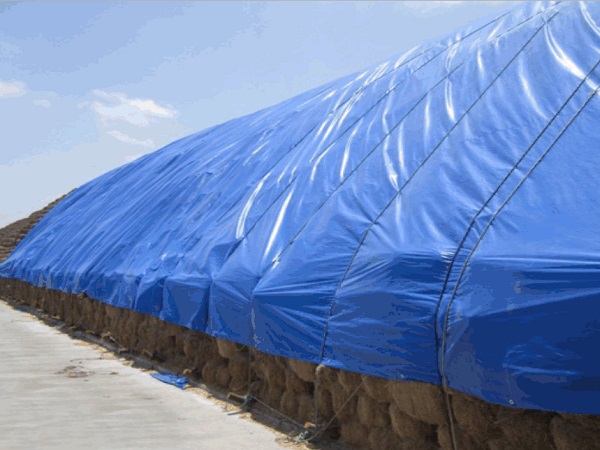
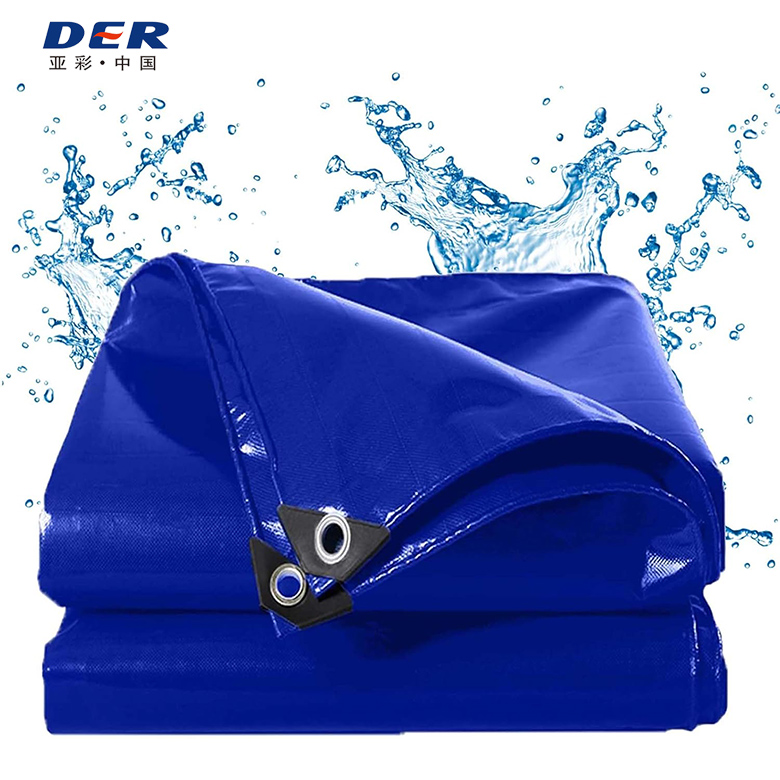
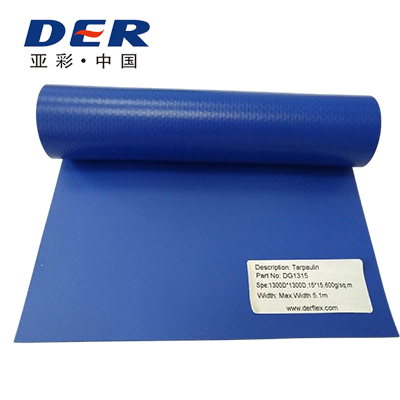
The ranges below are quotation directions, not a universal finished specification. Final values are confirmed according to application, tests, quantity and production agreement.
| Parameter | Typical direction | Selection logic |
|---|---|---|
| Product form | Roll goods, cut panels, welded covers, finished custom tarps, OEM size programs | Choose according to whether fabrication is completed by DERFLEX or the buyer. |
| Material | PVC coated polyester, PVC laminated fabric, reinforced PE tarpaulin or project-specific cover structure | PVC supports repeated use and welding; PE supports lighter seasonal coverage. |
| Weight direction | Approx. 300–900 gsm for common coated/laminated directions; custom structures available | Consider cover area, handling frequency, wind, abrasion and target service cycle. |
| Width and size | Common roll widths and custom welded finished dimensions | Finished size should include stack profile, overlap, slope, anchoring and access requirements. |
| Color | Blue, green, white, silver, black, brown, two-tone or custom color | Color may support heat reflection, visual coding, branding and local market preference. |
| Surface | Glossy, matte, embossed or application-specific finish | Balance cleanability, friction, appearance and fabrication needs. |
| Performance options | Waterproof, UV-stabilized, cold-resistant, anti-mildew, flame-retardant or printable directions | Options depend on application and should be confirmed with test methods and acceptance values. |
| Edge construction | Welded hem, stitched-and-welded hem, rope hem, webbing, reinforced corners and wear patches | Edge structure is designed around the fastening system and expected wind load. |
| Fixing hardware | Grommets, D-rings, straps, buckles, keder or customer-defined hardware | Spacing should reflect cover size, load direction and site installation practice. |
| Branding and packing | Logo print, sewn label, carton mark, barcode, instruction sheet, pallet packing | Available for wholesale and private-label programs subject to order details. |
Important: confirm direct feed-contact requirements, local regulatory expectations and any requested third-party test before placing the production order.
Application language is kept practical: what is being protected, how long it stays outside and how the cover is installed.
Seasonal or long-duration rain protection for rectangular and round bale storage, with reinforcement at high-friction corners.
Temporary field or yard coverage where water shedding, clean edges and secure anchoring are required.
Weather barriers over palletized feed, bulk bags or storage zones, with access flaps and handling-friendly fastening.
Reusable covers for daily agricultural handling, feed preparation areas and farm storage yards.
Custom sizes for short-term transport protection, loading areas and movable feed stock.
Heavy cover or protective top layer used with a separately designed oxygen-barrier and sealing system.
Repeatable size, color and packaging programs for agricultural distributors and importers.
Panels shaped around retaining walls, bunker layouts, access points, frames or project drawings.
A controlled specification helps reduce sizing mistakes, weak fixing points and inconsistent repeat orders.
Provide top, side and end dimensions, stack height, slope, access points and surrounding obstacles.
Confirm sunlight, rainfall, wind, temperature, installation duration and handling frequency.
Match PVC or PE material, weight, yarn, surface and functional options to the duty level.
Set seam direction, overlap, webbing, wear patches, grommet spacing, rings and straps.
Confirm sample, drawing, packing and inspection criteria before bulk production and reorder control.
Standard retail pages are useful when a buyer needs a known size immediately. A manufacturing program is more suitable when the buyer needs controlled material, repeat dimensions, reinforced finishing, private label or ongoing supply.
| Buyer concern | Standard stock cover | DERFLEX custom supply direction |
|---|---|---|
| Dimensions | Fixed listed sizes | Finished size planned from stack geometry, overlap and fastening. |
| Material control | Available grade selected from inventory | Weight, base fabric, coating/lamination and outdoor options agreed by specification. |
| Reinforcement | General edge treatment | Webbing, patches and hardware positioned around actual load points. |
| Brand program | Usually seller-branded or unbranded | Logo, label, carton, barcode and pallet plan for qualified OEM orders. |
| Repeat orders | Stock may change between purchases | Approved specification and production documentation support consistency. |
| Technical discussion | Often centered on size and price | Application, exposure, fabrication, testing and total handling cycle are reviewed together. |
Instead of using broad certification language, the order should identify the performance item, test method, acceptance value and document required by the buyer.
Material identity, width, weight direction, surface, color and process settings can be controlled according to the approved specification.
Finished size, seam continuity, edge reinforcement, hardware position, visual condition and packing can be included in the inspection plan.
Tensile, tear, adhesion, waterproofing, UV aging, cold resistance or other tests may be discussed when a method and target are provided.
Labels, lot identification, carton marks, pallet details and buyer-specific records can support repeat orders and distribution control.
Third-party testing can be arranged or reviewed where required, subject to the selected material, laboratory scope, cost and lead time.
Feed-contact, restricted-substance or destination-market requirements must be stated before material approval; applicability is not assumed from a generic tarp grade.
Six closely related pages strengthen topical navigation without separating minor keyword variations into duplicate pages.
Answers focus on selection and purchasing decisions rather than promotional claims.
PVC coated polyester is often selected for heavy-duty reusable covers, welded panels and reinforced fixing systems. Reinforced PE tarpaulin is lighter and may suit large seasonal covers or price-sensitive programs. The correct choice depends on cover area, exposure, handling and target service cycle.
Yes. DERFLEX can review finished dimensions, seam layout, overlaps, access flaps, edge reinforcement, grommet spacing, D-rings, straps and packing. A simple top, , side and end drawing is useful for reducing dimensional misunderstandings.
Not automatically. Standard industrial tarpaulin is generally intended as a protective cover. Direct feed contact requires confirmation of the exact formulation, intended contact condition, test method and applicable local requirements before production.
A heavy protective tarp can be part of a silage covering system, but it should not be assumed to replace a dedicated oxygen-barrier film or the sealing procedure required for controlled fermentation. Describe the silage system so the layers can be discussed separately.
Choose by duty level rather than one number alone. Consider wind, total cover area, crew handling, contact points, deployment frequency and expected reuse. A very heavy tarp may be durable but difficult to deploy over a large stack.
Provide the application, material preference, finished dimensions or roll width, target weight, color, quantity, edge and hardware details, branding, packing, destination and any required test or document. DERFLEX can then prepare a more relevant quotation direction.
Send DERFLEX the feed type, stack dimensions, exposure period, fastening method and purchase quantity. The team can discuss a practical material, reinforcement and packing direction for your project or supply program.