Finished antistatic flame-retardant mine ventilation duct systems for underground air delivery. Custom diameter, length, coupling, suspension and duct configuration from DERFLEX.
A complete flexible duct assembly for supplying or extracting air in underground mines, headings, shafts and tunnels—configured around airflow pressure, static-control, flame-retardant performance and installation method.
This page describes the finished duct product, including the duct body, welded seams, suspension system, couplings and optional fittings. Final performance is confirmed against the project specification and requested test method.
Finished Duct, Ready for System IntegrationDiameter, section length, coupling, suspension, reinforcement and color can be matched to the underground ventilation plan.
Antistatic ConfigurationConductive or static-dissipative formulation selected according to the required resistance limit and test method.
Flame-Retardant OptionMaterial and finished seams can be developed around the project’s specified flame test and regulatory route.
300–3000 mm Reference RangeLarge-diameter and non-standard duct sections are available after fan, pressure and site-layout review.
Multiple Connection SystemsZipper, hook-and-loop, end ring, eyelet or project-specific coupling arrangements.
Built as a ventilation component
Mine Ducting Designed Around the Whole Air Route
Underground auxiliary ventilation depends on more than the surface properties of a coated textile. A finished mine ventilation duct must carry the designed airflow, remain manageable during installation, retain acceptable leakage performance at every seam and connection, and suit the available headroom and hanging points.
DERFLEX develops the duct as an integrated assembly. The body is formed from reinforced PVC-coated technical textile, while high-frequency or hot-air welded seams create continuous sections. Suspension fins, patches or clasps are positioned for the actual support spacing. Couplings are selected to balance installation speed, joint leakage, maintenance access and route changes.
For coal mines or other locations where combustible gas or dust may be present, antistatic and flame-retardant requirements must be specified before production. DERFLEX can align the material recipe, seam construction and test plan with the buyer’s applicable standard, but site approval remains subject to the local authority, mine operator and project engineer.
Duct bodyPVC-coated woven or knitted reinforcement selected by pressure, weight and handling target.
Welded longitudinal and circumferential seamsSeam layout is coordinated with section length, diameter and required pressure class.
Suspension systemSingle or double fins, suspension patches, clasps or custom hanging details.
Coupling systemZipper, hook-and-loop, steel/end ring, eyelet lacing or a specified proprietary connection.
Reinforcement when requiredSpiral wire or ring support for suction duty, negative pressure or shape retention.
Fittings and route transitionsT-pieces, Y-pieces, reducers, fan adaptors, elbows and repair sections can be discussed.
Three duct structures
Select the Structure by Pressure Direction and Underground Clearance
The safest commercial decision is not to force one duct type onto every route. DERFLEX can configure the finished product according to how the fan moves air, how much headroom is available and how often the route will be extended or relocated.
Layflat Forcing Duct
A collapsible positive-pressure duct for delivering fresh air to headings and active work zones. It packs compactly and can be extended in sections as development advances.
Positive-pressure air delivery
Low transport and storage volume
Fast section replacement
Common choice for mine and tunnel headings
Spiral-Reinforced Duct
A wire-supported configuration that maintains an open passage under suction duty and can also be used where the route requires bend stability or shape retention.
Suitable for extraction or negative pressure
Helix pitch matched to flexibility target
Useful for fumes, dust and contaminated air removal
Custom end cuffs and fan adaptors
Oval / Low-Headroom Duct
A shaped duct option for drifts, service corridors or mobile-equipment routes where a conventional round duct would reduce clearance.
Improves usable headroom
Can follow constrained tunnel geometry
Suspension pattern engineered for shape control
Project-specific dimensions and chamber design
Reference specification window
Technical Range for Project Discussion
The values below combine the referenced Alibaba product attributes with common mine-duct configurations reviewed in the market. They are not a universal guaranteed specification; DERFLEX confirms the final values in the quotation, sample approval and purchase specification.
Finished product
Flexible mine and tunnel ventilation duct assembly
Includes body, welded seams, suspension and coupling; fittings are optional.
Primary application
Mining, underground machinery areas, tunnels and civil works
Forcing or extraction duty must be stated.
Nominal diameter
300–3000 mm reference range
Smaller, larger or oval dimensions can be evaluated by project.
Section length
5, 10, 20, 30, 50 or custom lengths
Long sections reduce joints; shorter sections are easier to handle and replace.
Duct construction
Layflat, spiral-reinforced or oval / chambered
Selected according to positive pressure, negative pressure and headroom.
Base structure
Woven or knitted polyester reinforcement with PVC coating
Fabric architecture and coating weight depend on the performance target.
Finished weight
Project based; 400–900 g/m² is a common discussion range
Higher weight does not automatically mean a better duct; pressure, tear and handling must be balanced.
Antistatic target
Project specified; <3 × 10⁸ Ω is a common reference
Test method, sampling plan and acceptance limit must be stated in the order.
Wind / internal pressure resistance
Common project reference: 3000–5000 Pa
Actual working pressure depends on diameter, construction, seam layout and safety factor.
Color
Yellow, orange, black or custom
Color matching is subject to batch and minimum quantity.
Coupling
Zipper, hook-and-loop, end ring, eyelet or custom
Joint design affects installation speed and leakage control.
Suspension
Single / double fin, patch, clasp or custom
Spacing should reflect diameter, duct weight, pressure and site support interval.
Flame-retardant route
Configured to the buyer’s specified test standard
Examples in the market include DIN 4102 B1, EN classifications and NFPA 701; applicability must be verified.
Performance priorities
Features That Matter After the Duct Goes Underground
Procurement value is measured by installed behavior, maintainability and consistency—not by one headline number. These are the performance areas DERFLEX reviews during product configuration.
01
Static-Control Strategy
Conductive components and surface formulation can be selected to reduce static charge accumulation, with the target resistance and test procedure documented before production.
02
Flame-Spread Limitation
Flame-retardant formulation is developed around the requested standard. The buyer should specify whether approval applies to the coated textile, the finished duct, or both.
03
Controlled Air Leakage
Continuous welding, suitable overlap and practical coupling design help preserve airflow over long auxiliary ventilation routes and reduce avoidable fan-energy loss.
04
Tear and Seam Strength
Base reinforcement, welding parameters and suspension details are coordinated so local loads at joints and hanging points do not become the weakest part of the assembly.
05
Underground Handling
Section length, weight and packing format can be adjusted for shaft transport, storage space, installation crew size and the frequency of duct-line extension.
06
Repairable Modular Route
Replaceable sections, practical couplings and compatible repair material help maintenance teams isolate damage without removing the entire duct line.
Product and application images
Flexible Ducting for Mine and Tunnel Air Routes
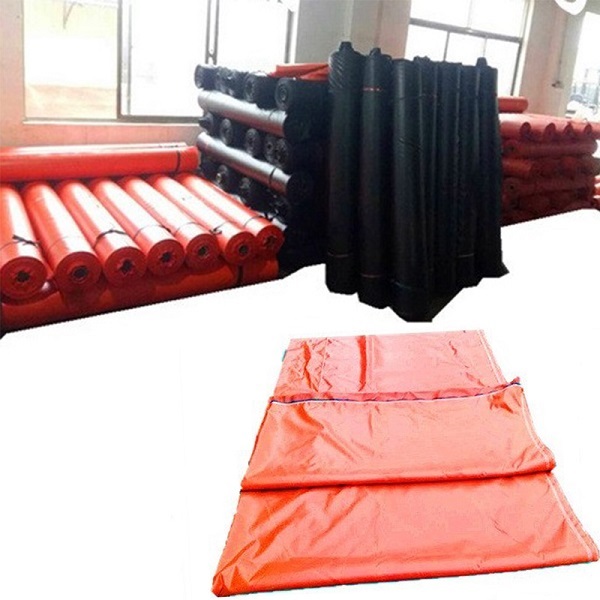
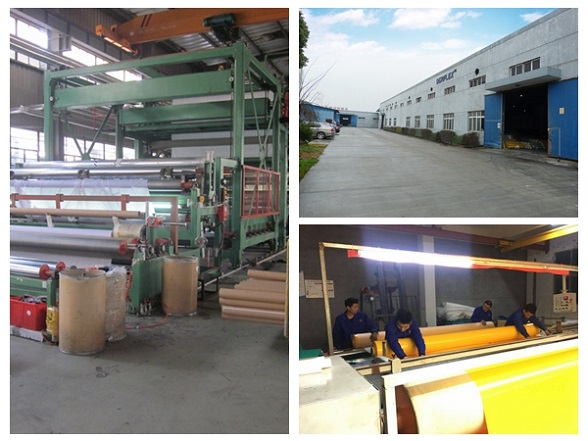
DERFLEX website imagery is used below to show finished duct forms, underground installation examples and factory production context.
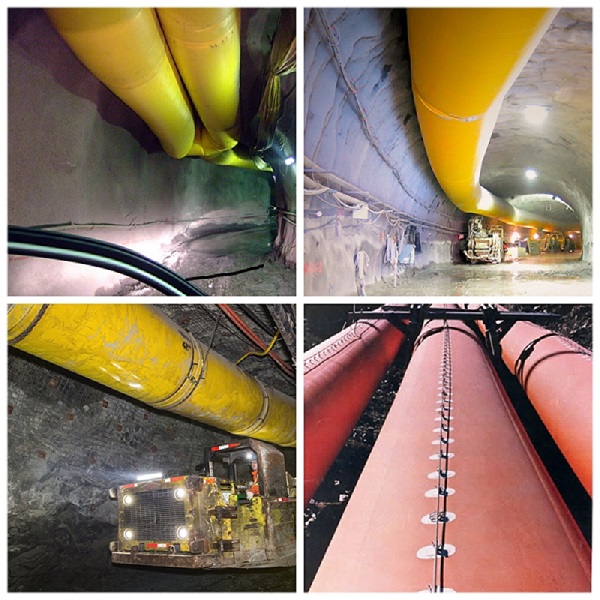
Underground duct routes require practical suspension, controlled joints and enough flexibility to follow development headings and mobile equipment zones.
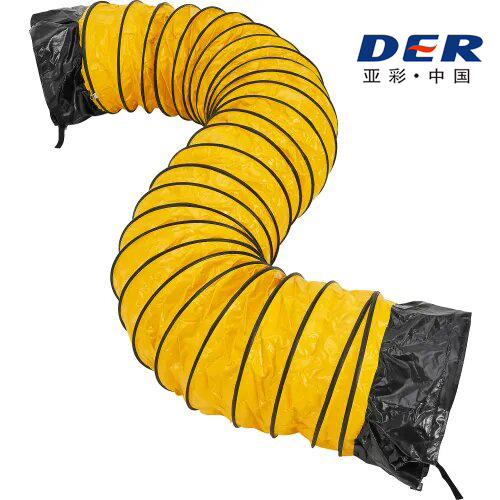
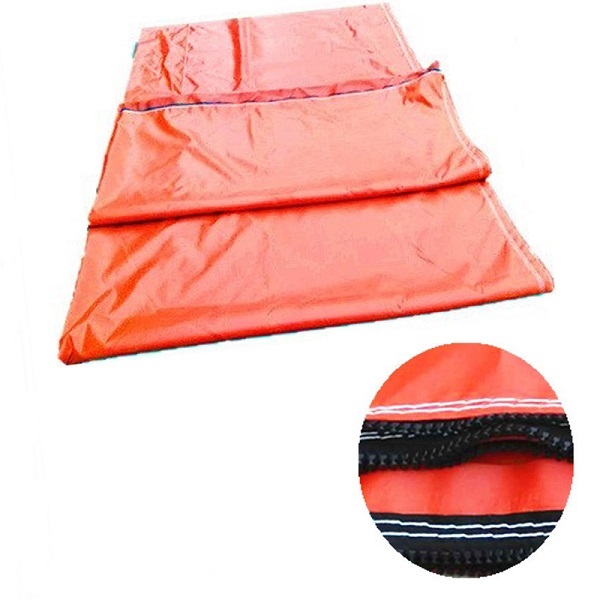
Finished layflat section with fabricated coupling and reinforced edge detail.Section length, color and packing can be organized for project installation and replacement planning.
Underground applications
Where Antistatic Flame-Retardant Ducting Is Commonly Specified
The appropriate duct configuration varies by hazard classification, airflow duty and route geometry. The following scenarios are typical starting points for engineering discussion.
Coal Mine Headings
Fresh-air delivery to development faces where gas and dust conditions require a defined antistatic and flame-retardant procurement route.
Metal and Hard-Rock Mines
Auxiliary ventilation for drilling, blasting, loading and haulage areas where abrasion, relocation and long duct runs affect product selection.
Shaft Sinking and Raise Work
Vertical or inclined installations that demand carefully planned suspension, manageable section weights and secure connection details.
Road, Rail and Metro Tunnels
Temporary fresh-air supply and fume extraction during excavation, lining, welding and equipment maintenance.
TBM Support Ventilation
Long, progressive routes where fewer joints, specialized couplings and planned repair sections can simplify installation logistics.
Underground Workshops
Local extraction or supply around maintenance bays, charging areas and enclosed machinery spaces.
Dust and Fume Extraction
Spiral-reinforced suction ducting for contaminated air removal where the duct must remain open under negative pressure.
Emergency and Temporary Routes
Portable sections for planned shutdown work, route diversion or temporary ventilation while permanent infrastructure is serviced.
DERFLEX project support
From Coated Textile Control to Finished Duct Fabrication
DERFLEX combines coated technical-textile experience with finished flexible-product fabrication. For mine duct programs, that allows the discussion to move from a generic material request to a coordinated product specification covering the body, welds, attachments, couplings and packaging.
The practical advantage for distributors, ventilation contractors, fan suppliers and mine operators is a single development path: provide the airflow and site constraints, approve the construction and sample, then maintain the same agreed specification for production orders.
01
Requirement reviewAirflow direction, fan pressure, diameter, route length, safety standard and installation restrictions.
02
Construction selectionLayflat, spiral or oval form; textile reinforcement; coating weight; seam and coupling design.
03
Sample and test planConfirm dimensional details and arrange requested material or finished-product tests where applicable.
04
Production and inspectionCheck dimensions, seam workmanship, attachments, connection compatibility, appearance and packing.
05
Export packing and documentationOrganize section identification, packing marks, accessories and agreed quality documents for delivery.
Procurement guidance
How to Compare Mine Ventilation Duct Quotations
Two quotations can show the same diameter and nominal weight while describing substantially different finished products. Compare the details that influence safety documentation, leakage, installation time and maintenance cost.
Ask what is actually tested
Confirm whether the report covers the coated textile, the finished duct, the seam, or only a raw-material formulation. Match the report to the local approval pathway.
Compare seam and suspension details
Finished strength depends on weld width, seam layout, reinforcement and attachment spacing—not only on the tensile value of the base fabric.
Review leakage at the connection
Long routes multiply the effect of every joint. A fast coupling may not be the lowest-leakage option, so balance speed, maintenance and airflow efficiency.
Check pressure with the proposed diameter
Pressure capability should be linked to the final diameter, construction and safety factor. A generic value without configuration detail has limited engineering meaning.
Plan section replacement
Specify identification marks, repair material and spare sections so damaged duct can be isolated and replaced without disrupting the complete route.
Define documentation before ordering
List the required inspection record, test report, certificate language, batch traceability and packing marks in the purchase contract.
Project workflow
From Airflow Data to a Manufacturable Duct Specification
Clear inputs shorten quotation time and reduce the risk of receiving a finished duct that is incompatible with the fan, route or local approval process.
STEP 01
Send Route Data
Share mine type, country, fan data, forcing or suction duty, route length, diameter and available headroom.
STEP 02
Confirm Safety Criteria
Identify the antistatic limit, flame-retardant standard, report requirement and approval authority.
Is this product a finished mine ventilation duct or only duct fabric?
It is offered as a finished flexible ventilation duct assembly. The quotation can include the fabricated duct body, welded seams, suspension details, couplings and optional fittings. Roll fabric can be discussed separately, but it is not the product focus of this page.
What does antistatic flame-retardant mine ducting mean?
It means the duct is configured to reduce static charge accumulation and limit flame spread according to specified test criteria. The exact resistance limit, flame test, sampling method and acceptance requirement must be agreed before production.
Can DERFLEX supply ducting for both positive and negative pressure?
Yes. Layflat ducting is commonly used for positive-pressure forcing systems. Spiral-reinforced ducting can maintain an open passage under suction or negative pressure. The fan duty and pressure should be supplied for construction review.
What diameter and length can be customized?
A 300–3000 mm diameter range is a useful project reference, with common section lengths from 5 to 50 m and longer custom sections possible. Final feasibility depends on duct form, pressure, handling and manufacturing details.
Which coupling system should I choose?
Zippers support fast installation; hook-and-loop systems are simple to handle; end rings and eyelet systems can suit robust project connections. The best choice depends on allowable leakage, installation speed, maintenance and compatibility with existing duct sections.
Can you provide T-pieces, Y-pieces, reducers and fan adaptors?
Project-specific fittings can be discussed. Send drawings or dimensions for branches, reducers, transitions, elbows, fan adaptors and end closures so the interface can be reviewed before quotation.
Are flame-retardant certificates automatically included?
No single certificate is automatically suitable for every country or mine. State the required standard, laboratory, sample type, report language and whether the test must apply to the textile or finished duct. Availability and cost are then confirmed in the offer.
What information is required for a quotation?
Please provide the country and mine type, forcing or suction duty, fan airflow and pressure, duct diameter, total route length, section length, coupling, suspension spacing, antistatic limit, flame standard, color, fittings and order quantity.
Can the duct be supplied with private labeling or project identification?
Custom markings, section numbers, color coding, packing labels and private-label arrangements can be discussed for qualifying production orders.
Send the Fan Data Before You Compare the Duct Price.
DERFLEX can prepare a project-based proposal covering finished diameter, duct structure, section length, coupling, suspension, antistatic target, flame-retardant test route and fittings.