


Boat Cockpit Tarp Enclosures with Clear Window Panels
Boat cockpit enclosures combine transparent windows, fabric borders and removable connections to shelter an occupied cockpit while retaining a view outside. For marine canvas shops, cover makers and OEM buyers, DERFLEX supplies clear PVC film and PVC coated fabric for enclosure fabrication. Start with the sightlines, opening layout and existing attachment points, then specify the materials around the way each panel will be used.
Weather protection around the cockpit. Visibility through it.
A boat cockpit enclosure is a set of fitted panels connecting a top or frame to the cockpit perimeter. Clear window sections preserve the view; fabric borders carry seams, zippers and fastening details.
Side curtains, an aft curtain, a bimini enclosure and a camper-style enclosure may share similar materials, but their patterns and attachment geometry differ. A replacement window also has to match the surviving fabric, zipper and fastener positions.
A mooring tarp covers an unoccupied boat for storage. A cockpit enclosure surrounds usable space and needs an access and ventilation plan. For storage-cover sourcing, see the separate boat cover tarp options.
One panel. Several decisions that affect fit.
Map the viewing area, fabric border and opening before choosing a roll width or committing to a cutting pattern.
Clear window
Locate sightlines first. Keep avoidable seams and opaque borders away from critical viewing areas; review distortion on a fitted sample.
Fabric border
Reserve usable width for joining and reinforcement. Colour and stiffness affect the finished panel as well as its appearance.
Opening & zipper
Mark the opening direction, slider access and mating zipper details. A replacement half must match more than nominal zipper size.
Lower attachment
Record the actual fastening centres, drain paths and contact points. The clear film should not carry concentrated fixing loads directly.
For removable access concepts and connection planning, explore custom tarps with zippers. Marine hardware suitability and the finished attachment design require project-specific review.
Choose the window and the border as a working pair.
Thickness alone cannot establish whether a clear panel will work on a boat. Evaluate transparency, stiffness, cold handling and the intended joining process together. DERFLEX’s clear vinyl film range is the starting point for a material discussion, rather than proof that every film grade suits exposed marine use.
| Panel requirement | What to specify | What the sample must resolve |
|---|---|---|
| Viewing through the window | Clear PVC grade, surface finish and the required viewing area. | Haze, optical distortion and surface marks in actual daylight, at the installed angle. |
| Frequent opening or removal | Panel dimensions, handling method, material flexibility and storage arrangement. | Whether the panel can be handled without creasing, dragging or stressing the window-to-border joint. |
| Outdoor exposure | Sun exposure, climate, minimum handling temperature and any required weathering evidence. | The selected formulation and available test evidence; no service-life assumption from a generic “UV resistant” label. |
| Opaque border & lower band | Coated-fabric construction, colour, stiffness and the joining allowance in the drawing. | How the border fits curves and distributes local loads at the chosen attachment points. |
| Sewn or welded assembly | Actual film/fabric pair, joining process and seam design. | A joint made using the intended equipment and process, including leakage and handling checks. |
| Replacement curtain | Full-size pattern, panel identification, zipper reference and existing fastener positions. | Compatibility with the retained top and adjacent curtains, verified on the boat. |
On smaller screens, scroll the table horizontally to compare all three columns.
Clear PVC, isinglass and rigid glazing
“Isinglass” and “eisenglass” are commonly used for flexible clear boat curtains. The name alone does not identify the resin grade, protective coating or optical performance. Rigid acrylic and polycarbonate are different glazing systems and need their own installation details.
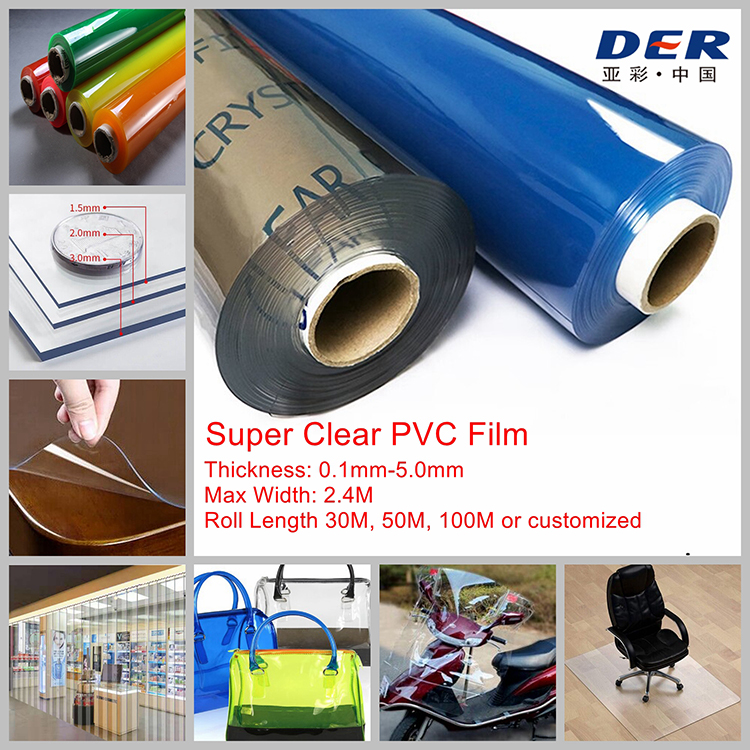
Compare the available super clear PVC film options, then request evidence for the specific grade being considered. Do not assume branded scratch-resistant glazing or an equivalent coating is included.
Border fabric is part of the specification
PVC coated polyester provides a reinforced opaque material for borders and cover components. Window film and reinforced fabric behave differently, so their joint needs a trial rather than an assumption of compatibility.
Review PVC coated fabric construction and state whether your fabrication process is sewing, welding or a combination.
Record thickness in millimetres and define any gauge terminology. For unit conversion, 1 mil = 0.0254 mm; this is not a recommended marine thickness.


A useful drawing starts at the attachment line.
Identify each section
Label port, starboard, forward and aft panels, with the inside face and top edge marked. Add boat make, model and year as context; they do not replace a pattern.
Record geometry from fixed reference points
Show the top and bottom edges, height at several positions, corner shapes and diagonals. Mark fastener centres from a common datum. Separate finished dimensions from seam and fabrication allowances.
Describe the retained connections
Photograph tracks, windshield interfaces and zipper ends. Include dimensions and a mating sample where practical. An old curtain can stretch or shrink, so cross-check its pattern against the existing boat.
Plan access and panel handling
Locate the doorway, removable sections and ventilation openings. Show where an opened panel is supported or stored and where fabric contacts tubing or other hard surfaces.
Approve the material, the joint and the fit.
For a custom boat enclosure project, a loose film swatch answers only part of the question. Agree a sample plan with your fabricator before cutting a full set or placing a repeat material order.
A usable viewing sample
Inspect against a distant straight edge and in the intended light. Record appearance, thickness, handling temperature and any grade-specific care instructions.
A representative joined piece
Use the proposed window, border and connection materials together. Check joint appearance, handling, zipper action and the agreed water-spray test.
A trial on the actual boat
Check attachment alignment, access, sightlines and interference. Record changes to the pattern before approving any repeat panel set.
Resolve these details before the pattern is final.
Water follows the whole assembly
A water-resistant sheet does not prove a leak-free enclosure. Review the top-to-side overlap, zipper exposure, window joints and lower edge. Identify a drainage path and agree how the assembled panel will be checked.
Ventilation belongs in the layout
Do not close off required ventilation or block exhaust outlets. Engines, generators and nearby boats can create carbon monoxide exposure around enclosures. Follow the boat builder’s operating instructions and have the layout reviewed by the responsible marine professional.
Reference: US Coast Guard: where carbon monoxide may accumulate.
Keep viewing areas clear
Position opaque seams and fittings with the helm sightline in mind. A material sample does not establish suitability as a windshield or certified safety glazing. The boat builder or marine fabricator must approve the installed viewing arrangement.
Allow for rubbing and storage
Mark tube contact and sharp edges on the drawing. Follow the selected film supplier’s limits for rolling, folding and cold handling. Do not assume every clear window can be tightly rolled or folded like an opaque tarp.
Agree the care method
Use the selected material’s approved cleaning instructions. Remove grit before wiping, avoid abrasive handling and confirm cleaner compatibility. Separate stored panels so fasteners and zipper teeth cannot mark the clear surface.
Define the intended conditions
Dockside shelter, use underway and road transport impose different requirements. There is no speed, wind, snow-load or storm rating stated here. Require the appropriate finished-system approval for your intended use.
Boat cockpit enclosure FAQ
Choose a specification that your fabricator can make, fit and maintain.
What material is used for clear boat enclosure windows?
Flexible clear PVC is commonly used for soft boat curtains. Some systems use coated clear vinyl, acrylic or polycarbonate. These are not interchangeable: clarity, handling, joining, care and attachment requirements depend on the exact material. Specify the grade rather than relying on the word “isinglass.”
What thickness should a clear cockpit panel be?
There is no single thickness for every boat. Panel size, visibility, flexibility, exposure and the opening method all affect the choice. Start from a validated existing material or test a proposed grade in a representative panel. Thickness on its own does not prove optical quality or outdoor durability.
Can I replace only the clear window?
Sometimes, if the remaining border and connections are sound and the window can be removed without compromising them. Have the fabricator inspect the old material, seams and pattern first. Where the border is distorted or the mating zipper is worn, replacing the complete panel may be more practical.
Does a waterproof material make the enclosure waterproof?
No. Seams, zipper paths, fastening holes and transitions to the existing top can admit water. Set an assembly-level acceptance check and review drainage rather than treating a sheet property as a guarantee for the completed enclosure.
Can DERFLEX quote a complete ready-to-fit enclosure?
DERFLEX’s documented supply includes clear PVC film and coated-fabric materials. For cut or assembled cockpit panels, submit a pattern and requested scope for review. A quotation must confirm the included operations and components; frame engineering, local measuring and on-board installation are not implied.
What affects price, minimum quantity and lead time?
Film grade, fabric construction, usable width, cutting yield, any agreed assembly, hardware, packing and order scale affect the quotation. Send your quantity, drawing and destination. Obtain the actual minimum quantity and production schedule for the approved scope rather than relying on a generic stock-enclosure price.
Bring the panel plan.
Start the material discussion.
Share your application photos, a sketch or an existing sample reference. Tell DERFLEX what you need to buy and how the enclosure will be fabricated, so the quotation can address the right material and supply scope.
Your next step
Include panel dimensions, quantity, window requirements, connection details and destination. Request the relevant sample and documentation before approving production.
Request a Quote