Repeated entry
Create an access door for operators, maintenance teams or inspection.



Create an entry, inspection opening or removable wall without taking down the entire cover. DERFLEX supports custom zippered tarps using PVC coated fabric, optional clear viewing sections and project-matched reinforced edges for industrial partitions, equipment covers and temporary enclosures.
For accurate pricing: send a drawing, finished dimensions, opening layout, quantity and exposure conditions.
Illustrative construction diagram · Actual zipper location, seams and hardware are approved by project drawing.
A tarp with a zipper is a flexible protective sheet or enclosure panel with one or more sewn-in zipper openings that provide repeated access while the main tarp remains installed.
Unlike a conventional fixed tarp, a zippered tarp lets a worker enter a contained area, inspect machinery, remove a section or open a sidewall without unfastening every grommet or tie-down. Common constructions combine PVC coated polyester tarpaulin with locally reinforced zipper tape, an optional weather flap, strengthened corners and a mounting edge.
DERFLEX's broader custom tarp manufacturing options provide the underlying material and fabrication choices; this page focuses specifically on engineering the access opening, zipper load path and removable-panel connection.
Create an access door for operators, maintenance teams or inspection.
Reclose a work-zone partition without dismantling surrounding panels.
Coordinate zippers with adjoining panels, tracks and detachable edges.
Align door orientation, material, corner reinforcement and hardware.
One zipper design does not suit every enclosure. Select the opening geometry from how people or equipment actually pass through the barrier, then choose the fabric, fastening and sealing details around that movement.
A central or offset slit for occasional entry where a full swing opening is unnecessary. Consider an overlap flap and enough slack to prevent the zipper teeth carrying panel tension.
Specify: opening height, zipper start/stop position and left/right access.
Two vertical zippers define a center flap that can be lifted, rolled or secured out of the opening. Useful when doorway width and clear access are more important than a simple slit.
Specify: finished clear width, head retention and rolled-flap restraint.
A three-sided zipper creates a service flap for equipment or a larger working opening. Orientation can be inverted to allow a top, bottom or side-retained flap as required.
Specify: corner radii, flap support and frequent-use reinforcement.
These are available design directions, not pre-approved ratings for every finished tarp. The final construction is established against the drawing, selected materials, approved sample and operating environment.
| Specification element | Selectable direction | What the buyer should confirm |
|---|---|---|
| Main tarp material | PVC coated polyester tarpaulin; clear PVC windows or mixed constructions on request. | Indoor/outdoor exposure, opacity, cleaning, flexibility and abrasion. |
| Fabric weight | Multiple coated-polyester GSM options; heavier grades available according to the tarp duty. | Panel span, frequency of handling, wind exposure and hanging method. |
| Clear zones | Transparent flexible PVC, optionally integrated into opaque tarp panels. | Clarity, thickness, viewing area, edge protection and UV exposure. |
| Zipper configuration | Single zipper slit, dual zipper doorway, U-shaped flap or modular joining zip. | Opening width/height, handing, pull direction, service cycle. |
| Zipper components | Specify heavy-duty zipper chain, slider quantity and pull access by approved sample. | Moisture, dirt, corrosion, wash-down and required cycling. |
| Weather protection | Overlapping protective flap, drainage orientation, covered zipper top and reinforced end stops. | Water approach direction; no exposed zipper should be assumed watertight. |
| Perimeter finishing | Welded or reinforced hems, webbing, ropes, sleeves, grommets, straps, buckles or D-rings. | Support spacing, fixing substrate and load direction. |
| Shape & dimensions | Rectangle, sloped sidewall, stepped panel, equipment-fit shape or drawing-based cut. | Finished size vs cut size; seam allowances and on-site tolerances. |
| Performance options | UV-resistant, cold-flexible, anti-mildew and flame-retardant material directions by requirement. | Exact test method and evidence required in destination market. |
| Supply & branding | Roll material, cut panels, finished tarp, sample, OEM label or bulk packaged order. | Quantity, approval protocol, packaging and destination. |
For the parent fabric family, see DERFLEX PVC tarpaulin material and coating options. No fixed minimum order, lead time, zipper strength, fire classification or leak rating is implied without a confirmed project specification.
Prioritize practical flexibility and easy manual access; confirm the support of a large panel independently of fabric weight.
Prioritize smooth zipper travel, low-friction alignment, replaceability and reinforcement where sliders stop.
Prioritize full-system mounting, covered zipper edges, water shedding and tested site-specific loads.
Choosing a zipper before selecting the base material can lead to a mismatched system. A very stiff fabric can make an entry flap awkward to fold; a highly flexible fabric may need more local reinforcement around the zipper tape and corner transitions.
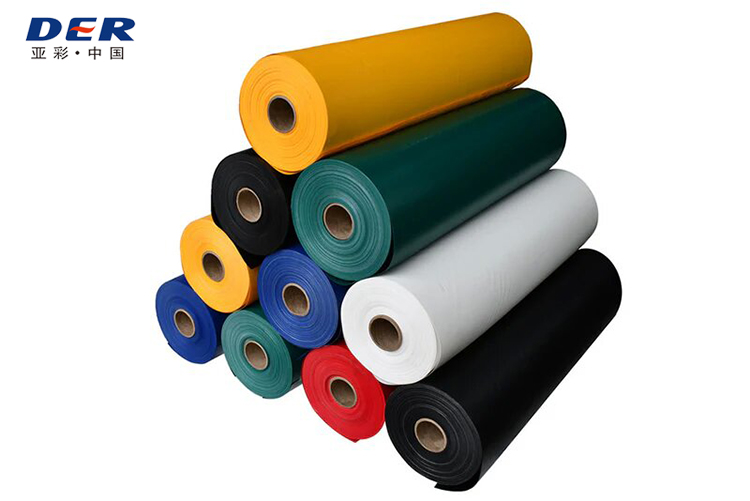
DERFLEX's waterproof coated tarp materials are available in multiple colors and coating constructions. Buyers should compare tear resistance, coating adhesion, weldability and handling behavior alongside zipper quality. For high-stress or repeated outdoor use, review the heavy-duty tarp selection range.
Buyers use zipper access when an enclosure must remain in place between visits but open quickly for people, inspection or routine work.
Create an operator entry in a flexible dust or splash partition. Define traffic frequency, visibility and suspension system before selecting the zipper position. Review related industrial curtain solutions.
Add a local service flap for visual checks, adjustments or scheduled maintenance without lifting the entire cover. Keep openings clear of moving and hot machine parts.
Use an access flap or double zipper doorway in temporary wall panels. Specify frame anchoring, wind exposure, egress and applicable site safety requirements.
Combine opaque perimeter fabric with optional clear viewing areas and a pedestrian zipper opening. Plan bottom restraint, flap roll-up and rain runoff.
Provide periodic access to stored equipment while avoiding repeated dismantling of perimeter fasteners. Reinforce the lower edge for abrasion and handling.
Create repeatable zip-on/zip-off sections for portable structures, displays or specialized industrial products. Lock zipper alignment and panel identification in the technical specification.
The frequent failure is rarely the idea of the zipper itself. It is an unbalanced load, inadequate reinforcement, an unsuitable zipper orientation or water collecting at the opening. Plan the full system before cutting fabric.
Where will the user stand? Which side opens? Will the panel roll or fold when the opening is clear?
Route suspension and wind tension into hems, webbing and frame fixings—not the zipper chain.
Use overlaps, outward-facing flaps and runoff where rain can reach the closure. Test the assembled system.
Check zipper glide, end-stop stress, dimensions, flap restraint and finished installation before bulk production.
Further process context: Custom tarps for industrial use — materials and fabrication options.
Not every opening should use a zipper. Match closure choice to access frequency, contamination, speed of operation and the extent of the gap that must be controlled.
| Decision factor | Zipper access | Hook-and-loop closure | Loose overlap flap |
|---|---|---|---|
| Best fit | Defined, repeatable access opening | Quick, lower-stress detachable sections | Simple pass-through or low-containment boundary |
| Closure alignment | Needs well-aligned chain and stable panel geometry | Tolerates some alignment variation | No exact mating hardware required |
| Dust and dirt | May obstruct zipper teeth; clean regularly | May accumulate fibers and debris | Few moving components |
| Weather protection | Requires protective flap and system detailing; not intrinsically watertight | Depends on overlap, tension and placement | Gaps remain under wind pressure |
| Procurement priority | Track type, pull side, end stops and reinforced tape | Hook/loop grade, width and cleaning needs | Overlap width and restraints |
Price accuracy improves when the purchase drawing identifies the functional opening—not just the outer tarp dimensions.
This page intentionally uses a quote-page link rather than a nonfunctional form.
DERFLEX is a manufacturing-based supplier of PVC coated textile and custom tarpaulin materials for international B2B programs. For zipper access projects, this allows the material choice, opening geometry, finishing details and OEM repeat-order documentation to be considered together.
For a high-reliability industrial order, we recommend sample approval for the combined fabric-and-zipper construction, then controlled drawings and component references for future production. Claims about zipper life, assembly sealing or regulatory compliance must be tied to the actual approved configuration.
Discuss coated polyester, clear vinyl, finish and handling characteristics together.
Coordinate zipper position with hems, seam allowance, window placement and mountings.
Color, markings, labels, packaging and repeat panel identification by requirement.
Share drawings, samples and inspection expectations before ordering project quantities.
Yes. A waterproof PVC-coated tarp can be fabricated with a zipper opening. However, a standard zipper is not automatically waterproof. Rain resistance at the opening depends on zipper protection flaps, seam construction, orientation, drainage and installation. Confirm the required sealing level before manufacture.
They can be, when the fabric grade, opening reinforcement, anchoring, protective flaps and environmental exposure are selected together. Wind loads must be carried by the supported tarp structure, not by the zipper teeth. Outdoor performance of the finished assembly needs project-specific review.
A single vertical zipper can work for a narrow entry; a double zipper arrangement gives a defined roll-up access flap; a U-shaped zipper is useful for a wider maintenance opening. The right layout depends on the required clear opening, direction of operation, traffic frequency and ability to secure the opened flap.
Yes, with compatible components and local reinforcement. The critical design issue is how the zipper tape is joined to the heavier fabric and how stress is redirected around the opening. A prototype or sample should be checked for folding, glide, end-stop stress and seam integrity.
Clear PVC sections can be discussed for visibility and light, either as the main panel or as a window in an opaque PVC enclosure. Reinforcement at the zipper edge should be planned carefully because clear sheet and coated polyester do not have identical tear and stretch behavior. See clear tarp material options for the related material family.
They can be designed for modular removal, but a zippered access door and a fully detachable panel are different assemblies. Removable panels need compatible zipper alignment, secure secondary support and a documented installation sequence. Confirm whether the intention is door access, panel replacement or seasonal dismantling.
Project prices and order quantities depend on the material, panel geometry, zipper components, reinforcement, fabrication process and total quantity. DERFLEX can review custom requirements, but no universal zipper-tarp price, MOQ or delivery time should be assumed without a quotation.
Provide the finished tarp width and height; the clear access opening; zipper start, stop and path; desired handing or slider side; mounting-point drawing; quantity; and indoor/outdoor conditions. Photos of the frame and a dimensioned sketch are especially useful.
Send your application, sketch, finished panel and door dimensions, material preference, zipper layout, quantity and destination. DERFLEX can review the construction direction and prepare a project-based quotation.