News
Industry News

Disaster Relief Tarpaulin Manufacturer | Custom Emergency Tarps | DERFLEX

Update:2026/7/17 20:10:45 Views:
DERFLEX logo Emergency Cover Materials
PE · Reinforced PE · PVC Coated Polyester Request A Quote

Response-ready tarpaulin programs

Disaster Relief Tarpaulin Built Around Deployment

DERFLEX supplies custom disaster relief tarpaulin materials and finished covers for emergency shelter, damaged-roof protection, aid distribution, temporary partitions and weather-sensitive relief cargo. Buyers can choose lightweight PE for rapid issue, reinforced relief grades for stronger fixation, or reusable PVC coated polyester for heavy-duty response inventory.

4×5 m / 4×6 m Common project-size directions; custom dimensions available.
PE or PVC Material selected by response period, handling and budget.
Reinforced fixing Hems, bands, eyelets, rope, webbing and corner patches.
Bulk-ready Folded units, kits, cartons, bales, pallets and private labels.
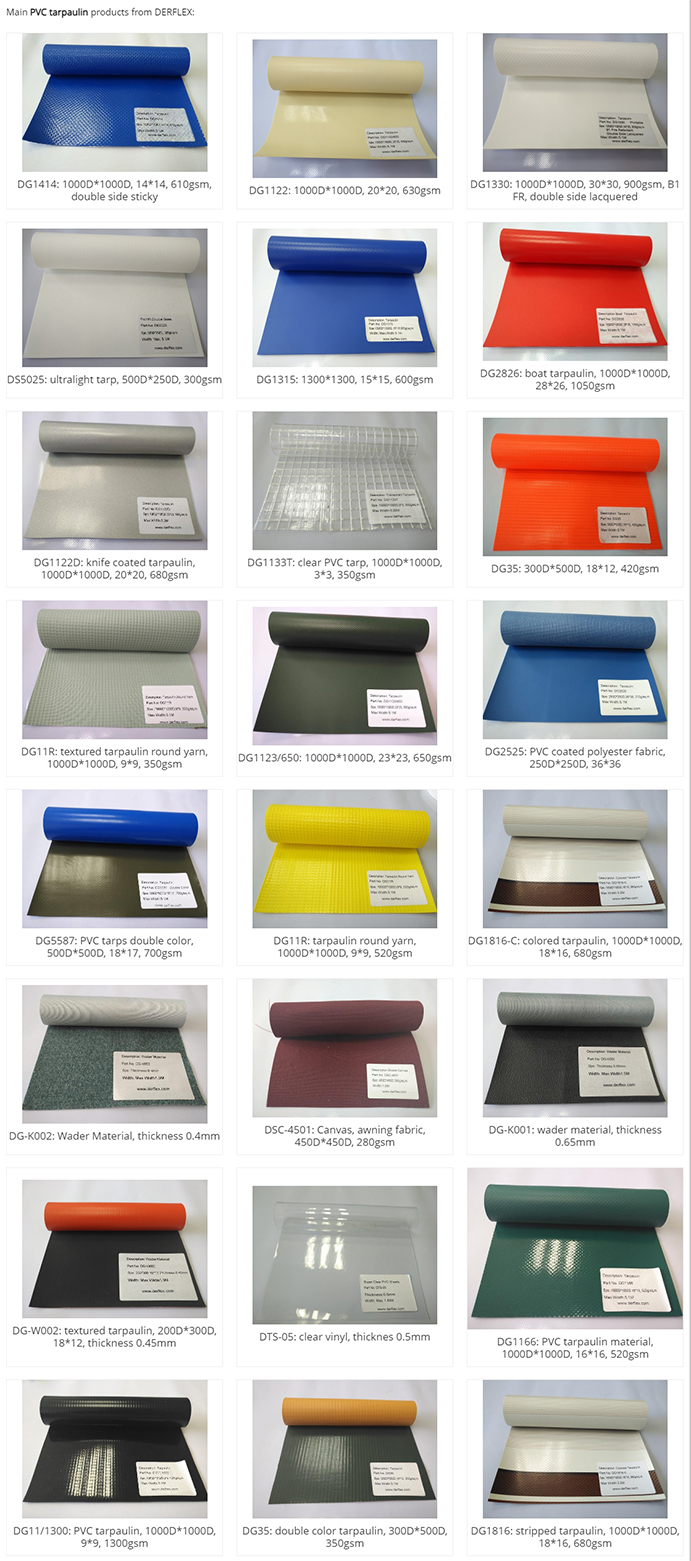
DERFLEX tarpaulin material range for disaster relief tarpaulin production
Material selection before bulk production Color, weight, coating, reinforcement and packing are matched to the approved relief-supply brief.
Procurement note Final values are confirmed against the buyer's tender, sample and test method.
Purpose before product

A Relief Tarp Is Part of a Response System

A disaster relief tarpaulin is a flexible waterproof or weather-resistant sheet used when communities, structures or essential supplies need immediate protection. In the field it may become a sloping roof, a wall enclosure, a privacy screen, a ground barrier, a temporary repair cover or a protected staging area.

For procurement teams, the correct product is not defined by GSM alone. Packed volume affects airfreight and truck loading. Eyelet layout affects installation. Surface color affects heat and visibility. Reinforcement affects how the sheet behaves when pulled, tied and repositioned. The expected response period determines whether an economical PE sheet or a heavy duty disaster relief tarpaulin is the practical choice.

Important: A tarpaulin is a temporary protection component, not a structural building system. Shelter geometry, anchoring, wind exposure, damaged surfaces and installer safety must be assessed by the responsible field team.
Material structure

Three Routes for Different Relief Programs

DERFLEX does not position one material as suitable for every deployment. The structure is selected around handling, exposure, storage density, fabrication and expected service period.

Rapid deployment

Woven PE Tarpaulin

Woven HDPE base with PE coating or lamination for lightweight emergency coverage and large-volume distribution.

  • Compact folded size and practical manual handling
  • Commonly selected for short-term shelter and roof cover
  • White, blue, silver, orange and project colors
  • Sheet or roll supply with custom packing
Reinforced relief grade

Band or Hem Reinforced PE

A stronger PE route using reinforced rims, bands, rope-in-hem, closer fixing points or corner reinforcement.

  • Improved load distribution at attachment areas
  • Suitable for more frequent installation and repositioning
  • UV-stabilized formulations can be discussed
  • Marking, identification stripe and logo options
Heavy duty & reusable

PVC Coated Polyester

Reinforced polyester scrim with PVC coating for professional covers, repeated handling and fabricated relief products.

  • Weldable seams and custom fabricated dimensions
  • Higher abrasion and tear-resistance directions
  • Webbing, D-rings, eyelets and patch reinforcement
  • Suitable for contractor, municipal and industrial stock
Top layer Waterproof coating, color, UV and optional surface treatment.
Core Woven HDPE or high-tenacity polyester base for mechanical strength.
Back layer Protective coating or lamination selected for use and fabrication.

Why the base fabric matters

The coating helps resist rain and surface wear, but the woven core carries tension when a tarpaulin is tied, stretched or exposed to movement. Yarn, density, weave, coating adhesion and reinforcement must work as one system.

For a custom disaster relief tarpaulin, DERFLEX can discuss the balance between finished weight, tensile direction, tear behavior, flexibility, packed size, welding or sewing method and target cost before a sample is approved.

Key performance

Designed for Handling, Fixing and Weather Exposure

Performance should be defined by test method and application. These six areas are commonly reviewed before bulk relief procurement.

01

Rain Protection

Coated or laminated surfaces are designed to resist water penetration. Finished-cover performance also depends on seams, punctures and installation geometry.

02

Tensile & Tear Control

Base-fabric selection and reinforcement help the sheet tolerate pulling, tying, folding and wind-induced movement without concentrating stress at one point.

03

UV Stability

UV-stabilized formulations can be specified for prolonged outdoor exposure. Required aging method and retention value should be agreed before production.

04

Fixation Strength

Eyelets, pre-punched reinforced bands, rope hems, webbing and corner patches can be selected according to the anchoring method and field installation pattern.

05

Climate Flexibility

Material flexibility, cold-crack direction, heat exposure and color selection should be matched to the destination climate and storage conditions.

06

Logistics Efficiency

Fold pattern, unit weight, bale or carton size, pieces per pallet and shipping marks are planned to support storage, loading and fast issue.

Specification table

Compare Typical Disaster Relief Tarpaulin Directions

The ranges below are planning references, not a substitute for an approved tender specification. Final values depend on material, test method and order program.

,
Specification item Rapid-Deploy PE Reinforced Relief PE Reusable PVC
Primary use Fast distribution, temporary shelter, basic roof and cargo cover. Extended temporary shelter, stronger attachment and repeated handling. Heavy-duty covers, contractor stock, municipal inventory and repeated use.
Material structure Woven HDPE base with PE coating or lamination.Woven HDPE with PE coating plus reinforced rims, bands or rope hem. High-tenacity polyester base with PVC coating or lamination.
Weight direction Common project discussion: approximately 150–220 gsm. Common project discussion: approximately 180–250 gsm or buyer-defined. Common DERFLEX custom direction: approximately 450–900 gsm and above.
Common dimensions 4×5 m, 4×6 m, family-size sheets or custom. 4×5 m, 4×6 m, reinforced sheets or roll formats. Custom finished size, panel, roll width or fabricated shape.
Fixing options Eyelets, reinforced corners, rope or basic hem. Eyelets at agreed spacing, reinforced bands, rope-in-hem, patches. Welded hem, webbing, eyelets, D-rings, straps, reinforced load points.
Colors White, blue, silver, orange or project color. White/black, white/blue, orange, silver or identification color. Blue, green, grey, white, orange, red and custom color subject to MOQ.
Optional performance UV stabilization, anti-mildew direction and printed identification. UV aging target, specified tensile/tear values and reinforced fixation tests. UV, cold resistance, flame-retardant formulation, lacquer and abrasion direction.
Supply format Folded sheet, bale, carton, kit or roll. Folded sheet, banded unit, carton, bale, pallet or roll. Roll goods, cut panels, finished tarps, packed kits or OEM products.

Procurement specifications used by humanitarian organizations may define exact size tolerance, material mass, UV aging, tensile strength, tear strength, weld strength, eyelet pull, marking and packing. DERFLEX can review a buyer-supplied specification, prepare a sample and coordinate agreed testing before bulk production.

Custom manufacturing

Build the Tarp Around the Distribution Plan

A disaster relief tarpaulin wholesale program often needs more than a sheet and a printed logo. DERFLEX can coordinate the material, fixing layout, folding method, unit identification and export packing so the delivered product is easier to store, issue and reorder.

  • Custom finished dimensions
  • Sheet or roll format
  • Reinforced rims and bands
  • Eyelet spacing and type
  • Rope-in-hem or webbing
  • Corner and centre patches
  • Printed logo and marking
  • Barcode and batch label
  • Instruction insert
  • Carton, bale and pallet plan
Dimensions & tolerances Define finished size, seam allowance, tolerance, centre weld position and fold direction.
Reinforcement map Specify load points, edge construction, band width, corner patches and intermediate fixation areas.
Eyelets & attachment Choose metal or reinforced polymer eyelets, pre-punched bands, rope hems, webbing or D-rings.
Identification Add organization marks, non-misleading product information, batch codes, handling symbols and destination labels.
Field packaging Plan one-piece packs, household kits, bundle counts, moisture protection, carton strength and pallet configuration.
Repeat-order control Record approved color, weight, reinforcement, artwork, fold pattern and packing as one repeatable specification.
Applications

One Product Family, Multiple Emergency Tasks

The same supply program can include different grades for household shelter, infrastructure protection and relief logistics.

Emergency Shelter Roofs

Sloping roof membranes for temporary family shelters when used with suitable framing, rope and local materials.

Focus: coverage + fixation

Walls & Privacy Partitions

Flexible enclosure for temporary living areas, clinics, sanitation spaces, registration zones and protected work areas.

Focus: opacity + handling

Damaged-Roof Cover

Temporary rain protection for exposed structures while inspection, stabilization and permanent repair are arranged.

Focus: waterproofing + safety

Relief Cargo Protection

Weather cover for food, blankets, medical supplies, tools, water equipment and other non-food items in staging areas.

Focus: fast access + weather cover

Ground & Debris Barriers

Temporary separation layer for clean zones, sorting areas, floor protection and controlled debris handling.

Focus: puncture risk + cleanup

Preparedness Inventory

Pre-positioned tarps for government suppliers, NGOs, municipalities, distributors, contractors and emergency-response networks.

Focus: stock rotation + reorder control
Quality & documentation

Quality Is Verified Against the Approved Specification

Rather than using broad compliance claims, the quality plan should state what is measured, which method is used and which document is supplied.

Requirement review

Confirm application, material route, destination climate, size, reinforcement, marking, quantity, packing and requested test direction.

Material and color confirmation

Review base fabric, coating or lamination, target mass, surface, color reference and optional additives before sampling.

Prototype and fabrication check

Verify finished dimensions, weld or seam layout, eyelet location, reinforcement, printing, fold pattern and packed presentation.

Agreed testing

Testing may cover mass, tensile, tear, water resistance, UV aging, weld strength, coating adhesion or fixation pull, depending on the contract.

Bulk inspection and traceability

Use approved sample, production records, batch identification, dimensional checks and packing verification to support repeat orders.

Procurement guide

What to Send a Disaster Relief Tarpaulin Supplier

A complete brief shortens quotation cycles and helps suppliers compare the same scope instead of pricing different products under one name.

Quotation checklist

  • Intended use: shelter roof, wall, damaged roof, cargo cover or multi-purpose kit.
  • Expected outdoor period and destination climate.
  • PE, reinforced PE or heavy-duty PVC preference.
  • Finished dimensions, tolerance and quantity per SKU.
  • Target mass, tensile, tear, UV or other test requirements.
  • Eyelet spacing, bands, hems, rope, webbing and corner details.
  • Color, opacity, printed marks, labels and language.
  • Pieces per bale/carton, kit contents, pallet and shipping marks.
  • Requested sample process, inspection level and delivery window.

From brief to bulk supply

Step 01Application and tender review
Step 02Material route and cost balance
Step 03Drawing, marking and packing plan
Step 04Sample fabrication and review
Step 05Agreed testing and approval
Step 06Bulk production, inspection and loading

For urgent programs, share the delivery destination, required arrival date and acceptable partial-shipment plan at the beginning of the inquiry.

Buyer questions

Disaster Relief Tarpaulin FAQ

Practical answers for procurement teams, distributors, emergency suppliers and OEM buyers.

What is a disaster relief tarpaulin used for?

It is used for temporary shelter roofs and walls, damaged-roof cover, privacy partitions, relief-cargo protection, ground separation, debris control and pre-positioned emergency inventory. The final use and installation method determine the appropriate material and reinforcement.

Should relief tarpaulins be made from PE or PVC?

PE is generally practical for lightweight, economical and high-volume emergency distribution. Reinforced PE is used when stronger fixing points and longer temporary exposure are needed. PVC coated polyester is commonly selected for heavier-duty covers, welding, repeated handling and reusable inventory.

Can DERFLEX supply 4×5 m and 4×6 m relief tarpaulins?

DERFLEX can discuss 4×5 m, 4×6 m and other finished dimensions, as well as roll formats. Size tolerance, reinforcement, eyelet layout, marking, fold pattern and packing should be confirmed in the approved specification.

Are disaster relief tarpaulins waterproof?

The coated or laminated sheet can be designed as a waterproof material. Practical protection also depends on seam construction, holes, abrasion, slope, anchoring and installation. For finished covers, welded seams and reinforced details can be specified where required.

Can the tarpaulin be made to a humanitarian procurement specification?

DERFLEX can review a buyer-provided specification covering dimensions, material mass, tensile and tear values, UV aging, weld strength, fixation pull, marking and packing. Any compliance statement should be based on an agreed product, test method, sample approval and supporting documentation.

What customization is available for wholesale orders?

Options include PE or PVC material, weight, size, color, reinforced rims, bands, rope hems, webbing, eyelets, D-rings, corner patches, printing, batch labels, instruction inserts, carton or bale packing and pallet plans.

What information is needed for a quotation?

Send the intended use, destination, expected outdoor period, material preference, finished size, quantity, required tests, reinforcement and eyelet layout, printing, packing, delivery schedule and any tender document or reference sample.

Request a project review

Send the Specification Before the Emergency Window Narrows

Share your application, material route, dimensions, quantity, reinforcement, testing direction, packing and delivery destination. DERFLEX will review a practical disaster relief tarpaulin manufacturing route for your program.

Request A Quote Email: sales@derflex.com Quotation is based on the confirmed product specification and order conditions.
Consulting Services
+86-021-54361792 / 54361798
Email
sales@derflex.com