Tarp Body
Woven polyester and the coating system carry broad tensile load, provide dimensional stability and form the protective surface.




DERFLEX manufactures custom hemmed tarpaulin for distributors, converters, contractors, fleet operators and industrial buyers who need more than a folded perimeter. Material, finished size, hem construction, reinforcement and fixing points are planned as one working system.
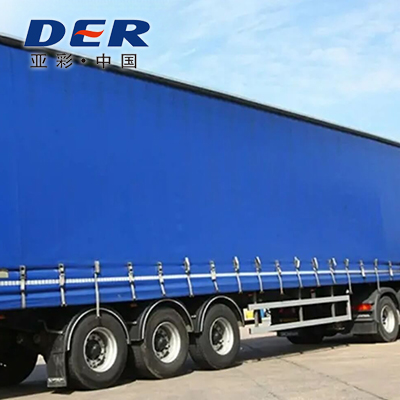
A hemmed tarpaulin is a finished tarp whose perimeter has been folded and secured by welding, sewing or a combined fabrication method. The folded edge hides the cut fabric, creates additional thickness and provides a more suitable zone for eyelets, webbing, rope, D-rings or other attachment details.
In a basic cover, the hem may simply neaten the edge. In a professional transport, construction, agricultural or industrial cover, the hem becomes part of the load path. Tie-down force moves from the fixing hardware into the reinforced perimeter and then into the tarp body. A mismatch between these zones can lead to distortion, local tearing or hardware pull-out even when the central fabric remains intact.
That is why DERFLEX approaches a custom hemmed tarpaulin from the required finished dimensions, installation direction and expected stress—not from a generic stock size alone.
A reliable hemmed tarp distributes force through connected structural zones. Increasing fabric weight alone does not correct a weak transition between the sheet, hem and hardware.
Woven polyester and the coating system carry broad tensile load, provide dimensional stability and form the protective surface.
The folded perimeter adds layers and changes stiffness. Its width and method should suit the fabric thickness and handling cycle.
Webbing, additional PVC strips, rope or local patches can spread concentrated loads beyond a single eyelet or attachment point.
Grommets, D-rings, straps and pockets must be placed for the actual pull direction, spacing, corrosion environment and installation method.
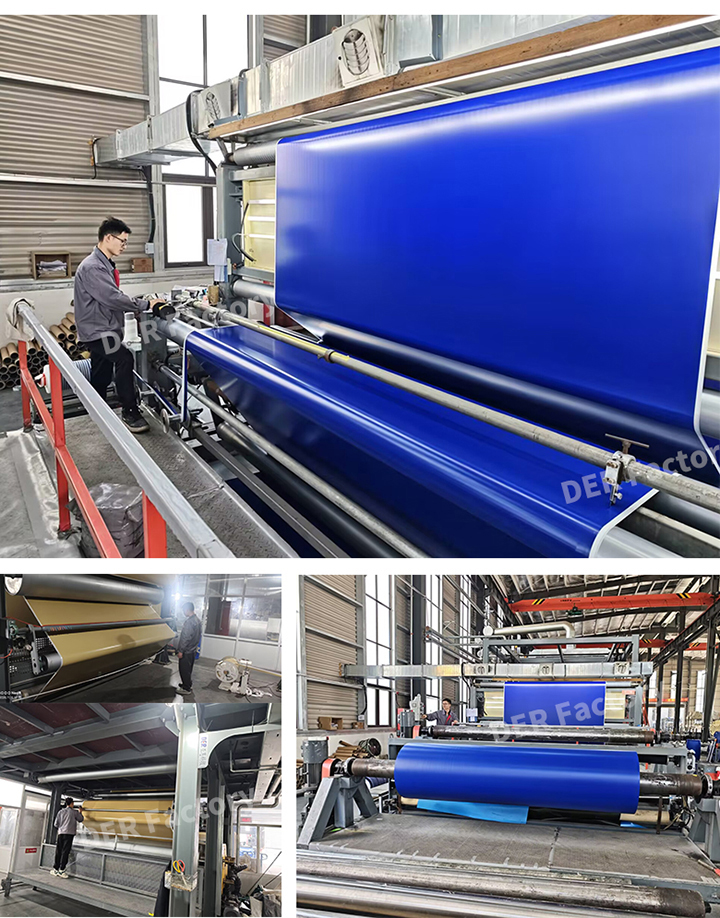
Coating adhesion, scrim balance, surface weldability, roll consistency and fabrication settings influence the quality of the finished perimeter. DERFLEX can support material supply and completed-tarp programs from a coordinated specification.
Final suitability depends on the agreed material, fabrication, installation and operating environment. These are the performance directions typically reviewed for custom hemmed tarp projects.
PVC coated polyester can provide a continuous water-resistant surface. Welded panel seams can be specified where sealed construction is required.
Folded layers and selected reinforcement help the perimeter accept handling and tie-down force more predictably than a raw cut edge.
Grommet spacing, D-ring rows, straps and pockets can be placed according to the frame, cargo, cover system or installation drawing.
Material weight, flexibility and hem stiffness can be balanced for tarps that are deployed, folded, rolled or tensioned repeatedly.
UV, cold-flexibility, anti-mildew, flame-performance and other functional directions can be discussed against the target market and test requirement.
Approved drawings, samples, color references, hardware lists and packing instructions help control repeat wholesale and OEM orders.
The table is a sourcing framework rather than a universal product promise. Final values should be confirmed by application review, sample approval and the agreed test method.
| Product direction | Custom hemmed tarpaulin, reinforced finished tarp, hemmed PVC tarp panel or made-to-measure protective cover. |
|---|---|
| Core material | PVC coated or PVC laminated polyester fabric; PE woven and mesh directions can be reviewed for application-specific programs. |
| Finished weight | Approximately 350–1200 gsm across project discussions; 450–900 gsm is a common direction for many repeated-use PVC cover programs. |
| Thickness | Approximately 0.35–1.20 mm depending on base cloth, coating mass, surface build and required handling characteristics. |
| Finished dimensions | Made to drawing, sample or measured coverage. The quotation should state whether dimensions mean cut size, finished size or usable coverage. |
| Hem construction | Single fold, double fold, multilayer welded hem, sewn hem, extra PVC strip, webbing-reinforced hem, rope-in-hem, cable pocket or custom profile. |
| Panel joining | Hot-air welding, high-frequency welding, sewing or a combined method selected according to material and finished product design. |
| Attachment options | Metal grommets or eyelets, D-rings, buckles, webbing loops, straps, elastic cord, hooks, pockets and project-specific fittings. |
| Reinforcement zones | Corners, grommet backing, lifting points, frame contacts, cargo-edge zones, access openings, wear strips and high-tension lines. |
| Surface and color | Matte, semi-matte, glossy, lacquered or embossed directions; common colors and custom color matching subject to order requirements. |
| Functional directions | UV resistance, anti-mildew, cold flexibility, flame-performance, anti-static, abrasion or oil-resistance directions where technically suitable. |
| Branding and packing | Logo printing, labels, barcodes, SKU marks, carry bags, cartons, pallets and private-label export packaging. |
| Supply format | Roll material, cut panels, semi-finished components or completed hemmed tarps for bulk and OEM orders. |
Specification note: tarp performance also depends on slope, tension, water pooling, sharp-edge protection, installation hardware, inspection frequency and operating environment.
The correct edge depends on the load pattern and handling method. A larger or thicker hem is not automatically better if it creates unnecessary stiffness or does not reinforce the actual pull zone.
A clean PVC edge direction for covers where weldability, water resistance and efficient production are priorities.
Additional folded material increases local thickness around the perimeter and selected fixing points.
Polyester webbing can help distribute repeated tie-down loads along transport, construction and industrial cover edges.
An inserted rope can create a fuller edge for selected attachment, handling or tension-distribution requirements.
Custom pockets can receive bars, cables, pipes or system components when a simple grommet line is not appropriate.
Hemming consumes material and changes the final dimensions. For a frame, truck body, pit cover, machinery cover or OEM size series, “10 × 12” is not enough information by itself.
Cut size describes the sheet before the perimeter is folded, welded, sewn or reinforced. Finished size describes the completed tarp after those operations. Usable coverage may be different again when the tarp needs overlap, side drop, tension or attachment allowance.
The edge build should follow how the tarp is installed, moved and exposed. Different applications create different pull directions, abrasion zones and folding cycles.
Finished covers can use webbing hems, grommets, D-rings and wear strips positioned for road vibration, wind pressure and repeated tie-down.
Scaffold sheets, roof covers, material protection and site barriers may require closer fixing points, reinforced corners and project-specific fire directions.
Hay, feed, machinery and seasonal storage covers can be planned for UV exposure, water shedding, larger panel sizes and repeated installation.
Custom shapes can include access flaps, reinforced openings, frame-contact patches, lifting points and attachment layouts around protrusions.
Replacement covers and temporary structures may need hem pockets, ropes, keder-style interfaces, grommet lines or attachment strips matched to the frame.
Distributors can develop consist, ent size programs with defined material grades, hem details, hardware, color plans, labels and retail or export packing.
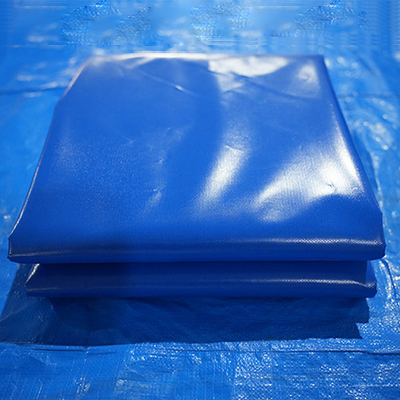
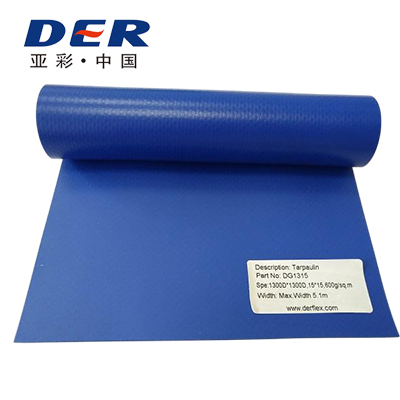
All images below are hosted on the DERFLEX website and illustrate material, finished cover and industrial application directions.
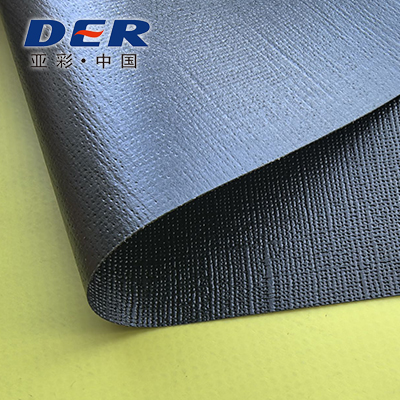
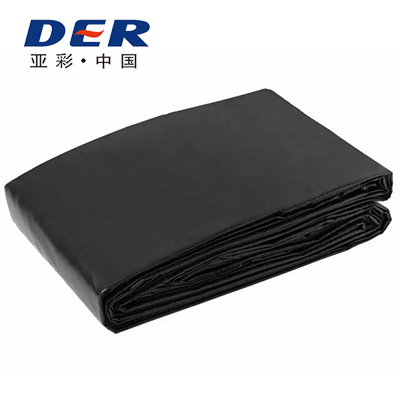
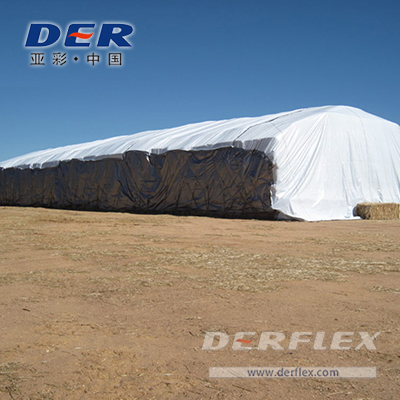
Larger covers can develop higher perimeter loads and more movement. Confirm attachment spacing, water-shedding slope, corner treatment, handling method and the surfaces that may contact the tarp.
Quality control should follow the approved specification. Applicable documents, tests and inspection points should be agreed before production rather than assumed from a general product name.
Confirm weight, base-cloth direction, color, finish and functional requirements against the approved sample or data sheet.
Measure the completed tarp at the agreed points after hems, seams, pockets and reinforcement have been fabricated.
Check hem width, weld or stitch condition, reinforcement continuity, hardware position and corner construction.
Maintain drawings, BOM details, labels, packing instructions and approved changes to reduce specification drift on repeat orders.
ISO management-system information and SGS, REACH or RoHS-related documents may be discussed according to the selected material, order scope and destination-market requirement. Required standards, report versions and acceptance criteria should be confirmed before production; no general certification statement should replace project-specific verification.
Standard products can work for general covering. A custom hemmed tarpaulin supplier is more useful when dimensions, hardware, branding or duty cycle must be controlled.
These internal pages cover the material, customization, wholesale and application decisions related to hemmed tarpaulin procurement.
Practical answers for importers, distributors, contractors, converters and OEM sourcing teams.
Hemming folds and secures the cut edge, adds local thickness and creates a more suitable perimeter for grommets, webbing, rope, D-rings or other fixing details. In demanding applications, the hem should be designed to distribute load rather than only improve appearance.
Yes. DERFLEX can manufacture to a confirmed finished dimension, drawing or approved sample. Buyers should state whether the requested measurement is cut size, finished size or usable coverage and include overlap, drop and tension allowances.
Neither method is universally better. Welding is commonly used with compatible PVC coated fabrics and can support sealed construction. Sewing may suit selected structures, hardware or fabrication routes. Some finished tarps use a combined method. The choice should follow the material and application.
Yes. Grommet or eyelet spacing, backing patches, webbing, corner layers, D-rings, straps and other fixing details can be discussed according to the installation, pull direction and expected duty cycle.
PVC coated polyester can provide a waterproof covering surface, and welded seams can support sealed panel construction. Final water protection also depends on penetrations, slope, pooling, hardware, installation and the complete finished-product design.
Yes. DERFLEX can support bulk and OEM programs with agreed material grades, size series, colors, labels, printing, barcodes, bags, cartons, palletizing and export packaging.
Send the application, required finished size, quantity, material or GSM target, color, hem construction, grommet or hardware layout, reinforcement zones, functional requirements, branding, packing method and destination. Drawings, installation photos and existing samples are especially useful.
Share the finished size, material target, fixing layout, application photos, quantity and packing requirement. DERFLEX will review a practical hemmed tarpaulin manufacturing direction for your project, wholesale line or OEM program.