High Solar & UV Exposure
Strong sunlight can accelerate surface aging, yellowing, brittleness and color change. Specify the expected outdoor cycle and storage pattern so UV direction can be discussed before production.



UV-focused, waterproof and weldable PVC coated polyester fabric for event marquees, wedding tents, exhibition halls, rental fleets and commercial tent systems supplied into the Gulf and wider Middle East.
DERFLEX helps event tent suppliers define material around climate exposure, roof/sidewall function, flame-test documentation, welding process, cleanability, color consistency and repeat-order control—not only GSM.
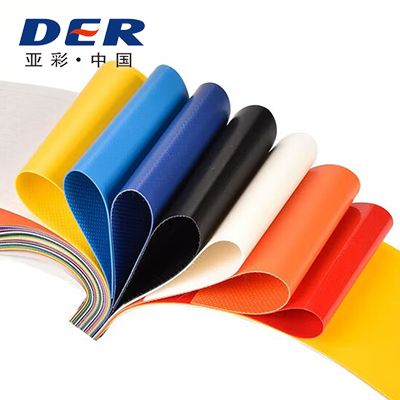
For commercial event tents in hot, high-UV Middle East environments, a practical starting point is PVC coated high-tenacity polyester fabric with project-matched UV stabilization, waterproof construction, dependable welding behavior, controlled white or ivory appearance, and the exact flame-performance documentation required by the destination project.
Roof fabric, sidewall fabric, transparent window panels and semi-permanent structures do not always use the same construction. Final GSM, base cloth, coating, top finish, blackout/translucency and fire-test route should be confirmed from the actual tent system and RFQ.
A tent fabric that performs acceptably in a mild climate can still disappoint in a Gulf rental fleet if its UV package, surface finish, color stability, cleaning behavior or welding consistency is wrong for repeated high-temperature outdoor use.
Strong sunlight can accelerate surface aging, yellowing, brittleness and color change. Specify the expected outdoor cycle and storage pattern so UV direction can be discussed before production.
Event tents are highly visual products. Whiteness, gloss, translucency, blackout effect and batch-to-batch shade consistency can matter as much as tensile strength for wedding and hospitality fleets.
Rental tents are folded, transported, tensioned, washed and stored repeatedly. Surface finish, flex behavior and weld quality should be approved around the real service cycle.
Do not buy a material simply described as “fire retardant.” Define the requested test standard, test method, report validity, specimen construction and destination authority before bulk approval.
Wide roof fields, keder edges, reinforcement patches, doors and sidewalls create different stresses. Material should be evaluated with the planned HF or hot-air welding process.
Event suppliers often reorder before exhibitions, festivals and wedding seasons. Golden-sample control, color references and documented construction reduce surprises on replenishment orders.
The table below is a procurement starting point, not a substitute for structural design or local approval.
| Application | Typical Material Direction | Priority Checks | Common Buying Error |
|---|---|---|---|
| Wedding / luxury marquee roof | Mid-heavy PVC coated polyester; bright white or ivory; translucent or blackout direction as required | Appearance, UV package, light transmission, cleanability, seam quality, FR documentation | Approving only GSM while ignoring white shade and heat/light behavior |
| Rental fleet sidewalls | Flexible PVC tent fabric selected for repeated folding, cleaning and handling | Tear resistance, flex behavior, dirt release, color match, window-panel compatibility | Using heavy roof material everywhere and creating unnecessary handling cost |
| Exhibition / corporate pavilion | Printable or visually controlled PVC coated fabric with project fire pathway | Print compatibility, surface finish, color, FR requirement, dimensional stability | Testing print before checking whether the finished fabric construction matches fire documentation |
| Semi-permanent event hall | Heavier-duty tent membrane direction with stronger reinforcement and outdoor-aging focus | Structural engineer requirement, wind loads, base cloth, seams, keder/edge detail, UV durability | Treating a long-term hall as if it were a short-cycle party tent |
| Transparent sidewall / window | Clear PVC panel integrated into the fabric system | Clarity, yellowing, joining method, panel size, heat exposure, cleaning chemistry | Assuming clear PVC and opaque tent fabric age or weld identically |
Real DERFLEX-hosted product images are used so Google Images and buyers can connect the page topic with the actual product category.

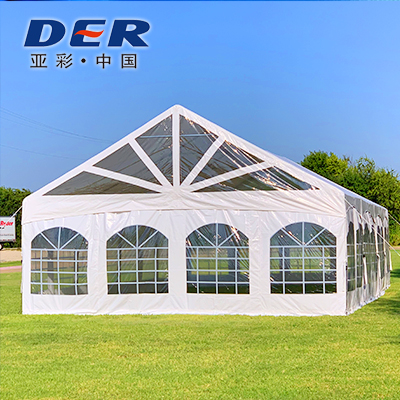
Two rolls with the same nominal GSM can behave differently after welding, tensioning and months of high-UV exposure.
| Specification Item | DERFLEX Supply Direction | What the Buyer Should Confirm |
|---|---|---|
| Material | PVC coated / laminated polyester tent fabric | Coated vs laminated construction and final use |
| Commercial weight range | Approximately 380–900 gsm across DERFLEX tent-fabric programs; project-specific structures available | Roof, wall, portable or semi-permanent use |
| 750gsm direction | Available as a mainstream middle-heavy event / shelter option | Whether tensile, tear, width and FR route match the actual tent |
| Width | Standard and project-customized widths depending on construction; selected DERFLEX tent programs discuss wider options | Cut plan, seam count, machine capability and logistics |
| Color | White, ivory / custom color direction, plus other project colors | Master sample, whiteness, opacity/translucency and repeat-order tolerance |
| Surface | Glossy, matte, lacquered, easy-clean / application-oriented finish | Dirt pick-up, cleaning chemistry, print and weld compatibility |
| Performance options | Waterproof, UV-resistant direction, flame-retardant pathway, anti-mildew and other project functions | Required test method, report, climate cycle and final finished construction |
| Fabrication | HF welding, hot-air welding, cutting, reinforcement and panel conversion depending on grade | Approve weld settings on production-equivalent material |
Final properties must be confirmed from the approved product data sheet and order specification. Do not infer tensile, tear, FR or weathering values from GSM alone.
A temperature-range claim does not by itself prove long outdoor life. Middle East tent-fabric selection should consider cumulative UV exposure, dark-surface heat gain, coating formulation, plasticizer stability, surface lacquer, color retention, repeated folding and cleaning.
White and light-colored roofs are popular in event systems partly because appearance and solar response matter to the user experience, but blackout and translucency decisions can change internal lighting and heat behavior. Approve the actual roof concept rather than assuming one white fabric serves every marquee.
Event projects in the Middle East can involve civil-defense, building-code, venue, consultant, insurer or event-organizer requirements. The material test requested for one project may not be accepted as a substitute on another.
NFPA 701 is a flame-propagation test standard for textiles and films and is commonly referenced for tents and membrane structures. Buyers should state the required edition and applicable test method rather than writing only “NFPA”.
DIN 4102 B1, M2 and EN-based classifications can appear in international event-tent specifications. They are not interchangeable labels. Confirm which test/classification the project authority actually requires.
UAE and Saudi projects should be checked against the current local fire/building-code process and the authority or consultant responsible for approval. A generic overseas certificate should not be assumed sufficient for the finished tent.
The finished tent fails at details—seams, keder edges, reinforcement patches, corners, doors and hardware zones—not in the middle of an untouched laboratory swatch.
Test HF or hot-air welding using the same fabric, seam overlap, reinforcement and machine route planned for bulk production.
Strong base cloth cannot compensate for poor coating-to-scrim adhesion at welded or repeatedly folded areas.
Keder, webbing, corner patches, rope edges, doors and tension points should be designed around the actual load path of the tent system.
Keep approved color, gloss, hand feel, weld appearance and construction as the repeat-order reference for seasonal replenishment.
A useful inspection plan should reflect how the final tent will be manufactured and used.
Base fabric, coating route, nominal weight, width, color and surface finish against the approved order specification.
Tensile and tear properties according to the agreed test method; compare to the approved product specification, not a generic catalog.
Adhesion, surface condition and trial seam behavior under the buyer’s intended conversion method.
Check exact standard, method, specimen description, report laboratory, date and whether the tested construction matches the ordered material.
White shade, gloss/matte level, blemishes, translucency/blackout behavior and roll-to-roll consistency.
Roll labels, batch identification, protective packaging and records needed for repeat orders or project documentation.
A one-line request for “white 750gsm tent fabric” is not enough for a serious event-tent program.
GSM does not define yarn, density, coating adhesion, UV formulation, surface finish or weld behavior.
Different standards and classifications use different methods. Confirm the one the project will actually accept.
Roof, sidewall and clear-window zones face different load, heat, appearance and handling demands.
A visually perfect sample can still cause seam or reinforcement problems on the production line.
Document approved shade, finish, construction and packaging so a seasonal repeat order can be compared to the original.
Ask what UV/weathering target is actually specified and how the final application will be exposed and maintained.
DERFLEX supplies PVC coated fabrics to international B2B buyers and supports tent-material programs with application matching, customization, export coordination and repeat-order control.
DERFLEX has more than 20 years of experience in industrial coated fabrics and serves tent, tarpaulin and flexible-material applications.
Discuss weight, width, color, surface, FR pathway, UV direction, printing, packaging and application-specific requirements in one supply program.
Golden-sample references, agreed construction and documented buyer requirements help reduce drift between seasonal or project orders.
These six related DERFLEX pages support broader material, weight and application comparisons.
Commercial event-tent programs often discuss mid-heavy structures such as 650–900gsm, with 750gsm being one mainstream direction. The correct construction depends on whether the material is used for a roof, sidewall, repeated rental fleet, exhibition pavilion or semi-permanent structure. GSM should never be the only selection criterion.
It can be suitable for many commercial event-tent applications when its base cloth, coating, UV direction, weldability, surface finish and fire documentation match the project. The climate and tent system should be reviewed before bulk confirmation.
There is no single universal “Middle East tent standard.” Requirements can depend on country, authority, venue and project. NFPA 701, DIN 4102 B1, M2 and EN classifications may appear in specifications, but buyers should state the exact standard, edition and test method required by the approving authority or consultant.
Yes, blackout or lower-transmission constructions can be discussed for roof systems where light and solar response matter. The buyer should state whether the priority is blackout, translucency, white appearance or a specific event-lighting effect.
DERFLEX supports standard and custom color directions for PVC coated tent fabrics. For repeat rental fleets, approve a physical master sample and record the finish so future orders can be compared against the original reference.
PVC coated tent fabrics are commonly converted by HF or hot-air welding, depending on grade and production setup. A production-equivalent weld trial should be approved before bulk fabrication, especially for roof seams, keder edges and reinforcement zones.
Send destination country, tent type, roof/sidewall use, target GSM or current sample, width, color, translucency/blackout requirement, surface finish, fabrication method, exact fire-test requirement, expected outdoor cycle, quantity and packaging needs.
Send DERFLEX your destination market, tent application, current material specification, required fire documentation, color/finish, fabrication process and quantity. We can discuss a project-matched PVC tent fabric route instead of quoting a generic roll.