



Car Camping Tarps for Vehicle Supported Camps and Gear Covers
Build the covered space around the way your camp works. A car camping tarp can extend a parked vehicle’s living area, form a detached rest shelter or protect campsite gear. DERFLEX supports coated fabric, cut-panel and custom finished tarp enquiries for outdoor brands, distributors and campsite operators. Start with the vehicle interface, protected layout and handling-weight target; then define the material, reinforced edges and included items. SUV and campervan compatibility is checked for the specific vehicle and mounting arrangement.
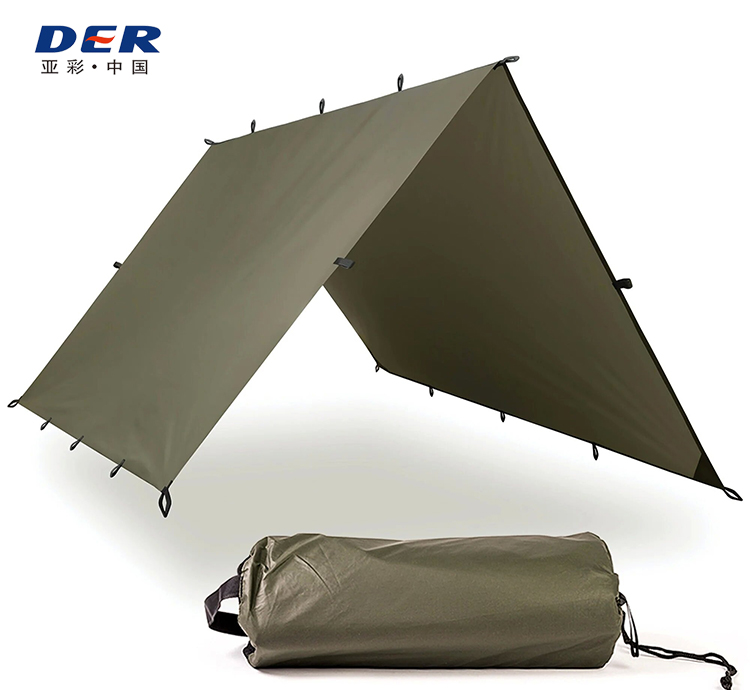
What makes a vehicle camping tarp work? A usable roof needs more than a large sheet: compatible fixing points, a clear door path, supported headroom, drainage and room for guy lines. Choose vehicle attachment only where the mounting interface is approved for the intended use. A detached layout keeps the shelter’s loads off the vehicle.
Vehicle side and detached layouts
Draw the seats, table, gear and access route first. The roof outline and the dry occupied space are different: roof slope, open sides and angled rain affect usable coverage.
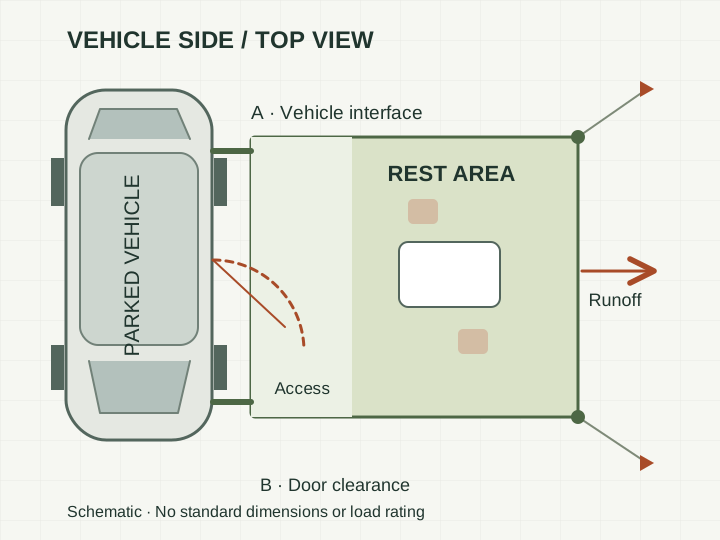
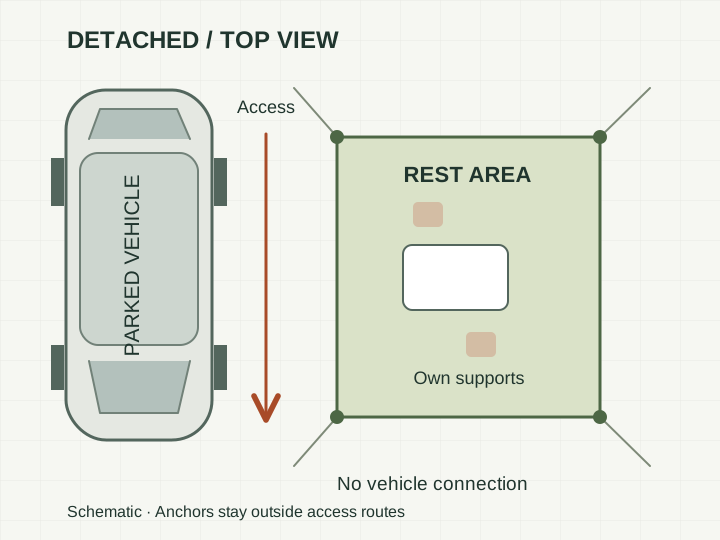
Original planning schematics. Support points, clearances and shapes are illustrative; these are not structural drawings, stock products or verified vehicle fitments.
On a small screen, swipe the table to compare all columns.
| Layout | Useful when | Measure before ordering | Key boundary |
|---|---|---|---|
| Car side tarp shelter | Seats and equipment need to sit close to the vehicle. | Mounting-edge length, roof projection, supported heights and open-door envelope. | The vehicle attachment must be approved; disconnect before moving. |
| Detached overlanding tarp shelter | The vehicle needs to leave while the camp remains. | Occupied footprint, independent supports and the full anchor perimeter. | The tarp is not self-supporting; the support kit needs its own specification. |
| Parked gear cover | Boxes, folded furniture or equipment need local protection. | Object length, width, height, cover drops and tie locations. | Maintain suitable ventilation and protect contact points; road use is a separate brief. |
For the broader product range, explore custom camping tarp supply. For overhead pitch geometry and rain entry, see waterproof camping shelter planning.
Material weight and repeated handling
A vehicle carries the shelter to camp, but people still lift, unfold, tension, dry and repack it. Select the sheet and complete packed system around those tasks.
Choose by the job, then review a sample
PVC-coated polyester can be considered for washable gear covers and transported camp products where compatible welded fabrication is useful. For a frequently moved overhead roof, total weight and fold stiffness may favour a lighter coated textile. Availability and fabrication suitability need project review; this page does not establish a lightweight textile range.
Compare the proposed material after folding and at the intended use temperature. Inspect coating creases, rubbing at rack or pole contact points, edge wear and the effort needed to repack the wet assembly. Colour alone does not establish UV protection, and a fabric water-resistance result does not establish finished-seam performance.
Continue to the PVC material page for outdoor camping for the material-led enquiry, or review PVC-coated polyester construction and roll supply.
Count the kilograms before the kit
Fabric mass (kg) = area (m²) × GSM ÷ 1,000A rectangular 3 × 4 m panel at an assumed 450 g/m² contains:
5.4 kg12 m² × 450 g/m² ÷ 1,000. This is an example, not a stock size or a confirmed DERFLEX material grade. Hems, seams, patches, attachments and the carry bag add mass. Poles, lines and anchors add further packed weight.
Ask for separate figures for finished tarp mass and complete kit mass, plus the agreed packing method and packed dimensions.
Attachment interfaces and custom order drawing
For a vehicle awning tarp, document the full connection from reinforced fabric to vehicle or independent support. A strong fabric cannot make an unsuitable rack, connector or fixing point acceptable.
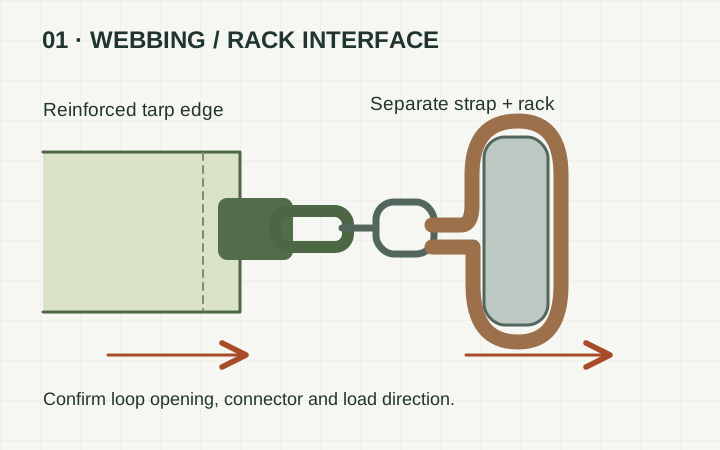
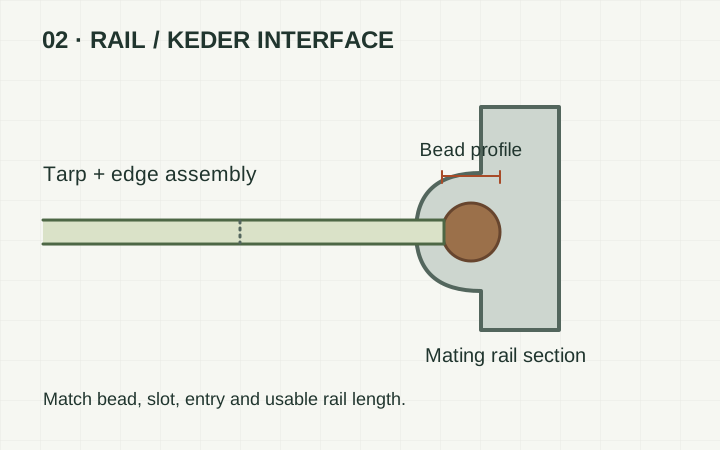
These are connection concepts for enquiry review, not tested DERFLEX hardware assemblies. Magnets, suction cups and vehicle panels require their own suitability checks; none is treated as a universal attachment.
Review reinforcement at each fixing point
Specify the pulling direction, patch construction, hem and loop or eyelet detail together. Label corner, side and mounting-edge points separately. If a detachable adapter is proposed, define which part belongs to the tarp and which is a separately sourced component.
Check the moving vehicle parts
Open the side doors, sliding door and rear hatch on the actual vehicle. Check fabric contact, strut movement, antennae, roof accessories and water running toward openings. Do not assume a hatch or gas strut can carry shelter loads.
Put vehicle measurements and tarp dimensions on separate views
A flat panel length is not the same as the installed ground projection. Use a plan, a side elevation and an interface detail to connect the roof shape to the camp layout.
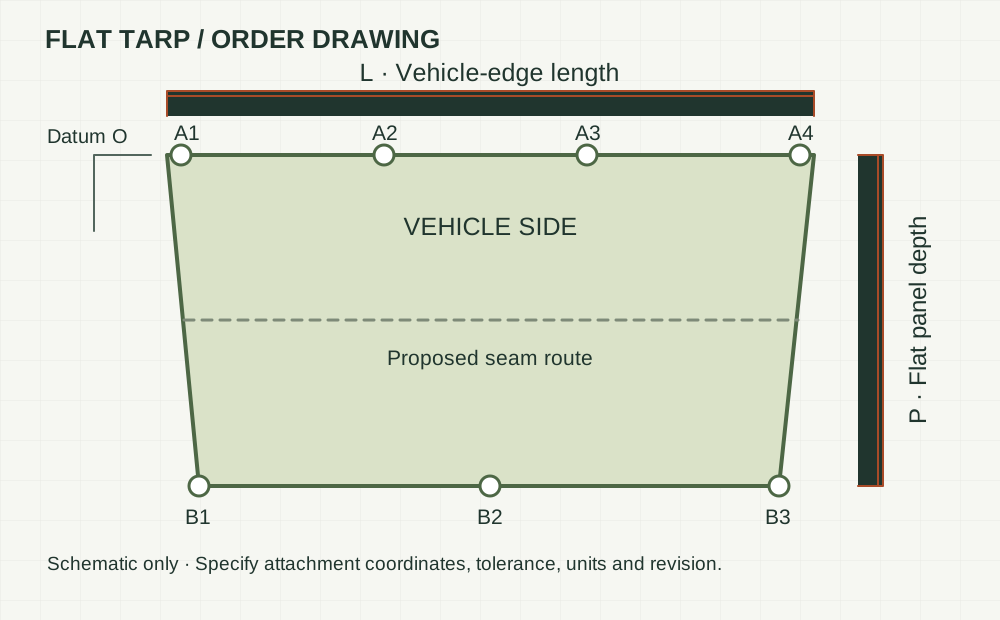
Include these six drawing details
- Vehicle identity: make, model, year, roof or rack equipment, and mounting photographs.
- Installed geometry: attachment height, support heights, desired sheltered area and runoff direction.
- Finished panel: mounting-edge length L, flat depth P, shape, diagonals and any shaped corners.
- Fixing coordinates: reference datum O, point labels, distances and intended pull direction.
- Edge and seam details: proposed joins, reinforcement, contact protection and matched connector dimensions.
- Order control: units, dimensional tolerance, material reference, quantity, revision and approval status.
A photo and rough sketch can start the discussion. Confirm the dimensioned drawing and an assembled sample before a repeat order. The camping tarp guide explains the wider choice of layouts; drawing-based custom tarp fabrication covers finished dimensions and fixing-point control.
What is included in the car camping tarp quotation?
Separate the sheet from the support system. Each quotation should identify included parts, excluded parts and anything still awaiting feasibility or sample approval.
| Supply level | Define in the enquiry | Quotation boundary |
|---|---|---|
| Coated fabric rolls | Material reference, mass, width, colour, roll packing and quantity. | Fabric supply; finished cutting, joining and attachments are separate. |
| Cut or joined panels | Panel outline, dimension basis, seam map and downstream processing. | List which seams and edge operations are complete and which remain with the buyer. |
| Custom finished tarp | Approved drawing, material, reinforced hems, fixing points, label and folded packing. | Include only the components itemised in the order. Vehicle fit requires a specific sample check. |
| Accessories or complete kit | Separate bill of materials: connectors, straps, poles, lines, pegs, bags and instructions. | Supply availability must be confirmed item by item. A complete vehicle awning kit is not an assumed standard offer. |
For a bulk car camping tarps programme, request pricing against the same drawing and bill of materials. Fabric choice, usable roll width, shape yield, seam length, reinforcement, hardware, branding, packaging and order quantity all affect cost. MOQ, sampling terms and lead time are quoted against the reviewed specification.
Before you order: handling, drainage and fit
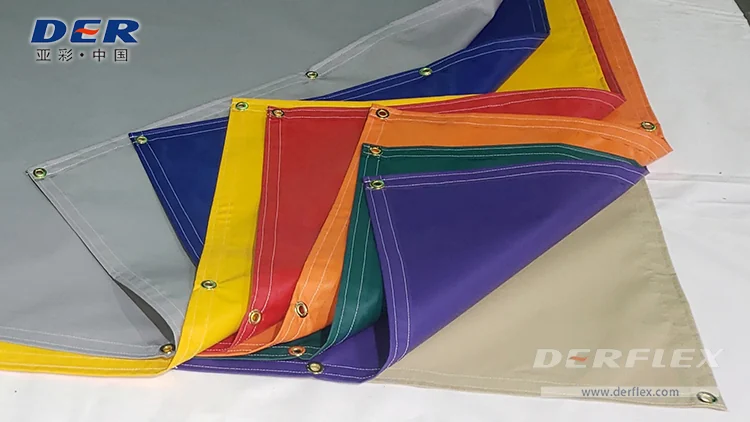
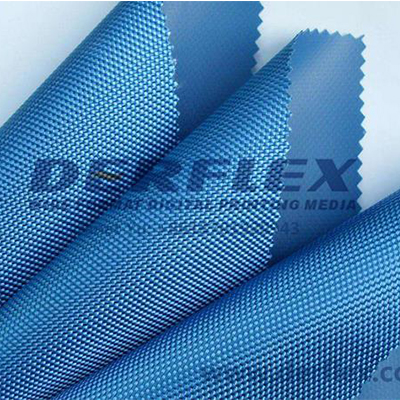
Material and edge photographs help discuss construction. They do not establish a particular SUV camping tarp fit, a weather rating or the contents of a complete kit.
Approve the assembled prototype
- Check the sample on the intended vehicle or a documented matching interface.
- Inspect every seam and attachment penetration for the agreed water-resistance check.
- Review drainage with the specified support heights; avoid roof pockets that collect water.
- Check door access, connector release, folding sequence and the labelled packing contents.
Define the operating instructions
- Set the shelter up only while parked; disconnect and pack it before driving.
- Keep combustion appliances and vehicle exhaust away from occupied covered areas.
- Use the approved operating conditions and take-down guidance; no wind rating is claimed here.
- Remove grit, clean as instructed and dry before storage. Keep the fabric away from hot vehicle parts.
Fabric results, finished-seam checks and installed-system performance are separate acceptance questions. Agree the evidence and sample checks needed for your market and intended application.
Car camping tarp FAQ
Will a car camping tarp fit any SUV or campervan?
No. Fit depends on the vehicle model, roof or rack arrangement, approved connection points, door and hatch movement, and intended pitch. Send the vehicle details, mounting photos and measurements. A custom tarp drawing must be checked against the actual vehicle and interface before bulk production.
Can the shelter stand independently of the vehicle?
A detached layout can be specified around its own supports and ground anchors. Its pole positions, supported heights, guy-line space and drainage still need review. Poles, lines and anchors are separate quotation items; a tarp-only order does not provide a complete shelter system.
Is PVC-coated polyester the right choice for an overland tarp?
It can be considered when washable surfaces, welded construction and repeated handling matter more than low packed weight. Compare the proposed material sample and finished assembly with your handling target. For a weight-focused portable roof, ask whether a lighter construction is available for the specific project.
Are poles, suction cups, magnets and roof-rack straps included?
They are included only when expressly listed in the approved quotation and bill of materials. Fabric rolls, finished tarps, vehicle connectors and complete support kits have different supply scopes. The presence of an accessory in an illustration or product display does not include it in the order.
Can a car camping tarp cover gear during transport?
This page covers stationary campsite shelter and gear protection. A road-travel cover needs a separate design for restraint, abrasion, visibility and applicable transport requirements. Do not drive with the camping shelter deployed or assume a parked gear cover is suitable for road use.
What should I send for a custom quotation?
Send the intended layout, vehicle and interface details, finished tarp dimensions, attachment locations, quantity, handling-weight target, material preference, colour, branding, packing and destination. Mark tarp, connectors, poles, lines, pegs and bags as included or excluded, and identify the drawing revision.
Plan your next vehicle camping tarp programme
Send your layout, vehicle interface photos, finished dimensions and quantity. Add the target packed weight, material preference, branding, destination and separate accessory list. DERFLEX can review a fabric, panel or custom tarp enquiry against that brief.