- tarp
- PVC coated fabrics
- Tarpaulin
- Sunscreen Fabric
- Flexible Ventilation Duct
- TPU coated fabric
- Frontlit banner
- PVC flex backlit
- Blockout banner
- PVC vinyl sticker
- PVC mesh banner
- PVC preformated vinyl
- Reflective vinyl
- Dye Sublimation fabric
- PVC Stretch Ceiling Film
- Super clear pvc film
- TPO coated fabric
- Automotive Protection Film
- Inkjet media
- Textile banner
- Mesh banners
- New Products
- customized PVC tarps products
- PVC Foam Board Sheet
- Profile download

- Services Hotline
+86-021-54361792 / 54361798 - Email
sales@derflex.com

|
|
Super Heavy Duty Tarps
Learn what makes a tarp super heavy duty, when 40 oz or higher-weight PVC tarp construction makes sense, and how to specify material, reinforcement, seams and custom finishing for industrial use.
|
|
||||||||||||||||||||||||||||||||||||||||||||
Industrial Tarp Selection Guide
Super Heavy Duty Tarps: What They Are and When You Need ThemSuper heavy duty tarps are extra-reinforced protective covers for applications where ordinary heavy duty sheets may be under-specified. They are commonly built from high-weight PVC coated polyester with stronger textile reinforcement, welded panel construction and reinforced stress zones for repeated industrial handling. Use this class of tarp when long outdoor exposure, abrasion, large cover size, high tie-down loads or expensive downtime make material and fabrication failure more consequential. DERFLEX can discuss roll goods, fabricated panels and finished custom tarps according to the approved project specification.
900–2000 gsm published super-heavy range
PVC coated polyester direction
Custom reinforcement & hardware
Rolls, panels or finished tarps

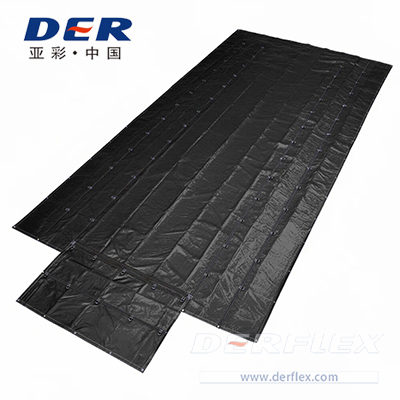
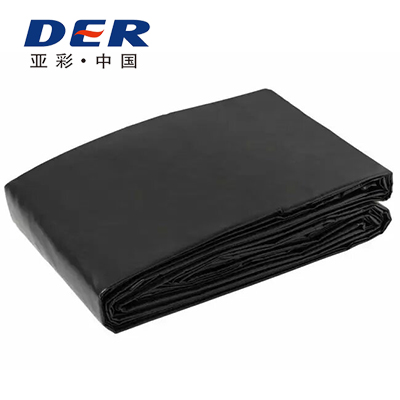
DERFLEX super heavy duty tarp. Final weight, reinforcement, seam layout and hardware should be matched to the application.
Direct Answer
What Makes a Tarp “Super Heavy Duty”?The term should describe a complete construction, not a marketing label. A super heavy duty tarp normally combines a high-strength woven base, substantial PVC coating, durable seams, reinforced hems or webbing, and attachment points designed to spread load through the perimeter. DERFLEX already has a broader heavy duty tarp range for industrial and transport protection. The “super heavy duty” level is most useful when the service profile moves beyond routine covering into higher abrasion, longer exposure, larger spans or more aggressive handling. Quick procurement ruleIf a normal tarp is failing because of edge pull-out, seam fatigue, wind flapping, repeated dragging, cargo abrasion, long UV exposure or oversized-panel stress, the solution is rarely “just buy a thicker sheet.” Move to a heavier material only after the stress zones and attachment design are defined. 1 High Mechanical StressRepeated pulling, folding, rolling, dragging and tensioning create fatigue that lightweight covers may not tolerate. 2 Large Finished SizeLarge covers place more demand on seams, perimeter reinforcement, lifting and tie-down geometry. 3 Long Outdoor ExposureUV, rain, heat, cold and repeated wet/dry cycles make coating quality and cold flexibility more important. 4 Abrasion & ContactSteel edges, machinery corners, rails and rough surfaces can wear through weak zones even when the center fabric is heavy. 5 High Consequence of FailureWhen exposed cargo, equipment or workflow interruptions are expensive, extra engineering margin may be justified. 6 Repeat-Order ProgramsFleet, distributor and OEM buyers often need controlled construction, color, hardware and packaging across batches.
Selection Matrix
When Do You Actually Need a Super Heavy Duty Tarp?
This matrix is a specification starting point, not a universal service-life guarantee. Final construction should be confirmed from size, climate, loading, attachment and approved sample data.
Weight & Construction
40 oz, 900 gsm, 1200 gsm: What Do These Numbers Mean?North American tarp listings often use ounces per square yard, while international coated-fabric sourcing often uses grams per square meter. The conversion is useful, but the number still describes only total areal weight—not yarn strength, coating adhesion, tear behavior or finished reinforcement.
For buyers comparing roll material rather than finished covers, review DERFLEX heavy duty tarpaulin fabric and define coating, base fabric, roll width, weldability and converting process before selecting weight.
Engineering Notes
The Finished Tarp Usually Fails at a Stress Zone FirstFabric + Fabrication Must Be Specified Together?Seam layout: large panels should place welded seams away from unnecessary stress concentration and water collection.
?Edge reinforcement: hems, rope edges or webbing help distribute tension beyond one small area of coated fabric.
?Hardware layout: grommet or D-ring spacing should follow actual load paths, not an arbitrary standard interval.
?Wear zones: add local patches where rails, steel corners or machinery protrusions repeatedly contact the cover.
?Water shedding: design the installed geometry to avoid low points where water can pool and multiply load.
?Cold handling: winter routes and frequent folding should be stated during material selection.
Heavier Is Not Automatically BetterA 40 oz or higher-weight vinyl tarp can be appropriate for severe wear, but extra mass creates its own design constraints. Large finished tarps can become difficult to lift, position and fold. Stronger material also transfers more force into attachment points if the tie-down system is poorly designed. For many fleets and industrial covers, a better result comes from balancing material weight with stronger base fabric, controlled seam design, local wear patches and well-distributed fastening points. To understand the wider material family, see DERFLEX vinyl tarps, where PVC-coated polyester construction and B2B supply forms are explained in more detail.
Material Decision
Super Heavy Duty PVC vs Standard Heavy Duty vs PolyStandard Heavy Duty PVCUseful for many reusable truck, construction, equipment and outdoor cover programs where a practical balance of durability, weldability and handling weight is required. Super Heavy Duty PVCBest considered when the duty profile adds severe abrasion, higher tension, larger dimensions, prolonged exposure or costly consequences from early failure. Super Heavy Duty PolySome markets use this term for thick woven polyethylene tarps. They can be lighter and economical, but should not be assumed equivalent to PVC-coated polyester in repeated abrasion, welding or long-term industrial fabrication. Material names can be confusing. DERFLEX's PVC vs vinyl vs canvas tarp comparison explains why “PVC” and “vinyl” often describe the same coated-polyester family in tarp purchasing.
Application Image Pack
Where Super Heavy Duty Construction Can Make SenseImage context matters in industrial procurement because the same material behaves differently when it is folded on a truck, tensioned over a load, dragged across a jobsite or fitted around machinery. 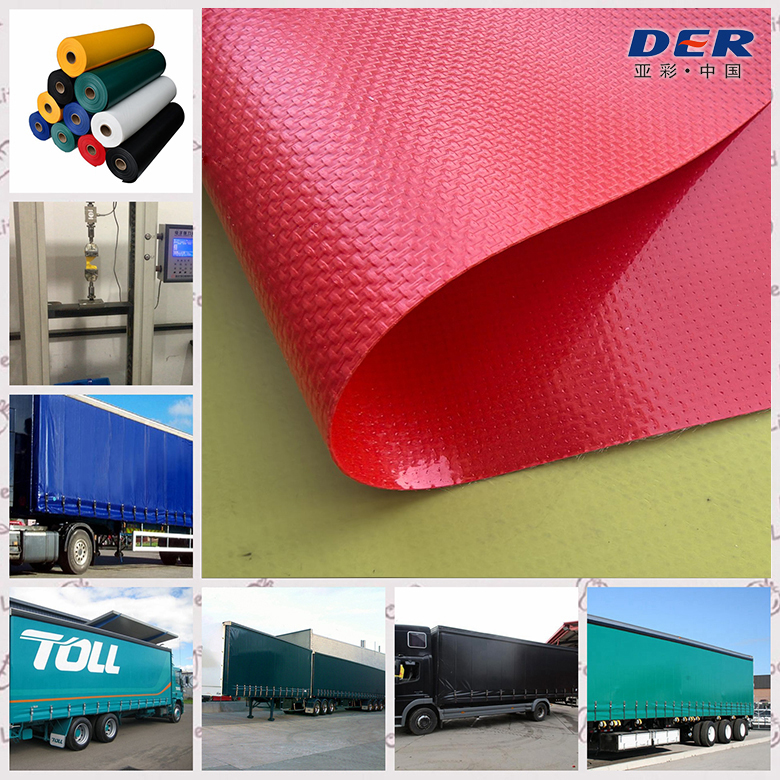 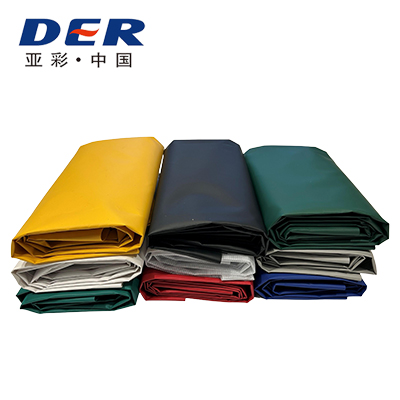 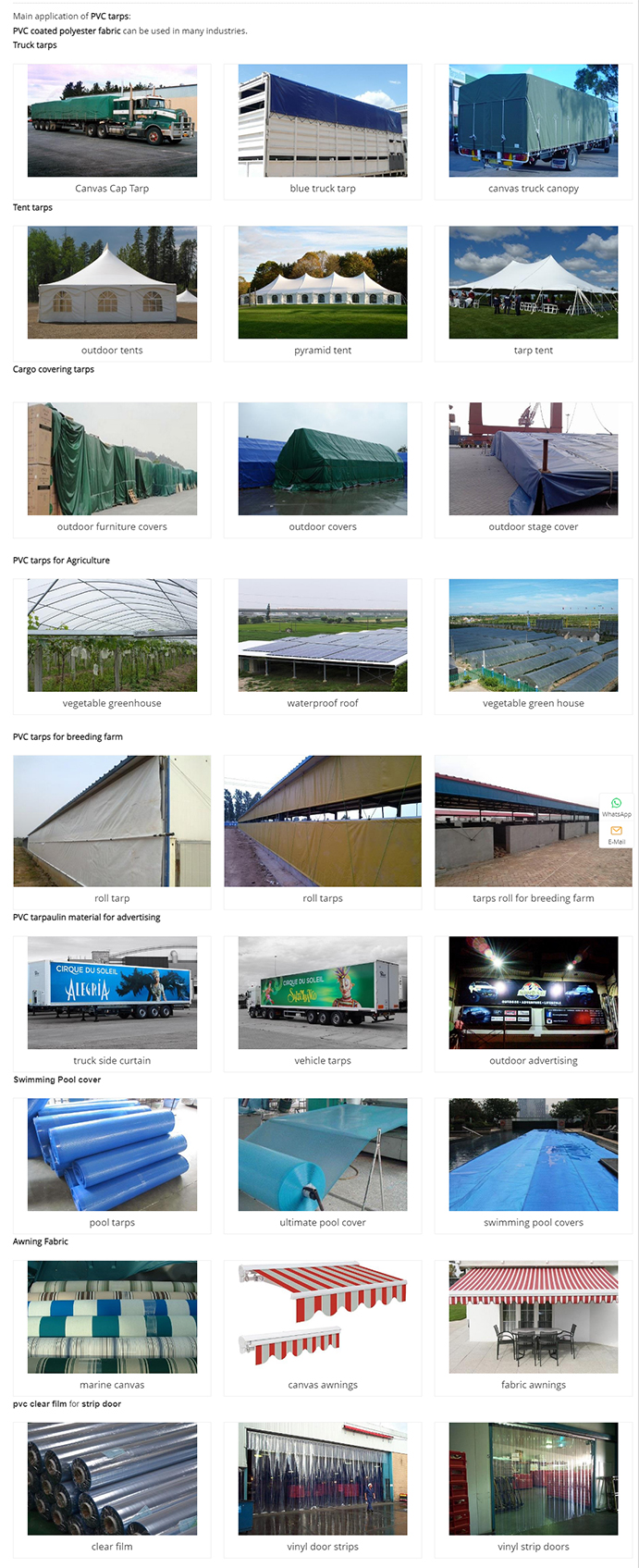
Procurement Risks
Common Mistakes When Buying an Extra Heavy Duty Tarp1. Buying by weight aloneGSM or ounces do not tell you the base yarn, weave, coating adhesion, tear behavior or attachment strength. 2. Assuming the heaviest tarp is safestOversized heavy covers can become difficult to handle and can overload weak frames, tie-down points or crew workflows. 3. Treating grommet spacing as universalAttachment spacing should follow wind, geometry and load distribution. More grommets do not fix poor load paths. 4. Ignoring finished dimensionsHems and seams consume material. Clarify whether dimensions are cut size or actual finished size. 5. Using “FR” without a standardFlame-retardant requirements should reference the exact standard, test method and report scope required by the project. 6. Skipping a stress-zone drawingPhotos or drawings showing corners, protrusions, straps, rails and access areas help place reinforcement where it actually matters.
Buyer Checklist
What to Send DERFLEX for a Useful QuotationA good RFQ describes the finished use, not only “super heavy duty tarp.” Send enough information to match material and fabrication to the job. ?Application and what the tarp will cover
?Finished length, width, drop and shape
?Known GSM, oz, thickness or reference sample
?Outdoor climate, UV, wind and temperature
?Abrasion points and handling frequency
?Welded/sewn seam expectation
?Grommet, D-ring, webbing or strap layout
?Color, logo, labels and packaging
?Required standard or certification scope
?Quantity, destination and approval schedule
Need something lighter?A super-heavy construction is not the default answer. If the cover is frequently handled by one or two people, or the duty cycle is moderate, a lower weight can improve usability while still meeting protection requirements. For comparison, DERFLEX also publishes 18 oz vinyl tarp information for buyers evaluating a common heavy-duty commercial weight class. Supply formatDepending on the project, discuss roll goods, cut panels, welded sheets or fully fabricated custom tarps. MOQ, sample availability and lead time should be confirmed against the final specification rather than assumed.
Custom Manufacturing
Specify the Duty Profile Before You Specify the WeightSend DERFLEX your application, finished dimensions, service environment, target material weight or reference sample, reinforcement layout, quantity, destination and any required test standard. The goal is to select a tarp construction that matches the job—not simply the highest GSM available.
Frequently Asked Questions
Super Heavy Duty Tarp Questions Buyers AskWhat qualifies as a super heavy duty tarp?There is no universal legal threshold. In industrial sourcing, the term normally describes a tarp with higher material weight, stronger reinforcement and heavier fabrication than a standard heavy duty cover. DERFLEX currently publishes a 900–2000 gsm direction for its super-heavy-duty range, but the complete construction matters more than GSM alone. Is a 40 oz vinyl tarp considered super heavy duty?Yes, 40 oz/yd2 vinyl tarps are widely marketed as super or extreme heavy duty. Forty ounces per square yard is about 1356 g/m2. That is a high material weight, but buyers should still verify base fabric, coating, seam construction and reinforcement details. When should I use a super heavy duty tarp instead of a standard heavy duty tarp?Consider upgrading when you have severe abrasion, large finished covers, high tie-down tension, long outdoor exposure, repeated folding or dragging, or high costs if the cover fails early. A standard heavy duty tarp may be better when handling weight and flexibility matter more than extra mass. Are super heavy duty tarps always thicker and stronger?They are usually heavier and may be thicker, but stronger is not guaranteed by weight alone. Tensile strength, tear strength, yarn construction, coating quality, seam design, edge reinforcement and hardware pull resistance all influence finished performance. Are PVC super heavy duty tarps waterproof?PVC-coated material can provide a waterproof barrier, but finished cover performance also depends on seams, openings, overlaps, drainage and installation. Ask about the completed tarp system rather than assuming the sheet material alone guarantees the installed result. How long does a super heavy duty tarp last?There is no reliable universal service-life number. Lifespan changes with UV exposure, wind movement, abrasion, chemicals, temperature, folding frequency, tie-down tension and maintenance. Compare the duty profile and approved material data instead of buying on a generic year claim. Can DERFLEX make custom sizes and reinforcement?DERFLEX's current super-heavy-duty tarp page publishes custom size, weight, color, edge reinforcement, webbing, D-rings, grommets, eyelets, rope, functional treatment and logo options. Final availability should be confirmed with the selected specification and order plan. Should I choose PVC, vinyl or poly for an industrial tarp?In this market, “vinyl tarp” usually means a PVC-coated or PVC-laminated polyester tarp. Poly tarps use a different structure and may be lighter and lower cost. For repeated industrial use, compare waterproofing, abrasion, welding, handling, UV exposure and reinforcement needs instead of relying on the material name alone. Technical content reviewed for buyer clarity and specification discipline. Last updated: September 11, 2026. |
||||||||||||||||||||||||||||||||||||||||||||