Clear Tarps for Custom Outdoor Enclosures, Covers & OEM Supply
DERFLEX supplies clear tarps, clear PVC tarps and clear vinyl tarps for buyers who need a transparent weather barrier without losing daylight or visual access. Material can be discussed as roll goods, cut panels or finished tarps with project-matched hems, reinforcement, grommets and OEM finishing.
Flexible clear PVC and reinforced transparent options
Waterproof material with weldable fabrication
Custom thickness, size and finished-panel layout
UV, anti-aging, cold-flex and FR directions by requirement
Webbing, rope, corner reinforcement and hardware options
B2B roll supply, fabricated panels and OEM programs
Updated September 2026B2B Buyer GuideCustom Fabrication
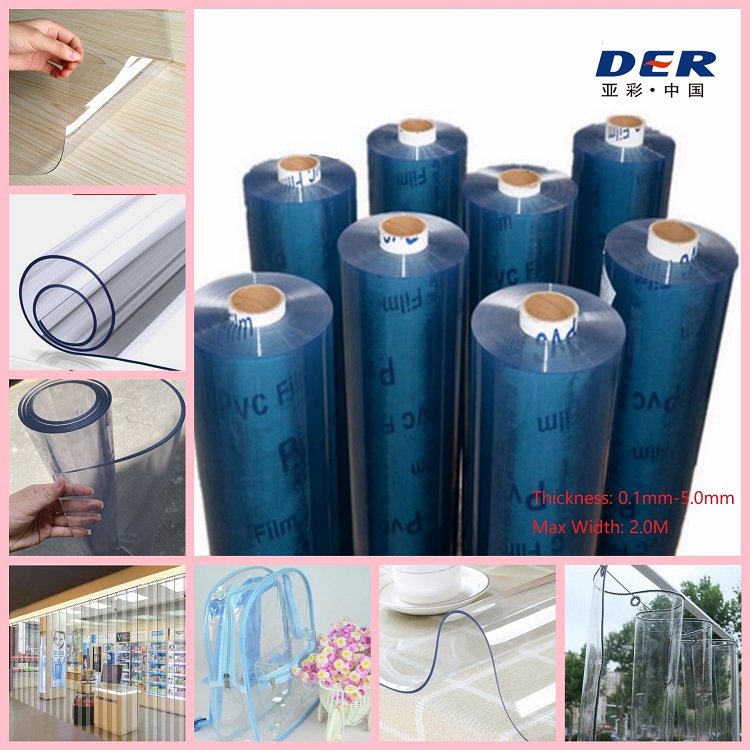
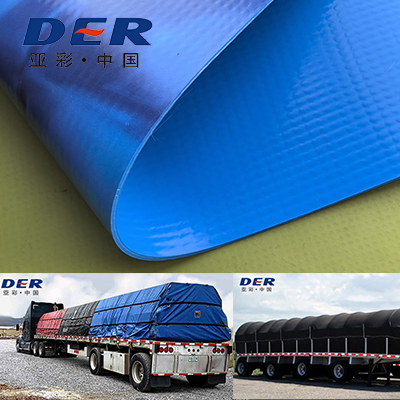
DERFLEX clear PVC material examples. Final clarity, thickness, reinforcement and fabrication should be confirmed against the intended use.
Answer-first buyer summary
What is a clear tarp, and which type should you buy?
A clear tarp is a transparent protective sheet or fabricated cover used when rain, wind, splash or dust protection is needed but visibility and natural light must remain. For high visual clarity, buyers usually look at flexible clear PVC or clear vinyl. For larger panels where dimensional reinforcement is more important than an unobstructed view, a transparent reinforced construction may be more suitable.
The practical buying decision is not “clear or not clear.” It is the combination of clarity, thickness, panel size, wind exposure, edge reinforcement, grommet layout, seam design and outdoor formulation. A thicker clear tarp can add body, but it also increases weight and handling effort.
Material choice
Clear PVC, Clear Vinyl or Reinforced Transparent Tarp?
“Clear tarp” is a broad buying term. The right construction depends on whether the priority is optical clarity, mechanical support, repeated handling or a specific finished enclosure.
High-Clear PVC / Vinyl
Best when line-of-sight matters: patio curtains, tent windows, industrial viewing panels and transparent covers. Smooth flexible PVC can be cut, welded and converted into custom panels.
Reinforced Transparent Tarp
A reinforcing grid can improve dimensional stability for larger or more stressed panels, but the scrim reduces optical clarity. It is a trade-off between see-through quality and structural support.
Finished Clear Tarp with Hardware
A fabricated panel adds hems, webbing, rope, reinforced corners, grommets, D-rings, zippers or other attachment details. The edge design often determines real service performance more than sheet thickness alone.
Buyer principle: specify how the clear tarp will be hung, tensioned, opened and exposed before deciding grommet spacing or material thickness. A stock hardware pattern is convenient, but it may not match the real frame.
Specification framework
Clear Tarp Specification Options
These ranges are selection guidance based on DERFLEX clear PVC product directions. Final values, tolerances and test requirements should be confirmed in the quotation and approved sample.
Specification item
Available direction / buyer decision
Why it matters
Product form
Roll material, cut sheet, welded panel, finished clear tarp, curtain panel or OEM packaged product
Determines downstream fabrication, packaging and sourcing workflow.
Material
Flexible transparent PVC; reinforced transparent structure can be discussed where added support is required
Controls clarity, flexibility, welding and dimensional behavior.
Thickness
Common clear PVC directions include about 0.2, 0.3, 0.5, 0.8 and 1.0 mm
Changes body, weight, folding behavior and handling effort.
Weight
Approximately 200–900 gsm depending on thickness, structure and finishing
Useful for freight, handling and comparison, but not a substitute for thickness or construction.
Clarity
High-clear grades available; target should be matched to viewing distance and application
A patio window and a greenhouse utility panel do not need the same visual standard.
Outdoor options
UV-resistant, anti-aging, anti-mildew and cold-flexible directions can be discussed by project
Outdoor appearance and flexibility depend strongly on climate and formulation.
Flame-retardant direction
Available by requirement; buyer should provide the exact market or test requirement before quotation
A generic “FR” claim is not enough for regulated projects.
Edge processing
Welded/folded hem, PVC banding, webbing, rope-in-hem, reinforced corners, pockets, zipper and D-ring details
Spreads load and adapts the panel to the installation method.
Grommets / eyelets
Aluminum, brass or stainless options; spacing and edge offset can follow the frame or anchor drawing
Hardware layout should match load direction instead of a one-size-fits-all catalog spacing.
Original selection matrix
Choose a Clear Tarp by the Failure Mode You Need to Prevent
Use condition
Start by prioritizing
Fabrication note
Common mistake
Patio / porch enclosure
Optical clarity, wind exposure, door access, seasonal handling
Coordinate perimeter fixing, bottom restraint and zipper/opening positions
Choosing thickness before deciding how the panel is anchored
Add local patches or sacrificial reinforcement at contact points
Using a heavier sheet but leaving stress zones unreinforced
Large vertical weather panel
Wind load, dimensional stability, frame geometry, fixing density
Consider reinforced transparent construction when support is more important than perfect clarity
Scaling a small stock tarp design to a very large panel without changing the edge system
Distributor / OEM line
Repeat specification, standard size plan, packaging, hardware consistency
Create a controlled SKU family around a small number of repeatable material and edge options
Buying by appearance only and not locking the approved material code
Mil ? mm purchasing guide
20 Mil vs 30 Mil Clear Tarp: Understand the Unit Before You Compare
North American retail listings often describe clear vinyl in mil, while international manufacturers commonly quote millimeters. One mil is one-thousandth of an inch. Converting the units prevents a common sourcing error: assuming two thickness labels describe different grades when they are actually close equivalents.
Important: thickness is only one decision variable. A 30 mil panel is thicker than a 20 mil panel, but that does not automatically mean it is better for every installation. Panel size, clarity, climate, reinforcement and hanging method still matter.
Nominal mil
Approx. mm
Procurement use
10 mil
0.254 mm
Reference conversion for lighter clear-sheet discussions
20 mil
0.508 mm
Common market reference near a 0.5 mm clear vinyl class
30 mil
0.762 mm
Heavier reference class between 0.5 and 0.8 mm
40 mil
1.016 mm
Approximate reference close to a 1.0 mm class
Engineering & fabrication notes
A Waterproof Sheet Is Not Automatically a Waterproof Installation
Clear PVC provides a water-impermeable material barrier, but real enclosure performance depends on seams, overlap direction, roof slope, openings, fasteners and how water is allowed to leave the system.
1. Plan the Water Path
Avoid flat geometry that encourages pooling. Coordinate seams and overlaps so gravity moves water away from the opening instead of toward it.
2. Spread Fastener Loads
Wind force can concentrate around one eyelet. Webbing, banding, rope reinforcement and corner patches help distribute load into a wider edge zone.
3. Keep Stress Out of the Clear Window
Where possible, put high-load hardware into reinforced perimeter zones rather than relying on the clear field material to carry point loads.
4. Design Access Before Production
Zippers, roll-up sections, overlap doors or removable panels should be located around real traffic and cleaning requirements.
5. Consider Cold Handling
PVC can become stiffer in colder conditions. The selected formulation and how the tarp is folded, rolled and tensioned should match the service climate.
6. Protect Contact Zones
Machinery corners, frame edges and repeated rubbing points can damage a clear tarp even when the main sheet is thick. Add local reinforcement where contact is expected.
Where clear tarps work best
Applications That Need Visibility Without Giving Up Protection
Clear tarps are most valuable where an opaque tarp would solve the weather problem but create a lighting, monitoring or visibility problem.
Greenhouses & Growing Areas
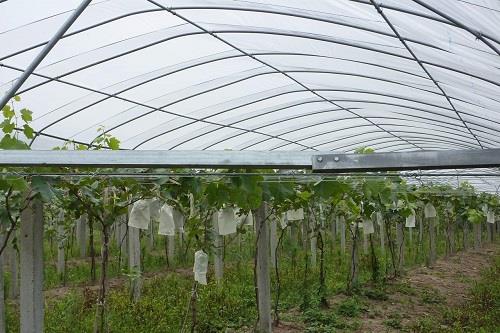
Use when daylight and crop visibility matter. Confirm outdoor formulation, frame support, condensation behavior and seasonal installation.
Industrial Curtains & Partitions
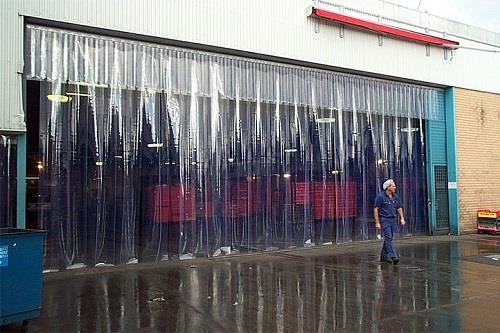
Transparent barriers can separate work zones while preserving line-of-sight. Hanging method, abrasion and access openings should be specified.
Patio, Porch & Outdoor Dining
Clear weather panels help keep an open visual feel. Define finished dimensions, bottom restraint, entry access and the expected wind exposure.
Tent & Canopy Windows
Clear roll material can be converted into sidewalls and windows where natural light and outside visibility are part of the product design.
Equipment & Project Covers
Clear panels can support visual inspection without removing a cover. Protect corners, access points and repeated-contact areas with local reinforcement.
Distributor & OEM Programs
Build repeatable clear tarp product families around controlled thickness, standard dimensions, hardware layouts, labels and export packaging.
Buyer comparison
Clear Tarp vs Opaque PVC Tarp vs Mesh Tarp
Material direction
Visibility
Rain barrier
Airflow
Best when...
Clear PVC / clear vinyl tarp
High
High at material level; installation details still matter
Low unless openings are designed
You need light or line-of-sight together with weather protection
Opaque PVC tarp
None
High at material level
Low
Privacy, shade, cargo concealment or conventional heavy-duty covering matters more than visibility
Mesh tarp
Partial
Not a sealed rain barrier
High
Shade, debris containment and wind-pressure reduction are more important than rain sealing
Clear Tarp Image Pack: Material, Application & Manufacturing Context
Each image uses a descriptive alt attribute and a product-specific caption so search engines and buyers can understand the subject without relying on filenames alone.
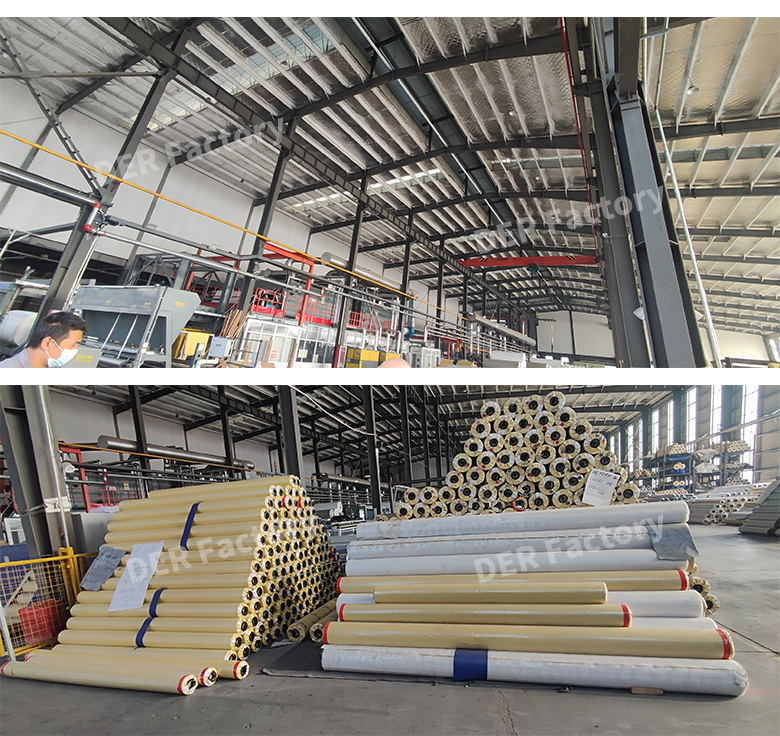
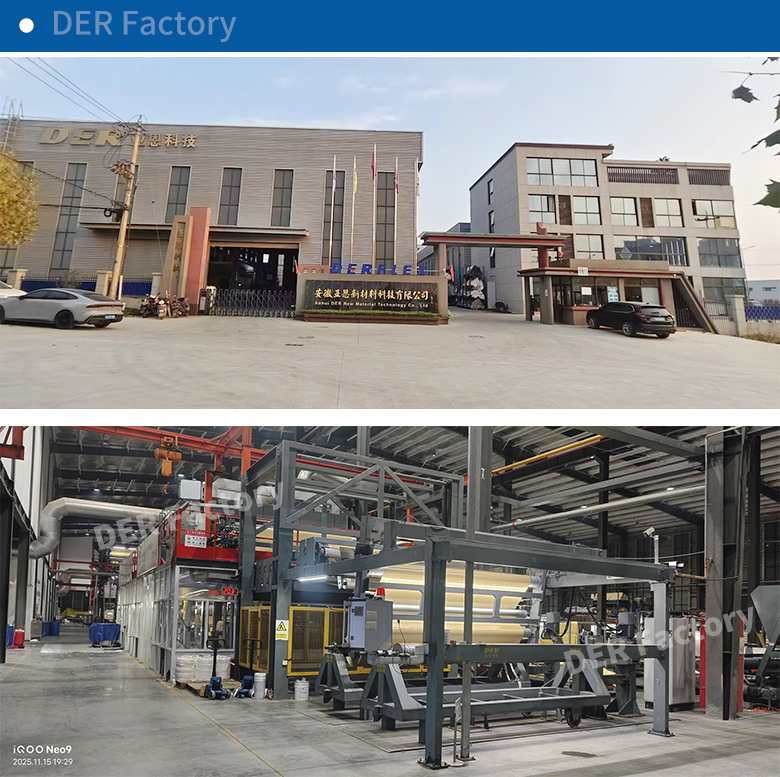
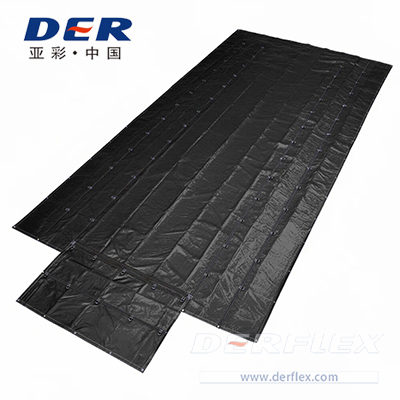
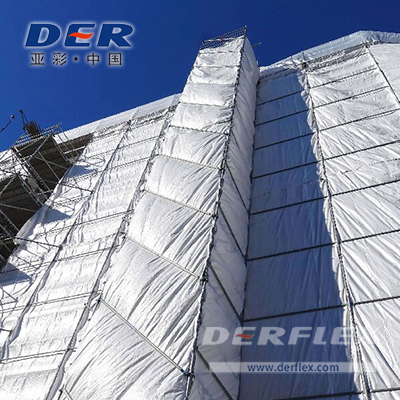
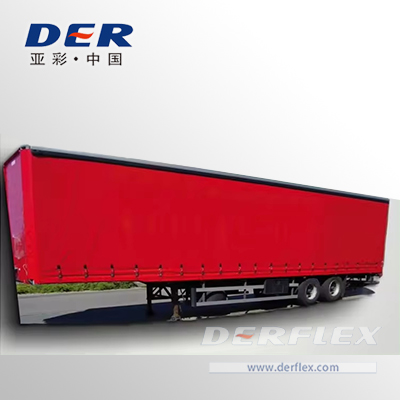
Clear PVC tarpaulin roll and converted application examples for transparent enclosure programs.Transparent PVC roll material for windows, curtains, panels and downstream clear tarp fabrication.Greenhouse clear-cover application where natural light and weather shielding are both required.Industrial transparent curtain application preserving visibility across a working doorway.DERFLEX manufacturing context for roll goods and specification-controlled B2B supply programs.
Common procurement mistakes
Five Ways Clear Tarp Projects Go Wrong Before Production Starts
Specifying only thickness and ignoring panel size, wind exposure and fixing geometry.
Assuming “waterproof material” means every finished enclosure will be watertight.
Using identical grommet spacing on every side even though load and anchor spacing are different.
Asking for “crystal clear” without defining whether reinforcement, tint or surface finish is acceptable.
Approving a sample visually but failing to lock material code, edge construction and hardware layout for repeat orders.
Related DERFLEX solutions
Continue the Material Selection Without Creating a Dead End
These six verified DERFLEX pages support adjacent decisions such as opaque PVC tarps, heavier vinyl, greenhouse use, clear film conversion and made-to-measure covers.
Build the Clear Tarp Around the Frame, Climate and Fixing Method
Send DERFLEX the application, finished dimensions, quantity, preferred thickness, clarity requirement, frame or anchor information, reinforcement and hardware details. The team can review a suitable material and fabrication direction for sampling and quotation.
Roll material, cut panel or finished clear tarp
Custom thickness, edge construction and grommet layout
Clear PVC material provides a waterproof barrier. A finished enclosure, however, can still leak at seams, edges, openings or fasteners if the installation does not manage water correctly. Heat-welded seams, suitable overlap, slope and edge design are important for real-world weather protection.
What is the best thickness for a clear tarp?
There is no single best thickness. Light temporary panels may use thinner clear PVC, while larger outdoor panels, industrial curtains or repeatedly handled covers may need more body. DERFLEX clear PVC directions commonly span about 0.2–1.0 mm; choose within that range according to panel size, wind, handling and reinforcement.
Is 20 mil clear vinyl the same as 0.5 mm?
They are very close: 20 mil is approximately 0.508 mm. When buying internationally, confirm the actual nominal thickness and tolerance on the quotation rather than relying only on unit conversion.
Should I use clear PVC or reinforced transparent tarpaulin?
Use high-clear PVC when visual clarity is the main priority. Consider a reinforced transparent structure when a larger panel or higher mechanical demand needs more dimensional support and some visible grid is acceptable.
Can clear tarps be made with custom grommet spacing?
Yes. DERFLEX can discuss custom grommet material, spacing, row position and edge offset. The best layout is based on the real frame, anchor spacing, panel size and expected load direction rather than a fixed retail pattern.
Will clear PVC tarps turn yellow outdoors?
Transparent PVC can change appearance with UV exposure, heat, pollution, cleaning chemicals and time. Outdoor-grade UV-resistant and anti-aging directions can be discussed to reduce premature visual change, but final service appearance depends on the selected formulation and environment.
Can I buy clear tarp material by the roll?
Yes. DERFLEX can discuss transparent PVC roll goods for converters as well as cut sheets, welded panels and finished clear tarps. Confirm roll width, thickness, downstream welding or sewing method and required packaging before ordering.
What information is needed for a clear tarp quotation?
Provide application, finished dimensions, quantity, preferred thickness or mil, clarity target, climate, reinforcement, grommet or hardware layout, required testing, packaging and destination. A frame sketch or installation photo can reduce ambiguity for custom work.
Product ranges and application guidance on this page are for specification discussion. Final dimensions, tolerances, test methods, performance values, commercial terms and packing should be confirmed in the approved quotation and sample.