
Salt Spray
Salt residue remains after water evaporates. It attracts moisture, soils the surface and accelerates corrosion of unsuitable fittings.



Salt spray, intense sunlight, humidity, wind and abrasive movement create a very different duty cycle from ordinary outdoor storage. This guide shows how to choose a saltwater-resistant tarp by material, coating, seam construction, edge reinforcement, hardware and ventilation—not by color or thickness alone.
A general outdoor tarp may stop rain yet still fail early beside the sea. Coastal performance depends on how the complete cover system responds to salt residue, UV energy, persistent dampness, wind cycling and contact abrasion.
Salt residue remains after water evaporates. It attracts moisture, soils the surface and accelerates corrosion of unsuitable fittings.
Coastal sites often have open exposure and reflected light from water, increasing the importance of coating stability and color retention.
Humidity, dew and trapped condensation create conditions for mildew on dirt and organic residue even when the base fabric itself is synthetic.
Repeated flapping loads seams, hems, grommets and tie-downs. Poor fit can damage a strong fabric surprisingly quickly.
Rails, corners, frames, machinery edges and sand can wear through the coating unless contact zones are padded or reinforced.
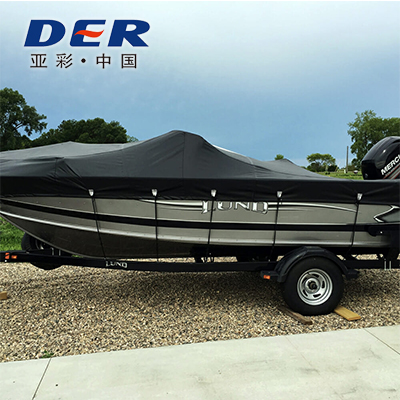
The best coastal tarp is a coordinated structure. The coating controls water and surface cleanability; the polyester base fabric carries tensile and tear loads; the seams connect panels; hems distribute edge stress; hardware transfers tie-down loads; and the installed geometry controls wind, drainage and ventilation.
DERFLEX can support marine tarp projects as roll goods, cut panels or fabricated covers. Buyers can specify material weight, surface finish, UV and mildew options, color, welded or sewn construction, reinforced hems, grommet spacing, webbing, straps, rope edges, printing and private-label packaging.
There is no universal winner for every boat, dock or coastal facility. The correct material depends on whether the priority is permanent waterproofing, temporary economy, breathability, fitted appearance or frequent handling.
| Material | Best coastal use | Strengths | Watch points | Buying decision |
|---|---|---|---|---|
| PVC-Coated Polyester Heavy-duty choice | Boat storage, dockside machinery, shipyard enclosures, cargo and long-term waterproof covers | Waterproof surface, weldable seams, high tear strength, easy cleaning, customizable UV and mildew performance | Heavier than light woven covers; needs ventilation strategy where condensation matters | Strong starting point for B2B coastal protection requiring waterproofing and custom fabrication |
| Polyethylene Tarp | Temporary covers, emergency protection, short seasonal storage and price-sensitive use | Lightweight, economical, easy to deploy and replace | Grade varies widely; lower-duty versions can degrade faster under UV, wind and repeated folding | Use for temporary duty and confirm UV treatment, weave quality, edge reinforcement and finished size |
| Treated Canvas | Breathable storage covers, shaded dockside use and traditional sewn cover systems | Airflow, softer hand, lower condensation risk when correctly installed | Not inherently waterproof; absorbs dirt and needs drying and maintenance | Useful where breathability is more important than fully welded waterproof construction |
| Marine Acrylic / Coated Woven Fabric | Fitted boat covers, bimini tops, cockpit covers and premium appearance-focused products | Good colorfastness and UV performance in qualified marine grades; easier daily handling in selected constructions | Performance depends on fabric family, finish, seams and pattern design; abrasion zones still need reinforcement | Best evaluated as a fitted cover system rather than a generic rectangular tarp |
Use these points when requesting samples, quotations or production specifications.
Ask for an outdoor-grade coating matched to expected sun exposure, color and target service period. Dark colors can absorb more heat, while light colors may reduce solar gain.
For rain and spray exclusion, specify a continuous coated surface and verify that panel seams can be welded with stable overlap and process control.
Anti-mildew treatment helps, but drainage, ventilation, cleaning and dry storage remain essential because mildew can grow on trapped contaminants.
Double hems, webbing, rope edges or layered reinforcement distribute tension and reduce the risk of fasteners pulling through the fabric.
Confirm grommet, D-ring, buckle and fastener materials for the actual coastal environment. Hardware selection should be documented rather than assumed.
Add sacrificial patches or padded zones at rails, windshield frames, corners, machinery edges and any location where wind movement creates friction.
A smooth, sloped and evenly tensioned cover generally handles wind and rain better than a loose tarp with a few highly loaded grommets.
A lacquered or easy-clean surface can simplify removal of salt residue, bird droppings and dockside dirt during routine maintenance.
For northern ports or winter storage, include low-temperature flexibility in the technical discussion so the coating does not become impractically stiff.
DERFLEX can develop coastal tarp materials and finished-cover features for distributors, cover makers, marinas, shipyards, fishing fleets and private-label programs. Values below are practical specification starting points and should be confirmed through sample approval and project-specific testing.
One material family can support many applications, but the finished design should be adjusted to the geometry, movement, exposure and maintenance routine.
Protect decks, consoles, upholstery, electronics and equipment during marina parking, winter lay-up or long outdoor storage.
Custom covers for winches, cranes, pumps, motors, generators and maintenance equipment exposed to spray and humid air.
Temporary containment, weather barriers and repair enclosures where weldable panels and reinforced fastening are required.
Waterproof protection for dockside storage, barge cargo, fishing gear and equipment waiting for loading or transport.
Cover building materials, tools, temporary structures and equipment on beachfront, island and waterfront projects.
Roll supply, cut panels, replacement tarps and private-label finished products for marine distributors and outdoor brands.
A clear requirement sheet reduces sample revisions and helps align material, fabrication, packaging and inspection before bulk production.
Provide location, distance from seawater, sun level, wind, temperature range, storage period and whether direct salt spray is expected.
Send dimensions, drawings or photos, attachment points, desired overlap, slope, vents, access openings and contact zones.
Confirm color, hand feel, weight, coating, seam style, reinforcement, grommets, straps, logo, labels and packing.
Agree inspection items for dimensions, appearance, welding, hems, hardware, strength, packing and repeat-order consistency.
For precise quotation, include quantity, destination country, packing method and whether you need roll material, cut panels or finished tarps.
The material specification matters, but installation and maintenance often determine how quickly local damage develops.
Use fresh water and mild cleaning methods to remove salt and dirt. Follow the approved cleaning guidance for the selected coating.
Support the cover with adequate slope so rain does not form heavy ponds that stretch fabric and overload seams.
Use vents, spacers or breathable sections when enclosed equipment can release moisture or when large temperature swings occur.
Check grommets, corners, seams, straps and chafe patches before small wear areas develop into tears.
Store the tarp clean and dry. Avoid tight folding over the same lines and keep it away from sharp hardware.
Inspect installation after strong wind or heavy rain. Loose sections can flap, while over-tightened points can concentrate loads.
These related pages cover boat covers, PVC materials, canopies and custom tarp systems.
PVC-coated polyester is often selected for long-term waterproof coastal covers because it can combine a waterproof surface, welded seams, high tear strength, easy cleaning and customizable UV or mildew performance. The final choice should still account for ventilation, handling weight, abrasion and exposure intensity.
It may work for temporary or emergency use, but performance varies by grade. For repeated or year-round marina exposure, verify UV stabilization, weave strength, finished size, reinforced hems, fastener quality and expected service conditions rather than relying on color.
A correctly specified PVC-coated tarp can be suitable for salt-air and salt-spray environments, but salt residue should still be rinsed away. Hardware, seams, edge construction, surface treatment and cleaning routine all affect the finished cover's durability.
The answer depends on the asset and installation. Machinery and exposed cargo may prioritize waterproof welded construction. Fitted boat covers and enclosed storage may need vents or breathable zones to reduce condensation. Waterproofing and moisture management should be designed together.
Use corrosion-resistant hardware documented for the project environment, and support it with reinforced hems or webbing. The spacing should reflect wind load, tarp size, edge geometry and tie-down method; closer spacing alone does not compensate for weak reinforcement.
DERFLEX can support custom colors, sizes, material weights, surface finishes, welded or sewn construction, reinforced edges, grommet spacing, webbing, straps, rope hems, printing, labels and private-label packing, subject to specification review and production confirmation.
Send DERFLEX your application, dimensions, coastal exposure, target material wei, ght, color, seam construction, reinforcement, hardware, quantity, packing and destination. The team can review the requirement and recommend a practical marine tarp specification.