



What Is the Best Tarp Material?
The best tarp material depends on the job: lightweight polyethylene works for short-term covers, canvas works when breathability matters, mesh works for shade and airflow, and PVC vinyl coated polyester is usually the strongest choice for heavy-duty, waterproof, long-term industrial use.
For truck covers, industrial equipment covers, construction site protection, agriculture covers, outdoor storage, canopy covers and OEM tarp programs, DERFLEX recommends PVC vinyl coated polyester because it balances waterproofing, tear strength, weldability, UV resistance, surface durability and custom manufacturing flexibility.
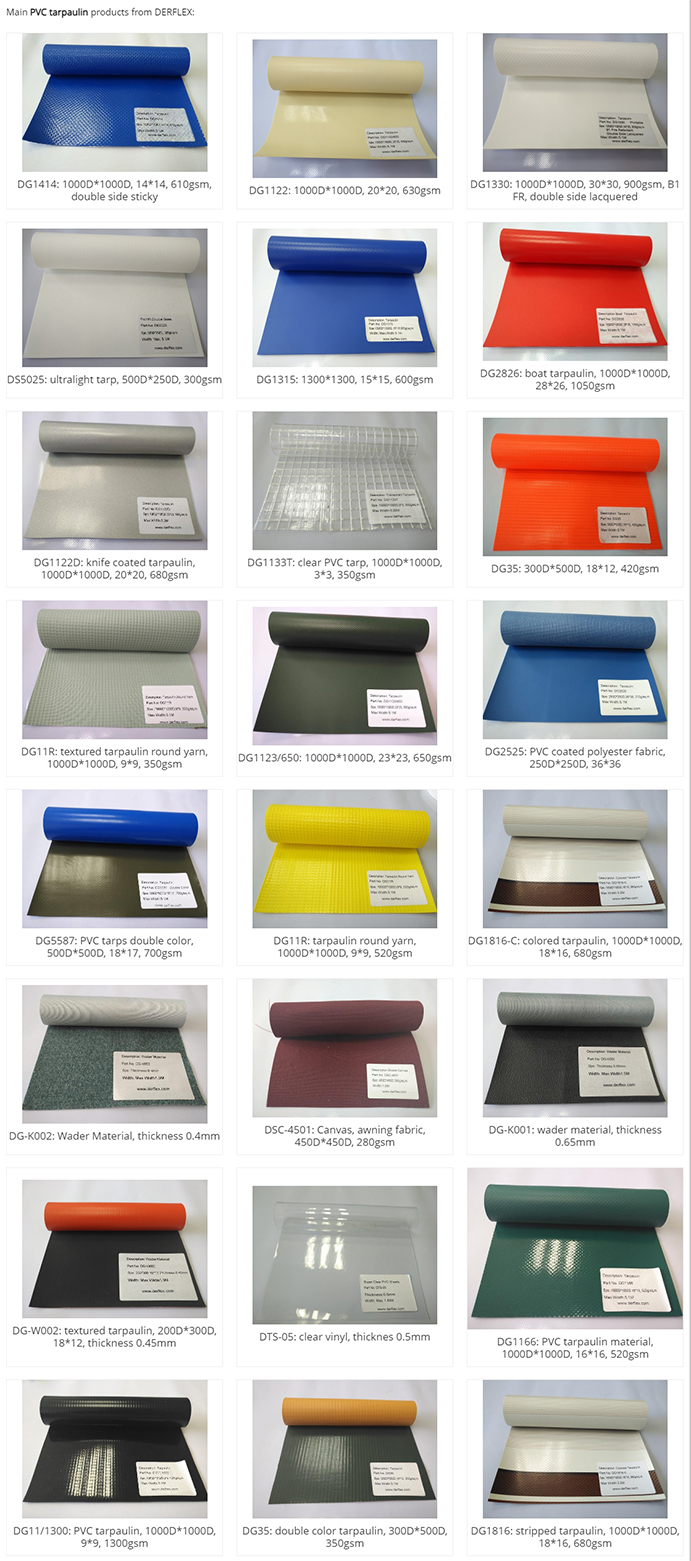
DERFLEX PVC Coated Tarp Materials
A practical range of coated polyester tarpaulin fabrics for different weights, colors, surface finishes, UV grades, flame-retardant options and finished tarp manufacturing needs.
The Best Tarp Material Is the One Matched to Real Use Conditions
Many buyers search for one universal answer, but tarp performance is not decided by material name alone. The real decision depends on waterproofing, UV exposure, weight, tear resistance, abrasion, flexibility, edge reinforcement, welding method, expected service life and purchasing model.
PVC / Vinyl Coated Polyester
Best for buyers who need a serious, long-term, waterproof tarp material with stronger tear resistance, better outdoor durability, weldability and custom manufacturing support.
- Recommended for heavy-duty and industrial use
- Good waterproof and weatherproof performance
- Suitable for HF welding and finished tarp fabrication
- Custom GSM, color, width, surface and treatment options
Polyethylene / PE Tarps
Best for economical, short-term or general outdoor cover needs. PE tarps are lightweight and waterproof, but they are usually less suitable for demanding industrial use, repeated abrasion or long-term custom projects.
- Good for temporary protection
- Lightweight and economical
- Easy to handle for general use
- Not ideal for premium custom tarp programs
Canvas, Mesh & Specialty Fabrics
Canvas is useful when breathability is important. Mesh is useful for shade, airflow and wind reduction. Specialty materials such as TPU or flame-retardant coated fabrics can be selected for specific performance requirements.
- Canvas reduces moisture build-up
- Mesh allows airflow and shade
- Specialty coated fabrics solve niche requirements
- Best selected after application review
Poly vs PVC Vinyl vs Canvas vs Mesh: Which Tarp Material Should You Choose?
The table below helps procurement teams, distributors, fabricators and project buyers compare tarp material options from a practical purchasing perspective.
| Material Type | Main Advantages | Limits to Consider | Best Applications | B2B Recommendation |
|---|---|---|---|---|
| PVC / Vinyl Coated Polyester | Waterproof, durable, weldable, tear resistant, UV-resistant options, custom-friendly, industrial appearance | Heavier than light PE tarps; quality depends on coating formula, base fabric and production control | Truck tarps, industrial covers, machinery covers, canopy tarps, marine covers, outdoor storage, OEM programs | Best Overall |
| Polyethylene / PE | Lightweight, affordable, waterproof, easy to handle, widely available | Shorter service life in demanding conditions; less premium for welding, edge structure and repeated industrial use | Temporary roof cover, camping ground sheets, garden cover, short-term construction protection | Budget Use |
| Canvas | Breathable, natural texture, good for reducing condensation, durable in selected dry-use situations | Water-resistant rather than fully waterproof unless treated; may absorb moisture; heavier to dry | Firewood covers, breathable equipment covers, painting drop cloths, some agricultural covers | Breathability |
| Mesh | Allows airflow, reduces wind pressure, provides shade, lightweight handling | Not fully waterproof; not suitable when complete rain protection is required | Shade screens, fence screens, dump truck mesh covers, wind screens, ventilation covers | Airflow |
| TPU / Specialty Coated Fabric | Flexible, strong, abrasion-resistant, can be used for special technical products | Higher cost; should be selected only when performance requirements justify it | Flexible tanks, doors, premium inflatable products, demanding technical covers | Specialty |
Do Not Judge a Tarp Only by Thickness
A tarp can look heavy but still fail early if the base fabric, yarn density, coating adhesion, UV formulation, seam method or reinforcement design is wrong. DERFLEX evaluates tarp material as a complete performance system.
- Base fabric: polyester denier and yarn density
- Coating: PVC formula, adhesion and surface treatment
- Fabric weight: GSM or oz level matched to the application
- Finishing: hems, eyelets, webbing, welding and packaging
- Environment: UV, wind, rain, abrasion, cold and chemicals
Common PVC Tarp Range
Medium to heavy-duty PVC coated polyester materials are commonly selected from approximately 450gsm to 1200gsm depending on application, strength target and cost level.
Industrial Structure
Typical structures include 500D, 1000D, 1300D or application-specific polyester base fabric with PVC coating, lamination or knife-coating processes.
Surface Options
Glossy, matte, lacquered, textured, anti-mildew, UV-resistant, flame-retardant or printable surfaces can be selected according to end use.
Finished Tarp Support
DERFLEX can support roll goods and finished tarp programs including cutting, welding, hems, reinforced edges, eyelets, webbing and OEM packaging.
| Buyer Question | What to Check | Why It Matters | DERFLEX Support |
|---|---|---|---|
| Will the tarp stay waterproof? | Coating type, coating thickness, weldability, seam design | Water failure often begins at weak seams, punctures or poor coating adhesion | PVC coated polyester material and welding-friendly structures |
| Will it survive wind and tension? | Tensile strength, tear strength, grommet spacing, edge reinforcement | Wind whipping and tie-down stress can destroy weak tarp edges | Custom hems, webbing, reinforcement patches and eyelet layout support |
| Will UV exposure damage it? | UV-resistant formulation, color stability and surface treatment | Outdoor tarps need resistance against sunlight aging and cracking | Outdoor-grade PVC tarpaulin material options |
| Is it suitable for repeat orders? | Batch consistency, color control, width, roll length and packaging | Distributors and OEM brands need stable material across orders | Factory-direct production coordination and export-ready supply |
Best Tarp Material by Use Case
A strong material decision starts with the environment. DERFLEX helps buyers select tarp material by real use case instead of only comparing price per square meter.
How to Choose the Best Tarp Material for Your Project
For distributors, importers, contractors and fabricators, the right tarp material should be selected by performance requirements first, then cost, finishing and order model.
Define Exposure
Confirm rain, UV, wind, snow, temperature, chemicals, abrasion and whether the tarp will be used indoors or outdoors.
Define Strength
Check tensile strength, tear strength, base fabric denier, yarn density, tarp weight and reinforcement requirements.
Define Fabrication
Decide whether the tarp needs welding, sewing, hems, grommets, webbing, handles, logo printing or custom packaging.
Define Supply Model
Choose roll goods, finished tarps, OEM private label programs or project-based custom material development.
DERFLEX Helps Buyers Go Beyond Generic Online Tarps
Many online tarp pages answer the question from a retail buying angle. DERFLEX answers it from a manufacturing and B2B procurement angle: material structure, custom requirements, repeat supply and long-term performance.
DERFLEX Factory-Direct Tarp Material Supply
- Material recommendation based on real application conditions
- Custom GSM, thickness, color, width and surface finish
- Waterproof, UV-resistant and flame-retardant direction available
- Roll goods and finished tarp support
- Hems, eyelets, webbing, welding, labels and packaging options
- Better for distributors, importers, fabricators and OEM buyers
Common Retail or Stock Tarp Sellers
- Usually focused on standard sizes and stock colors
- Limited control over coating formula and base fabric structure
- Often optimized for small orders rather than repeat B2B programs
- Less flexibility for OEM packaging and private-label needs
- Harder to maintain identical material across repeat shipments
- May not match project-specific welding or reinforcement requirements
Explore Related Tarp Materials & Custom Tarp Pages
These internal links help buyers move from material education to product selection, quotation and application-specific procurement.
From “Best Tarp Material” Search to Custom PVC Tarp Program
A regional distributor wanted to upgrade from generic low-cost tarps to a more professional outdoor cover product line. The buyer originally searched for the best tarp material because existing PE tarps created complaints in wind, UV exposure and repeated handling.
Outdoor equipment covers, truck covers and general industrial covers with different price levels.
Recommend PVC coated polyester grades by weight, surface finish, UV exposure and target retail segment.
Custom color, roll consistency, reinforced finished tarp options and export-ready packaging support.
Frequently Asked Questions About the Best Tarp Material
These questions help buyers compare tarp material options before requesting a quote.
What is the best tarp material overall?
For heavy-duty, waterproof and long-term outdoor applications, PVC vinyl coated polyester is usually the best overall tarp material. It offers stronger durability, better surface protection, weldability and custom manufacturing flexibility than basic lightweight tarps.
Is PVC tarp material better than polyethylene?
PVC tarp material is usually better for industrial, truck, construction, marine and long-term outdoor use. Polyethylene is lighter and more economical, making it suitable for short-term or general-purpose protection.
Which tarp material is best for waterproof protection?
PVC vinyl coated polyester and many PE tarps can provide waterproof protection. For demanding B2B use, PVC vinyl coated polyester is preferred because it combines waterproofing with stronger tear resistance, weldability and custom finishing options.
Is canvas tarp material waterproof?
Canvas is usually water-resistant rather than fully waterproof. It is valued for breathability and reduced condensation, but it may absorb water if exposed to standing water or heavy rain for long periods.
What tarp material is best for truck covers?
PVC vinyl coated polyester is the preferred material for many truck covers because it is waterproof, durable, weldable, tear resistant and suitable for reinforced edges, eyelets, webbing and custom cargo cover designs.
What tarp material is best for agriculture?
For long-term weather protection, PVC coated polyester is a strong choice. For breathable storage such as firewood or certain agricultural materials, canvas or mesh may be more suitable depending on ventilation requirements.
What is the best tarp material for shade and airflow?
Mesh tarp material is best when airflow, shade and wind reduction are more important than complete waterproofing. It is commonly used for fence screens, shade covers, wind screens and certain truck mesh covers.
Can DERFLEX make custom tarp materials?
Yes. DERFLEX supports custom PVC coated tarpaulin materials, roll goods and finished tarp programs with options for weight, color, width, surface finish, UV resistance, flame-retardant direction, hems, eyelets, welding, webbing, labels and packaging.
Need Help Choosing the Best Tarp Material?
Send your application, size, target weight, color, UV exposure, waterproofing requirement, reinforcement method and order quantity. DERFLEX can recommend a practical PVC tarpaulin material or finished tarp solution for your project.