


 Industrial tarpaulin knowledge center
Is a Tarp 100% Waterproof?
Some tarps block rain through the sheet itself, but no material name alone guarantees a leak-free finished cover. Learn what “100% waterproof” actually means, how PVC, polyethylene, canvas and mesh compare, where a tarp can fail, and which tests and construction details matter to industrial buyers.
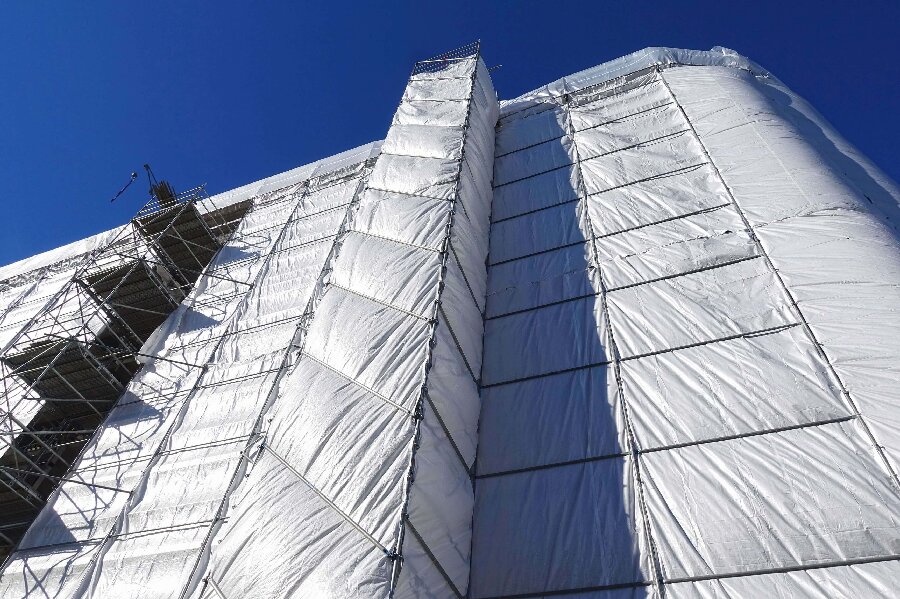
Not every tarp is 100% waterproof—and “waterproof fabric” is not the same as a watertight cover.
PVC/vinyl-coated tarps and many laminated PE tarps can stop rain penetrating an intact sheet. Treated canvas is often water-resistant rather than continuously waterproof; open mesh lets water pass. Even with waterproof sheet material, rain may enter at stitches, joins, damaged coatings, grommet holes or open edges. An appropriate slope, seam design and acceptance test are necessary when dry cargo or equipment must be protected.
What Does “100% Waterproof” Actually Mean?
On a product label, the phrase usually describes an intended water barrier. For procurement, it is incomplete until the buyer knows what was tested, under which conditions, and whether the claim applies to the sheet or the complete fabricated tarp.
Material barrier
A continuous coating or plastic lamination can prevent water passing through intact material under a defined exposure. This says nothing about seams or fittings.
Fabricated assembly
Joined panels, stitched or welded seams, hems, corners, windows and fastening points can introduce water paths. A material result is not a finished-cover certificate.
Installed system
Actual protection depends on pitch, overlap, wind-driven rain, sagging, ponding, abrasion and how the cover is anchored. Water may travel in from below or around the edges.
Use the term “waterproof” with an agreed exposure and acceptance criterion; avoid interpreting it as an unlimited promise under any pressure, storm or lifetime.
Are PVC, Poly, Canvas and Mesh Tarps Waterproof?
Different constructions serve different tasks. Waterproofing, breathability and wear life should be evaluated independently, without assuming that one material label or GSM guarantees performance.
| Tarp material | Rain barrier potential | Main buyer advantage | Confirm before purchase |
|---|---|---|---|
| PVC-coated polyester / vinyl tarp | Continuous waterproof barrier in an intact coated construction | Reusable industrial covers, weldable panels and reinforcement options | Coating integrity, weld route, seam evidence, UV exposure, corners and fixings |
| Laminated PE / poly tarp | Often waterproof as an intact plastic-laminated sheet | Lightweight, cost-sensitive or temporary protection | Laminate quality, thickness or GSM, seam type, UV specification, eyelet durability |
| Treated canvas | Often repels light rain; saturation or pressure may eventually penetrate | Breathability and a traditional textile handling feel | Treatment chemistry, care instructions, shrinkage, seam sealing, moisture risk |
| Open mesh tarp | Not a waterproof rain barrier | Ventilation, shade and debris restraint | Mesh openness, edge strength, airflow, required containment rather than water blocking |
On small screens, scroll the comparison table horizontally.
For a wider material comparison, see waterproof versus water-resistant tarps. For coated-fabric procurement, the DERFLEX PVC tarpaulin range explains material options and finishing.
Why Does Water Get Under a Tarp That Is Supposed to Be Waterproof?
Identify the water path before rejecting the base material. These failure patterns can look similar but require different corrections.
Where to look first
- Along a stitched seam: needle holes or an inadequately sealed join.
- Below a grommet or corner: a penetration, pulled fitting or torn reinforcement.
- At a low spot: pooled water, excessive sag or an overstressed seam.
- Near exposed edges: wind-driven rain entering from the side or underneath.
- At a worn crease: abrasion, pinholes or degraded coating after repeated folding.
- Across the underside: condensation from humid air or wet cargo, even without rain leakage.
For practical repair and aftercare, read how to waterproof a tarp.
Water-path schematic
Even when the sheet surface is impermeable, joints and fixings introduce different failure mechanisms. The illustration is explanatory, not a measured performance claim.
A wet underside does not automatically prove a leak: if moisture is widespread rather than localized below a seam or hole, investigate condensation, ventilation and initially damp cargo.
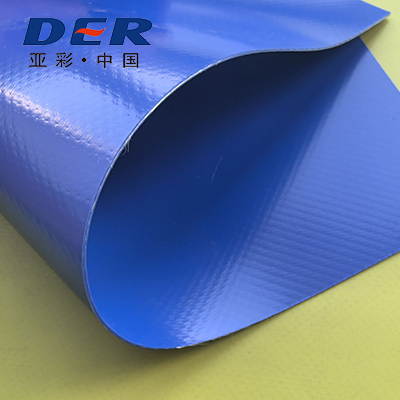
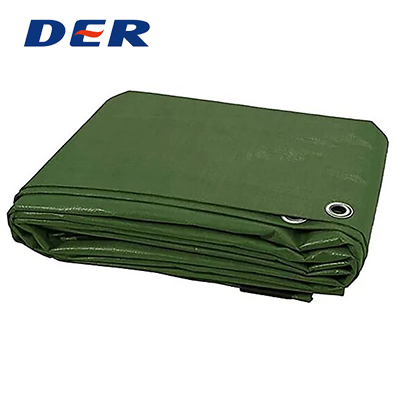
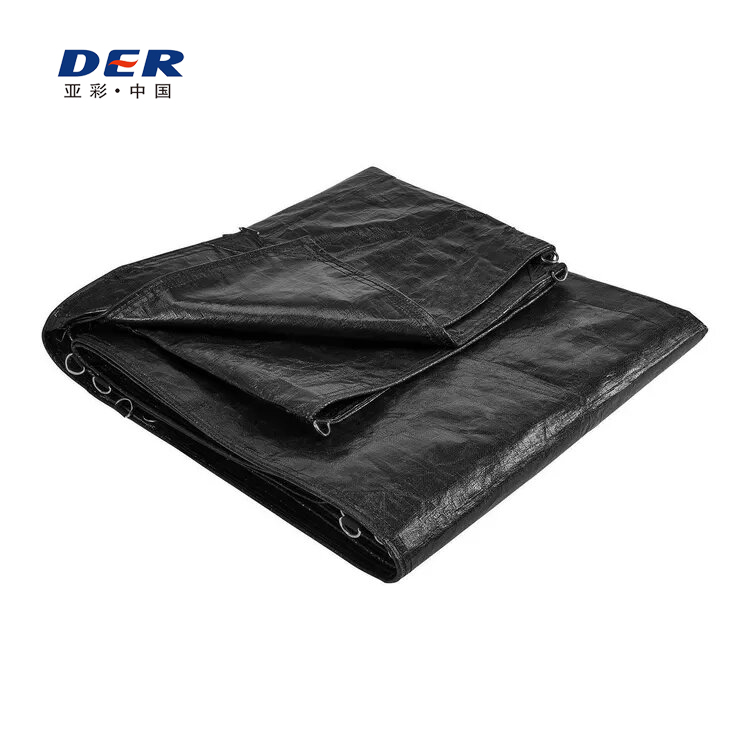
How Tarp Construction Looks in Actual DERFLEX Product Images
These images are existing DERFLEX-site references for material appearance, folded finished covers and hardware. They are not staged leakage tests or proof of any specific waterproof rating.
How Do You Test Whether a Tarp Is Actually Waterproof?
Use two levels of evidence: a repeatable test for the selected sheet material and a separate inspection or agreed test for the fabricated cover. A single “100% waterproof” line on a catalog sheet cannot substitute for those records.
Define the exposure
Specify rain splash versus prolonged wet exposure, expected pitch, wind, seam location, required coverage and whether the cover can encounter temporary standing water. Do not assume a tarp is an approved load-bearing roof or containment liner.
Test the sheet barrier
Where appropriate, request a water-penetration or hydrostatic-head test using an identified method and revision. Record the specimen, preconditioning, pressure or water-head endpoint, units, number of specimens and pass criterion. A result in mm H₂O is only comparable under equivalent methods.
Examine joining details
Approve production-representative weld or sealed-seam samples, overlap, hems, corner patches and fastening penetrations. Compare sealed joins with stitched-only seams. Ask which details are included in the actual quote rather than inferred from an image.
Inspect the complete cover
Agree an appropriate visual, water-spray or other finished-cover procedure before acceptance, with installation geometry and observation areas defined. Log leaks at seams, openings, closures and edges separately from sheet defects, and retain batch and drawing references.
The method, target result and certificate availability must be confirmed for the actual SKU and contract. This page does not claim that a particular DERFLEX tarp passed a specific hydrostatic-head level.
For specification fields and evidence planning, consult the tarpaulin technical specification guide and the PVC tarp waterproofing explanation.
Which Waterproof Tarp Construction Fits Your Application?
Start with how the tarp will be used, not a generic durability slogan. The following are selection priorities, not verified model specifications.
| Application | Material direction | Water-risk focus | Procurement detail |
|---|---|---|---|
| Reusable truck and cargo cover | PVC-coated polyester where repeated-use strength is needed | Seams, D-rings, abrasion, flutter, drainage | Finished size, tie-down layout, rolling cycles and weld samples |
| Temporary outdoor stockpile | PE or PVC depending on duration and handling | Ponding, loose edge, puncture, wind lift | Slope, overlap allowance, edge reinforcement and UV exposure |
| Construction scaffolding and sheeting | Purpose-specified coated sheet | Runoff, vertical joints, attachment and structural loads | Frame geometry, applicable site safety requirements and installation plan |
| Breathable equipment cover | Selected treated canvas or vented design | Condensation as well as external rain | Humidity, ventilation, treatment care and possible wet-through |
| Industrial partition or clear enclosure | PVC-coated or transparent PVC panel where appropriate | Door openings, top edge, seams and condensation | Panel drawing, access locations, closure and slope of any overhead panel |
On small screens, scroll the application table horizontally.
Related use cases: construction tarp selection for contractors and custom heavy-duty PVC tarp supply. For a material-level recommendation, also see what is the most waterproof tarpaulin?
A Practical Waterproof Tarp Procurement Checklist
Send these details with your inquiry
- Use and exposure: cargo, roof cover, outdoor stock, curtain or equipment; expected rain and reuse.
- Dimensions: finished width and length, coverage overlaps, layout or a sketch.
- Material target: PVC/PE/canvas preference, approximate GSM or thickness if known, and approved sample reference if available.
- Critical interfaces: welded joins, openings, reinforced hems, grommets, D-rings or straps.
- Evidence: required water-penetration method, finished-seam acceptance, lot identification and any market-specific documents.
- Commercial scope: rolls, cut panels or finished covers; quantity, packing, destination and schedule.
Do not skip these installation questions
Drainage: Will rain run off rather than collect in an unsupported depression?
Sharp edges: Does the cover need abrasion protection or reinforced contact zones?
Moisture management: Can condensation build up inside a sealed enclosure?
Service and repair: Can damaged sections be inspected, cleaned, patched or replaced?
Responsibility: Is the purchase for fabric rolls, a fabricated cover or an engineered installed system? State each separately.
Need Waterproof Tarp Material or Custom Finished Covers?
DERFLEX supplies PVC tarpaulin and custom tarp directions for industrial and OEM buyers. Submit your application, drawing, quantity, material preference and key seam or reinforcement requirements. The proposed construction and any testing scope should be agreed before production.
Frequently Asked Questions About 100% Waterproof Tarps
Is any tarp completely waterproof?
Intact PVC-coated and many laminated PE tarp sheets can form waterproof barriers under defined conditions. A finished tarp still needs compatible seams, sound fixing points and an installation that sheds water. No general material name guarantees zero leakage in every environment or over unlimited service time.
Are blue poly tarps waterproof?
Many blue polyethylene tarps use a waterproof laminated sheet, especially when new and undamaged. The color alone says nothing about lamination quality, UV durability, seam sealing or eyelet strength. Check the exact product construction rather than the color.
Is a PVC or vinyl tarp more waterproof than canvas?
For an intact material water barrier, PVC-coated polyester is normally the more direct option. Many treated canvas tarps are designed to shed rain while retaining some breathability. However, the final cover must still be assessed for stitching, welded joins, wear and drainage.
Why is the underside of my waterproof tarp wet?
Localized moisture can come from a seam, puncture, grommet or open edge; widespread droplets may be condensation. Check whether the load was wet, whether air can circulate, and whether the water pattern follows a specific leak point before applying a sealant.
Can heavy rain penetrate a waterproof tarp?
Heavy or wind-driven rain can enter around open sides, loose overlaps, stitched holes or damaged zones even if the intact sheet stops water. Standing water also adds load and may stress seams and anchors. Use adequate pitch and verify the finished design for the actual exposure.
Does higher GSM mean the tarp is more waterproof?
No. GSM measures mass per square metre, not resistance to water penetration. Coating continuity, construction, seam integrity and testing conditions control waterproofing. A heavy tarp with a leaking seam may protect less effectively than a lighter, correctly sealed cover.
What should I request to verify a “100% waterproof” claim?
Ask for the specific material construction, the applicable water-penetration test method and result, sample or batch identification, and the finished-cover seam or spray inspection method if leakage matters. Agree the acceptance criterion before ordering; do not rely on an unqualified marketing phrase.
Related DERFLEX Waterproof Tarpaulin Resources
Waterproof vs water-resistant tarps — terms and material selection.
How to waterproof a tarp — repairs and leak tracing.
Are PVC tarps waterproof? — PVC coating and seam performance.
Tarpaulin technical specification — test and drawing requirements.
PVC tarpaulin manufacturer — material and fabricating options.
Tarpaulin material hub — PVC, PE, mesh and canvas selection.
Construction tarp guide — roof and jobsite protection.
PVC tarps — custom industrial cover sourcing.