News
Company News

How to Choose a Tarpaulin Supplier in USA | Buyer Checklist

Update:2026/8/3 21:08:06 Views:
USA Tarpaulin Sourcing Guide

What Factors Should I Consider When Choosing a Tarpaulin Supplier in USA?

Choose a supplier by how well it controls the complete result—not only the tarp price. Material construction, finished-size accuracy, seam design, reinforcement, documentation, lead time and repeat-order consistency all influence the real cost of a tarpaulin program.

This guide is written for U.S. distributors, contractors, fleet operators, importers, OEM brands and industrial procurement teams comparing stock suppliers, custom fabricators and international manufacturers.

Procurement Perspective

The “Best” Tarp Supplier Depends on the Supply Problem You Need to Solve

A U.S. buyer replacing one damaged cover has a different priority from a distributor building a private-label line or a contractor purchasing project-specific containment tarps. The first may value immediate domestic stock. The second may need consistent specifications, custom packaging and repeatable production. The third may require drawings, fabrication details, documentation and shipment coordination.

That is why supplier selection should begin with the use case and supply model. Comparing only catalog price can hide important differences in actual finished dimensions, material weight tolerance, coating quality, seam construction, grommet spacing, packing method and order replenishment.

Practical rule: compare suppliers on total fit for your program. A low-cost tarp that is difficult to install, fails early, arrives late or changes between orders can create more expense than a properly specified product.
Product Image Display

Evaluate the Material, the Finished Tarp and the Factory System

A reliable sourcing decision connects raw material structure, fabricated details and repeat-production capability.

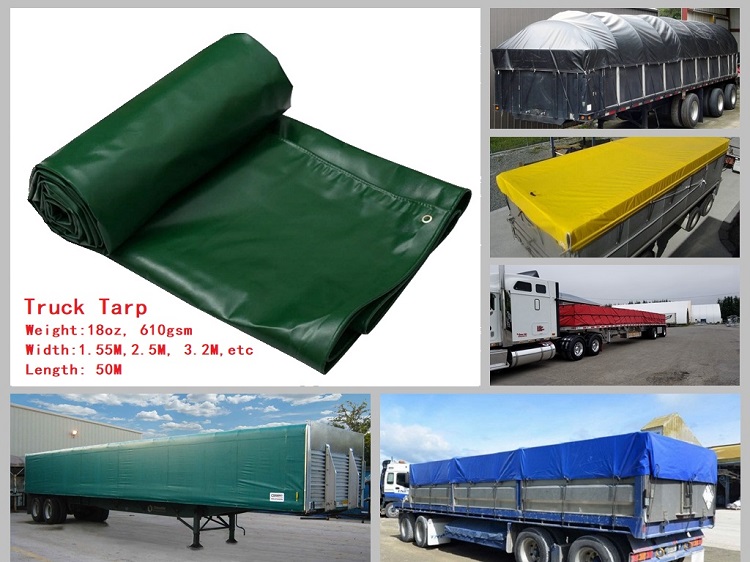
Heavy duty PVC truck tarpaulin and truck cover applications
Finished Heavy-Duty PVC Tarps Truck, trailer and cargo-cover programs require more than waterproof fabric; edge reinforcement, hardware placement and daily handling conditions also matter.
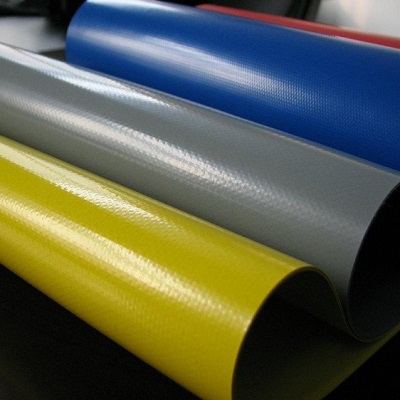
PVC coated tarpaulin material rolls in multiple colors
PVC Coated Material Weight, scrim, coating, finish, color and functional treatments should be confirmed before sampling.
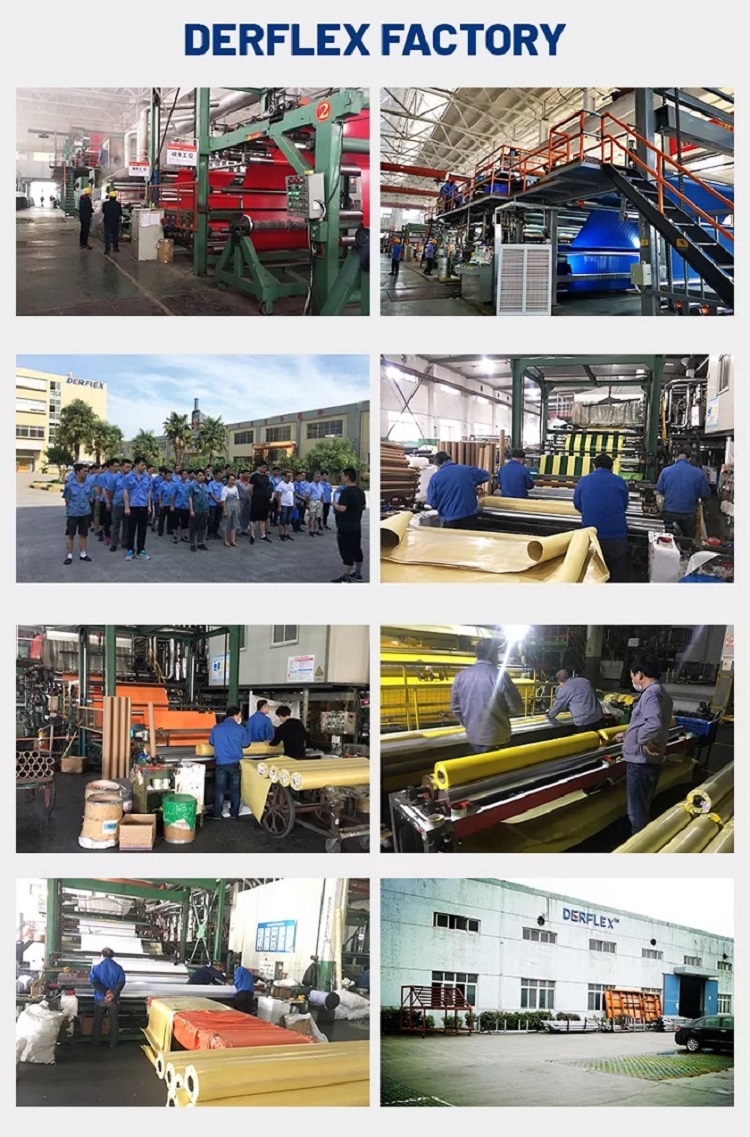
DERFLEX tarpaulin manufacturing and production facilities
Production & Inspection Repeat orders depend on material records, in-process checks, finished inspection and packing discipline.
Step 1

Choose the Right Tarpaulin Supply Model for the USA Market

Domestic stock suppliers, U.S. custom fabricators and overseas manufacturers can all be appropriate—but for different buying situations.

U.S. Stock Supplier

Often suitable for urgent replacement, small quantities and standard-size products that need quick domestic delivery.

  • Prioritize in-stock availability and clear shipping policy
  • Check whether listed size is cut size or finished size
  • Confirm return rules before ordering unusual sizes

U.S. Custom Fabricator

Useful for complex one-off covers, field measurements, repair work or projects where close local communication is important.

  • Ask about drawings, pattern development and installation support
  • Confirm who controls the base fabric specification
  • Review fabrication lead time and warranty scope

International Manufacturer

Often relevant for bulk buying, OEM programs, custom material, repeat supply and private-label product development.

  • Evaluate sampling, QC records and export experience
  • Compare landed cost rather than factory price alone
  • Build realistic production and replenishment planning
Step 2

10 Factors to Compare Before Selecting a Tarp Supplier

Use these criteria during supplier qualification, sample review and quotation comparison.

1

Application Understanding

A supplier should ask where the tarp will be used, what it covers, how it is installed, how often it moves and which failure mode matters most.

Ask: “What would you change in this specification for our actual environment?”

2

Material Specification Clarity

Terms such as heavy duty are not precise. Compare material type, total weight, thickness, yarn denier, weave construction, coating method and surface treatment.

Ask: “Which test method supports the strength or weight data?”

3

Custom Fabrication Capability

Finished performance depends on panel layout, welded or sewn seams, hems, rope edges, webbing, corner patches, grommets, D-rings, straps and access openings.

Ask: “Can you review our drawing and recommend reinforcement zones?”

4

Sample-to-Bulk Consistency

A good sample is useful only when its approved color, hand feel, weight, weld quality and workmanship can be repeated during mass production.

Ask: “How is the approved sample linked to production inspection?”

5

Testing and U.S. Documentation

Depending on application, buyers may need flame-retardant, restricted-substance or other test documentation. Confirm the exact standard, material code and report validity.

Ask: “Does the report cover the exact supplied construction and color?”

6

Lead Time and Supply Continuity

Separate sample time, material preparation, production, inspection, export packing, ocean or air transit and U.S. inland delivery.

Ask: “What is the replenishment plan if demand increases?”

7

Total Landed Cost

Compare unit price together with tooling, sampling, packaging, freight, duty, brokerage, storage, inspection, financing and defect risk.

Ask: “Which charges are included, excluded or estimated?”

8

Capacity and Repeatability

The supplier should be able to support your order size without uncontrolled subcontracting or frequent changes in material structure.

Ask: “Which operations are completed in-house and which are outsourced?”

9

Packaging and Private Label Support

For distributors and brands, carton strength, folded dimensions, labels, barcodes, manuals, pallet plans and container utilization affect sales and logistics.

Ask: “Can packaging be approved before bulk packing starts?”

10

After-Sales Problem Resolution

Clarify how claims are documented, investigated and resolved. A professional response should use evidence such as batch records, photos, measurements and retained samples.

Ask: “What information is required to review a quality claim?”

Decision Tool

A Weighted Supplier Scorecard for B2B Tarpaulin Procurement

Adjust the weighting for your project. A fleet replacement program may score lead time higher; an OEM program may score consistency and customization higher.

Evaluation Area Suggested Weight What to Verify Evidence to Request
Application and technical fit 20% Material, expected service, environmental exposure, installation and handling Technical proposal, specification sheet, application questions
Quality consistency 20% Raw material control, tolerances, workmanship and sample-to-bulk alignment Inspection checklist, retained sample, batch records, photos
Customization and engineering 15% Drawing review, seam choice, reinforcement, hardware and packaging Approved drawing, pre-production sample, packing mock-up
Commercial value 15% Unit cost, MOQ, payment, tooling, packing, freight and defect exposure Itemized quotation and Incoterm definition
Lead time and capacity 15% Sampling, production, peak-season capacity and replenishment Production schedule and shipping plan
Compliance and documentation 10% Applicable standards, report match, traceability and labeling Current test report, material code and declaration
Communication and claim handling 5% Response quality, escalation route and corrective-action process Named contact, claim workflow and response timeline
RFQ Preparation

Send the Same Specification to Every Supplier

Quotations are difficult to compare when each supplier assumes a different material, finished size or reinforcement method. A structured RFQ reduces hidden variation and helps procurement teams compare equivalent offers.

For an existing product, include photos, a physical sample or a marked drawing. For a new product, describe the use environment and installation method before finalizing material weight.

  • ApplicationTruck, construction, industrial, agriculture, storage, marine or another use
  • Working ConditionsRain, sun, wind, abrasion, chemicals, temperature and handling frequency
  • DimensionsFinished size, cut size, shape, tolerance and shrinkage allowance
  • MaterialPVC, PE, canvas, mesh or clear vinyl; GSM, ounces or thickness target
  • PerformanceWaterproofing, UV, flame-retardant, anti-mildew, cold-flex or abrasion needs
  • FabricationSeams, hems, webbing, rope, patches, grommets, D-rings, straps and openings
  • AppearanceColor, gloss or matte finish, printing, logo and label requirements
  • QuantitySample quantity, initial order, annual demand and reorder frequency
  • PackagingFolded size, bag, carton, pallet, barcode, manuals and private label
  • DestinationU.S. ZIP code or port, desired Incoterm and requested de, livery window
Material Guide

Compare Tarp Materials by Use—Not by Name Alone

The supplier should explain why a material fits your application and where its limitations begin.

Material Common Strengths Typical Buying Situations Questions to Confirm
PVC / Vinyl-Coated Polyester Waterproof, weldable, durable, customizable and suitable for heavy-duty finishes Truck covers, equipment covers, industrial curtains, long-term outdoor covers and OEM products GSM/oz, scrim, coating, UV package, cold flexibility, seam method and surface finish
PE / Poly Tarpaulin Lightweight, economical and convenient for temporary or general coverage Short-term construction, emergency covers, seasonal storage and price-sensitive programs Weave, mil thickness, UV treatment, actual finished size, corner reinforcement and expected duration
Canvas Breathable, flexible and traditional textile appearance Equipment protection, trucking uses where breathability matters, painting and general industrial use Treatment type, water resistance, shrinkage, mildew resistance, color transfer and care requirements
Mesh Airflow, shade and lower wind load than solid tarp materials Dump truck mesh, shade, fencing, nursery, privacy and debris containment Open-area percentage, tensile strength, edge reinforcement, UV resistance and visibility
Clear PVC Visibility, light transmission and weather barrier Patio enclosures, partitions, machine curtains and observation windows Thickness, cold crack, clarity, UV aging, weldability and scratch resistance
Buyer Scenarios

Match Supplier Strength to the Purchase Scenario

The same supplier does not have to be the best choice for every order type.

Urgent Need

One Replacement Tarp

Prioritize a U.S. stock supplier or local fabricator with verified dimensions, available inventory and fast domestic delivery.

Project Need

Custom Industrial Cover

Prioritize drawing review, material recommendation, reinforcement design, documentation and project schedule control.

Recurring Need

Fleet or Contractor Program

Prioritize repeatable dimensions, hardware layout, repair compatibility, planned replenishment and quality records.

Growth Need

Wholesale or Private Label

Prioritize factory capacity, product-line planning, custom packaging, container utilization and repeat-order control.

DERFLEX Supply Position

Where DERFLEX Fits a USA Tarpaulin Supply Program

DERFLEX manufactures PVC coated polyester tarp materials, finished heavy-duty tarps and OEM tarp programs for truck, industrial, construction, agriculture, marine, canopy and distributor applications. Material options can be discussed across approximately 350–1200 gsm, together with custom color, finish, reinforcement, hardware, logo and packaging.

The strongest fit is generally a planned B2B requirement where the buyer values specification control, custom development, bulk supply, private-label support or repeat production—not an urgent single-piece domestic replacement.

Transparent sourcing note: DERFLEX is an international manufacturer serving global buyers. This page does not represent DERFLEX products as domestically manufactured in the United States. U.S. buyers should compare production location, transit time, duty, inventory and landed cost according to their own program.
  • PVC coated polyester rolls and finished tarp fabrication
  • Custom size, color, surface finish and functional treatments
  • Heat welding, reinforced edges, webbing and hardware options
  • Samples, drawings and specification confirmation before bulk
  • OEM logo, labels, carton formats and private-label packaging
  • Bulk export packing and repeat-order specification support
Recommended Workflow

A Lower-Risk Process for Qualifying a Tarpaulin Supplier

Use staged approval so price, product and delivery expectations are aligned before full production.

1

Define the Use Case

Document environment, load, installation, expected service period and likely failure modes.

2

Issue a Common RFQ

Send equivalent size, material, fabrication, packaging, quantity and destination requirements.

3

Review the Technical Response

Give more weight to a supplier that identifies risks and asks useful questions than one that only sends a price.

4

Approve Material and Sample

Record color, dimensions, weight, workmanship, reinforcement, hardware and packaging details.

5

Confirm Inspection Criteria

Agree on measurable tolerances, test records, sampling level, labeling and photo documentation.

6

Plan Reorders Early

Keep approved specifications and forecast replenishment around production and transport lead times.

Risk Signals

Supplier Red Flags That Deserve Further Review

One warning sign does not automatically disqualify a supplier, but unresolved ambiguity increases procurement risk.

“Heavy duty” without measurable specifications. No weight, thickness, scrim, strength or test method is provided.
Price changes after technical details are clarified. The first offer may have been based on a different construction.
Unclear cut size versus finished size. Hems, welding and shrinkage can reduce usable dimensions.
Test report does not match the supplied item. Confirm material code, thickness, color and production construction.
No written sample approval record. Verbal approval is difficult to use for bulk inspection or repeat orders.
Lead time excludes material preparation or transport. Ask for the complete schedule to the U.S. destination.
Inconsistent answers about production location. Understand which processes and subcontractors are involved.
No practical claim-review process. Corrective action should rely on traceable evidence rather than informal promises.
FAQ

Frequently Asked Questions About Choosing a Tarpaulin Supplier

Answers for procurement teams comparing U.S. supply, custom fabrication and overseas manufacturing.

What is the most important factor when choosing a tarpaulin supplier in USA?

The most important factor is application fit supported by a clear specification. A supplier should understand the working environment and convert it into measurable material, fabrication, quality, delivery and documentation requirements. Price should be compared only after the offers are technically equivalent.

Should I choose a U.S. tarp supplier or an overseas manufacturer?

A U.S. stock supplier may be practical for urgent standard-size orders and small quantities. A local custom fabricator may suit one-off fitted covers or field service. An overseas manufacturer may be more relevant for bulk supply, custom material, OEM packaging and repeat programs. Compare total landed cost, transit time, inventory requirements and risk—not factory price alone.

How can I compare tarp quotations fairly?

Send the same RFQ to each supplier and require confirmation of finished size, material type, GSM or ounces, thickness, scrim, coating, seams, hems, reinforcement, hardware, functional treatments, packaging, quantity, Incoterm and delivery destination. Separate included costs from estimates and exclusions.

What documents should a commercial tarp supplier provide?

Useful documents can include a technical data sheet, approved drawing, sample approval record, packing specification, inspection report and applicable third-party test report. The required documents depend on product use and market rules, so the buyer should name the exact standard rather than request a general certificate.

How do I know whether a tarp supplier can maintain repeat-order quality?

Ask how material codes, approved samples, color standards, fabrication drawings and inspection criteria are recorded. Repeatability is stronger when the supplier can link the new order to the previous approved construction and explain how substitutions are controlled.

What information does DERFLEX need to quote a custom tarp?

Provide the application, finished size or drawing, preferred material, weight or thickness, color, surface finish, reinforcement, seams, grommets or hardware, quantity, packaging, destination and any required test standard. Photos or an existing sample can help the engineering discussion.

Compare Your Requirement Against a Factory Specification

Send DERFLEX your application, size, material target, fabrication details, quantity, packaging and U.S. delivery destination. The team can review the requirement and discuss a suitable sample and quotation path.

Request A Quote

Product ranges, performance options, testing, MOQ, production time and commercial terms are project-dependent and should be confirmed in the final quotation and approved specification. References to U.S. sourcing describe the target procurement market and do not imply domestic U.S. manufacturing.

Consulting Services
+86-021-54361792 / 54361798
Email
sales@derflex.com