


Tarp for Construction That Protects Projects, Materials, Equipment, and Deadlines
DERFLEX supplies tarp for construction applications designed for demanding site environments where rain, dust, UV, wind, debris, and rough handling can delay work, damage materials, and reduce project efficiency. Whether you need a construction tarp manufacturer for bulk supply, a construction tarp supplier for export distribution, or a partner for OEM custom construction tarpaulin programs, this page is built to help buyers select the right specification with confidence.
From scaffold enclosure tarps and site cover sheets to waterproof equipment covers, material storage tarpaulins, contractor-grade debris containment sheets, and reinforced PVC protective fabrics, DERFLEX focuses on solutions that combine dependable performance, scalable manufacturing, flexible finishing, and buyer-friendly customization. The result is a product platform that serves contractors, importers, industrial distributors, project suppliers, rental companies, and private-label brands looking for durable, saleable, application-ready construction tarps.
- Waterproof & Weather Shielding
- OEM / Private Label Ready
- Heavy Duty PVC Tarpaulin Options
- Custom Size / Color / Finishing
- Project & Distribution Supply
- Quality / Testing Support
Why Buyers Choose a Professional Construction Tarp Supplier
Construction sites are harsh, unpredictable, and expensive to manage. A tarp is not only a cover. It is part of the workflow that protects raw materials, shields partly completed work, reduces cleanup time, supports temporary enclosure, helps keep equipment ready for use, and improves jobsite organization during changing weather.
- Custom widths, lengths, weights, and reinforcement structures
- Options for eyelets, hems, rope edges, heat sealing, welding, and branding
- Suitable for short-term projects, seasonal work, and longer exposure periods
- Supports contractor, wholesaler, importer, and OEM procurement models
- Can be developed around rain cover, debris control, scaffold wrapping, or equipment protection needs
Built for Hard Use
Reinforced tarpaulin options for drag, fold, tie-down, cover, and repeated site handling across construction, renovation, maintenance, and infrastructure environments.
Made for Custom Supply
Available for OEM and custom programs with size, color, logo, edge finishing, packing, and application-specific performance development.
Focused on Delivery Stability
Production planning and supply coordination are structured to support bulk orders, repeat purchasing cycles, and project-based replenishment schedules.
Documentation-Friendly
Performance discussion can include weight targets, tear strength expectations, UV needs, and test-document alignment based on market and project requirements.
What Is a Tarp for Construction?
A tarp for construction is a protective covering used across building, infrastructure, civil engineering, renovation, industrial maintenance, and temporary works environments to shield materials, partially completed structures, machinery, tools, and work zones from weather, dust, debris, contamination, and unnecessary exposure. In purchasing language, it may also be referred to as a construction tarp, construction tarpaulin, building site tarp, site cover tarp, contractor tarp, scaffold tarp, or waterproof construction cover, depending on the market and application. 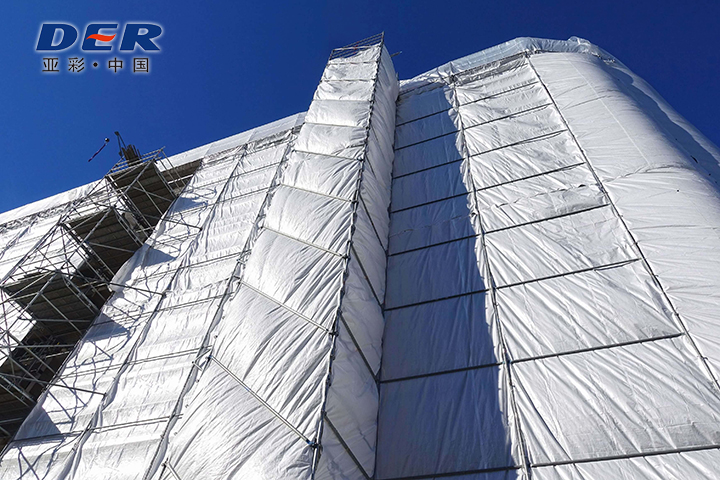
On active projects, tarps play a practical and financial role. They help reduce material waste caused by rain or UV degradation. They limit moisture intrusion into cement bags, insulation, timber, steel components, flooring materials, piping bundles, and prefabricated assemblies. They protect equipment during idle periods and simplify staging areas by keeping materials grouped, covered, and easier to inspect. They can also help create temporary separation between work zones, contain dust and splashing, and serve as fast-deploy protective layers over scaffolds, openings, stockpiles, and temporary shelters.
Not all construction tarps are equal. Light, low-cost sheets may work for very short coverage tasks, but demanding sites usually require stronger material systems. This is why many professional buyers move toward reinforced PVC or other industrial-grade fabrics rather than relying only on low-end general-purpose tarps. A better construction tarp resists tearing during installation, stays more stable under fluctuating temperatures, handles tie-down stress more effectively, and maintains waterproof performance after folding, transport, and repeated field use. For importers and project buyers, this translates into fewer complaints, lower replacement frequency, and better cost efficiency over the full life cycle.
A professional construction tarp manufacturer does more than sell a sheet. The right supplier helps match material weight, reinforcement structure, surface treatment, edge finishing, fixing method, and packaging format to the real application. For example, a tarp used as a temporary roof cover during rainy conditions requires different performance priorities than a tarp used for scaffolding enclosure, truck unloading protection, debris separation, or equipment wrapping. A tarp used in a coastal environment may need stronger attention to wind handling and UV resistance. A tarp used for urban renovation may require cleaner appearance, controlled light transmission, or project-specific color preferences. A tarp used for a distributor line may need retail labeling, standardized carton packing, and a balanced price-to-performance model.
For this reason, the most successful procurement decisions begin with application logic, not price alone. Buyers who define only width and length often miss critical details that affect performance on site. These details include fabric base strength, coating adhesion, surface slip behavior, fold memory, cold-temperature flexibility, eyelet spacing, hem reinforcement, printing compatibility, and whether the tarp will be installed once, repositioned repeatedly, or cut further after delivery. Choosing a supplier that can discuss these points early helps prevent mismatch between expectation and actual site use.
Why This Product Category Matters in Construction Procurement
Construction purchasing is often measured by delivery discipline, damage prevention, labor efficiency, and project continuity. Tarps contribute to all four. A well-chosen heavy duty construction tarp can reduce emergency replacement costs, prevent water damage to costly materials, shorten cleanup cycles after storms, protect temporary works from contamination, and help contractors maintain better order across active zones. On sites with multiple subcontractors, the tarp also becomes part of work sequencing because it helps isolate materials, keep tools protected between shifts, and maintain usable areas when weather changes unexpectedly.
For distributors and resellers, the product is attractive because it serves a broad market: general contractors, roofers, scaffold companies, infrastructure contractors, warehouse and logistics operators, civil engineering teams, maintenance providers, and hardware or industrial supply channels. A custom construction tarp program can be positioned in multiple performance tiers, from economical short-cycle protective covers to premium waterproof PVC tarpaulins for demanding site use. This flexibility makes the category suitable for both project sales and ongoing channel business.
At DERFLEX, the value proposition of a construction tarp solution is built around practical performance, supply flexibility, and customization depth. Many buyers are not looking for a generic sheet. They want a product that fits their market, their customers, their installation methods, and their brand. That is where a specialized manufacturer becomes more useful than a simple trader or commodity reseller.
Need a construction tarp matched to your exact site application?
Send your target use, size, weight preference, quantity, destination market, and any finishing or branding requirements. DERFLEX can help you move from a general idea to a workable product specification faster.
Key Features Buyers Expect from a Competitive Tarp for Construction
1. Reliable Waterproof Protection
Waterproof performance is the first requirement for most construction use cases. Whether the tarp covers sand, cement, insulation boards, steel sections, facade elements, timber, tools, or mobile equipment, moisture control affects both material quality and work continuity. A professionally engineered PVC construction tarp creates a barrier that helps keep rain out, reduces puddling on covered stock, and protects against splash and incidental runoff. This is especially important on projects where material exposure can delay installation schedules or create secondary drying and replacement costs.
2. Tear Resistance for Repeated Handling
Construction conditions are rough. Tarps are dragged, folded, tensioned, rolled, tied to frames, exposed to sharp edges, and often repositioned several times during a project. Reinforced industrial tarp structures help resist premature tearing and edge failure. Better tear resistance is not only about durability; it also reduces the risk of small installation damage turning into rapid, project-disrupting failure under wind load or repeated movement.
3. UV and Outdoor Weather Stability
Even if a tarp is intended as a temporary cover, outdoor exposure can be aggressive. UV radiation, heat cycling, cold nights, rain, dust, and wind all affect surface condition and structural stability. A good waterproof construction tarp should be specified according to realistic exposure time, not only ideal conditions. In many markets, buyers prefer materials that maintain color, flexibility, and covering performance long enough to support project schedules without early brittleness or accelerated wear.
4. Flexible Customization for Real Site Needs
Construction projects do not follow one universal format. Buyers may need full rolls, finished covers, special widths, specific colors, eyelet spacing, reinforced hems, branding, stitched or welded finishing, pallet-ready packaging, or private-label presentation. This is why sourcing from a custom construction tarp manufacturer is more efficient than buying a purely standard item. Customization allows the product to serve the job better and helps distributors offer more targeted, higher-value product lines.
5. Better Control Over Site Cleanliness and Debris
On renovation, demolition-adjacent, scaffold, and enclosure jobs, tarps often help manage dust, splashing, loose material, and temporary separation between zones. A tarp designed for enclosure or containment can support cleaner work conditions and improve organization in high-traffic project areas. For urban works, this is particularly useful when appearance, cleanliness, and work-area discipline are important.
6. Application-Specific Weight Options
Heavier is not always better. Some buyers need a robust, multi-use heavy duty tarp for repeated deployment. Others need a lighter cover that is easier for crews to handle quickly over broad areas. A versatile supplier should offer practical weight ranges and explain how fabric weight affects strength, handling, foldability, shipping volume, and price. This helps purchasing teams choose smarter rather than simply choosing the heaviest specification available.
7. Strong Edge Finishing and Fixing Compatibility
Many tarp failures start at the edge, not in the center panel. Poor finishing can lead to grommet pull-out, edge splitting, or deformation during tie-down. For this reason, eyelets, rope edges, hems, corner reinforcement, and welding quality matter. A professional construction tarp supplier should be able to recommend fixing-friendly designs based on installation method, span, wind exposure, and expected number of reuse cycles.
8. Suitable Appearance for Project and Distribution Markets
Construction tarps may be functional, but appearance still matters. Many buyers request specific blue, green, gray, orange, white, black, or custom corporate colors. Cleaner surfaces and better finishing can improve how the project looks to end users, inspectors, developers, and site visitors. For resellers, a visually consistent product line also supports stronger merchandising and easier differentiation between economy, standard, and premium ranges.
9. Printability and Branding Support
OEM buyers and project suppliers often need their logo, grade marking, handling instruction, or SKU reference added to the tarp or packaging. This is useful for brand visibility, product control, stock management, and channel sales. A manufacturer with customization capability can turn a generic item into a marketable, branded product that better supports repeat business.
10. Scalable Supply for Bulk and Repeat Orders
The best product is not helpful if supply becomes unstable during seasonal demand peaks or project rollouts. Buyers need consistency in material, color, finishing, and packing from order to order. A capable OEM construction tarp manufacturer supports not only product performance but also procurement rhythm, replenishment planning, and repeatability across multiple orders.
11. Documentation and Testing Alignment
For some markets, buyers need more than a price and a photo. They may ask for weight tolerance, tensile information, tear resistance expectations, flame-retardant discussion, or other performance-related documentation according to project and destination requirements. A construction tarp supplier that understands documentation expectations can reduce friction during evaluation and procurement.
12. Better Life-Cycle Value
The lowest upfront price often leads to higher total cost when the tarp tears early, leaks after limited use, or fails under routine site handling. Better materials can deliver better life-cycle value by reducing replacement frequency, labor disruption, and the hidden cost of unreliable site protection. Serious buyers increasingly evaluate tarps in terms of project efficiency and complaint reduction, not price alone.
Technical Specifications for Construction Tarp Projects
Technical selection is where many procurement mistakes are prevented. A tarp that looks acceptable in a photo may fail in real use because the specification was not aligned with the working environment. That is why buyers should evaluate construction tarpaulins by application, not appearance alone. Rain exposure, project duration, tie-down method, span size, installation frequency, temperature range, and performance expectations all influence the recommended structure.
The table below shows common reference ranges used when discussing a construction tarp manufacturer or construction tarp supplier. These are general guidance values for commercial discussion and can be adjusted according to your market, budget, and project conditions.
| Material Structure | PVC coated polyester fabric, PVC laminated tarpaulin, reinforced industrial fabric, or other application-matched constructions depending on use intensity and budget target. |
|---|---|
| Common Weight Range | Approx. 300 gsm to 900 gsm depending on whether the tarp is intended for light cover, general site protection, repeated contractor use, scaffold enclosure, or higher-duty outdoor conditions. |
| Width Options | Standard and custom roll widths available depending on production line capability and final usage. Finished sheet dimensions can be developed according to covering area and installation pattern. |
| Color Options | Blue, green, gray, white, black, orange, striped, or custom colors subject to quantity and application needs. Brand color matching can be discussed for OEM programs. |
| Surface Finish | Gloss, semi-gloss, matte, embossed, or application-specific surface treatment depending on aesthetic preference, handling behavior, printing, and site conditions. |
| Waterproof Performance | Designed for water barrier performance when correctly specified, fabricated, and installed. Recommended for rain cover, material protection, temporary enclosure, and outdoor shielding applications. |
| Reinforcement | Base fabric selection, coating structure, woven reinforcement density, edge hemming, rope-in-hem finishing, corner reinforcement, and eyelet setting can be adjusted based on tension and reuse level. |
| Finishing Options | Heat sealed hems, stitched hems, welded seams, grommets/eyelets, corner patches, rope edges, reinforced webbing, cut-to-size sheets, and packed finished covers. |
| Customization | Custom size, thickness target, logo printing, item coding, labels, retail packaging, pallet configuration, bundled shipment, and OEM/private-label solutions. |
| Outdoor Considerations | UV stability, wind handling, foldability, low temperature flexibility, surface cleanliness, and expected service cycle should be reviewed at quotation stage. |
| Application Types | Scaffold wrapping, temporary weather cover, building material cover, concrete curing protection, roof repair shielding, machinery cover, waste segregation, site fencing support, and debris containment. |
| Testing / Documentation | Weight, dimensional reference, performance discussion, and application-related documentation can be aligned according to project requirement and destination market expectations. |
| Order Format | Roll goods, finished tarps, bundled sheets, custom packed sets, or repeat supply programs for distributors, contractors, or industrial project buyers. |
| Lead Time Factors | Lead time depends on specification complexity, customization depth, order quantity, packaging requirements, and current production planning. Early specification confirmation helps shorten the cycle. |
How to Read the Specification Correctly
Construction buyers often start with simple questions such as: “What weight do you have?”, “Is it waterproof?”, or “Can you make 6 × 8 meter covers?” These are useful starting points, but they do not fully define the job. A better quotation process usually includes at least six dimensions of information: what the tarp will cover, how long it will stay installed, how frequently it will be moved, whether it needs eyelets or special finishing, whether branding or private label is required, and what destination market or compliance expectations apply.
For example, a tarp used over masonry pallets on a residential construction site needs good rain protection and decent handling strength, but may not need the same finishing detail as a tarp used for scaffold wrapping across multiple floors in a commercial facade renovation. A tarp used to protect steel or machinery during transport-to-site staging may need different fold behavior and abrasion characteristics than one used to form temporary covered walkways or isolate interior construction zones. These differences influence the best material choice.
This is why serious sourcing teams increasingly prefer a supplier who can discuss the application in detail. It leads to fewer misunderstandings, better price logic, and a construction tarp product that performs closer to the original expectation. DERFLEX supports this process by approaching the tarp as a project solution rather than a generic roll of material.
Looking for OEM, custom size, or contractor-grade packaging?
Share your target size list, quantity forecast, and packaging preference. We can help structure a quotation around project supply, distribution resale, or private-label development.
Applications for Tarp for Construction Across Real Jobsite Scenarios
One of the reasons the construction tarp category remains so important is its versatility. A single product family can support dozens of workflows across new construction, maintenance, infrastructure, temporary works, and industrial site operations. Below are some of the most common application directions buyers discuss with a construction tarp supplier.
Material Storage Protection
Cement bags, insulation, gypsum boards, timber, steel accessories, piping, cable reels, adhesives, prefabricated components, and flooring materials all benefit from reliable cover. A waterproof tarp helps reduce exposure to rain, dirt, and jobsite contamination while materials wait for installation. For procurement teams, this translates into less spoilage and better stock condition control.
Scaffold Enclosure and Site Wrapping
Scaffold and perimeter wrapping often requires a tarp or tarp-like protective fabric capable of partial enclosure, temporary shielding, and better visual control of the work area. Depending on the application, buyers may prioritize privacy, splash reduction, dust control, wind moderation, and appearance. Reinforced construction tarpaulins are commonly selected where stronger weather shielding is needed than open mesh alone can provide.
Temporary Roof and Repair Covering
Roof repairs, waterproofing work, facade opening protection, and partial shell construction often require immediate cover that can be installed quickly and removed when conditions improve. In these situations, a heavy duty construction tarp helps keep the work area usable and protects unfinished surfaces or stored materials from sudden weather change.
Equipment and Tool Protection
Compressors, generators, cutting stations, welding machines, mixers, mobile lighting units, lifts, and sensitive tools may remain outdoors between working periods. A custom construction tarp can be designed for easier draping, fastening, and repeated deployment over equipment shapes, helping reduce downtime related to moisture or contamination.
Concrete Curing and Surface Protection
Certain construction stages require temporary surface protection during curing, waiting periods, or weather fluctuations. Tarps can help reduce direct water exposure, dust deposition, and contamination on prepared areas or partly completed work. The correct material choice depends on direct contact conditions, site cleanliness requirements, and installation method.
Debris Containment and Work-Zone Separation
During demolition preparation, abrasive work, coating removal, cutting, grinding, and renovation activities, tarps are often used to isolate zones and help control debris spread. A better debris containment tarp should withstand handling stress while providing an efficient physical barrier that is easier to install, remove, and dispose of or reuse according to project practice.
Weather Protection During Loading and Unloading
Construction materials frequently arrive before they can be immediately installed. During unloading, staging, and temporary ground storage, tarps help maintain protection continuity. This is valuable on busy sites where weather can shift quickly and crews need a fast, simple cover system that supports operational flow rather than slowing it.
Temporary Shelters and Covered Work Areas
In some cases, reinforced construction tarpaulin is used as part of a temporary shelter system for tools, small equipment, light fabrication, or local weather shielding. Here, the buyer often needs a tarp with good flexibility, strong edge finishing, and the ability to work with frames, poles, or improvised support systems.
Ground Cover and Clean Separation
On projects where materials must be kept off soil, dust, or wet surfaces, tarps can serve as a clean separation layer for staging or temporary floor protection. This is especially useful in wet conditions, remote job locations, and projects with sensitive finishing materials.
Distributor and Retail Product Lines
Construction tarps are not only for direct project use. They are a strong category for hardware distributors, contractor supply outlets, industrial retailers, and private-label importers. A manufacturer that supports multiple sizes, quality levels, logo printing, labels, and packaging options allows buyers to build a differentiated product program instead of selling an undistinguished commodity.
Why Application Matching Drives Better Results
Each of the use cases above places slightly different demands on the tarp. A material storage cover may prioritize waterproof performance, moderate cost, and easy crew handling. A scaffold enclosure may prioritize finishing integrity, dimensional stability, and controlled movement under wind. An equipment cover may require flexibility and more tailored sizing. A distributor product line may prioritize SKU efficiency, visual consistency, and packaging optimization. Matching the tarp design to the intended use is one of the clearest ways to reduce field complaints and improve customer satisfaction.
Buyers looking for a dependable tarp for construction supplier should therefore ask not only what is available, but what is recommended for the intended application. This turns the procurement process from a commodity negotiation into a performance-based sourcing decision.
OEM and Custom Construction Tarp Programs for Brands, Distributors, an, d Project Buyers
Many of the best-performing tarp businesses do not rely entirely on open-, market generic products. They develop a more focused specification that aligns with their customer base, project profile, or channel strategy. That is why OEM and customization remain critical in the construction tarp manufacturer space. A custom program helps buyers control product positioning, improve repeatability, reduce market confusion, and create more consistent commercial value.
DERFLEX supports custom and OEM development in ways that are practical for construction-related markets. Instead of forcing every buyer into a narrow standard template, the program can be structured around product use, supply format, and commercial goals. Some customers need full roll goods for local conversion. Some need cut-size finished tarps. Some need a retail-ready line with labels and cartons. Some need private-label products with distinct color coding and performance tiers. Others need site-specific covers for repeated purchase by contractors or project groups.
Common Customization Areas
- Size and Dimension: Custom width, length, and sheet layout based on site use, pallet size, scaffold sections, or equipment cover needs.
- Weight and Structure: Selection of light, medium, or heavy duty construction tarp constructions based on durability target and cost level.
- Color Development: Standard or market-specific color choices for contractor use, brand consistency, project control, or visual differentiation.
- Edge Finishing: Heat sealed hems, stitched hems, corner reinforcement, rope edging, webbing support, and eyelet spacing according to installation method.
- Branding: Logo printing, grade marking, product coding, and packaging identification for OEM or private-label sales channels.
- Packing Format: Roll packing, folded finished covers, set packing, pallet configuration, carton printing, and shipment convenience planning.
- Performance Direction: Waterproof emphasis, outdoor exposure balance, handling strength, or other application-oriented priorities discussed at RFQ stage.
Why OEM Matters in Construction Markets
In many regions, contractors and distributors are no longer satisfied with a one-size-fits-all tarp. They want products that match local usage habits, climate conditions, installation styles, and customer expectations. An OEM construction tarp manufacturer helps buyers create precisely this kind of product. The benefit is not only technical. It is also commercial. Better-matched products tend to generate stronger repeat orders, clearer market positioning, and fewer quality disputes.
OEM development also helps importers avoid direct comparison with generic market stock. By adjusting weight, surface, eyelets, color, branding, or package structure, the buyer can create a product that is recognizably theirs. This supports margin stability and long-term channel development.
Lead Time, Planning, and Repeat Supply
Lead time is one of the most important issues in construction procurement because delays in protective materials can slow broader site operations. The best way to improve delivery reliability is to confirm the specification early and reduce uncertainty during order execution. Buyers who define application, quantity, finishing, destination, and packaging requirements clearly typically receive smoother quotation and better production planning.
Repeat orders also benefit from a more structured product definition. Once the specification is stabilized, the buyer can order more efficiently, reduce sampling cycles, and keep better consistency across batches. For distributors and project supply groups, this is often the turning point between irregular buying and a sustainable procurement program.
Quality and Documentation Support
Quality should be understood as consistency plus suitability. A tarp that meets one application may not meet another. For that reason, quality discussion should begin with the real use case. DERFLEX can discuss weight targets, material direction, finishing methods, packaging, and performance expectations in relation to the job. Where needed, buyers can also raise testing or documentation requirements during the quotation stage so that the supply conversation is aligned from the start.
In international construction and industrial supply markets, documentation expectations may relate to product identification, dimension control, weight reference, or project-specific performance discussion. Flame-retardant or other special properties, where relevant, should be specified early so that the solution path is discussed correctly. A professional supplier handles these conversations as part of the product development process rather than as an afterthought.
Want a contractor-ready or private-label construction tarp line?
We can discuss custom sizes, branded packaging, logo printing, eyelets, edge reinforcement, and application-focused material options for your market.
How to Choose the Right Tarp for Construction
Choosing the right construction tarp is one of the easiest ways to improve site protection while avoiding over-buying or under-specifying. Many buyers spend too much money on unnecessary weight, while others save a small amount upfront only to face high replacement rates, installation frustration, or customer complaints. A structured selection method can prevent both problems.
1. Start with the Actual Application
Ask what the tarp will really do. Will it cover palletized materials, enclose scaffolding, protect machinery, form a temporary roof barrier, separate debris zones, or support transport-to-site staging? Each application changes the performance priorities. When the use case is defined clearly, the supplier can recommend more effectively and the quotation becomes more accurate.
2. Define Exposure Time Honestly
One common sourcing mistake is treating a medium-term tarp as if it only needs to survive a few days. In practice, many temporary construction measures remain in place longer than expected. Weather delays, labor scheduling changes, and project extensions are common. If the tarp will likely stay outdoors longer than initially planned, the specification should reflect that reality.
3. Consider Handling Conditions
Will workers deploy the tarp manually every day? Will it be dragged across rough surfaces? Will it be tied to frames or anchored with ropes? Will it be folded repeatedly in trucks? Handling conditions influence the need for tear strength, flexibility, and edge reinforcement. A tarp used once and discarded does not require the same design as one reused across multiple phases or projects.
4. Review Edge and Fixing Requirements
Eyelets, hems, corners, rope reinforcement, and seam quality often determine whether a tarp performs well in the field. If the tarp will be tensioned, suspended, or exposed to movement, the edge design becomes especially important. Buyers should communicate how the tarp will be fixed so that the finishing method suits the application.
5. Balance Weight Against Usability
Heavy-duty material provides more confidence in many outdoor jobs, but excessive weight can reduce handling speed and increase labor burden. The best value often comes from choosing a weight that fits the environment rather than automatically selecting the highest available gsm. Contractors usually appreciate a tarp that is durable enough yet still practical to move quickly when weather changes.
6. Clarify Custom and Branding Needs Early
If you need logo printing, custom labels, carton marks, color coding, or a retail packaging system, mention it at the beginning of the RFQ process. This helps avoid rework later and makes lead time planning more accurate. For OEM buyers, early clarity also improves consistency from the first production cycle.
7. Ask the Supplier About Documentation and Market Expectations
Export markets differ. Some buyers need only stable commercial quality. Others require clearer technical discussion, product identification, or project-specific documentation. Raising these points early helps build a better quotation and reduces the risk of approval delays.
8. Think Beyond Unit Price
The real cost of a construction tarp includes replacement frequency, labor required for handling, complaint risk, material damage prevention, and overall reliability on site. A better tarp often pays for itself through reduced disruption and more predictable performance. This is particularly true for contractors and distributors whose reputation depends on the products they deploy or resell.
Information to Include in Your RFQ
- Application or end use
- Preferred dimensions or roll width
- Target weight or durability expectation
- Color requirement
- Estimated quantity and order frequency
- Need for eyelets, hems, corner reinforcement, or custom finishing
- Printing, logo, private label, or packaging requirement
- Destination market and any testing or documentation expectations
- Requested delivery timing
When these details are shared upfront, the sourcing process becomes faster, clearer, and more productive. It also helps the supplier recommend the most suitable tarp for construction rather than offering a generic default item that may or may not fit the job.
Why Choose DERFLEX as Your Construction Tarp Manufacturer or Supplier
Application-Driven Product Development
DERFLEX approaches construction tarp supply from the perspective of end use. Instead of selling only a generic stock sheet, the discussion can focus on your project conditions, market needs, and customer expectations. This improves fit, reduces mismatch, and supports better purchasing confidence.
Flexible OEM and Custom Capability
Size, weight, color, logo, packaging, edge finishing, and configuration can be discussed based on your business model. Whether you are a contractor supply company, importer, distributor, brand owner, or industrial reseller, customization helps turn the tarp into a more competitive product.
Built for Bulk Supply and Repeat Orders
Construction and distribution buyers often need more than a one-off shipment. DERFLEX works with repeat procurement logic in mind, helping buyers move toward stable specification and smoother replenishment planning as the business develops.
Practical Communication on Quality
Quality is treated as a supply and application issue, not just a marketing claim. Weight, reinforcement, finishing, and usage expectations can be discussed early so that the product direction makes sense for the actual job rather than only for a catalog page.
Support for Project and Distribution Channels
The same construction tarp family can serve direct project supply, industrial stock programs, contractor distribution, and private-label retail lines. This channel flexibility helps buyers build broader product strategies without changing suppliers for every segment.
Customization That Supports Sales, Not Just Production
A smarter OEM tarp program should make the product easier to sell, easier to identify, and easier to reorder. Branding, packaging, color structure, and differentiated grades all contribute to stronger channel performance and better buyer retention.
Lead Time Awareness
Delivery timing matters in construction. DERFLEX encourages early confirmation of product details so planning can be more efficient. Clear specifications generally lead to faster quotation, better production rhythm, and fewer avoidable delays during execution.
Open to Performance and Documentation Discussion
If your market or project has specific expectations around product performance, testing discussion, or documentation, those points can be raised during the quotation stage. This creates a more grounded sourcing process and helps reduce surprises later.
A Supplier Mindset That Fits Serious Buyers
Serious buyers usually want three things from a supplier: practical product knowledge, responsive communication, and commercial consistency. They need more than attractive wording. They need a partner who understands how tarps are actually used in the field, how distributors structure their product lines, and how specification clarity affects lead time, complaint rate, and long-term purchasing efficiency.
DERFLEX is positioned around that mindset. The goal is not only to sell a sheet, but to help buyers source a construction tarp solution that protects materials, supports site operations, and creates stronger repeat business. That is why the page places so much emphasis on application, customization, finishing, and supply discipline. These are the areas that really matter once the product reaches the jobsite.
Need a supplier that can support custom size, OEM branding, and repeat project supply?
Tell us your application, quantity, finish, and target market. We will help you structure a practical construction tarp quotation.
Construction Tarp Comparison: PVC Tarpaulin vs Other Common Cover Materials
| Comparison Item | PVC Construction Tarp | Light PE Tarp | Canvas Cover | Mesh / Open Screen | Untreated General Fabric |
|---|---|---|---|---|---|
| Waterproof Protection | Strong waterproof barrier for many site-covering applications | Usually waterproof, but lower durability in harsher handling conditions | Can absorb moisture unless specially treated | Not designed for full rain protection | Generally limited without specific coating |
| Durability | Good balance of strength, flexibility, and repeat-use suitability | Useful for economy applications, often shorter life under rough use | Can be robust but heavier and less water-stable in some conditions | Useful for airflow and screening, not full protective enclosure | Varies widely and may not suit construction exposure |
| Customization Potential | High: size, color, eyelets, hems, printing, branding, OEM packaging | Moderate, often more limited in premium custom positioning | Moderate, but may be less efficient for some industrial finishing needs | Application-specific rather than broad cover use | Depends on base fabric and converter capability |
| Outdoor Site Suitability | Strong option for weather shielding and tougher project environments | Suitable for lighter or short-cycle tasks | May suit some traditional uses but less efficient in many waterproof jobs | Better for dust, shade, or airflow management than rain cover | Often less suitable for demanding outdoor protection |
| Edge Finishing Options | Strong flexibility for hems, welding, reinforcement, eyelets | Available, but may be less durable in demanding tensioned use | Can be finished, but performance depends on construction and treatment | Usually tailored for screen-like use | Depends on structure and converter experience |
| Brand / OEM Opportunity | High for distributor, contractor, and private-label product programs | Often price-led and harder to differentiate at higher value level | Niche depending on market | More limited to specific enclosure or shade segments | Unclear without further development |
| Overall Use in Construction | One of the most practical options for multi-purpose site protection | Common for entry-level cover needs | Selective use only | Useful where breathability is needed, not a full replacement for tarp | Usually secondary or specialized only |
Why Many Buyers Move Toward Reinforced PVC Construction Tarps
PE tarps are popular for price-sensitive, lighter-duty applications, and mesh materials remain useful for airflow-oriented enclosure or screening tasks. However, where buyers need a better blend of waterproofing, custom finishing, stronger handling performance, better appearance, and more professional OEM development, reinforced PVC construction tarps usually provide a more complete platform.
This is especially true for buyers building a long-term product line. PVC construction tarpaulin gives more room for structured differentiation between entry, standard, and premium grades. It also supports better customization depth, which is important when the goal is to build a recognizable contractor or distributor brand rather than sell interchangeable commodity stock.
Representative Project Case: Custom Construction Tarp Program for Multi-Site Building Protection
The following example illustrates how a buyer may work with a construction tarp manufacturer to solve practical site-protection needs. It is presented as a representative project scenario to show the decision logic, customization process, and value created through better specification alignment.
Project Background
A regional building materials and contractor supply company was serving a mix of commercial renovation crews, mid-rise residential contractors, and industrial maintenance teams. Their customers used tarps daily, but purchasing was inconsistent. Some clients bought low-cost tarps in large volume and replaced them frequently. Others demanded stronger, more waterproof covers for scaffold wrapping, temporary roof protection, and equipment shielding. Complaint patterns were familiar: eyelets pulling out, covers tearing after repeated handling, dimensions varying from shipment to shipment, and difficulty distinguishing different quality levels in inventory.
The distributor wanted to move away from unstructured commodity buying and build a more reliable tarp program under its own brand. The objective was not only to improve product quality, but also to reduce returns, simplify SKU planning, and create clearer product segmentation for sales teams. They needed a supplier capable of OEM development, not just stock sales.
Key Challenges
- Existing product mix lacked consistent quality and specification control
- Contractors needed better waterproof performance for repeated outdoor use
- Sales team needed clearer differentiation between economy and premium grades
- Packaging and labeling were too generic to support brand recognition
- Lead time planning was unstable because specifications changed from order to order
- Customer complaints often related to finishing and real-world handling rather than material alone
Solution Development
Instead of trying to serve all use cases with one universal tarp, the program was divided into three levels. The first level focused on general material protection and short-cycle site covering. The second level targeted regular contractor use with better reinforced edges and more stable waterproof performance. The third level was positioned as a heavy duty construction tarp for repeated outdoor deployment, equipment cover, scaffold-related protection, and more demanding work cycles.
The distributor also requested private-label branding, color differentiation between grades, printed identifiers, and carton marks to simplify warehouse picking. Eyelet spacing and hem reinforcement were reviewed because many complaints had originated from edge failure rather than center-panel damage. By discussing the actual field use, the product design became more aligned with how crews worked on site.
Implementation
Samples were reviewed not only by the purchasing team but also by field users. This was important because office-based evaluation often focuses on feel and price, while crew feedback reveals whether the tarp is easy to fold, fast to tie down, and resilient enough for repeated deployment. The heavy duty grade was adjusted to improve confidence in repeated use, while the mid-grade was positioned as the best-value contractor product for general site coverage.
Once the final configurations were confirmed, the distributor adopted a more standardized ordering approach. Instead of changing product details in each purchase cycle, they worked from a clearer specification matrix. This improved internal communication, supported better forecasting, and reduced the repeated sampling and approval steps that had previously slowed procurement.
Results
The shift from commodity buying to a custom OEM construction tarp program delivered benefits at several levels. Field complaints declined because the products more closely matched usage realities. Sales staff found it easier to recommend the correct tarp for each customer because the product range had clearer application logic. Brand recognition improved because the covers and packaging carried identifiable markings. Inventory control became simpler because the tariff-like confusion between dozens of similar-looking tarps was reduced.
Just as importantly, the distributor could discuss value more confidently with customers. Instead of selling only on price, they could explain why one grade was better for short-term stock cover, another for repeated contractor deployment, and another for premium heavy-duty site use. This supported better margins and more stable repeat sales.
Takeaway for Buyers
The case shows that the best tarp for construction sourcing strategy is often not about finding the cheapest sheet or the heaviest sheet. It is about building a product program that aligns material, finishing, quality expectations, packaging, and use case. Whether you are buying for direct project use or building a distributor line, a structured approach can deliver stronger commercial and operational results.
Frequently Asked Questions About Tarp for Construction
1. What is the best material for a construction tarp?
The best material depends on the application. For higher-demand site protection, reinforced PVC construction tarpaulin is often preferred because it offers a strong combination of waterproofing, durability, finishing flexibility, and customization potential. For lighter or short-cycle use, more economical alternatives may be acceptable. The right choice depends on exposure, handling frequency, and budget.
2. Is a construction tarp the same as a general tarp?
Not always. A general tarp may serve simple cover needs, but a true construction tarp is usually selected with stronger attention to site conditions, rough handling, edge reinforcement, waterproof performance, and practical reuse. Buyers working in contractor or project environments often need better-performing materials than generic household or light-duty tarps.
3. Can you provide custom size construction tarps?
Yes. Custom sizes can be discussed for different project uses, including material stacks, equipment covers, scaffold sections, temporary roof protection, and retail-ready finished tarps. Size customization is one of the most common requests in OEM and project supply.
4. Can the tarp include eyelets, reinforced hems, or rope edges?
Yes. Finishing options such as eyelets, hems, reinforced corners, rope in hems, seam welding, and additional edge strengthening can be discussed according to installation method and expected stress on site. These features are important because many tarp failures start at the edge.
5. Are these tarps suitable for scaffold enclosure?
They can be, depending on the project requirement and the selected specification. For scaffold-related uses, the tarp should be chosen with attention to size, reinforcement, fixing method, movement under wind, and required degree of weather shielding or containment. The best solution depends on the actual enclosure objective.
6. Can DERFLEX support OEM or private-label construction tarp orders?
Yes. OEM and private-label options can include custom color, size, logo printing, labels, carton design, product coding, and packaging structure. This is especially useful for distributors, importers, and contractor-supply brands that want a differentiated product line.
7. How should I choose tarp weight for construction use?
Start with the end use. Short-term material covering may allow a lighter structure. Repeated deployment, rough handling, or more exposed outdoor conditions usually call for a stronger or heavier-duty specification. Weight should be balanced with crew handling, budget, expected service life, and performance expectations.
8. Can I order rolls instead of finished tarps?
Yes. Depending on the supply model, buyers may purchase roll goods for local conversion or finished sheets for direct use. This flexibility is valuable for converters, project suppliers, and distributors with different downstream requirements.
9. What details should I include when requesting a quote?
Please provide application, size, quantity, target weight or durability expectation, color, finishing requirement, logo or package needs, destination market, and expected order timing. The clearer the RFQ, the faster and more accurate the quotation process becomes.
10. Can the tarp be developed around documentation or project-specific requirements?
Yes. If your project or market requires specific technical discussion, performance direction, or documentation alignment, these points should be raised during the quotation stage. Early communication helps build a more appropriate solution path and reduces delays later in the process.
Final Buying Perspective
A good construction tarp supplier helps buyers make better decisions before the order is placed. The product should be sized, finished, and structured around what happens on the jobsite, not only what looks appealing in a sample book. When procurement teams approach tarps as functional project tools rather than low-value accessories, the result is usually better cost efficiency, stronger performance, and a clearer basis for repeat purchasing.
DERFLEX supports buyers who want that more structured approach. Whether your goal is direct site protection, channel distribution, or OEM product development, the next step is to define the real use case and build the specification around it.
Ready to source a better tarp for construction?
From waterproof site covers and scaffold tarps to custom heavy duty contractor tarpaulins, DERFLEX can help you build the right specification for your project, distribution channel, or OEM line.
Related Solutions and Product Pages
The following internal links are reserved for relevant product and solution pages closely related to the construction tarp topic. If your live URL structure differs, you can replace the links below with your actual internal URLs while keeping the anchor logic intact.
Tell us your application, quantity, and customization needs
Whether you need a construction tarp manufacturer for long-term OEM supply or a construction tarp supplier for immediate project quotation, DERFLEX is ready to discuss your requirement.