Surface Isolation
Separates sensitive or clean cargo from rust, paint residue, dust, rough flooring, old odors and contaminated interior surfaces.



A custom container liner protective cover creates a flexible barrier between cargo and the interior surfaces of a shipping container. DERFLEX develops PVC coated polyester liner panels and protective cover assemblies for palletized, crated, bagged, machinery and industrial cargo programs where buyers need cleaner separation, abrasion protection, reusable handling and drawing-based fit.
This page focuses on coated-fabric protective liners and interior cargo covers. A food-contact dry-bulk liner for free-flowing powder, grain or pellets is a different packaging system and should be specified separately by material, loading method and compliance requirement.
A container liner protective cover is a flexible internal barrier installed inside a shipping or storage container to reduce direct contact between cargo and the container shell. Depending on the job, it may line the walls, floor and roof area, or form a fitted protective envelope around cargo. For industrial use, the important design questions are not only the nominal container size, but also cargo shape, forklift traffic, sharp contact points, condensation risk, attachment locations, loading sequence and whether the liner must be disposable or reusable.
Separates sensitive or clean cargo from rust, paint residue, dust, rough flooring, old odors and contaminated interior surfaces.
Adds a sacrificial flexible layer at walls, corners and floor interfaces where pallets, crates or machinery may rub during loading and transit.
Can be fabricated with replaceable reinforcement zones, access flaps, webbing or attachment tabs to support repeated industrial handling.
The term container liner covers several very different products. Correctly separating these applications is one of the fastest ways to avoid a wrong quotation.
| Application | Typical Liner / Cover Direction | Best Fit for This Page? | Key Buyer Question |
|---|---|---|---|
| Palletized, crated, bagged or machinery cargo | Reusable or semi-reusable coated-fabric interior liner / protective cover | Yes | Where will abrasion, dirt or cargo-to-wall contact occur? |
| Free-flowing powders, grains, resin pellets or minerals | Dedicated dry-bulk PE / PP container liner with fill and discharge system | No — specify separately | How will the cargo be loaded, retained and discharged? |
| High moisture / oxygen / temperature sensitivity | Barrier-film or thermal foil liner system | Only after barrier requirement is defined | What WVTR, oxygen barrier or thermal performance is required? |
| Open-top container exposed to rain and wind | Exterior PVC shipping container top cover | No — related product | How will the cover be tensioned, drained and secured? |
| Liquid cargo in a flexible bladder | Purpose-designed flexible liquid liner / bladder material | No — separate engineered system | What liquid, pressure, valve, seam and compatibility requirements apply? |
Protection requirements should be confirmed against actual cargo, container condition, route, loading method and applicable compliance requirements. Do not assume that one liner type can replace another simply because the container dimensions are the same.
A durable interior liner should manage the contact points that actually cause damage. The fabric body, panel layout, reinforcement, attachment and access design need to work together.
PVC coated polyester provides a cleanable, weldable and mechanically reinforced surface for reusable industrial protection.
The floor, lower wall and door-end zones often see more abrasion than the roof area, so they may require different reinforcement.
Welded panel orientation should avoid repeated fold lines, forklift traffic paths and high-friction contact points where practical.
Webbing tabs, straps or hook-compatible details can be positioned around the container’s approved lashing or suspension layout.
Loading access can use overlapping flaps, roll-up panels or drawing-based closures depending on cargo geometry and operating sequence.
Localized sacrificial patches can be easier to repair than increasing fabric weight across the whole liner when damage is concentrated.
The table below is a quotation framework. Final values should be confirmed against the real container drawing, cargo and handling method rather than copied from a generic liner specification.
| Specification Item | DERFLEX Direction | Why It Matters |
|---|---|---|
| Primary material | PVC coated polyester fabric for reusable industrial liner / protective-cover programs | Balances mechanical strength, cleanability, weldability and flexible handling. |
| Container reference | 20 ft, 40 ft or drawing-based custom interior dimensions | Nominal container length alone does not define usable inside geometry or attachment positions. |
| Fabric weight / thickness | Selected according to abrasion, reuse frequency, folding and handling requirements | Heavier is not always better; excess weight can make installation and repeated handling inefficient. |
| Surface finish | Smooth, matte, lacquered or project-specific finish where available | Surface affects cleaning, friction, folding and contact behavior with packaged goods. |
| Panel fabrication | Heat-welded large panels; sewn or reinforced details where appropriate | Seam placement can affect leakage paths, abrasion and folding life. |
| Reinforcement | Extra layers, webbing, corner patches and wear strips by drawing | Targeting high-stress zones is more effective than adding material everywhere. |
| Attachment | Webbing loops, straps, tabs or other drawing-based fastening details | Attachment must match the container’s real lashing points and installation sequence. |
| Color / identification | Standard or custom color; logo, part ID and orientation markings available by program | Useful for fleet identification, repeat installation and warehouse control. |
| Food-contact use | Not assumed by default; material and documentation must be reviewed separately | Industrial PVC protective fabric should not be presented as food-grade without verified compliance for the exact construction. |
| Moisture barrier | Project-dependent; sealed barrier performance requires separate definition and verification | A protective liner can isolate surfaces without automatically becoming a hermetic moisture-vapor barrier. |
| Packing | Folded, labeled and protected for installation sequence; export packing by project | Large liners are easier to deploy when fold direction and part identification are controlled. |
Container liners usually fail at interfaces: forklift contact, pallet corners, sharp crate edges, door-end dragging, repeated folds or poorly located attachment points. Material selection should start with those risks.
Focus on floor protection, door-end entry wear, wheel path clearance and a liner layout that will not bunch under forks or pallet runners.
Map sharp corners, skid contact and tie-down points. Consider removable patches or local reinforcement where movement could rub the liner.
Prioritize contamination separation, smooth contact surfaces, dust isolation and simple loading access without unnecessary heavy construction.
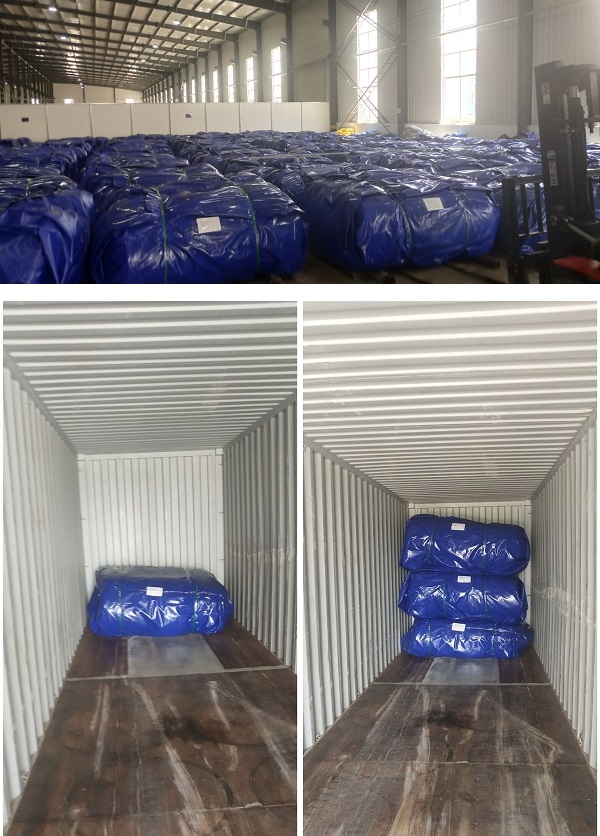
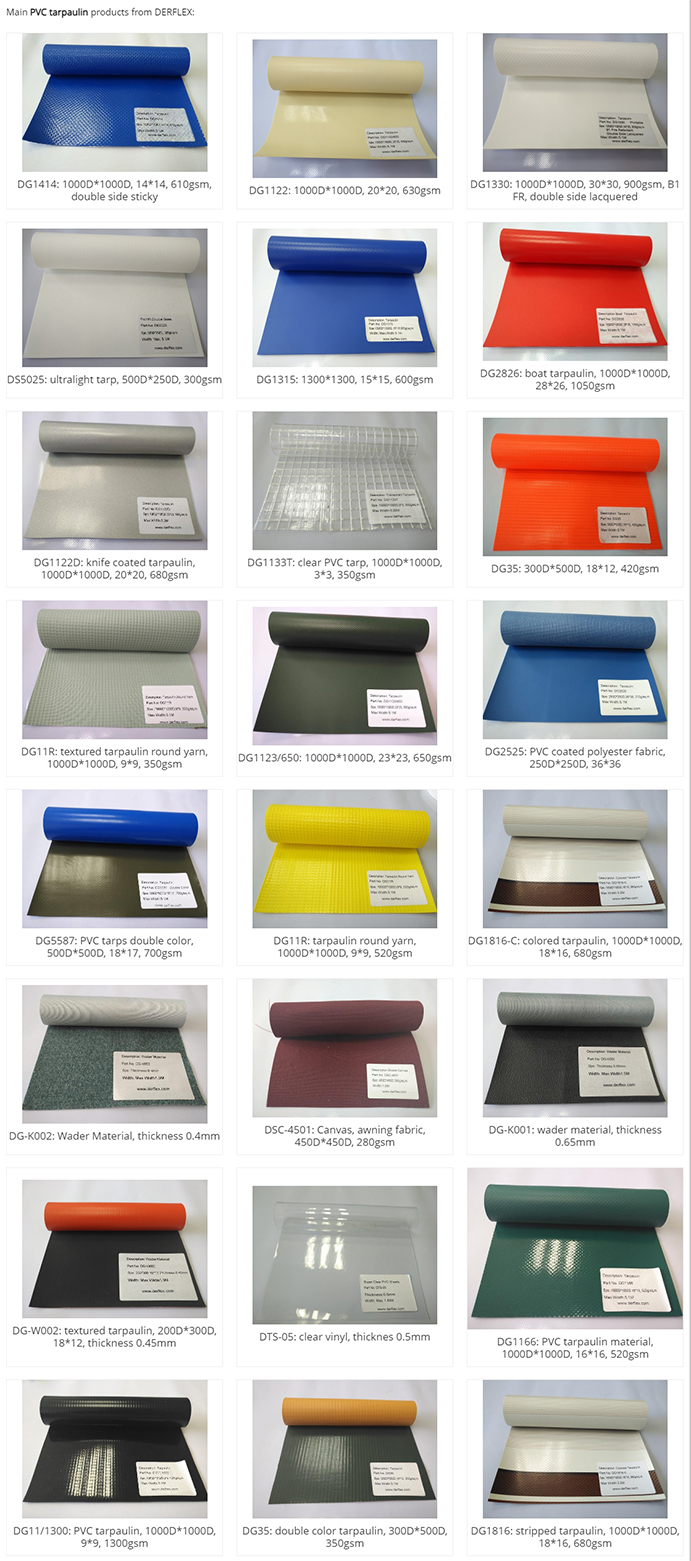
These are existing DERFLEX site images showing coated fabric, a container cover application and export-loading context. A final interior liner should be photographed after the first approved prototype so the page can later gain an even stronger application-specific image set.


Use measured usable dimensions, not only the external ISO size. Door hardware, wall corrugation and floor details can change the practical liner fit.
Identify forklift direction, pallet entry, conveyor use, crane loading or manual loading. The liner must stay clear of the handling path.
Mark corners, skids, protrusions, tie-down hardware and pressure zones so reinforcement is positioned where contact is expected.
A liner can isolate cargo from wet or dirty walls, but condensation control may also require desiccant, ventilation, vapor barrier or thermal design.
Large liner assemblies should be folded and labeled in the order installers need them. Incorrect fold direction can create unnecessary labor and contamination.
If the liner is intended for reuse, define cleaning method, acceptable repair, inspection points and retirement criteria before bulk production.
Useful when painted machinery, metal skids or wrapped equipment should be isolated from rusty, dirty or abrasive container surfaces. Add wear patches at contact points rather than relying only on thicker fabric.
Suitable for cartons, parts and palletized industrial goods where floor and wall cleanliness matters. Door-end protection should be planned around forklift entry and pallet movement.
Can create a cleaner interior envelope for bagged non-food industrial materials that are sensitive to dirt, rust flakes or wall contamination during transport.
Reusable liners can be standardized by container family, color, part code and fold pattern where the same cargo flow repeats across multiple shipments.
For containers used as temporary storage, a fitted liner can create a cleaner internal surface and reduce direct abrasion against the steel shell.
For irregular industrial cargo, a drawing-based liner can incorporate access panels, reinforced corners and shaped protection around high-risk contact areas.
Problem: “20 ft liner” or “40 ft liner” does not define interior fit, attachment or access. Better approach: send actual inside dimensions, door opening and a simple sketch.
Problem: high weight does not fix poor seam placement or concentrated abrasion. Better approach: map the load and wear zones first, then choose material and reinforcement together.
Problem: the wrong liner type may be quoted for powder or pellet loading. Better approach: state whether cargo is palletized, bagged, crated, loose bulk or liquid.
Problem: moisture can enter through closures, seams or condensation inside the container. Better approach: define the actual barrier requirement and test method.
Problem: the liner is damaged during loading before ocean transit begins. Better approach: design the floor and door zone around the real handling method.
Problem: dimensions, tabs and reinforcements drift between orders. Better approach: approve a controlled drawing and identify the liner with a stable item code.
Inspection should focus on the features that determine fit and field reliability, not only cosmetic appearance.
Check the completed liner against the approved drawing after hems, seams and closures are finished.
Inspect welded areas for skips, edge lifting, contamination and inconsistent overlap.
Confirm wear strips, patches and webbing are placed at the real contact zones shown on the drawing.
Measure tabs or straps from fixed reference points so installation remains repeatable.
Check for coating damage, contamination, sharp debris and defects that could mark sensitive cargo.
Confirm door-end flaps, roll-up panels or closures can be operated in the intended loading sequence.
Use item code, orientation marks, container family and revision reference where repeat orders require control.
Pack the liner so installers can deploy it without dragging clean surfaces across the floor unnecessarily.
These verified DERFLEX pages connect the liner decision with material selection, custom fabrication, cargo protection and export-loading planning.
The more clearly the loading environment is described, the easier it is to compare material and fabrication options on the same basis.
A protective liner cover on this page is intended to separate packaged or industrial cargo from the container interior and manage abrasion, dirt and contact. A dry bulk container liner is a purpose-built bag used to hold free-flowing powder, grain, pellets or similar bulk cargo and normally includes dedicated filling, retention and discharge features.
It can be a practical direction for reusable industrial protection because it combines a reinforced textile base with a coated, cleanable and weldable surface. The correct construction depends on cargo contact, abrasion, folding frequency, installation method and required barrier performance.
DERFLEX can develop drawing-based coated-fabric protection around standard container families and custom interior dimensions. For accurate fit, buyers should provide actual usable dimensions, door opening and attachment-point locations rather than only the nominal container length.
A liner can reduce direct cargo contact with damp or contaminated steel surfaces, but it should not automatically be treated as a complete condensation-control system. Long ocean routes may also require desiccant, ventilation, a verified vapor barrier or a thermal liner depending on cargo sensitivity.
Food-contact suitability should never be assumed from a generic industrial PVC liner. If direct food contact or food-grade transport is required, the exact material construction and compliance documentation must be specified and verified separately before purchase.
Start with the actual failure risk rather than a target GSM alone. Light separation duties may favor easier handling, while repeated industrial use may require stronger base fabric, better abrasion behavior and reinforced wear zones. Localized reinforcement can be more efficient than increasing weight across the entire liner.
Send the container type and inside dimensions, cargo description, loading method, photos or drawing, protection requirement, expected reuse, high-abrasion zones, attachment layout, quantity, color or branding and any documentation or test requirements.
A useful quotation should define the liner as a complete protection system: material, panel map, wear zones, attachment, access, labeling and packing. Send your existing liner sample or a simple marked-up container drawing and DERFLEX can review a practical coated-fabric direction for sampling and quotation.
Product information on this page is general procurement guidance. Final material properties, dimensions, tolerances, barrier performance, compatibility, compliance documents and finished-liner performance must be confirmed for the specific project before bulk production.