


 Architectural membrane material supply
ETFE Membrane for Transparent Roofs, Skylights and Facade Envelopes
DERFLEX supports architects, facade contractors, membrane structure builders and project buyers with ETFE membrane material for lightweight daylight architecture, including single-layer foil, multi-layer cushion systems and printed shading directions.
For Project Buyers Who Need More Than a Film Name
ETFE membrane sourcing should connect the material to real project conditions: daylight target, cushion layout, wind load direction, fire review route, printing pattern, roll width, welding plan and site installation method.
- ✓Transparent roof, atrium, skylight and facade material consultation
- ✓ETFE foil thickness and layer structure discussion for project design
- ✓Printed dot, pattern and shading direction for solar control
- ✓Sample, roll packing and export communication for B2B procurement
What Is ETFE Membrane?
ETFE membrane is a transparent fluoropolymer film used as a lightweight architectural skin. It can be installed as a single-layer foil or welded into air-supported cushion panels for roofs, atriums, canopies and facades.
In building-envelope design, ETFE is selected when the project needs natural light, visual openness, low structural weight and a distinctive modern appearance. It is not a conventional waterproof fabric; it is a foil-based architectural material that must be matched with aluminum profiles, inflation systems, support frames and engineering details.
Specification Support Before Quotation
DERFLEX helps buyers define the correct material direction before purchasing. Instead of quoting only by square meter, we review application type, target transparency, cushion structure, roll width, thickness, printing requirement, packing method and required project documents.
Final specification should be confirmed by samples, drawings, local standards and engineering review.
ETFE Membrane Application & Material Showcase
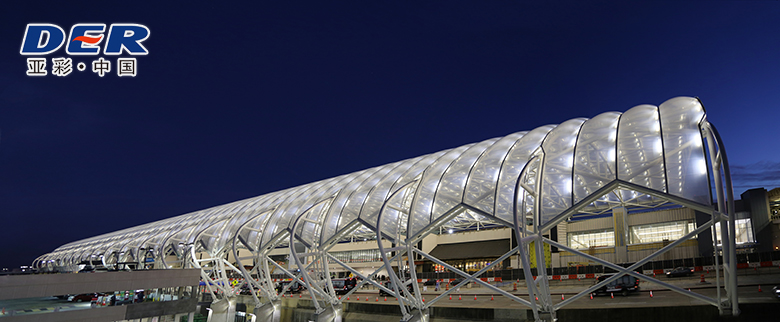
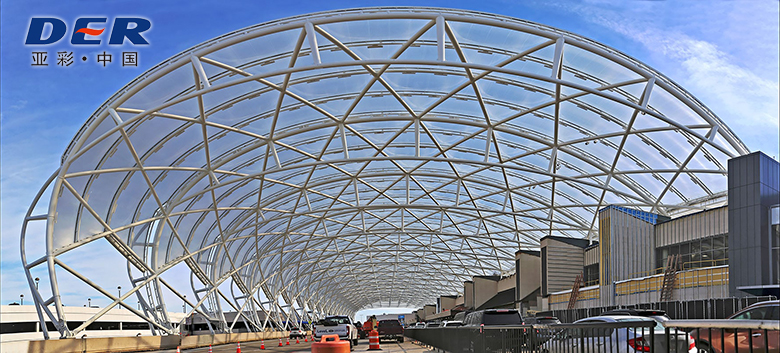
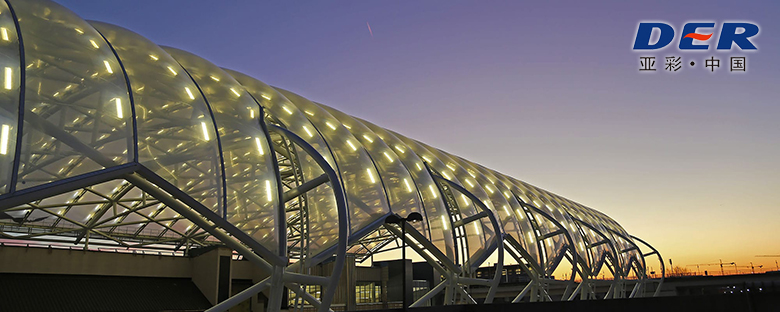
The following DERFLEX site images show transparent ETFE architectural membrane directions for roofs, long-span coverage and illuminated building envelopes.
Why Buyers Choose ETFE Membrane for Modern Architecture
ETFE membrane is valued because it changes how transparent roofs and building skins can be designed. The value comes from a combination of material behavior, structural efficiency and visual freedom.
Transparent Daylight Envelope
ETFE film can create a glass-like daylight feeling while allowing architects to design wider, lighter and more expressive envelope forms.
Low Structural Weight
Compared with rigid glazing concepts, ETFE membrane can reduce load on frames and foundations, especially in large-span or renovation-sensitive projects.
Single or Cushion System
Single-layer ETFE foil supports simple transparent covers, while double or triple-layer cushions can improve insulation and structural behavior.
Weather & UV Direction
ETFE is commonly specified for outdoor architectural exposure because it is designed for sunlight, rain, temperature change and surface aging concerns.
Solar Control by Printing
Dot patterns, frit printing or shading layouts can be discussed to adjust glare, heat gain and visual appearance for different building uses.
Project-Oriented Customization
Thickness, transparency, pattern direction, roll width, packing and documentation can be discussed based on drawings and application requirements.
ETFE Membrane Material Specification Framework
Use this table for early procurement discussion. Final data should be confirmed by sample testing, engineering design and destination-market requirements.
| Product Name | ETFE membrane / ETFE foil / ETFE architectural film / ETFE cushion membrane material |
|---|---|
| Material Type | Ethylene tetrafluoroethylene fluoropolymer film for transparent architectural envelope systems |
| Common Thickness Direction | 100 μm, 150 μm, 200 μm, 250 μm; other project-specific directions can be discussed according to design needs |
| Visual Options | Clear transparent, translucent, tinted direction, printed dot pattern or project-based shading layout |
| System Direction | Single-layer foil, double-layer cushion, triple-layer cushion, printed cushion and facade envelope discussion |
| Typical Applications | Skylights, atriums, station roofs, airport walkways, botanical gardens, greenhouse roofs, shopping malls, sports venues and facade skins |
| Procurement Information Needed | Project drawings, area, span, climate, fire route, desired transparency, cushion system design, roll size, printing pattern and quantity |
| DERFLEX Support | Material selection discussion, samples, OEM roll supply, packing, labeling and export communication |
Where ETFE Membrane Works Well
The right ETFE membrane page should help buyers map the product to actual structures, not only describe generic material advantages.
Transparent Roofs & Skylights
Used where buildings need covered space with a high level of natural daylight.
- Commercial atriums
- Station and terminal covers
- Shopping center skylights
ETFE Cushion Roof Systems
Air-supported cushions can be discussed for large roof areas requiring thermal and structural design coordination.
- Double-layer cushion
- Triple-layer cushion
- Printed solar-control cushion
Facades & Building Skins
ETFE facade systems can create bright, lightweight and visually distinctive architectural envelopes.
- Public buildings
- Sports and leisure venues
- Exhibition structures
Botanical Gardens & Greenhouses
ETFE allows strong daylight entry and can support plant-focused architecture where light is a design priority.
- Botanical domes
- Research greenhouses
- Public garden structures
Transport & Walkway Covers
Useful for covered pedestrian zones, airport access areas and station corridors where brightness improves user experience.
- Airport canopy
- Railway walkways
- Metro entrances
Renovation & Lightweight Additions
Where structural load is sensitive, ETFE membrane can be reviewed as a lightweight envelope direction.
- Existing atrium cover
- Commercial renovation
- Lightweight extension
ETFE Membrane vs Glass, PTFE and PVC Membrane
Early material selection should connect the envelope goal with budget, daylight, appearance, fabrication route and local approval requirements.
| Selection Factor | ETFE Membrane | Glass Roof | PTFE / PVC Fabric Membrane |
|---|---|---|---|
| Best Fit | Transparent roofs, skylights, atriums, cushion envelopes and daylight-driven facades. | Rigid transparent envelope where traditional glazing appearance and acoustic mass are desired. | Opaque or translucent tensile roofs, canopies, stadium covers and shade structures. |
| Weight Direction | Very lightweight foil direction, useful for large-span and reduced-load envelope concepts. | Heavier rigid panel direction requiring stronger supporting structures. | Lightweight fabric direction, normally not as transparent as ETFE. |
| Transparency | Clear, translucent or printed; strong daylight direction. | High clarity, but glare, heat and weight require careful design. | Usually diffused daylight or opaque shade, depending on material and coating. |
| System Complexity | Requires foil welding, clamping, cushion detailing and possible inflation system. | Requires glazing frames, sealants, safety glass and drainage details. | Requires fabric cutting, welding/seaming, tensioning and edge fixing. |
| Procurement Question | Is daylight and lightweight transparent architecture the main goal? | Does the project require rigid glazing and glass-related appearance? | Does the project need shade, tensile form and practical fabric fabrication? |
How DERFLEX Supports ETFE Membrane Procurement
Architectural membrane projects need communication between design, engineering, fabrication and supply. DERFLEX focuses on making the material discussion clear before production.
Requirement Review
Share drawings, application, area, climate, transparency target, fire route and quantity for a practical material recommendation.
Sample & Specification
Review thickness, surface option, printed shading direction, roll size and documentation route before bulk supply.
Production & Inspection
Batch communication can include thickness consistency, optical direction, packing method and roll labeling requirements.
Export Coordination
DERFLEX supports international buyers with quotation communication, packing discussion and repeat-order documentation.
Information to Send for a Useful ETFE Membrane Quote
- Project type: roof, skylight, atrium, facade, greenhouse or cushion system.
- Target system: single layer, double-layer cushion, triple-layer cushion or printed shading layout.
- Approximate area, panel layout, desired roll width and expected delivery stage.
- Transparency, haze, color tint, print pattern or solar-control requirement.
- Destination market, fire documentation direction and local engineering requirements.
- Sample quantity, packing, label, OEM or distributor supply requirements.
When ETFE May Not Be the Right First Choice
ETFE membrane is not automatically suitable for every roof. It should be selected when transparent daylight architecture and lightweight envelope logic are the main design goals.
If the project requires opaque shade, simple hot-air weldable fabric, strong color branding or a tighter budget, PVC/PVDF membrane may be reviewed. If the project requires a premium white tensile roof with long-term public appearance, PTFE-coated fiberglass may be reviewed. DERFLEX can help compare these routes before quotation.
Need ETFE Membrane Material for a Transparent Architecture Project?
Send DERFLEX your project drawings, area, thickness direction, transparency target, cushion system plan, destination market and required documents. Our team will help review a suitable ETFE membrane quotation route.
ETFE Membrane Questions from Architects and Buyers
What is ETFE membrane used for?
ETFE membrane is used for transparent architectural roofs, skylights, atriums, facades, botanical gardens, greenhouse structures, transport walkways and cushion building-envelope systems where daylight and low weight are important.
Is ETFE membrane the same as ETFE film or ETFE foil?
In architectural sourcing, these terms are often used together. ETFE film or foil refers to the material form, while ETFE membrane often refers to the film used in a roof, facade or cushion envelope system.
Can ETFE membrane replace glass?
ETFE can be considered as a lightweight transparent alternative to glass in many skylight, roof and facade projects. The final decision depends on structural design, acoustic requirements, fire route, thermal target, maintenance access and local codes.
What thickness of ETFE membrane should I choose?
Common project discussions often start from 100 μm, 150 μm, 200 μm and 250 μm. The correct thickness should be reviewed according to span, cushion design, panel size, wind exposure, printing and engineering requirements.
Can ETFE membrane be printed for shading?
Yes. Printed dot patterns, frit designs or custom shading layouts can be discussed to help adjust solar gain, glare and visual expression. The design should be confirmed with the architect and engineering team.
Does DERFLEX supply ETFE membrane for cushion systems?
DERFLEX can discuss ETFE film material directions for single-layer and multi-layer cushion projects. Buyers should provide system type, foil thickness, panel layout, transparency target, print pattern and project requirements before quotation.
What should I provide to get a quotation?
Please send project application, drawings if available, required thickness, roll width, quantity, visual requirement, printing pattern, destination market, documentation needs and delivery schedule through the Request A Quote page.