01
Lightweight Building Skin
ETFE film can reduce envelope weight compared with rigid glazing, helping architects explore larger spans and lighter support structures when the engineering design is suitable.



 ETFE Architectural Membrane Material
DERFLEX supplies project-oriented ETFE membrane material for architects, façade contractors, membrane fabricators and building envelope specialists who need a transparent, lightweight and weather-resistant film solution.
From early material comparison to sample confirmation, DERFLEX helps buyers evaluate ETFE film thickness, transparency, surface printing, roll format, cushion application and export-ready documentation before project procurement.
ETFE membrane material is a fluoropolymer film used as a transparent or translucent architectural skin. It can be applied as a single-layer membrane, welded into multi-layer pneumatic cushions, or integrated into façade and skylight systems where daylight, low weight and long outdoor exposure are important.
Unlike traditional coated fabric membranes, ETFE is not normally used as a reinforced fabric roll. It is a film or foil material that depends on system design, perimeter clamping, cushion inflation, welding details and structural engineering. This makes supplier communication especially important during material selection.
DERFLEX positions ETFE membrane material as part of a wider architectural membrane portfolio. Buyers can compare ETFE with PTFE, PVC and ETFE architectural membrane options before deciding the right specification path for a project.
Use the following DERFLEX project-style images as product display visuals for roofs, façades and transparent building envelopes.
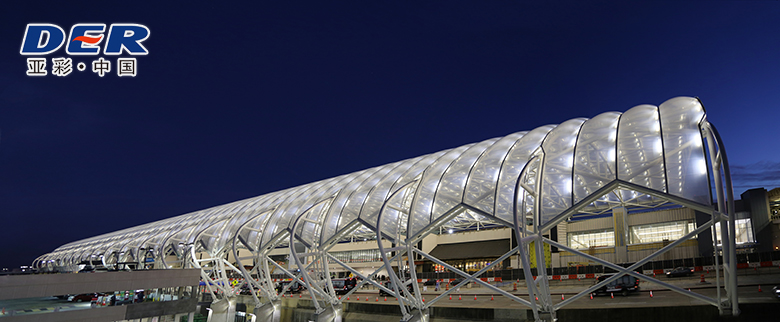
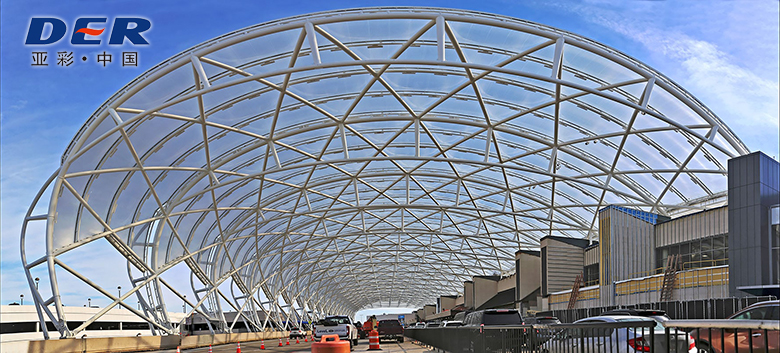
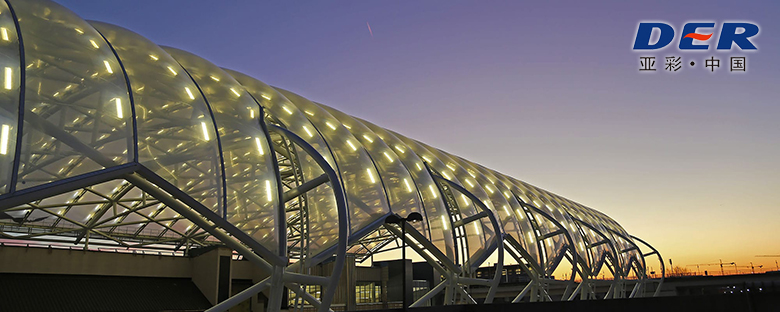
The final specification should be confirmed by drawings, local standards, engineering review and sample testing. The table below helps start technical communication.
| Product Type | ETFE membrane material / ETFE film / ETFE architectural foil for building envelope applications. |
|---|---|
| Material Structure | Transparent or translucent ETFE fluoropolymer film. Not a woven fabric; system strength depends on film selection, welding, clamping and project engineering. |
| Thickness Direction | Common DERFLEX project discussion range: 100μm, 150μm, 200μm and 250μm. Other film directions can be discussed according to project requirements and availability. |
| System Types | Single-layer stressed skin membrane, two-layer or three-layer air cushion, skylight film, façade film and special envelope components. |
| Visual Options | Clear/natural, translucent white, tinted direction, printed shading pattern or project-based visual effect after technical confirmation. |
| Key Performance Focus | Light transmission, weather resistance, UV exposure stability, film flexibility, tear behavior, surface cleanliness, welding compatibility and building code direction. |
| Buyer Types | Membrane fabricators, façade contractors, skylight system companies, tensile structure builders, architectural designers, project distributors and OEM envelope brands. |
| DERFLEX Support | Material recommendation, sample coordination, roll quotation, project packing, export documentation and comparison with architectural membrane materials. |
Note: ETFE system performance must be verified with the project engineer, frame supplier, installer and applicable local requirements before construction.
ETFE membrane material is often chosen when the building needs daylight, lightness and a distinctive transparent envelope rather than a conventional opaque tensile fabric.
ETFE film can reduce envelope weight compared with rigid glazing, helping architects explore larger spans and lighter support structures when the engineering design is suitable.
Clear ETFE film is used in roofs and skylights where natural light is a design goal. Shading can be adjusted through printing, tinting or multi-layer cushion design.
ETFE supports curved roofs, air pillows and complex façade surfaces, allowing designers to create a lighter visual effect than many traditional envelope systems.
The material is selected for external applications where UV exposure, rain, temperature variation and long-term appearance must be considered during design.
ETFE’s low surface adhesion helps reduce dirt retention compared with many conventional surfaces. Maintenance planning should still follow project conditions.
DERFLEX can discuss thickness, color direction, printed shading concept, roll packing and documentation according to contractor and fabricator requirements.
Each material has a different project role. DERFLEX helps buyers shortlist the right direction before sampling and quotation.
Transparent lightweight film for roofs, skylights, façades and air cushions. Strong fit when daylight and architectural lightness are central to the design.
Rigid transparent envelope material with a different structural load, frame demand and breakage behavior. Often selected where a hard glazed façade is required.
Premium coated fiberglass membrane for permanent tensile structures that need dimensional stability and long-life white architectural fabric appearance.
Cost-efficient coated polyester membrane for canopies, roofs, walkways and tensile fabric projects where weldability and color options are important.
ETFE is used in transparent building envelopes and lightweight architectural structures where visual openness and engineering coordination are both important.
ETFE cushions and film systems can support covered sports venues, training centers and public seating areas where daylight and iconic appearance matter.
Useful for terminals, station canopies, walkways and passenger spaces that require lightweight roofing with transparent or translucent daylighting.
Shopping malls, hotel atriums and public indoor streets may use ETFE skylights or cushion roofs to create bright central spaces.
ETFE façade films and cushion systems can create light, modern envelopes with tinting, printing or lighting effects for architectural identity.
ETFE can be considered where light transmission and controlled shading are important for plant-oriented structures and exhibition gardens.
Museums, campuses, pavilions and civic spaces can use ETFE to create a transparent roof or enclosure with a contemporary appearance.
A clear inquiry helps avoid wrong film selection and makes the quotation process faster.
Confirm single-layer membrane, two-layer cushion, three-layer cushion, façade panel or skylight use.
Discuss film thickness according to span, cushion pressure, welding, wind load and engineering design.
Decide clear, translucent, white, tinted or printed shading direction for daylight and solar control.
Confirm fire, building envelope, wind, snow, seismic and local approval requirements with your project team.
Ask for sample, roll packing, datasheet and quotation based on your drawing or procurement schedule.
ETFE membrane projects involve many decisions before ordering: film thickness, transparency, cushion layer design, printing pattern, welding compatibility, fire direction, frame design and shipment format. DERFLEX helps buyers organize those requirements into a practical specification path.
DERFLEX supplies and discusses multiple membrane directions, including tensile membrane fabric, PVC/PVDF materials, PTFE fiberglass membranes and ETFE film. This makes it easier for contractors and distributors to compare material routes within one sourcing conversation.
Instead of only quoting a roll price, DERFLEX can discuss application type, project climate, target appearance, roll width, packing, sample needs and delivery schedule so the buyer can move forward with clearer technical and commercial expectations.
For overseas fabricators and envelope companies, DERFLEX can support custom roll supply, label and packing discussion, documentation coordination and repeat-order communication for building envelope programs.
These related pages help buyers compare membrane systems and build an internal link path around architectural materials.
Answers for architects, membrane contractors, façade companies and procurement teams.
ETFE membrane material is used for lightweight transparent roofs, skylights, façades, atriums, canopies and air cushion systems. It is commonly considered when daylight, low weight and architectural flexibility are important.
No. ETFE is normally a fluoropolymer film or foil, while tensile fabric usually refers to reinforced coated textiles such as PVC/PVDF or PTFE-coated fiberglass. ETFE performance depends heavily on system design, clamping, welding and engineering.
Common project discussions often start around 100μm, 150μm, 200μm or 250μm, but final thickness must be confirmed by structural design, cushion layout, span, wind/snow conditions and local project requirements.
Yes. Printed or patterned ETFE film can be discussed when a project needs shading, solar control or a specific visual effect. The final pattern should be verified with sample review and project engineering.
ETFE can be used in façade systems when the design requires a lightweight transparent or translucent envelope. Suitability depends on frame design, film selection, fixing method, fire direction and local approval requirements.
Please send the project type, system type, target film thickness, color or print requirement, roll width or quantity, drawings if available, destination market and any required standards. DERFLEX can then recommend a practical quotation path.
Send your drawing stage, film thickness target, system type, color or printing direction, estimated quantity and destination market. DERFLEX will help you organize material options and quotation details.