Water Management
Coated surfaces and properly planned welded seams help reduce water ingress. Seam direction, overlap and drainage geometry should match the installation.



 Ready-to-Install Tarpaulin Manufacturing
DERFLEX converts PVC coated polyester materials into custom finished tarps with planned dimensions, seams, hems, reinforcement, hardware, branding and export packaging.
For distributors, contractors, fleet operators, industrial buyers and private-label brands, the important question is not only which tarp material to buy. It is whether the completed tarp arrives ready to fit, fasten, handle and perform in the intended environment.
A finished tarp is a tarpaulin that has moved beyond roll material or a simple cut sheet. It has been converted into a usable protective product through dimension planning, cutting, panel joining, edge finishing, reinforcement, hardware installation and final packing.
This distinction matters in professional purchasing. A fabric roll may have the correct GSM and color, but the finished product can still fail if the hem allowance is wrong, the grommet spacing does not match the fixing points, the seam direction creates water traps, or the reinforcement does not follow the actual load path.
Cut size is the dimension of the material before hems, seams and assembly. Finished size is the usable dimension after fabrication. DERFLEX recommends confirming which measurement your drawing refers to before sampling or bulk production.
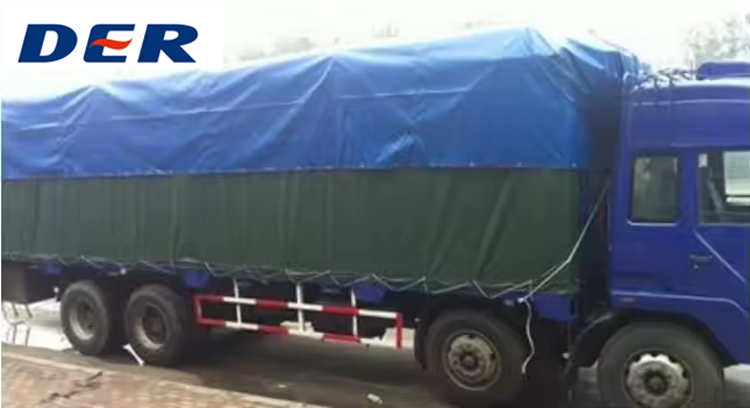
DERFLEX matches the base fabric, PVC formulation, surface finish and fabrication method to the service environment before the tarp is cut and assembled.
PVC coated polyester is commonly selected for heavy-duty finished tarps because it combines a reinforced textile core with a weldable, weather-resistant surface. The exact construction should be based on handling frequency, wind exposure, temperature, folding requirements, abrasion points and expected service duration.
Performance descriptions are application directions rather than a universal guarantee. Test method, compliance target and material grade should be confirmed in the approved specification.
Material strength, fabrication quality and installation design must work together. Selecting only by thickness or price can overlook the points that determine field usability.
Coated surfaces and properly planned welded seams help reduce water ingress. Seam direction, overlap and drainage geometry should match the installation.
Polyester scrim construction, yarn density and coating adhesion influence how the tarp handles pulling, tie-down stress and repeated movement.
Hems, webbing, rope edges, patches and hardware spacing distribute force away from isolated points and help reduce premature edge damage.
UV and weather-resistant material directions can be selected for sunlight, rain, humidity, road spray and seasonal temperature variation.
Heavier is not always better. Finished weight, folding, lifting, deployment frequency and operator use should influence material selection.
Approved dimensions, color references, hardware layout and packing details can be retained as production references for wholesale and OEM programs.
The table is a sourcing guide. Final values depend on the application, approved sample, drawing, material grade and production method.
| Specification Item | Typical / Custom Direction | Buyer Confirmation Points |
|---|---|---|
| Product Format | Finished tarp, made-to-measure cover, panel, curtain, shaped cover or OEM packaged product | Confirm whether dimensions are cut size or finished size. |
| Core Material | PVC coated polyester; selected PVC laminated, mesh or clear PVC directions | State waterproofing, breathability, visibility and handling requirements. |
| Fabric Weight | Approx. 300–1200 GSM direction; heavier constructions can be discussed | Balance durability with finished product weight and operator handling. |
| Finished Dimensions | Custom length, width, drop, panel geometry or drawing-based shape | Provide tolerance, seam allowance responsibility and measurement method. |
| Joining Method | Hot-air welding, HF welding or selected sewing / hybrid assembly | Choose by material, seam load, waterproof target and product geometry. |
| Edge Finish | Folded hem, welded hem, rope edge, webbing reinforcement or layered edge | Identify pull direction, tie-down load and abrasion zones. |
| Hardware | Brass, aluminum or stainless eyelets; D-rings, buckles, straps, hooks, pockets, zippers | Confirm material, diameter, spacing, position and corrosion environment. |
| Reinforcement | Corner patches, edge bands, wear strips, webbing grids or localized multilayer panels | Mark high-stress and contact points on the drawing. |
| Surface / Color | Glossy, matte, embossed; standard or custom color direction | Color matching should be confirmed by sample or agreed reference. |
| Optional Performance | UV-resistant, cold-flexible, anti-mildew, flame-retardant, blackout or oil-resistant direction | State test standard, target value and market documentation requirement. |
| Branding | Logo printing, label, barcode, instruction sheet and private-label packaging | Provide artwork format, print position, color and approval process. |
| Packing | Folded, rolled, polybag, woven bag, carton or palletized export packing | Confirm unit pack, carton mark, pallet limit and container plan. |
All ranges are indicative. Product suitability and compliance should be reviewed against the actual use environment and the mutually approved specification.
The conversion process is planned around the final installation and supply program, helping buyers reduce misunderstandings before bulk production.
Confirm use, environment, expected service, quantity and purchasing model.
Clarify finished dimensions, cut allowance, tolerance, openings and hardware points.
Select fabric weight, coating, color, surface and optional performance direction.
Plan panel layout, welds, hems, reinforcement, eyelets, rings and accessories.
Review dimensions, joining, appearance, hardware position and packing reference.
Produce against approved references with order-specific export packing.
The images below are sourced from the DERFLEX website and illustrate finished applications, coated material options and manufacturing support.
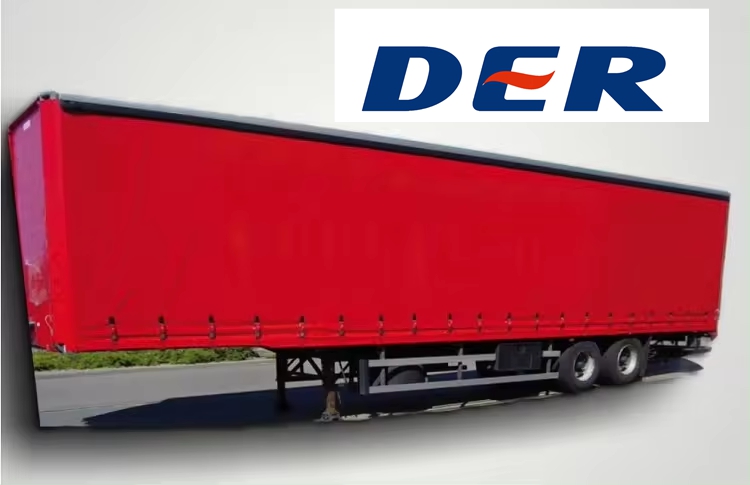
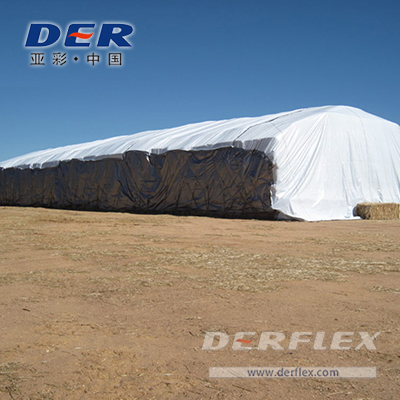
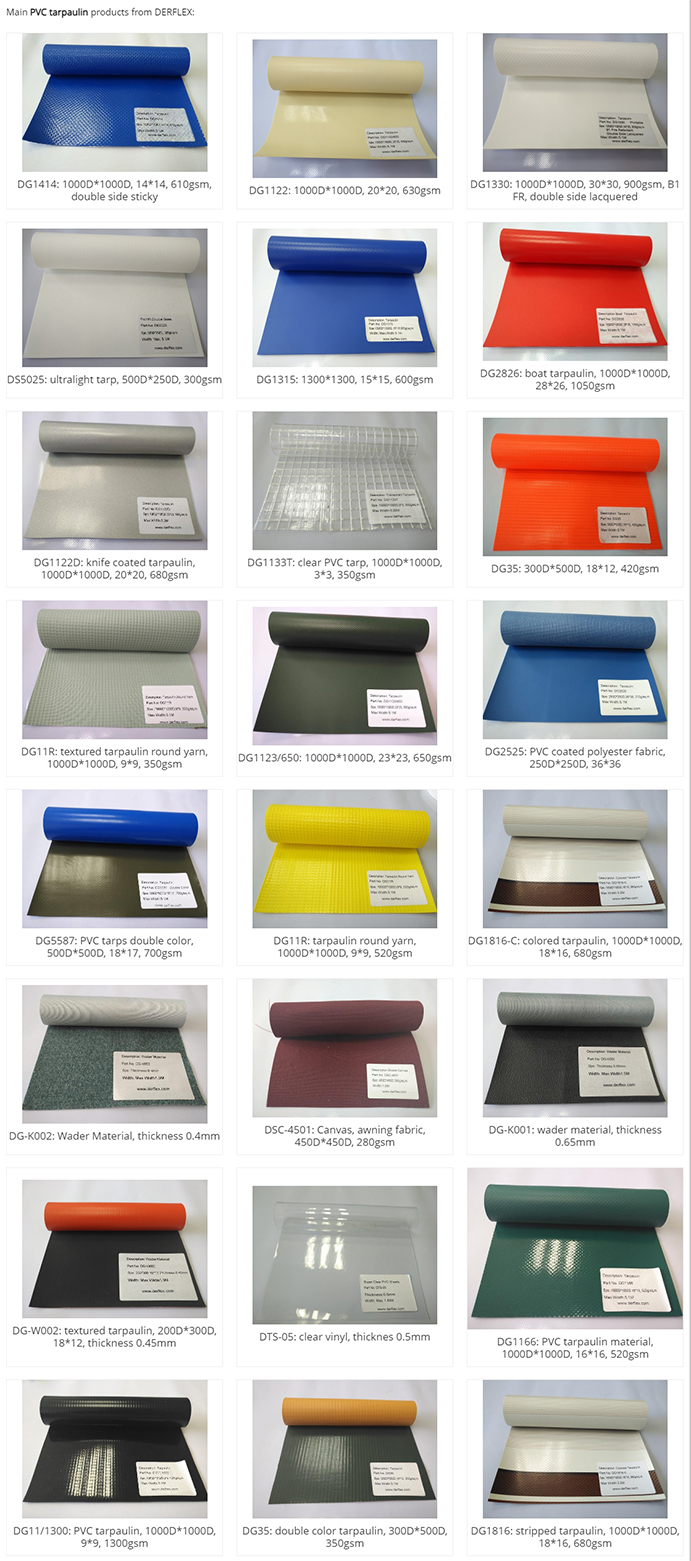
Different industries place different loads on the tarp. DERFLEX uses the use case to guide material, reinforcement, hardware and packing decisions.
Flatbed cargo covers, trailer systems, side curtains, dump truck covers, lumber and steel protection.
Made-to-measure machine covers, outdoor asset covers, warehouse dividers and dust protection.
Temporary weather barriers, scaffolding covers, material protection and project-specific enclosures.
Hay, feed, equipment, greenhouse-related and seasonal farm storage protection.
Boat storage covers, dock equipment covers, patio enclosures and weather-exposed equipment.
Replacement canopy roofs, event structures, shade covers and temporary shelter components.
Repeatable standard or custom sizes with retail labels, carton marks and market-ready product assortments.
Drawing-based products with controlled material, hardware, branding, instructions and packaging.
Finished tarp inspection should cover both the coated material and the details introduced during fabrication.
A complete inquiry improves material matching, quotation accuracy and sample efficiency.
A finished tarps supplier should do more than cut material. Professional B2B programs need coordinated material production, conversion planning, repeatable dimensions, hardware sourcing, sample approval, private-label packing and stable supply references.
DERFLEX is positioned for buyers who want the material and the completed tarp specification managed within one manufacturing-oriented supply process.
These six internal resources cover the parent category, base material, custom manufacturing, wholesale supply, application direction and quotatio, n.
Tarp fabric rolls are coated textile materials supplied for local cutting or conversion. Finished tarps are fabricated products with completed dimensions, seams or welds, hems, reinforcement, hardware and packing so they can be installed or sold as a final product.
Yes. Square, rectangular and selected shaped covers can be developed from dimension sheets, drawings, reference samples or marked photographs. The drawing should identify finished dimensions, openings, fixing points, reinforcement zones and tolerance requirements.
PVC coated polyester is a common direction because it combines textile reinforcement, waterproof surface performance, weather resistance and weldability. The suitable GSM and structure depend on the application, handling and service conditions.
Yes. Hardware material, diameter, spacing, position and reinforcement can be planned according to the fixing method. Buyers should mark exact hardware locations on the approved drawing whenever possible.
DERFLEX supports bulk and OEM programs with custom color, logo printing, labels, product instructions, unit packing, cartons and repeat-order specification control. Commercial details depend on the product and order plan.
Provide the application, finished dimensions, quantity, preferred material or performance target, color, hardware layout, reinforcement method, branding, packaging, documentation requirement and target delivery schedule.
Send your drawing, size list, application, quantity and fastening details. DERFLEX will review the material direction, fabrication structure and packing requirements before quotation and sampling.