News
Company News

Choosing a Tarpaulin Supplier in India: 12 Factors | DERFLEX

Update:2026/8/4 17:50:22 Views:
DERFLEX logo Industrial Tarpaulin Buyer Guide

What Factors Should I Consider When Choosing a Tarpaulin Supplier in India?

Select a supplier by measurable material performance, application engineering, sample-to-bulk consistency, production control and total landed value—not by GSM or unit price alone.

This guide is written for Indian distributors, importers, truck-body builders, contractors, agricultural suppliers, industrial buyers and OEM brands comparing domestic tarpaulin suppliers with overseas manufacturing partners.

Quick Answer

Choose the supplier that can translate your use case into a controlled specification.

A reliable tarpaulin supplier in India should help you define the correct material, weight, tensile and tear strength, coating or lamination structure, waterproof construction, UV requirement, size tolerance, reinforcement, fastening hardware and packaging. It should then prove that the approved specification can be reproduced in bulk and supported with inspection records, test documents and responsive after-sales communication.

For an occasional light-duty cover, a local stockist may be sufficient. For truck fleets, monsoon storage, construction, agriculture, tents, industrial curtains or private-label distribution, procurement should be treated as a repeatable product program. In these applications, the cost of premature tearing, leakage, color variation, incorrect dimensions or delayed replenishment can exceed the difference between two quotations.

Current Market Benchmark

What established supplier pages in the India market consistently emphasize

The most visible supplier pages tend to cluster around three themes. A professional buyer should keep those basics, then extend the evaluation into test methods, batch consistency and total procurement risk.

Material, GSM and weather performance

Buyers are commonly advised to check tarpaulin material, GSM, UV resistance and waterproofing. These are valid starting points, but the quotation should also identify base-fabric construction, coating method, measurable strength and the seam design used in the finished cover.

Customization, quality control and delivery

Indian manufacturers frequently highlight custom sizes, broad product ranges, quality-control processes and timely service. Buyers should verify how custom requirements are documented, approved and retained for repeat orders rather than accepting general claims.

Detailed construction specifications

Stronger technical pages publish ranges for GSM, mesh, denier, lamination, dimensions, colors, eyelets, UV treatment and border ropes. This level of detail makes comparison easier and should be requested from every shortlisted supplier.

Buyer Checklist

12 factors to evaluate before appointing a tarpaulin supplier

Use the following factors as a quotation checklist, supplier-audit framework and sample-approval guide.

Start with the application, not a generic material name

“Tarpaulin” can refer to lightweight PE sheets, HDPE woven laminates, canvas, PVC-coated polyester, PVC-laminated fabric and specialized technical textiles. Each material behaves differently in rain, heat, abrasion, flexing, welding, storage and repeated handling.

  • Temporary rain cover: cost and handling may dominate.
  • Truck or trailer tarp: tear, abrasion, flexing and fastening matter.
  • Industrial storage: waterproofing, UV and long exposure become critical.
  • Tent or shelter: appearance, weldability, width and optional FR performance matter.

Look beyond GSM to the full material architecture

GSM describes weight per square metre, but two tarps with the same GSM can perform differently. Ask for the polyester or HDPE base structure, yarn denier, weave or mesh count, coating/lamination weight, total thickness and surface finish.

  • Tensile strength in warp and weft directions
  • Tear strength and, where relevant, adhesion strength
  • Coating or lamination route
  • Actual finished-weight tolerance

Match performance to India's climate and use environment

A tarp used during heavy monsoon exposure needs more than a water-resistant sheet. A supplier should discuss the waterproof layer, seam construction, edge details and water-entry risks around stitching or hardware. Outdoor applications may also require UV stabilization, heat resistance, cold-flex performance, anti-mildew treatment or salt-air consideration.

  • Rain duration and drainage direction
  • Solar exposure and expected outdoor season
  • Coastal, dusty, humid or chemical-contact conditions
  • Wind loading and tie-down frequency

Verify whether the seller controls manufacturing

Dealers and stockists can provide fast local availability, while manufacturers can offer deeper specification control. Neither model is automatically right or wrong. The key is to know who controls base fabric, coating, lamination, cutting, welding, sewing, hardware installation, inspection and packing.

  • Request factory address, process flow and equipment list.
  • Ask which operations are subcontracted.
  • Confirm who owns the quality responsibility.
  • Check whether the quoted grade can be repeated later.

Assess custom fabrication and engineering capability

Finished tarps often fail at the edge, corner, seam or fixing point rather than through the centre of the fabric. A capable supplier should review finished dimensions, cut-size versus finished-size tolerance, panel layout, seam direction and load transfer around hardware.

  • Heat-welded, high-frequency-welded or sewn seams
  • Reinforced hems, corner patches and webbing
  • Grommets, D-rings, straps, ropes and sleeves
  • Custom logo, labels, color references and packaging

Require a sample approval system before bulk production

A sample is useful only when it becomes a controlled reference. Approve the material, color, hand feel, surface, finished dimensions, seams, reinforcement, hardware, printing and packing. Record acceptable tolerances and retain a signed or coded reference sample for production and inspection.

  • Material swatch for early screening
  • Pre-production sample for final construction approval
  • Golden sample or signed specification sheet
  • Change-control procedure for future orders

Check testing, documentation and compliance support

Ask for reports that correspond to the exact product grade, test method and validity period. A logo on a website is not a substitute for a report. Depending on the application, documents may cover tensile, tear, adhesion, UV, flame-retardant performance, restricted substances or factory management systems.

  • Confirm the sample name and specification on the report.
  • Check the laboratory, standard and test date.
  • Define whether third-party inspection is required.
  • Do not assume one certificate covers every product grade.

Evaluate capacity, lead time and supply continuity

Capacity is not only the stated annual output. It is the supplier's ability to reserve material, schedule coating or lamination, complete fabrication, inspect, pack and ship within the agreed window. Ask how peak-season demand, color changes, special additives and custom hardware affect lead time.

  • Normal and peak-season production lead time
  • Minimum order quantity by color or specification
  • Backup equipment and approved raw-material sources
  • Reorder planning and safety-stock options

Compare total landed cost rather than ex-factory price

For Indian buyers sourcing internationally, compare material cost together with packing, inland transport, port charges, freight, insurance, customs handling, duties or taxes, warehouse receiving and expected defect or replacement cost. Confirm the Incoterm and responsibility at each stage.

  • Roll utilization and fabric-width efficiency
  • Container loading quantity and packing density
  • Currency and freight assumptions
  • Local broker review of current import requirements

Inspect packing, labeling and transport protection

Tarpaulins can be damaged or confused after production through weak cores, poor folding, moisture exposure, mixed labels or inadequate palletization. Define roll length, core type, folding method, carton marks, barcode/label content, pallet rules and container-loading photos before shipment.

  • Individual packing and outer packing
  • Batch, size, color and item identification
  • Moisture and abrasion protection
  • Loading plan and quantity reconciliation

Demand traceability and a practical inspection plan

Repeat orders become easier when the supplier can identify the raw-material batch, coating or lamination run, production date and inspection record. Define inspection level and acceptance criteria for appearance, dimensions, weight, color, seam quality, reinforcement, hardware and packing.

  • Incoming material control
  • In-process checks and first-piece approval
  • Pre-shipment inspection
  • Corrective action for nonconforming goods

Review communication and post-sale problem solving

Good supplier communication is technical, documented and timely. The sales team should be able to explain specification differences, escalate engineering questions and provide clear follow-up when a problem occurs. Ask how claims are investigated and what evidence is required.

  • Named commercial and technical contacts
  • Response process for quality claims
  • Photo, sample and batch-number investigation
  • Corrective and preventive action reporting

Procurement reminder: performance statements should be tied to an agreed specification, sample and test method. Actual service life depends on material grade, fabrication, installation, exposure, maintenance and handling.

Application Matrix

Different Indian applications require different supplier strengths

Use this matrix to identify which specification questions should carry the greatest weight in your supplier evaluation.

Application Primary risks Specification priorities Supplier evidence to request
Truck & logistics covers Wind flap, abrasion, tearing, poor tie-down alignment, repeated handling Tear/tensile strength, flexibility, reinforced edges, grommet or D-ring layout, seam direction Finished sample, drawing, hardware pull review, repeat-order specification record
Construction & monsoon protection Standing water, sharp edges, site movement, UV exposure and temporary fixing Waterproof layer, seam construction, puncture resistance, UV direction and repairability Material TDS, seam sample, installation guidance and inspection criteria
Agriculture & grain storage Moisture, mildew, soil contact, seasonal sun and handling by farm teams Waterproofing, UV, anti-mildew option, suitable weight and easy handling Application reference, grade comparison and packing suitable for local distribution
Tents, sheds & temporary structures Long panels, seam leakage, appearance variation, wind stress and project compliance Width, weldability, dimensional stability, color control and optional FR direction Welding trial, color reference, roll map, project-specific test documents
Industrial equipment covers Irregular shapes, hot surfaces, chemical splash, abrasion and access requirements Pattern design, fitted dimensions, material compatibility, closures and reinforcement Drawing review, prototype, material compatibility discussion and final inspection report
Distributor / private label Inconsistent SKU quality, packaging variation, customer returns and reorder mismatch Grade matrix, labels, artwork, color coding, MOQ, batch consistency and replenishment Golden samples, SKU specifications, packaging proof and ongoing QC plan
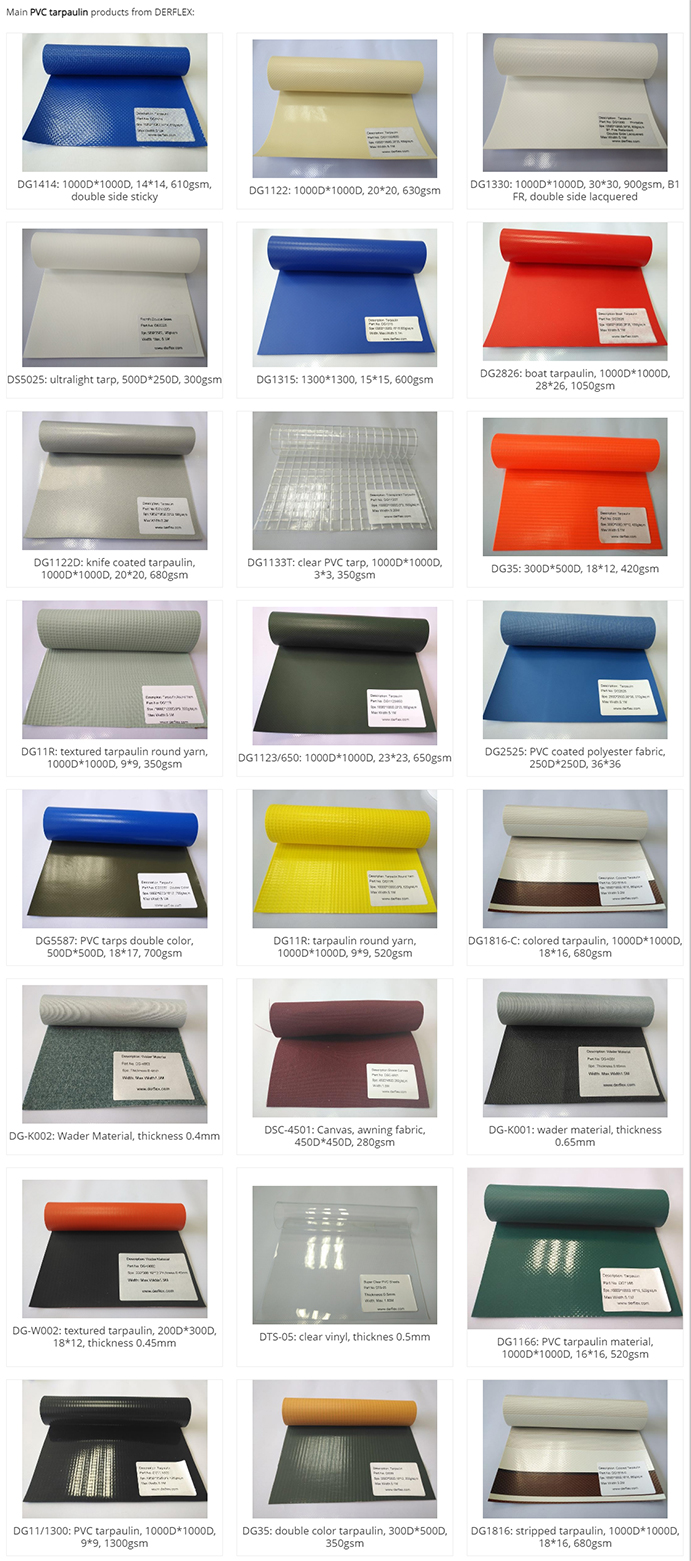
Product Image Display

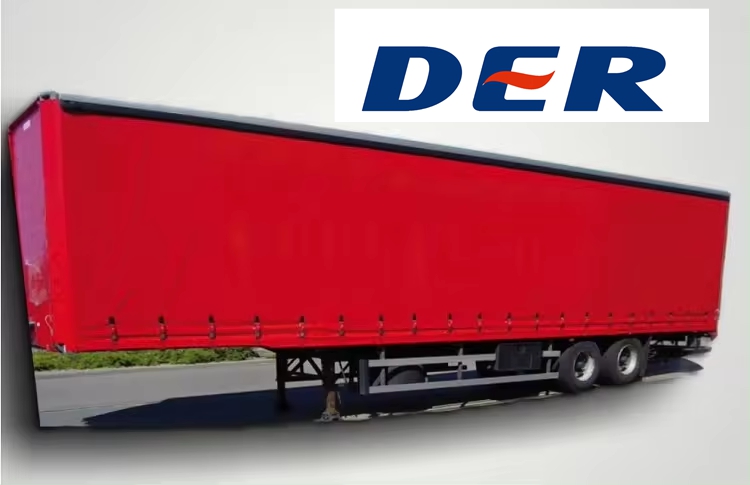
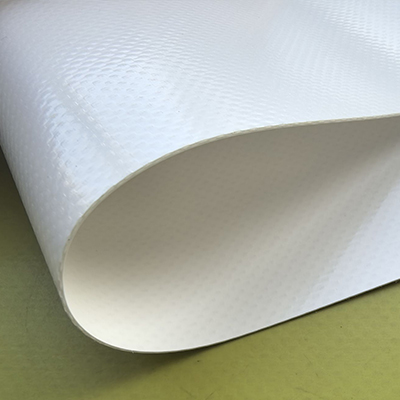
PVC tarpaulin materials and finished-cover applications

DERFLEX can discuss roll-goods supply, cut panels and finished custom tarpaulins according to the buyer's fabrication and distribution model.

Supplier Audit

Questions to send with your RFQ

A useful RFQ creates comparable quotations. Send the same questions to every shortlisted supplier and score the completeness of each response.

Attach a drawing, product photo, existing sample or end-use description whenever possible. This reduces assumptions and helps the supplier identify technical risks before pricing.

  1. Which material construction do you recommend for this application, climate and expected service period—and why?
  2. What are the nominal and tolerance values for GSM, thickness, width, color and finished dimensions?
  3. Can you provide tensile, tear, adhesion or other relevant test data for the quoted grade?
  4. Which processes are completed in-house, and which are subcontracted?
  5. How will seams, hems, corners, grommets, D-rings, webbing or ropes be constructed and inspected?
  6. Can you produce a pre-production sample and keep it as the approved reference for bulk production?
  7. What is the MOQ by color and specification, and what changes the lead time?
  8. How do you control shade, weight and surface consistency between production batches?
  9. What inspection records, loading photos, certificates or third-party inspection support are available?
  10. What packing method, roll length, label content and container-loading quantity are proposed?
  11. Which Incoterm is quoted, and which charges are excluded from the stated price?
  12. How are quality claims investigated, documented and resolved after delivery?
Risk Control

Supplier red flags that deserve closer review

One red flag does not automatically disqualify a supplier, but several together increase procurement risk.

Only GSM is provided

No bas, e-fabric, strength, coating, thickness or tolerance information is available.

“Waterproof” is undefined

The supplier cannot explain seams, stitching holes, edge details or the relevant test method.

Sample and bulk differ

There is no golden-sample system, color reference or change-control process.

Factory details are unclear

The seller avoids explaining production location, subcontracting or inspection responsibility.

Price exclusions are vague

Packing, freight, local charges, documentation or hardware costs appear late in the process.

No batch traceability

Products cannot be connected to a material lot, production run or inspection record.

Why DERFLEX

A manufacturing partner for Indian buyers who need controlled PVC tarp programs

DERFLEX is a China-based manufacturer serving global B2B buyers. For Indian importers, distributors, converters, contractors and OEM brands, the company can support the path from PVC-coated fabric selection to custom finished tarpaulins, sample approval, production control and export-ready packing.

Rather than positioning every tarp as the same product in a different weight, DERFLEX works from the application, exposure, handling, fabrication and repeat-order requirements. Final specifications and performance claims should be confirmed through the quotation, approved sample and agreed test documents.

PVC Coated & Laminated RoutesMaterial structures can be discussed for different cost and performance needs.
Rolls, Panels or Finished TarpsSupply format can match fabricators, distributors or direct project use.
OEM / Private Label OptionsCustom color, printing, labels, packing and SKU programs are available for discussion.
Fabrication SupportWelded seams, reinforced hems, grommets, D-rings, webbing and other details.
Sample-to-Bulk ControlSpecification and sample approval can be used as repeat-order references.
Export CoordinationPacking, documentation and container planning can be aligned with the order.
Recommended Workflow

From supplier shortlist to repeat bulk order

A structured procurement path reduces ambiguity and creates a stable basis for future replenishment.

Define the use case

Record exposure, handling, service-life target, dimensions, fixing method and failure consequences.

Issue one controlled RFQ

Send the same drawing, questions, target standards and packing requirements to each supplier.

Compare technical offers

Score specification completeness, testing, quality control, capacity, support and landed cost.

Approve the sample

Sign off material, color, dimensions, seams, reinforcement, hardware, printing and packing.

Freeze the specification

Create a version-controlled product sheet with tolerances and inspection criteria.

Inspect production

Use first-piece, in-process and pre-shipment checks according to order risk and quantity.

Verify packing & loading

Reconcile quantities, labels, batch details, packaging and container-loading evidence.

Review field performance

Feed installation, customer and service data back into the next order specification.

FAQ

Frequently asked questions about choosing a tarpaulin supplier in India

Answers for buyers comparing local stock, Indian manufacturers and overseas factory-direct supply.

What is the most important factor when choosing a tarpaulin supplier in India?

The most important factor is the supplier's ability to match a documented specification to the real application. Material name and GSM are only starting points. The supplier should also address strength, waterproof construction, UV exposure, reinforcement, fastening, tolerances, inspection and repeat-order consistency.

Should I choose PVC, HDPE, LDPE or canvas tarpaulin?

Choose according to use. PE/HDPE tarps can suit economical or temporary coverage, canvas can provide breathability in selected applications, and PVC-coated polyester is often selected for reusable truck, industrial, tent and heavy outdoor applications where tear strength, abrasion resistance and weldability are important. The final choice should be tested against your exposure and handling conditions.

Is a higher GSM tarpaulin always better?

No. Higher GSM usually means more material, but performance also depends on base-fabric denier and weave, coating quality, tensile and tear values, seam construction and reinforcement. An application-matched tarp can perform better than a heavier tarp with weak edges or unsuitable construction.

How can I verify that a supplier is a real manufacturer?

Request the factory address, business and quality documents, process flow, equipment list, photos or video of production, sample records and an explanation of subcontracted operations. For larger programs, consider a factory audit or third-party inspection.

What should be included in a tarpaulin sample approval?

Approve material structure, GSM/thickness, color, surface, finished size, tolerance, seam type, overlap, hems, corner patches, grommet spacing, D-rings or straps, printing, labels and packaging. The approved sample should be linked to a specification version and retained as a reference.

How should Indian importers compare a local supplier with an overseas factory?

Compare availability, MOQ, technical control, customization, quality consistency, lead time, service and total landed cost. Local suppliers may offer faster replenishment and smaller quantities; an overseas manufacturer may offer deeper material and OEM control. The right model depends on volume, risk, specification complexity and inventory strategy.

Can DERFLEX supply custom tarpaulins for the Indian market?

DERFLEX can discuss PVC tarpaulin rolls, cut panels and finished custom covers for Indian distributors, fabricators, contractors and OEM buyers. Custom options may include material weight, width, color, finish, seams, reinforcement, hardware, logo, labels and packing, subject to technical review, sample approval and order requirements.

Build a Comparable Quotation

Send DERFLEX your application, specification and target quantity

Receive a project-based recommendation for PVC tarpaulin material or a custom finished-cover program. Include your destination in India, expected exposure, dimensions, reinforcement, packing and documentation requirements.

Technical recommendations are application-dependent. Confirm the final material, construction, tolerances, testing, installation and commercial terms in the approved specification and sales agreement.

Consulting Services
+86-021-54361792 / 54361798
Email
sales@derflex.com