How to Measure Custom Tarps for a Better Fit
Practical measurement advice for truck tarps, equipment covers, outdoor storage, industrial curtains and OEM tarp programs.
Accurate tarp measurement is not only about length and width. For a durable custom tarp, buyers also need to confirm finished size, side drop, edge reinforcement, grommet spacing, material weight, fastening method and the real working environment.
DERFLEX helps distributors, fabricators, truck body builders and industrial buyers turn a simple sketch into a reliable custom PVC tarp specification that is easier to fabricate, install and repeat in bulk orders.
A Custom Tarp Should Fit the Job, Not Just the Object
Too small and it leaves corners exposed. Too large and it can sag, collect water, flap in wind or overload the grommets. A good measurement plan protects both the covered asset and the tarp itself.
Finished Size vs. Cut Size
Finished size is the actual size of the tarp after hemming, welding, reinforcement and edge finishing. This is usually the most important number for installation.
Cut size is the fabric size before hems and edge work. If a buyer sends cut size by mistake, the finished tarp may be smaller than expected. DERFLEX recommends confirming “finished size” clearly on every custom tarp drawing.
Coverage Size vs. Tensioning Size
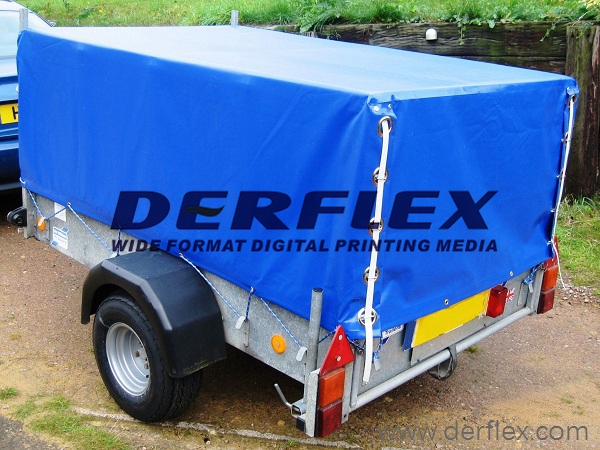
A tarp that only covers the top surface may not protect side edges, tie-down rails or cargo corners. For transport, construction and equipment covers, extra drop is often needed for ropes, bungees, straps, D-rings or grommets.
For repeat orders, DERFLEX can help standardize the drop allowance and reinforcement position so every tarp in the program fits the same installation method.
How to Measure Custom Tarps Before Ordering
Use this method when preparing a request for custom truck tarps, machinery covers, waterproof storage covers, agricultural tarps or industrial protection sheets.
Define the application
Tell DERFLEX whether the tarp will cover a truck, trailer, machine, pallet, warehouse opening, tent frame, agricultural storage pile, boat or construction material. The application affects material weight, coating, flame retardancy, UV level and reinforcement.
Measure the base area
Record the true length and width of the object, tray, frame or opening. Use the widest and longest points, not the average. For irregular shapes, divide the area into simple rectangles and label each section.
Add height or drop
If the tarp must hang down the sides, measure the required drop. For machinery, stacked cargo or rounded loads, record the maximum height and any protruding parts that may create stress points.
Check diagonals
For rectangular frames, compare diagonal measurements from corner to corner. If the diagonals are not equal, the frame may not be square and the tarp may need a revised shape or more installation tolerance.
Plan tie-down points
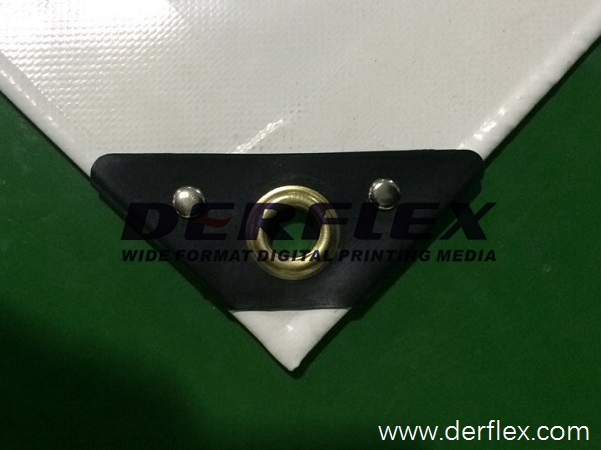
Mark where grommets, D-rings, webbing, ropes, sleeves or hook-and-loop fasteners should be installed. Grommet spacing should match the wind load, frame structure and how frequently the tarp will be handled.
Send a drawing or photo
A simple top-view sketch, side-view sketch and photos of the installation area help DERFLEX understand the shape, stress zones, corners, obstacles and preferred fastening method before quoting.
Simple Formulas for Custom Tarp Dimensions
These formulas help buyers prepare a first measurement. Final specifications should also consider seam direction, welding method, material thickness, reinforcement width and installation tension.
Manufacturer advice: for B2B orders, submit both the object dimensions and your desired finished tarp size. This helps avoid confusion between coverage measurement and production size.
Finished Length = Object Length + Front Overlap + Back Overlap
Finished Width = Object Width + Left Overlap + Right Overlap
Suitable for flat storage covers, pallet covers, roof emergency covers and simple outdoor protection.
Finished Length = Top Length + Front Drop + Back Drop
Finished Width = Top Width + Left Drop + Right Drop
Use this when the tarp must hang down the side to reach rails, hooks, bungees or tie-down points.
Measure along the actual surface line, not only the flat ground projection
For arched frames, pergolas, boat covers or rounded loads, a flexible tape and a side-view sketch are recommended.
Measurement Details by Custom Tarp Application
Different tarp uses require different allowances. A truck tarp is measured differently from a warehouse cover or machine protection sheet.
| Application | What to Measure | Important Allowance | DERFLEX Recommendation |
|---|---|---|---|
| Truck & trailer tarps | Tray length, tray width, cargo height, side drop, tie rail position, bow height and rear flap requirement. | Extra drop for fastening and wind control. Mark grommet or D-ring spacing clearly. | Use PVC coated polyester with reinforced edges, welded seams and optional logo printing for fleet identity. |
| Industrial machinery covers | Maximum length, width and height; protruding handles, pipework, corners and access areas. | Add protection around sharp edges and high-friction contact points. | Choose heavier PVC tarpaulin, corner patches and abrasion-resistant reinforcement for repeated handling. |
| Construction material covers | Stack footprint, material height, ground contact area and common storage layout. | Overhang should allow secure anchoring without forcing grommets under constant strain. | Consider UV resistance, waterproof coating and high-frequency welded seams for long-term outdoor exposure. |
| Agricultural covers | Pile length, pile width, pile height, slope and anchoring method. | Extra edge material may be needed for sandbags, ropes or ground fastening. | Select anti-UV and anti-mildew options depending on crop, climate and storage duration. |
| Outdoor shade or canopy tarps | Frame outer dimensions, post spacing, slope, diagonal distance and expected tensioning direction. | Measure actual frame line and allow for tension without overstretching edges. | Specify grommet spacing, reinforced corners and suitable color for heat and appearance control. |
| Warehouse curtains & partition tarps | Opening width, opening height, hanging rail position, overlap, floor clearance and door movement. | Allow overlap at sides or center split if dust, splash or wind control is required. | Request custom hems, sleeves, clear window sections or flame-retardant PVC where required. |
What to Confirm Before DERFLEX Produces Your Custom Tarp
A correct measurement is only one part of the specification. For a stable custom tarp program, buyers should also confirm material and fabrication details.
Material & Coating
Tell us whether the tarp needs waterproof PVC coating, UV resistance, flame retardancy, anti-mildew treatment, low-temperature flexibility, blackout performance or specific color matching.
- Common PVC tarp fabric ranges from medium-duty grades to super heavy-duty grades.
- Roll width and finished size may influence seam placement.
- For OEM programs, confirm repeat color, surface finish and packing method.
Edges, Corners & Hardware
Finishing details determine how the tarp performs after installation. A tarp used in wind, transport or frequent handling usually needs stronger edge engineering than a temporary cover.
- Reinforced hems, welded seams and corner patches
- Grommets, D-rings, webbing, rope-in-hem or sleeves
- Custom spacing for straps, hooks, bungees or rails
Send These Details for a Faster Custom Tarp Quote
The more precise your information is, the faster DERFLEX can recommend material, calculate production feasibility and prepare quotation details.
Why Buyers Use DERFLEX for Custom Measured Tarps
DERFLEX is not only a tarp seller. We are a material manufacturer and custom tarp supply partner for buyers who need stable quality, repeatable specifications and export-ready support.
Factory Knowledge Behind Every Measurement
Because DERFLEX manufactures PVC coated tarpaulin materials, we understand how coating weight, base fabric strength, welding direction, seam layout and edge reinforcement affect the final tarp. This helps buyers avoid design choices that look good on paper but fail during installation or repeated use.
Custom Support for B2B Programs
For distributors, converters, fleet operators and project contractors, DERFLEX can support custom size development, material matching, color selection, logo printing, packing design and repeat production control for long-term supply.
Useful Internal Resources for Custom Tarp Buyers
These pages help buyers compare material choices, heavy-duty grades and application-specific tarp solutions before sending measurements.
Need a Custom Tarp Size Checked?
Send DERFLEX your measurements, application photos, desired finished size, material requirements and hardware layout. Our team can help review the specification and recommend a practical PVC tarpaulin solution for your project.
Frequently Asked Questions About Measuring Custom Tarps
These answers are written for buyers preparing specifications for custom PVC tarps, industrial covers and truck tarpaulin projects.
Should I measure the object size or the finished tarp size?
Measure the object first, then decide the finished tarp size by adding the required drop, overlap or fastening allowance. When requesting a quote, provide both the object size and the finished tarp size you want.
What is the difference between cut size and finished size?
Cut size is the material size before hems, welding and edge reinforcement. Finished size is the final tarp size after production. For installation, finished size is usually the key measurement.
How much extra material should I add for tie-downs?
It depends on the frame, wind load, rail position and fastening method. For truck, trailer and equipment covers, measure the distance from the top edge to the tie-down point and add enough drop so straps or ropes do not pull directly on the tarp edge.
How should I measure an irregular custom tarp shape?
Break the shape into rectangles, triangles or simple sections. Mark every side length, diagonal distance, curve direction and hole/cutout position. A photo or sketch greatly improves quotation accuracy.
Can DERFLEX add grommets, D-rings and reinforced corners?
Yes. DERFLEX can discuss custom grommet spacing, D-rings, webbing, reinforced hems, corner patches, rope edges, sleeves, welded seams and logo printing depending on order details.
What material is best for long-term outdoor custom tarps?
For heavy-duty outdoor use, PVC coated polyester tarpaulin is a strong choice because it offers waterproof performance, weldability, tear resistance and UV-resistant options. The best GSM and coating depend on your application and service life target.
Can DERFLEX supply custom tarps in bulk for OEM or distributor programs?
Yes. DERFLEX supports custom size, color, material structure, reinforcement, logo printing, packing and repeat specifications for distributors, fabricators, contractors and OEM tarp programs.