News
Company News

Tarp Manufacturer vs Supplier | Verify a Real PVC Factory

Update:2026/8/2 17:43:13 Views:
DERFLEX logo Factory verification guide for B2B tarp buyers

Is Your Tarp Supplier a Real Manufacturer—or a Trading Company?

A practical way to verify a PVC tarpaulin factory in China before you approve samples, place an OEM order, or build a long-term industrial tarp supply program.

The important question is not whether a company calls itself a manufacturer. The important question is which production stages it controls, how it documents quality, and whether it can repeat the approved specification from one shipment to the next.

60,000㎡Integrated production area stated in the DERFLEX company profile
450+Production and operational workforce
25+Senior engineers supporting material and process development
120+Countries and regions served by the company
Direct answer

A supplier can be a manufacturer, a trader, a fabricator—or a mixture of all three.

A tarp manufacturer normally controls one or more production stages such as base fabric, PVC film, coating or lamination, cutting, welding, sewing, eyeleting and packing. A tarp supplier is a broader commercial term. It may describe a factory, a distributor, an export company, an online seller, or a trading company that coordinates production through outside plants.

Neither label is enough by itself. A capable trading company may be useful for mixed products, low-volume sourcing or consolidated shipments. A factory-based partner becomes more important when you need custom GSM, controlled coating, stable color, welded construction, private-label packaging, repeat-order consistency or technical accountability.

For industrial tarp OEM programs, verify the complete production chain. Some companies manufacture PVC tarp fabric rolls but outsource finished tarp fabrication. Others cut and weld finished covers but buy all roll material from external mills. Your audit should identify the actual manufacturing level—not simply accept the word “factory” on a website.
Manufacturer vs supplier vs trader

Compare the operating model—not the marketing title

The right partner depends on your order type. This comparison helps procurement teams decide when direct production control matters and when a commercial sourcing partner may still be practical.

Business model What it usually controls Typical strengths Potential limitations Best-fit buying situation
Material manufacturer Polyester base fabric, PVC formulation, film, coating or lamination, roll inspection and packing. Material customization, roll-to-roll consistency, technical data and bulk supply. Finished tarp sewing or complex hardware may be outsourced. Converters, fabricators, tent makers, truck-cover producers and distributors buying roll goods.
Finished tarp factory Patterning, cutting, hot-air or HF welding, sewing, hems, webbing, eyelets, D-rings and packing. Made-to-measure products, fittings, reinforcement and custom construction. May rely on external fabric mills and have limited control over coating formulation. Fleet replacements, machinery covers, project covers and custom-size industrial tarps.
Integrated manufacturer Material production plus at least part of finished-product conversion and OEM coordination. Stronger traceability, specification control and communication across material and fabrication. Minimum order or production planning may be more structured than local stock supply. Repeat OEM programs, private label, industrial projects and multi-size product ranges.
Trading company Supplier selection, negotiation, export documents, mixed sourcing and shipment coordination. Broader catalogs, mixed-container sourcing, flexible small orders and language support. Less direct process control; factory may change between orders unless locked by contract. Mixed products, exploratory orders, consolidated procurement and low-complexity stock items.
Distributor / stock supplier Warehousing, local stock, standard sizes, local delivery and replacement service. Speed, small quantities and convenient domestic access. Limited OEM depth, material changes or private-label control. Urgent replacements, maintenance orders and standard tarp sizes.
Factory due diligence

12 checks for verifying a PVC tarpaulin factory in China

Use several types of evidence together. A single certificate, factory video or sample does not prove who controls production or whether the approved quality can be repeated.

01

Verify the legal entity

Request the business license in Chinese and English. Confirm the registered name, address, business scope and date. Ask why the invoicing, payment or export entity differs, if applicable.

02

Separate office from factory

A Shanghai, Guangzhou or overseas sales office may be legitimate, but it is not the production site. Confirm the manufacturing address and the relationship between the office and the plant.

03

Map every production stage

List weaving, film, coating, lamination, printing, cutting, welding, sewing, eyeleting, inspection and packing. Mark each stage as in-house or subcontracted.

04

Request a live factory tour

Ask for a real-time video call that follows material from raw rolls to active production, QC and finished packing. Pre-recorded clips alone are easy to reuse.

05

Check equipment relevance

Equipment should match the quoted product: coating or lamination lines for roll goods; cutting, hot-air/HF welding, sewing and eyeleting for finished tarps.

06

Review material traceability

Ask how yarn, base fabric, PVC formulation, pigments and additives are linked to a production batch. Repeat orders require more than a color photo and GSM label.

07

Inspect the testing routine

Relevant controls may include weight, width, thickness, tensile, tear, adhesion, hydrostatic pressure, color, surface, weld behavior and finished-size checks.

08

Match reports to the product

Confirm that ISO certificates, flame-retardant reports, REACH/RoHS documents or other tests cover the correct entity, formulation, color and validity period.

09

Control sample-to-bulk transfer

Approve a signed specification and retained reference sample. Define allowable tolerances instead of relying on the phrase “same as sample.”

10

Test repeat-order discipline

Ask how the supplier preserves color, texture, roll length, packaging, reinforcement and hardware records for the next purchase order.

11

Audit export readiness

Review packing marks, pallet or roll protection, container loading, moisture control, commercial documents and how claims are handled after shipment.

12

Use independent verification

For important programs, arrange a third-party factory audit, pre-production review or pre-shipment inspection. The scope should reflect your actual product risks.

Product and process visibility

What a real tarp manufacturing conversation should show

Industrial buyers need visibility into the material, the finished construction and the factory environment. The three are related, but they are not the same capability.

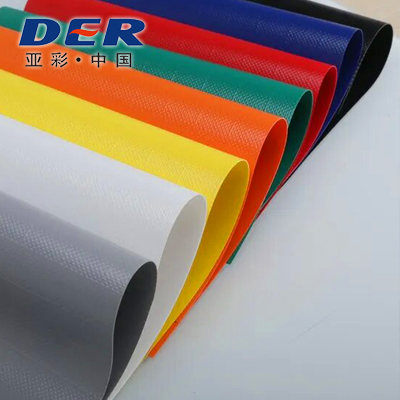
DERFLEX PVC tarpaulin fabric rolls in multiple colors
PVC tarpaulin roll materialThe roll specification should define base fabric, coating or lamination, weight, width, color, finish, additives and conversion behavior.
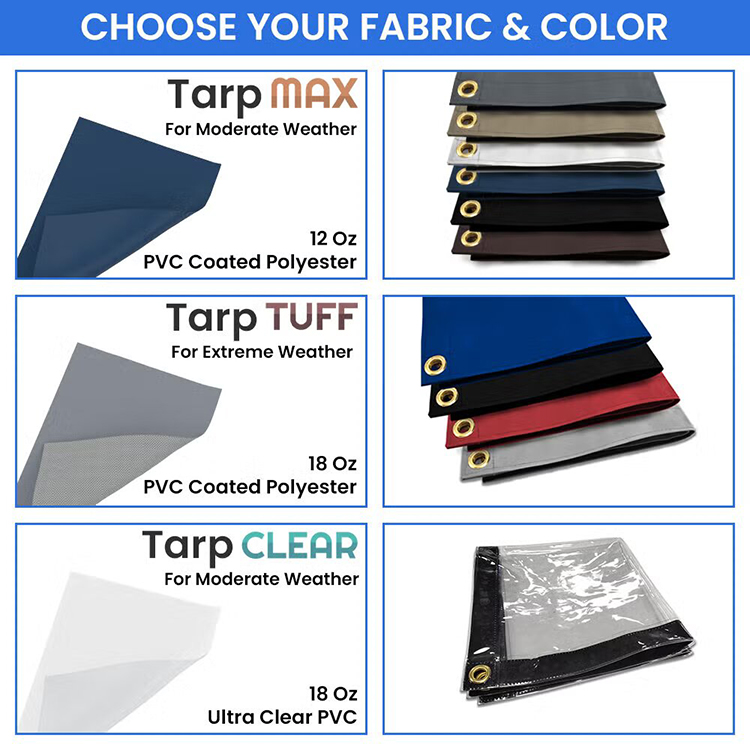
Custom tarp fabric and finished tarp options with grommets
Finished tarp constructionEdges, seams, reinforcement, eyelets, D-rings, clear windows and packaging require separate approval.
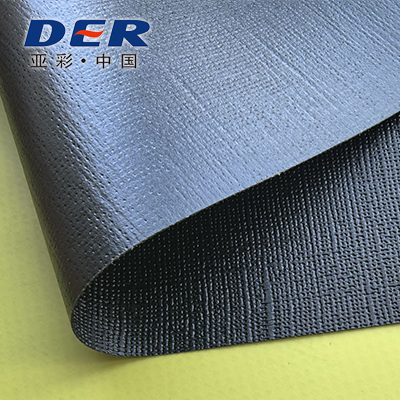
Close-up of heavy duty PVC coated industrial tarp fabric
Surface and base structureAppearance alone cannot confirm tensile, tear, adhesion, UV package or welding suitability.
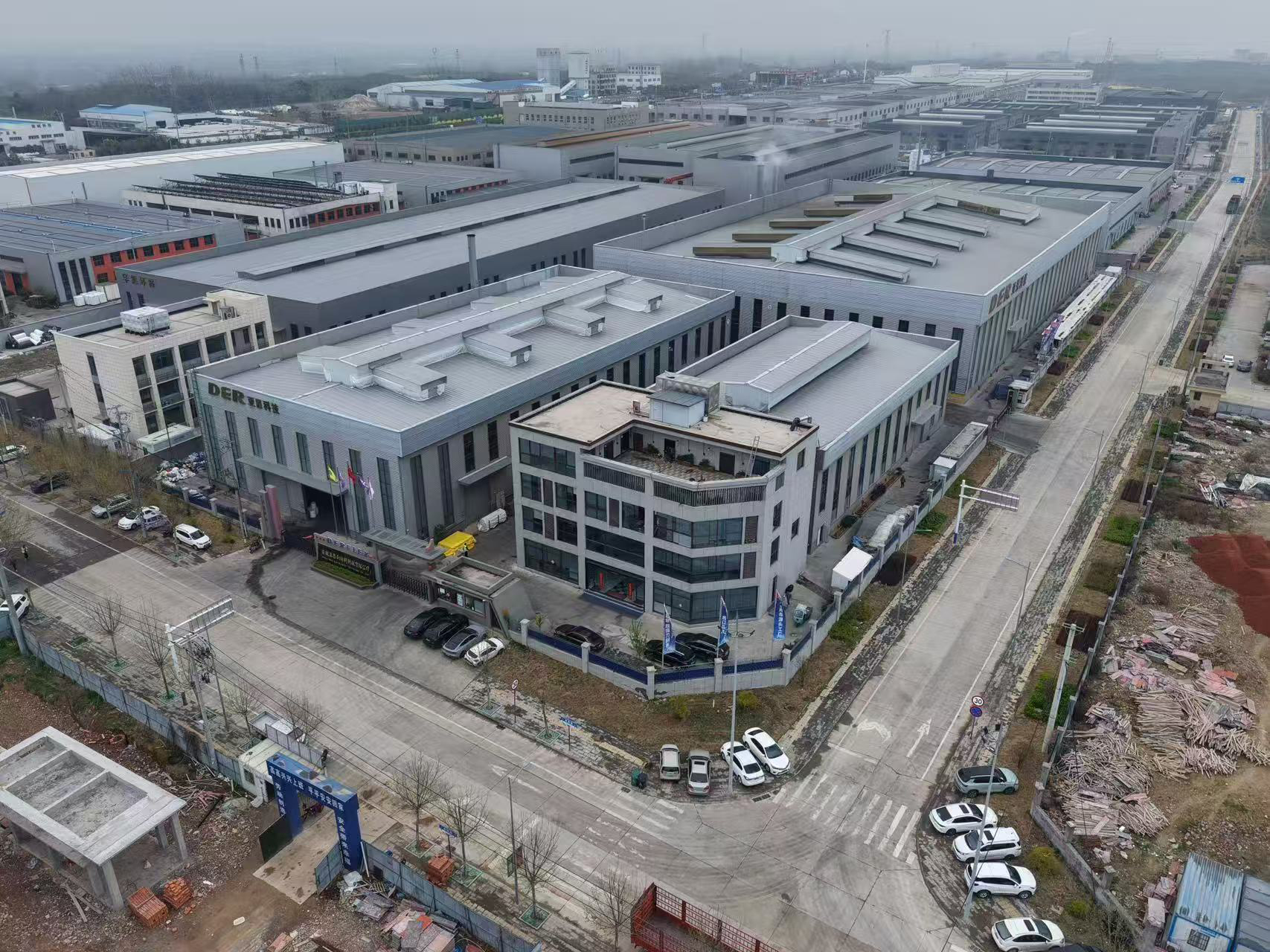
DERFLEX manufacturing base aerial view
DERFLEX manufacturing profile

Factory-based supply with material and OEM coordination

DERFLEX identifies Shanghai DER New Material Co., Ltd. and Anhui DER New Material Technology Co., Ltd. as its office and manufacturing entities. The company profile presents an integrated production area of approximately 60,000 square meters, more than 450 employees, over 25 senior engineers, and multiple calendering, coating and lamination systems.

For tarp buyers, the practical value is the ability to discuss both PVC coated or laminated roll material and finished custom tarp requirements. Depending on project scope, this may include custom GSM, width, color, surface finish, UV or flame-retardant direction, welding, hems, webbing, eyelets, D-rings, labels and export packaging.

Order-specific capability, tolerances, test standards, MOQ and documentation should always be confirmed in the final quotation and approved specification.

Roll goodsPVC coated and laminated tarpaulin material directions
Finished tarpsCustom size, reinforcement, hardware and packing options
OEM supportColor, label, logo, carton mark and repeat-order records
QC planningSpecification-based inspection and shipment review
OEM execution

How an industrial tarp OEM manufacturer should move from inquiry to repeat order

A useful factory does more than quote a piece price. It translates the application into a controlled specification and keeps that information available for future orders.

Application review

Clarify what is being covered, exposure, installation, handling frequency, expected life and target market.

Specification proposal

Select material structure, GSM, width, finish, functional treatment, seam method and reinforcement direction.

Sample approval

Review lab dip, material swatch, welded sample, prototype or golden sample with written tolerances.

Production control

Link raw material, color, coating, conversion, inspection and packing records to the purchase order.

Repeat-order lock

Keep approved construction, labels, packaging and quality limits available for reorder confirmation.

What to specify

Material control and finished-tarp control are two separate approvals

Buyers often approve the PVC fabric but leave the finished construction undefined. That gap can create leakage, size deviation, tearing at hardware points or inconsistent private-label presentation.

PVC tarpaulin material specification

  • Base fabricYarn denier, weave density and polyester structure.
  • Coating systemCoated or laminated construction, adhesion and surface treatment.
  • Weight and thicknessNominal value, test method and acceptable tolerance.
  • Width and roll formatUsable width, roll length, core, wrapping and pallet plan.
  • Functional directionUV, flame retardancy, cold flexibility, anti-mildew, anti-static or abrasion needs.
  • Color and finishPantone/RAL reference, gloss, matte, lacquer, embossing and side-to-side consistency.

Finished industrial tarp specification

  • Finished sizeFinal dimensions, drops, overlaps, pockets and size tolerances.
  • Seam constructionHot-air, hot-wedge, high-frequency welding, sewing or combined method.
  • Edge reinforcementFolded hem, webbing, rope-in hem, double layer and corner patches.
  • Attachment layoutEyelet spacing, D-rings, straps, buckles, loops, elastic or custom hardware.
  • Brand presentationPrinting, woven label, care label, carton, barcode and shipping marks.
  • Inspection planDimensions, appearance, weld, hardware pull, packing and AQL or project-specific checks.
Risk signals

Common red flags when a “factory” cannot support its claims

None of these items proves a problem on its own. Several unresolved signals together should trigger deeper verification before payment or mass production.

Generic factory videos

The supplier cannot show your sample, current date, production order or staff during a live call.

Changing factory names

Business license, bank beneficiary, quotation, test report and shipping entity differ without a clear corporate explanation.

No process-level answers

Sales staff can discuss price and color but cannot explain coating, welding, reinforcement, tolerances or test methods.

One report for every product

The same certificate is presented for different weights, colors, formulations or factories without confirming its test scope.

Uncontrolled subcontracting

The production plant can change after sample approval, or the supplier will not disclose which stages are outsourced.

Price before specification

A final-looking price is offered without confirming finished size, material structure, reinforcement, hardware, packing or destination.

No retained reference

The supplier has no method to keep a golden sample, color record, formulation code or packaging file for repeat orders.

Audit resistance

Independent inspection, live video, factory visit or document verification is repeatedly delayed without a practical reason.

RFQ preparation

Send enough information to test whether the supplier really understands your product

A detailed request for quotation is also a capability test. A technically competent tarp manufacturer should identify missing information, explain trade-offs and confirm what must be sampled before bulk production.

  • Application, operating environment and expected service conditions
  • Roll-goods dimensions or finished tarp drawing and quantity by size
  • Target material, GSM/oz, thickness, color and surface direction
  • UV, flame-retardant, anti-mildew, cold, abrasion or chemical-contact needs
  • Welding or sewing method, hems, webbing, grommets, D-rings and stress zones
  • Logo, label, packaging, pallet, container and destination-market requirements
  • Required test reports, inspection standard and sample approval method
Buyer FAQ

Questions about tarp manufacturers, suppliers and trading companies

What is the difference between a tarp manufacturer and a tarp supplier?

A tarp manufacturer controls defined production stages such as material coating, lamination, cutting, welding, sewing or hardware installation. A tarp supplier is any company that sells or coordinates tarp supply, including manufacturers, traders, distributors and stockists. Buyers should verify actual process control rather than rely on the title.

Is a trading company always a bad choice?

No. A capable trading company can be useful for mixed-product procurement, small volumes, consolidated shipments and market communication. The risk increases when it hides the production source, changes factories without approval or cannot control your specification. Transparency and documented supplier control matter more than the label alone.

How can I verify a PVC tarpaulin factory in China remotely?

Check the legal entity and factory address, arrange a live video tour, review equipment relevant to your product, request process and QC records, compare test reports with the quoted specification, verify payment and export entities, and use a third-party audit or inspection for important orders.

Does a PVC tarp fabric manufacturer also make finished tarps?

Not always. Some factories specialize in roll goods, while others focus on cutting, welding and sewing finished covers. An integrated supplier may coordinate both. Confirm which processes are in-house, which are subcontracted, and who is responsible for final inspection.

What should I approve before an OEM industrial tarp order?

Approve the material structure, weight, width, color, finish, treatments, finished dimensions, seams, reinforcements, hardware, printing, labels, packaging, tolerances, inspection method and retained reference sample. Order-specific reports should match the final product scope.

Can DERFLEX supply both PVC tarp rolls and finished custom tarps?

DERFLEX presents both PVC tarpaulin roll-material supply and custom finished-tarp support. Available construction, minimum order, size, welding, reinforcement, hardware, packaging and documentation depend on the project and should be confirmed during quotation.

What information should I send for a factory quotation?

Send the application, environment, dimensions or drawing, quantity, target material and weight, color, surface finish, performance requirements, seam and edge details, eyelet or D-ring layout, branding, packing, destination and required test or inspection scope.

,

Evaluate the factory through your real tarp specification

Send DERFLEX your application, dimensions, material direction, quantity and OEM requirements. The team can review roll-material and finished-tarp options, identify missing specification points and prepare a project-based quotation.

Product performance, tolerances, compliance documents and factory processes should be confirmed against the final specification, order quantity and destination-market requirements.
Consulting Services
+86-021-54361792 / 54361798
Email
sales@derflex.com