News
Company News

PVC vs EVA vs PP vs TPU Clear Film: Differences, Uses and Selection Guide

Update:2026/6/27 17:29:59 Views:
DERFLEX logo Transparent Film Material Selection
PVC �� EVA �� PP �� TPU Clear Film Guide

PVC vs EVA vs PP vs TPU Super Clear Film: Differences, Uses and Buyer Selection Guide

Transparent film is not selected by clarity alone. A good material decision also depends on flexibility, sealing method, surface durability, outdoor exposure, compliance direction, lamination behavior and total converting cost.

DERFLEX helps converters, OEM factories, distributors and industrial buyers compare PVC clear film, EVA transparent film, PP clear film and clear TPU film roll for real production applications such as clear curtains, tent windows, packaging, protective covers, textile lamination, inflatable products and custom transparent panels.

DERFLEX PVC super clear film roll and transparent film material
PVCClarity & fabrication
EVASoft lamination
PPPackaging & labels
TPUElastic performance

Product images use real DERFLEX website material photos. Final image selection can be replaced by your exact roll, sheet or OEM sample photos before publishing.

Four Clear Film Materials

Each Transparent Film Has a Different Strength

PVC, EVA, PP and TPU can all be made into clear or translucent film, but they are not interchangeable. The right choice depends on the final product, processing equipment and market positioning.

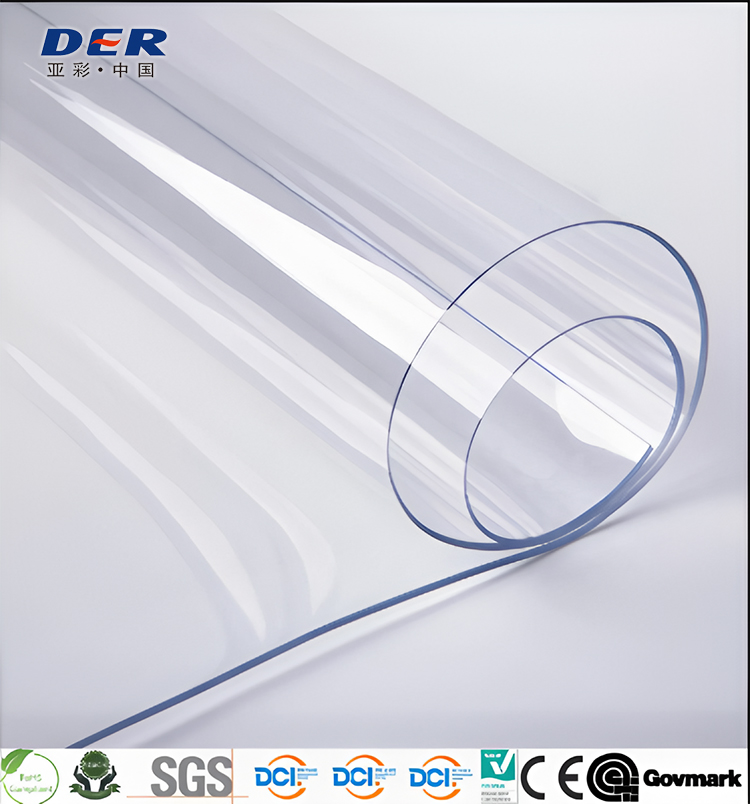
PVC super clear film for curtains windows covers and clear panels
PVC Clear Film

Clear, Flexible and Easy to Fabricate

PVC super clear film is widely selected for visible protection where buyers need transparency, soft hand feel, waterproof performance and convenient fabrication.

  • Useful for HF welding, heat sealing, sewing and cutting
  • Good for clear curtains, tent windows, marine panels and partitions
  • Cost-effective direction for wide rolls and thick clear sheets
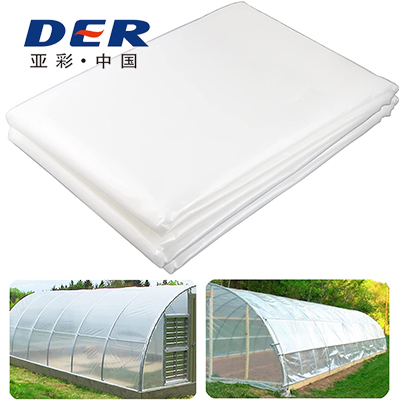
EVA blend greenhouse film and transparent agricultural covering material
EVA Transparent Film

Soft, Adhesive and Lamination-Friendly

EVA film is often chosen for flexible lamination, interlayers, encapsulation and protective packaging where softness and bonding behavior matter.

  • Common in solar encapsulation and laminated glass interlayers
  • Good softness and low-temperature flexibility direction
  • Can support greenhouse, packaging and protective film uses
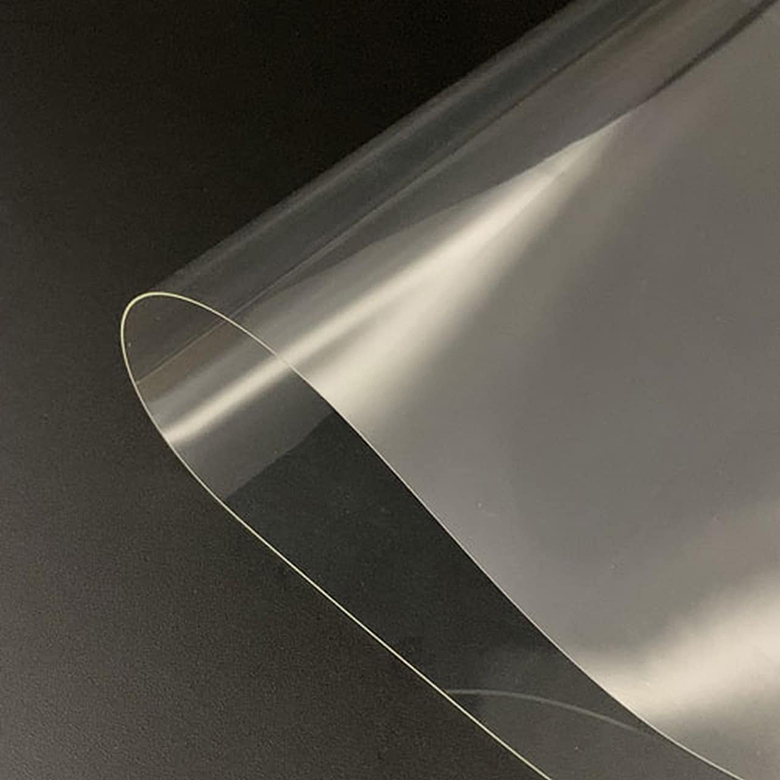
PP material sheet direction for polypropylene clear film comparison
PP Clear Film

Lightweight, Glossy and Packaging-Oriented

PP film, including CPP and BOPP directions, is widely used when buyers need light weight, gloss, moisture resistance and efficient packaging conversion.

  • Common for food packaging, overwrap, labels and stationery
  • Good stiffness-to-weight balance and moisture barrier direction
  • Suited to printing, lamination and high-speed packaging lines
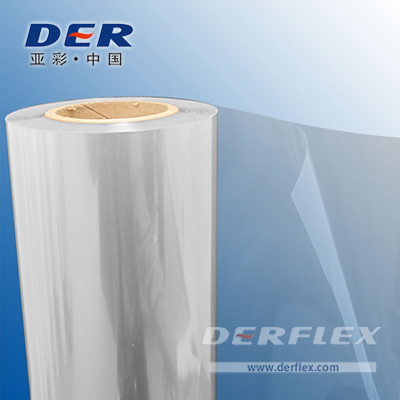
DERFLEX clear TPU film roll transparent polyurethane film
TPU Clear Film

Elastic, Weldable and Resistant to Wear

Clear TPU film roll is selected when the finished product needs transparency with repeated bending, abrasion resistance, waterproof sealing or airtight performance.

  • Used for waterproof bag windows, bladders and textile lamination
  • Good for hot-air welding, heat bonding and selected HF welding
  • Premium PVC-free direction for outdoor and flexible OEM products
Material Comparison

PVC, EVA, PP and TPU Clear Film Difference Table

This comparison is intended for procurement screening. Final grades should be confirmed by samples, test data, welding or lamination trials, and finished product requirements.

Selection Factor PVC Super Clear Film EVA Transparent Film PP Clear Film Clear TPU Film
Material nature Flexible vinyl film with adjustable softness and functional additives. Ethylene vinyl acetate copolymer film, soft and lamination-friendly. Polypropylene film, often CPP or BOPP for packaging and labels. Thermoplastic polyurethane film with rubber-like elasticity.
Typical clarity direction Very clean visual clarity for windows, curtains and protective panels. Clear to translucent depending on formulation and lamination use. High gloss and clarity for packaging, labels and overwrap. Clear appearance with stronger functional performance; aliphatic TPU may be selected for demanding optical or UV directions.
Flexibility Softness can be customized; good for folding, rolling and hanging. Soft and flexible; useful for low-temperature and bonding applications. Usually stiffer than EVA and TPU; BOPP has dimensional stability. Elastic and resilient; suitable for repeated bending and movement.
Sealing and fabrication Strong choice for heat sealing, HF welding, sewing and cutting. Excellent for lamination, encapsulation and adhesive interlayer uses. Good for packaging seal structures and lamination; not selected for HF welded soft products. Good for hot-air welding, heat bonding, lamination and selected welding processes after testing.
Outdoor direction UV-resistant, cold-resistant, anti-mildew and FR grades can be discussed. Weatherable grades can be used in glass, solar and greenhouse-related structures. Outdoor use requires correct stabilization and surface design. Polyether or aliphatic directions can be evaluated for hydrolysis, cold flexibility and outdoor use.
Common applications Tent windows, patio curtains, marine clear panels, industrial partitions, table covers, protective covers. Glass interlayers, solar encapsulation, greenhouse films, medical packaging direction, protective packaging. Food packaging, labels, overwrap, stationery, medical/pharma packaging, textile packaging. Waterproof bags, inflatable bladders, medical cushions, protective film, textile lamination, outdoor gear.
Buyer focus Balanced cost, width, clarity, thickness and fabrication efficiency. Bonding, encapsulation, softness and plasticizer-free direction. High-speed packaging conversion, gloss, light weight and moisture barrier. Performance, elasticity, abrasion resistance and PVC-free positioning.
Buyer Decision Logic

How to Choose the Right Clear Film Roll

Many buyers start from thickness and price, but transparent film performance is usually decided by application stress. A film used as a fixed label face stock does not need the same elasticity as a roll-top dry bag window. A patio curtain needs weathering and dimensional stability that a short-life packaging film may not require.

DERFLEX recommends selecting the film from the final product backward. Define the finished product, installation condition, processing method, target softness, visual standard and expected service environment before confirming material type.

Practical Selection Checklist

  • Use PVC when the product needs flexible clarity, economical roll supply, wide thickness range and curtain/window fabrication.
  • Use EVA when the project depends on lamination, bonding, encapsulation, soft interlayers or low-temperature flexibility.
  • Use PP when the application is packaging, label stock, overwrap, moisture barrier or high-speed converting.
  • Use TPU when the product must flex repeatedly, resist abrasion, seal water or air, or support a PVC-free material direction.
  • Test before bulk order when welding strength, haze, shrinkage, odor, blocking, yellowing or compliance is important.
Applications

Where These Clear Films Are Used

Different industries use transparent film for different reasons: visibility, barrier, safety, decoration, sealing, lamination or product inspection.

Outdoor Clear Curtains & Windows

PVC super clear film is commonly used for tent windows, restaurant patio curtains, roll-up enclosure panels, marine clear windows and industrial transparent partitions. TPU may be evaluated when repeated folding, higher wear resistance or PVC-free positioning is required.

Packaging, Labels & Overwrap

PP film is a practical direction for clear packaging, labels, food overwrap, medical/pharmaceutical packaging and stationery products. EVA can be selected for soft packaging or protective applications where flexibility and bonding are relevant.

Glass, Solar & Lamination

EVA transparent film is widely associated with laminated glass interlayers and solar encapsulation. TPU film can also be used in technical textile lamination, waterproof layers and flexible composite structures.

Waterproof Bags & Outdoor Gear

Clear TPU film roll is suitable for welded windows, air or water chambers, hydration bladders, inflatable cushions and outdoor soft goods where film must remain flexible during repeated use.

Industrial Covers & Protection

PVC is suitable for clear machine covers, flexible doors, dust barriers and waterproof protective sheets. TPU can be considered for high-abrasion contact surfaces, while PP is useful for disposable or semi-rigid protective packaging formats.

OEM Transparent Film Programs

Brand owners and converters may require special thickness, width, softness, anti-blocking, UV direction, FR direction, matte/gloss surface, color tint, roll packing and private-label supply. DERFLEX can review these details by project.

DERFLEX Support

From Material Type to Repeatable OEM Roll Supply

For transparent film buyers, one sample is not enough. Repeat orders require stable roll surface, thickness control, packing protection and technical communication during converting trials.

Application Review

We review finished product use, weather exposure, required transparency, softness and processing method before recommending a material direction.

Grade Matching

Material, thickness, width, hardness, surface, tint and functional options are matched to the buyer��s fabricating or packaging line.

Sample Testing

Welding, lamination, printability, clarity, shrinkage, blocking and appearance can be checked using the customer��s real process.

Bulk Supply

Roll length, packing, label, pallet method and OEM documentation can be arranged for repeat procurement and export supply.

Procurement Advice

Questions Buyers Should Ask Before Ordering Clear Film

A professional clear film RFQ should include both appearance requirements and processing requirements.

For PVC Clear Film Projects

Confirm thickness, width, softness, UV grade, FR direction, cold resistance, shrinkage target, surface quality, roll flatness and whether the product will be sewn, welded, heat sealed or used as a flexible panel.

For tent windows, outdoor curtains and marine panels, tell DERFLEX the expected exposure condition and cleaning method so the grade can be evaluated properly.

For TPU, EVA and PP Projects

For TPU, provide hardness, welding method, substrate, application stress and whether polyether or polyester direction is required. For EVA, confirm lamination substrate and bonding target. For PP, confirm CPP/BOPP direction, printability, sealing structure, packaging speed and food or medical packaging documentation requirements.

FAQ

PVC, EVA, PP and TPU Clear Film FAQ

Common questions from buyers comparing transparent film rolls for OEM, industrial and packaging projects.

Which clear film is suitable for outdoor transparent curtains?

PVC super clear film is commonly selected for outdoor transparent curtains because it offers clarity, flexible softness, weldability and economical wide-roll supply. For higher abrasion resistance or PVC-free positioning, clear TPU film can be evaluated after sample testing.

Is TPU clear film different from PVC clear film?

Yes. PVC is often selected for economical clear windows, curtains and partitions, while TPU is usually chosen when the product needs elasticity, abrasion resistance, cold flexibility, waterproof sealing or premium PVC-free material positioning. The final choice depends on product use and budget.

What is EVA transparent film used for?

EVA transparent film is widely used in laminated glass interlayers, solar encapsulation, protective packaging, greenhouse-related film structures and other lamination-oriented applications where softness, adhesion and encapsulation behavior are important.

When should PP clear film be selected?

PP clear film is suitable for packaging, labels, overwrap, food packaging, stationery, medical or pharmaceutical packaging and lamination structures where light weight, gloss, moisture resistance and converting efficiency are important.

Can DERFLEX customize clear film thickness and width?

Yes. DERFLEX can discuss custom thickness, width, softness, hardness, surface finish, color tint, UV direction, FR direction, anti-blocking, roll length and packing according to the selected material and application.

What information should I provide for a clear film quotation?

Please provide material preference, application, thickness, width, roll length, transparency target, surface finish, welding or lamination method, outdoor exposure, quantity, compliance requirement and any sample testing target.

Need Help Selecting PVC, EVA, PP or TPU Clear Film?

Send DERFLEX your application, film thickness, width, processing method, target clarity, required function and order quantity. Our team will review the suitable transparent film direction and support sample or quotation discussion.

Consulting Services
+86-021-54361792 / 54361798
Email
sales@derflex.com