


TPU Coating Material for Waterproof, Airtight & Weldable Products
Specify the TPU layer, textile reinforcement and fabrication method as one material system—not as separate purchasing decisions.
DERFLEX supplies application-ready TPU coating material in coated fabric, laminated fabric and film formats for manufacturers of waterproof bags, inflatables, medical air systems, flexible tanks, protective products and other sealed technical textiles. Nylon or polyester reinforcement, polyether or polyester TPU direction, one-side or two-side structures, hardness, thickness, finish and roll format can be discussed around the finished product.
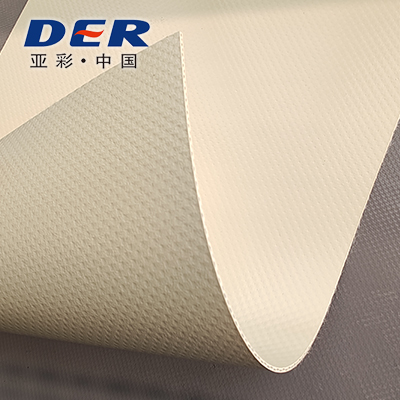
TPU Coating Material Is a System of Polymer + Textile + Process
Thermoplastic polyurethane (TPU) is used as a flexible barrier layer on technical textiles. In a coated or laminated construction, the TPU contributes sealing, flexibility and a thermoplastic surface for welding, while the woven nylon or polyester base carries tensile load, tear forces and dimensional stability.
For B2B production, the purchasing decision should not stop at “TPU” or at a single GSM number. Two rolls with similar total weight can behave very differently during HF welding, repeated folding, pressure cycling, cold storage or long-term water exposure. The final result depends on the TPU chemistry, hardness, layer thickness, coating adhesion, base yarn, weave, surface finish, one-side or double-side construction and the actual joining process.
Typical one-side construction
Used where one TPU surface provides the barrier or weldable face and the opposite side can retain more textile feel or lower total weight.
Typical double-side construction
Often reviewed for airtight inflatables, bladder systems, medical air cells and flexible liquid containment where both surfaces benefit from TPU coverage and sealed seam processing.
Six Variables That Matter More Than the Material Name Alone
A practical TPU coating material specification starts with the finished product and works backward to the roll structure.
TPU Chemistry
Polyether TPU is commonly evaluated for hydrolysis resistance, humidity, water contact and repeated flexing. Polyester TPU is often evaluated where abrasion, oil-related contact or mechanical strength is a priority. Exact suitability depends on grade and service conditions.
Base Textile
Nylon is commonly selected for soft folding and tear performance; polyester is often selected for dimensional stability, panel control and repeatable industrial conversion. Denier and weave should be matched to product size and load.
Layer Thickness
Thicker is not automatically better. The layer must balance barrier performance, weld window, coating adhesion, flexibility, hand feel, weight and cost for the finished product.
Hardness & Hand
Softer grades can improve drape and foldability; harder directions may improve surface toughness or dimensional feel. Shore hardness should be reviewed together with thickness and temperature range.
Welding Method
RF/HF, hot-air, heat sealing, hot wedge and ultrasonic methods create different process windows. Electrode shape, overlap width, speed, heat and pressure should be tested on the actual material.
Exposure Conditions
Water, humidity, cleaning agents, oils, fuels, UV, cold flexing, pressure cycling and repeated folding can each change the preferred structure. Compatibility should be verified with the real medium and use environment.
Custom TPU Coating Material Options for OEM Roll Supply
The ranges below are specification directions, not a universal datasheet. Final values should be confirmed by sampling, welding trials and end-use testing.
| Specification Item | Available Direction | How Buyers Should Choose |
|---|---|---|
| Material form | TPU coated fabric / TPU laminated fabric / TPU film | Choose by reinforcement need, surface feel, barrier structure and fabrication method. |
| Base textile | Polyester or nylon; lightweight to heavy reinforcement | Select by tear load, product size, flexibility, dimensional stability and cost target. |
| TPU type | Polyether TPU / polyester TPU direction | Review hydrolysis, moisture, abrasion, oil contact, low-temperature flexibility and service environment. |
| Coating structure | Single-side / double-side; coated or film-laminated | Single-side can reduce weight; double-side is often reviewed for airtight or liquid-holding products. |
| TPU thickness | Approx. 0.02–1.0 mm by project | Confirm barrier requirement, weldability, flexibility, peel strength and finished product weight. |
| Hardness | Common flexible-product direction around 70A–95A | Use softer or harder direction only after considering thickness, foldability and process window. |
| Total material weight | Lightweight to heavy-duty; project-specific | Do not select by GSM alone. Match load, pressure, panel size and handling cycle. |
| Width | Approx. 1.0–3.2 m depending on structure | Wider rolls may reduce seams but must fit coating, lamination and downstream cutting equipment. |
| Surface finish | Matte / glossy / smooth / embossed / selected textures | Surface can affect appearance, friction, cleanability, welding and brand positioning. |
| Color | Standard colors and OEM color matching | Provide a Pantone reference or physical target; confirm batch tolerance before mass production. |
| Processing | HF/RF welding, hot-air welding, heat sealing and other trial directions | Share machine type, seam width, overlap, target strength and product pressure before sample preparation. |
| Roll program | Custom width, roll length, core, labels and packing | Define repeat-order packaging and traceability requirements as part of the approved specification. |
Important: TPU performance varies by formulation, substrate, processing and environment. Where regulatory, medical, food-contact, fuel-contact or safety-critical requirements apply, the buyer should define the required test standard and approve the exact production sample before commercial use.
Select TPU Chemistry Around the Exposure Profile
Neither chemistry is universally better. The right choice depends on water exposure, abrasion, oil contact, temperature, flexing and the base textile.
Polyether TPU Direction
- Often reviewed for humid or repeated water-contact environments
- Common direction for hydrolysis-sensitive applications
- Useful where low-temperature flexibility and repeated flexing matter
- Frequently considered for marine, outdoor inflatable and medical air systems
- Still requires verification for cleaning agents, UV and the actual service temperature
Polyester TPU Direction
- Often reviewed for abrasion and mechanical performance
- Can be suitable for industrial protection and oil-related projects after compatibility testing
- Frequently selected where surface durability and lamination strength are priorities
- Useful for many coated polyester fabric constructions and industrial roll programs
- Long-term hot/wet exposure should be reviewed before final specification approval
From Product Requirement to Production-Ready TPU Coated Roll
DERFLEX uses an application-first discussion so procurement, engineering and production teams can work from the same specification.
Where TPU Coating Material Creates Practical Buyer Value
Different finished products need different combinations of barrier performance, reinforcement, folding behavior and seam processing.
Waterproof Bags & Outdoor Gear
Dry bags, waterproof backpacks, soft coolers, bikepacking bags and gear covers where low bulk, folding and welded seams matter.
Typical direction: lightweight nylon or polyester + one-side TPUInflatables & Rescue Products
Packrafts, inflatable boats, air chambers, lifting bags, rescue cushions and other products where air retention must be considered together with seam strength.
Typical direction: reinforced double-side TPU constructionMedical Air Systems
Pressure mattress air cells, cushions and inflatable support components requiring soft handling, reliable welding and clean surfaces.
Typical direction: soft weldable TPU structure with validated cleaning compatibilityFlexible Tanks & Oil Bladders
Collapsible tanks, liquid bags, containment products and bladder systems where chemical compatibility, foldability and weld integrity must be tested together.
Typical direction: heavy reinforced TPU with project-specific liquid testingIndustrial Protection
Protective covers, technical bags, machine shields and flexible barriers requiring abrasion resistance, waterproofing and repeatable roll quality.
Typical direction: TPU coated polyester for stability and conversion controlFilm & Lamination Programs
Transparent windows, bladder films, protective layers and textile composites where a TPU film is supplied as a functional layer rather than a finished reinforced fabric.
Typical direction: clear TPU film or TPU laminated fabricTPU Coating Material vs PU Coating vs PVC Coated Fabric
Choose by performance and production method rather than by material label alone.
| Decision Point | TPU Coating Material | PU Coating | PVC Coated Fabric |
|---|---|---|---|
| Typical positioning | Flexible, weldable technical products and premium sealed structures | Lightweight waterproof coatings, apparel and general textile treatments | Heavy-duty covers, tarpaulins, tents and broad industrial applications |
| Heat-seal / welding direction | Strong thermoplastic processing potential; method must be matched to grade | Varies by chemistry and coating system | Widely used with HF/hot-air welding in many industrial products |
| Low-temperature flexibility | Can remain flexible at low temperature with suitable grade selection | Depends heavily on formulation | Depends on plasticizer and formulation; may be less suitable for some cold-flex targets |
| Abrasion & folding | Good option for repeated folding and abrasion-sensitive products | Useful for lighter-duty applications; performance range is broad | Good heavy-duty durability but generally higher bulk for comparable applications |
| PVC-free requirement | Suitable material direction when a project specifies PVC-free construction | Also PVC-free, subject to formulation | Not suitable where PVC-free construction is mandatory |
| Cost logic | Often selected for performance-sensitive products rather than lowest material cost | Can be efficient for lightweight waterproofing | Often economical for high-volume heavy-duty coated fabric uses |
| Best selection approach | Confirm chemistry, base fabric, welding and exposure together | Confirm hydrolysis, coating adhesion and end-use durability | Confirm weight, plasticizer, welding, weathering and service life |
Validate the Roll Against the Finished Product
For sealed or load-bearing products, visual inspection alone is not enough. The meaningful test plan should reflect the product's fabrication method, working medium and service cycle.
Send This Information for a More Useful Quote
- Finished product and drawing or reference photo
- Required base fabric or target denier
- Single-side or double-side TPU preference
- Target thickness, GSM, width and color
- HF/RF, hot-air or heat-seal processing method
- Working temperature and water / oil / chemical exposure
- Required tests, standards or customer approval method
- Estimated order quantity, roll format and destination
Why Buyers Use DERFLEX for TPU Coated Textile Programs
The emphasis is on specification matching, sample confirmation and repeatable roll supply rather than presenting one generic TPU fabric as suitable for every application.
Application Review
Material discussion starts from the product, load, working environment, welding equipment and target market so the recommended structure has a defined reason.
Custom Structure
Nylon or polyester reinforcement, TPU chemistry, thickness, coating side, hardness, color, texture, width and roll format can be discussed for OEM requirements.
Sample Before Scale
Buyers can use samples to review welding window, hand feel, surface, coating adhesion, leakage or hydrostatic performance and compatibility with the finished product.
Process-Focused Support
For welded products, the material is considered together with seam construction and the buyer's actual fabrication process instead of treated as a generic waterproof sheet.
Repeat Roll Specification
Approved construction, width, roll length, finish, color and packing can be documented for repeat orders, helping converters reduce unnecessary specification drift.
Export-Oriented Communication
DERFLEX supports international buyers with quotation detail, sample coordination, packing requirements and project communication for ongoing B2B supply.
Continue Your Material Selection Inside DERFLEX
Use these six related pages to move from a broad TPU coating material search to the exact roll format and application you need.
TPU Coating Material FAQs for Procurement and Engineering Teams
What is TPU coating material?
TPU coating material uses thermoplastic polyurethane as a functional surface or barrier layer. In technical textiles, the TPU is coated or laminated onto nylon or polyester reinforcement to create a flexible material that can be specified for waterproofing, airtight sealing, abrasion resistance and heat-weldable fabrication.
Does DERFLEX sell raw TPU resin or finished TPU coated fabric?
DERFLEX primarily presents application-ready TPU textile materials such as TPU coated fabric, TPU laminated fabric and TPU film. If your project requires raw resin pellets or a chemical coating formulation, clarify this in the inquiry so the supply scope can be confirmed.
Which is better for coating material: polyether TPU or polyester TPU?
Neither is universally better. Polyether TPU is often reviewed for hydrolysis resistance, wet environments and repeated flexing, while polyester TPU is often reviewed for abrasion, mechanical strength and some oil-related applications. The grade should be selected against the actual service environment and verified by testing.
Can TPU coated material be RF or HF welded?
Many TPU coated fabrics can be evaluated for RF/HF welding. Final weldability depends on TPU chemistry, layer thickness, textile construction, surface finish, electrode geometry, overlap design, machine settings and target seam strength. Sample trials are recommended before bulk production.
Should I choose single-side or double-side TPU coating?
Single-side TPU is often suitable for lightweight waterproof covers and bags where one barrier surface is sufficient. Double-side TPU is commonly reviewed for airtight inflatables, medical air cells, flexible tanks and liquid-holding products where sealing performance on both faces can be useful.
Is TPU coating material suitable for oil or fuel contact?
Selected TPU structures can be developed for oil-related and fuel-related projects, but compatibility depends on the exact liquid, additives, temperature, exposure time, pressure and seam design. Testing with the real liquid is recommended before commercial use.
What information should I send for a custom TPU coating material quotation?
Send the finished application, target base fabric, coating side, thickness or GSM, width, color, surface finish, welding method, temperature range, exposure medium, required tests, order quantity and destination. A drawing or reference sample can make material matching more accurate.
Request a TPU Coating Material Specification for Your Product
Tell DERFLEX how the material will be welded, folded, loaded and exposed in use. The goal is to define a sample direction that can be tested before bulk roll production.
- Application
- Base fabric
- TPU type
- Coating side
- Thickness / GSM
- Welding method
- Width / color
- Required tests