Rain and Wind-Driven Moisture
The coated face helps form a weather barrier, while seam design, closures and attachment details determine the waterproof performance of the finished cover.



 Engineered Coated Fabrics for Wind Energy Logistics
A configurable coated-fabric system for reusable wind turbine blade protective covers, shipping covers, storage tarps, leading-edge sleeves and blade tip protectors.
DERFLEX supports high-strength outer fabrics, soft-contact inner layers and fabrication-ready material structures for long, curved and irregular wind energy components exposed to rain, dust, sunlight, salt-laden air and repeated handling.
Wind turbine blades move through several risk environments before installation: factory handling, road or rail transport, port staging, sea freight, temporary storage and final site preparation. The blade surface can be affected by water, dust, salt-laden air, tie-down movement, packaging contact and repeated cover installation.
A wind turbine blade cover fabric must therefore balance two different jobs. The outside should withstand weather and transport friction, while the inside should avoid marking or scratching the composite surface. This is why DERFLEX treats the cover as a configurable protection system rather than a single standard roll.
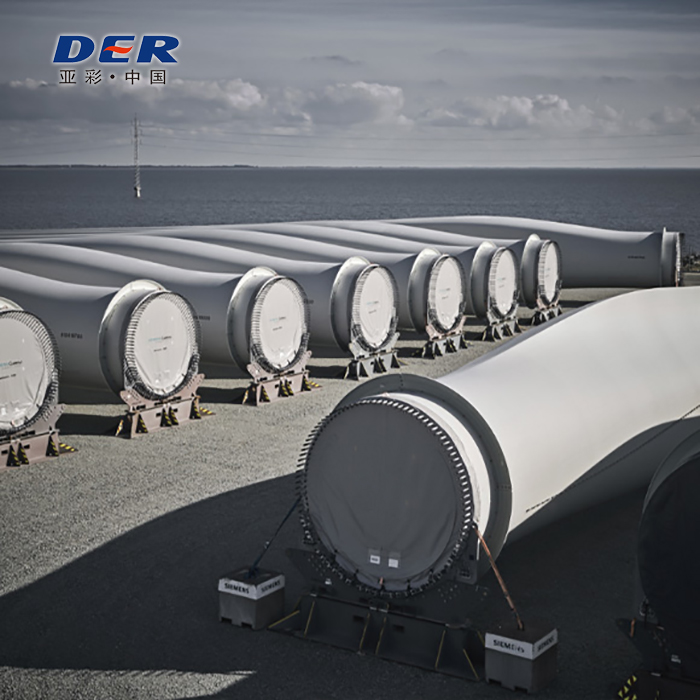
The correct construction depends on the complete journey of the component and the locations where pressure, moisture or friction can concentrate.
The coated face helps form a weather barrier, while seam design, closures and attachment details determine the waterproof performance of the finished cover.
A smooth, cleanable outer surface helps reduce dirt retention during road transport, terminal handling and outdoor staging.
UV-stabilized coating directions can be reviewed for extended outdoor storage, high-sun regions and repeated project use.
Road vibration and cover movement can create wear at contact points. Surface finish, coating weight and wear patches should be matched to these zones.
Coastal and sea-shipping projects may require enhanced weathering direction, non-corrosive hardware and inspection of ventilation or condensation-control details.
A soft backing or separate liner can help isolate the blade finish from the heavy-duty outer shell, seams, straps and reinforcement pieces.
Different protection zones can use different material layers. Final combinations should be confirmed through sample fabrication and contact testing on the intended blade finish.
A modular construction makes it possible to increase protection only where it is needed, rather than making the entire cover unnecessarily heavy.
The woven polyester base supports tensile and tear strength. The coating adds a waterproof, cleanable and weldable surface for transport and outdoor storage covers.
A nonwoven, foam-laminated or selected textile inner layer can be evaluated where direct contact with painted or composite blade surfaces requires additional scratch protection.
Double layers, wear strips, webbing, corner patches and backing panels can be placed at tie-downs, seams, lifting zones, leading edges and other concentrated wear points.
Material routes can be selected for sewing, hot-air welding, thermal welding or high-frequency welding, depending on the cover design and production equipment.
The following ranges are practical starting points for engineering discussion. They are not a fixed universal specification for every turbine model or logistics route.
| Specification Item | Typical Project Direction | Selection Considerations |
|---|---|---|
| Material Type | PVC-coated high-tenacity polyester; optional laminated or backed composite | Reuse cycle, weather exposure, cover geometry, contact sensitivity |
| Fabric Weight | Approximately 550–1200 gsm; heavier or multi-layer zones can be discussed | Transport friction, wind load, foldability, installation labor and target durability |
| Thickness | Approximately 0.50–1.20 mm depending on structure and backing | Surface wear, flexibility, seam method and storage volume |
| Roll Width | Common widths from 1.02 m; selected structures may be discussed up to 5.10 m | Pattern layout, seam reduction, equipment limits and freight planning |
| Surface Finish | Matte, semi-matte, lacquered, anti-scratch or project-specific finish | Cleanability, friction behavior, appearance and repeated folding |
| Performance Options | Waterproof, UV-resistant, abrasion-resistant, tear-resistant, cold-resistant, flame-retardant or anti-mildew directions | Climate, storage time, local requirements and buyer test method |
| Inner Protection | Separate liner, laminated nonwoven, foam-backed layer or selected soft textile | Blade coating, contact pressure, condensation control and cleaning method |
| Fabrication | Sewing, hot-air welding, thermal welding, high-frequency welding, cutting and printing | Cover pattern, sealing requirement, repair method and fabricator capability |
| Color and Identification | Custom color, printed logo, component ID, handling marks and high-visibility panels | Project tracking, road visibility, branding and installation instructions |
| Supply Format | Roll goods, cut panels, welded sections, semi-finished components or finished custom covers | Buyer manufacturing setup, project schedule and quality-control responsibility |
Final values, tolerances and compliance requirements should be confirmed in the approved technical data sheet, sample and purchase specification. Finished-cover performance also depends on seam construction, liner choice, reinforcement, hardware, installation and maintenance.
Protection should remain practical from the factory floor to the installation site, with handling details designed for each transfer point.
Clean-surface installation, component identification and initial fastening.
Vibration, airflow, tie-down loads and repeated inspection access.
Moisture, salt-laden air, lifting operations and terminal storage.
Sunlight, rain, dust, wind loading and extended component staging.
Fast removal, organized folding, inspection and preparation for reuse.
A complete program can use different cover forms, reinforcements and inner materials for each component or surface zone.
High-wear outer fabric, cushioning and visible identification can be combined for the narrow, impact-sensitive blade tip.
Shaped sleeves and wear strips can help isolate the leading edge from rubbing, straps and contact with transport fixtures.
Custom circular covers can protect openings and interfaces from rain, dust and debris during storage and movement.
Welded or sewn fitted covers can include access points, lifting openings, reinforced closures and printed handling references.
Heavy-duty fabric and optional soft backing can be configured around complex geometry, protrusions and sensitive service openings.
Large welded panels, reinforced circumference zones and secure fastening systems can help shield tower interiors during staging.
A useful cover drawing should reflect how the component is lifted, supported, inspected, transported and stored—not only its overall dimensions.
Covers can be developed from drawings, dimensions, reference samples or component scans, with allowances for taper, curvature and installation access.
Webbing, double-layer fabric, wear pads and backing patches can follow fastening and handling loads rather than adding unnecessary weight everywhere.
Zippers, hook-and-loop, straps, buckles, lacing, rope hems, elastic sections and custom hardware can be reviewed according to installation practice.
Flaps, windows, service openings and labeled zones can reduce the need to remove the entire cover during inspection or transfer.
Printed part numbers, orientation marks, handling instructions, reflective areas and high-visibility colors can support logistics control.
Replaceable wear panels, repair-compatible seams and clear folding instructions can support repeated project use and easier maintenance.
A complete inquiry helps prevent over-specification, under-protection and avoidable sampling rounds.
DERFLEX can review a roll-material requirement, a fabricated panel program or a finished protective cover project.
DERFLEX combines coated textile manufacturing, customization and export-oriented supply for fabricators, wind component manufacturers, logistics contractors and industrial cover companies.
These related pages support specification development from base coated fabric to custom wind-energy protection covers.
Technical answers should be confirmed against the final drawing, approved sample, logistics route and agreed test method.
PVC-coated high-tenacity polyester is a practical starting point because it combines a waterproof surface, mechanical reinforcement, cleanability and compatibility with welding or sewing. The correct weight, scrim, finish and backing depend on the cover design and route.
Yes. A separate liner, laminated nonwoven, foam-backed layer or selected soft textile can be evaluated. Contact compatibility should be tested against the blade's actual coating and expected pressure points before bulk production.
Material structures can be developed for combined logistics routes, including rain, sunlight, dust, vibration and coastal exposure. The finished design must also address seams, fastening, ventilation, hardware and inspection requirements.
Yes. DERFLEX can discuss high-wear coated fabric, visible colors, cushioning layers and reinforcement materials for blade tip protection. The complete protector geometry and fastening system should be validated by the finished-product designer.
Selected PVC-coated fabrics can be sewn, hot-air welded, thermally welded or high-frequency welded. The process should be matched to coating type, thickness, seam load and sealing target.
Project discussions can include roll goods, cut panels, welded sections, semi-finished components or finished covers. Supply scope depends on dimensions, drawing maturity, fabrication requirements, order quantity and quality-control plan.
Send the component dimensions, exposure conditions, contact-surface requirements, fabrication method and expected reuse cycle. DERFLEX will review a practical material direction for sampling and quotation.