Surface Contact
A rough inner face or trapped debris can rub against paint, panels, screens and finished housings during transport or windy storage.



 Technical Coated Fabric Solutions
Coated fabric engineered for fitted covers that protect CNC machines, machine tools, automation systems, robotic equipment and other high-value industrial assets during outdoor storage, transport and delivery.
DERFLEX supports cover manufacturers, machinery exporters and industrial equipment brands with waterproof, UV-resistant and abrasion-resistant fabric options, including a soft inner side for sensitive painted, polished or instrument-facing surfaces.
Precision equipment needs external weather protection without introducing unnecessary surface abrasion, trapped dirt or difficult handling. The fabric specification should therefore consider both the outside environment and the side that touches the machine.
A standard outdoor sheet may block rain, but a fitted precision machinery cover has a more demanding job. It must move around corners, control contact with painted or polished panels, tolerate repeated installation, and remain practical for technicians who need access to control cabinets, service doors or cable exits.
For CNC machines and automation equipment, the fabric should be specified as part of a complete protection system: outer weather barrier, high-strength textile support, inner contact surface, seam method, ventilation, abrasion patches and fastening layout.
A rough inner face or trapped debris can rub against paint, panels, screens and finished housings during transport or windy storage.
Outdoor covers may need planned vents, stand-off space or moisture-control procedures depending on climate and storage duration.
Daily removal and refitting can concentrate stress at corners, handles, zipper ends and lower tie-down zones.
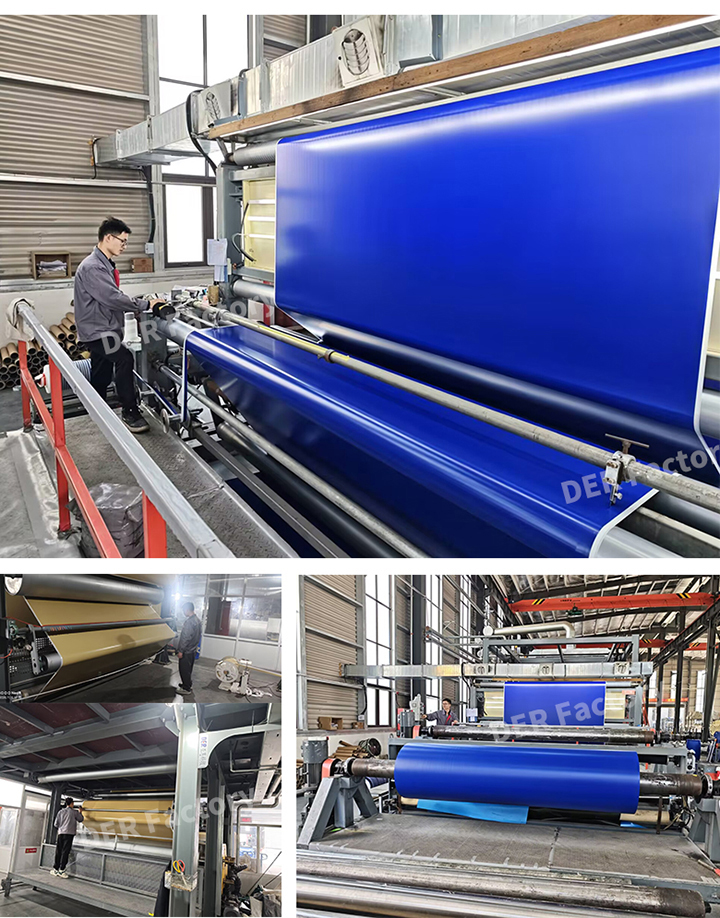
The recommended structure depends on whether the cover is intended for temporary rain protection, reusable export packaging, daily outdoor storage or a premium OEM accessory program.
PVC or customized coated surface for rain, UV, dust, grime, abrasion and easier cleaning. Acrylic lacquer can be discussed for surface protection and washability.
Polyester scrim provides dimensional control, tensile support and tear resistance for shaped covers, large panels and reinforced fastening points.
A smoother or textile-facing inner layer can reduce direct rubbing against painted panels and equipment housings. Final suitability should be confirmed by sample contact testing.
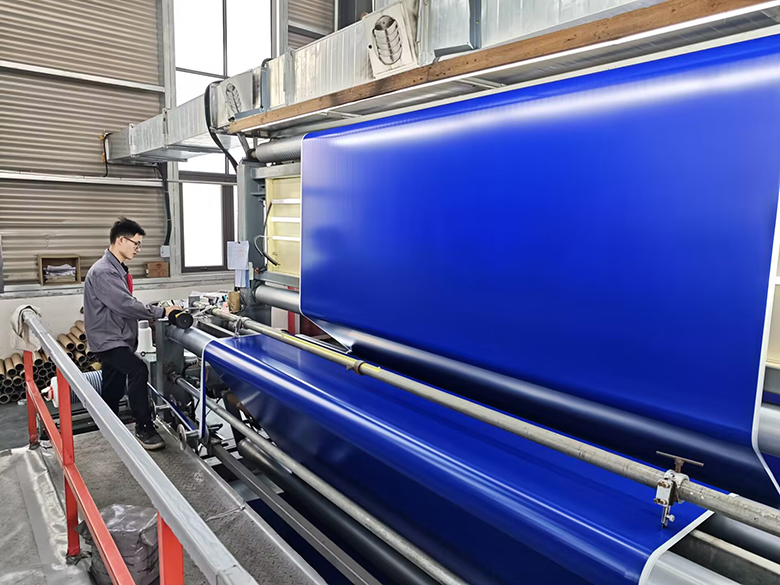
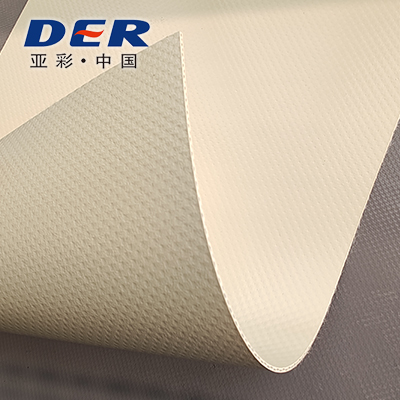
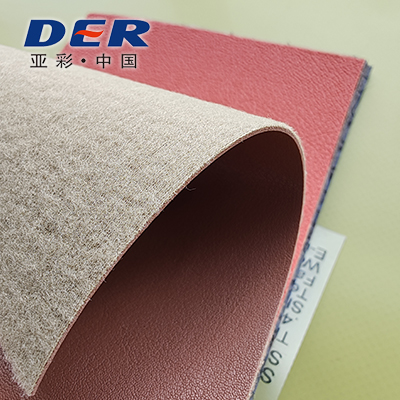
Not every project requires every option. DERFLEX can discuss a balanced material direction based on machine value, climate, cover size, removal frequency and target service level.
Coated surface for rain, splash and outdoor storage protection when paired with suitable seam construction.
UV-stabilized formulation direction for machinery stored outdoors or transported through high-sun regions.
Smooth coated face helps create a practical barrier against dust, road grime and warehouse contamination.
Softer inner construction can be considered for painted housings, panels and equipment with sensitive contact areas.
Coating and reinforcement direction for repeated dragging, folding and contact with corners or equipment frames.
Polyester base fabric supports larger covers, tensioned fastening and frequent industrial handling.
Low-temperature formulation can be discussed for winter storage, northern logistics and cold-region equipment yards.
Surface treatment direction for workshops, machinery plants and environments with lubricants or oil mist.
Anti-mildew formulation direction for humid storage, seasonal use and export logistics.
Acrylic lacquer or easy-clean finish can support routine wiping and cover maintenance.
Suitable material options for hot-air welding, high-frequency welding or combined sewing and welding.
Color matching, thickness direction, embossing, matte or gloss finish and printed branding can be discussed.
The table provides practical discussion ranges rather than a universal specification. Final values should be confirmed against drawings, samples, climate, fabrication process and required test standards.
| Specification Item | Available Direction | Why It Matters for Precision Machinery Covers |
|---|---|---|
| Product Type | Precision machinery outdoor cover fabric / CNC machine cover fabric / weatherproof equipment cover material | Aligns the material around high-value machines rather than general temporary covering. |
| Base Fabric | High-tenacity polyester; common directions include 500D, 840D, 1000D and 1300D constructions | Supports tear strength, dimensional stability and reinforcement around stress points. |
| Weight Direction | Approximately 450gsm–1000gsm+ depending on cover size and duty level | Balances handling, drape, outdoor durability and fabrication requirements. |
| Coating / Lamination | PVC coated, PVC laminated, TPU-related technical fabric or customized coated structure | Allows different combinations of weather resistance, flexibility, surface feel and cost. |
| Outer Finish | Matte, semi-matte, glossy, embossed, acrylic lacquered, anti-UV or easy-clean direction | Influences appearance, washability, friction and long-term outdoor surface behavior. |
| Inner Side | Standard coated back, smoother finish, textile-facing layer or project-specific soft inner option | Helps manage contact with paint, housings and sensitive machine surfaces. |
| Width | Common discussion range 1.02m–3.20m; wider options subject to structure and production route | Wider rolls may reduce seams on large CNC and automation equipment covers. |
| Temperature Direction | Cold-resistant formulation and typical outdoor grades selected by project environment | Reduces stiffness and handling problems in low-temperature storage or transport. |
| Functional Options | UV resistant, mildew resistant, oil resistant, anti-static direction, flame-retardant direction or printable surface | Allows the material to match factory, export, warehouse or outdoor storage conditions. |
| Fabrication | Sewing, hot-air welding, high-frequency welding, reinforced hems, patches and multi-panel construction | Determines seam strength, water protection and repeatable finished-cover production. |
| Supply Format | Roll goods, cut panels, laminated panels, semi-finished components or project-based finished cover support | Fits cover manufacturers, packaging companies, machinery brands and industrial distributors. |
| Branding | Custom color, logo printing, labels, carton marks and private-label packing | Supports OEM accessory lines and reusable export cover programs. |
Indoor dust control: prioritize low weight, easy handling, clean inner contact and appropriate ventilation.
Outdoor storage: prioritize waterproofing, UV resistance, wind fastening, reinforced abrasion zones and anti-mildew direction.
Export packaging: prioritize reusable fit, identification labels, smooth inner contact, repairability and packing efficiency.
Each application creates a different balance between waterproofing, contact protection, drape, abrasion resistance and access design.
Fitted covers for CNC equipment, lathes, milling machines, grinders and measuring systems during storage, installation or delivery.
Protect robotic cells, control cabinets, conveyors, sensors and automation modules awaiting installation or shipment.
Weatherproof and dustproof covers for production equipment, laser cutters, packaging lines and industrial modules.
Branded reusable covers for precision equipment exporters, container handling, temporary warehousing and delivery protection.
Protection for equipment stored outside before installation, resale, project mobilization or factory relocation.
Material rolls or finished-cover programs for machinery brands, equipment dealers and industrial cover suppliers.
The page supports commercial search intent from cover fabricators, machine exporters, automation manufacturers and equipment-protection suppliers.
Roll material, cut panels and project-matched structures for fitted CNC and machine-tool covers.
Custom fabric weights, colors, finishes and performance options for distributor or private-label ranges.
Reusable protective cover material for export packing, temporary storage and equipment delivery.
Protective cover programs with logo printing, labels, carton marks and repeat-order control.
Weatherproof cover fabric for robotic cells, modules, cabinets and production-line components.
Flexible material options for shaped covers, access panels, closures and reinforced contact zones.
Precision machinery protection should be validated with samples and real fabrication tests. Important checks can include material weight, thickness, tensile and tear performance, coating adhesion, flex behavior, welding compatibility, surface cleanability and inner-side contact behavior.
Documentation and third-party testing support can be discussed according to the required product grade, destination market and order specification.
A structured specification process helps reduce mismatched fabric weight, poor seam behavior and unnecessary surface contact risk.
Confirm dimensions, geometry, protruding parts, painted surfaces, control panels, access needs and likely abrasion zones.
Identify rain, UV, dust, oil mist, cold, humidity, transport vibration and expected cover-removal frequency.
Choose fabric weight, textile core, coating, optional soft inner side, finish, color and functional treatments.
Match the material with sewing, hot-air welding, HF welding, seams, vents, zippers, Velcro and reinforcement patches.
Evaluate drape, fit, inner contact, seam quality, surface cleaning, printing and packing before bulk production.
Lock agreed color, structure, weight, finish, labeling and packaging details for consistent B2B supply.
Six closely related internal pages connect material selection, machinery-cover design and industrial tarp applications.
Practical answers for cover manufacturers, machine exporters and industrial equipment brands.
PVC coated polyester is a common direction because it combines a waterproof outer surface, textile reinforcement, tear resistance and weldable fabrication. For precision equipment, the inner-side texture and contact behavior should also be evaluated before approval.
Yes. DERFLEX can discuss smoother back finishes, textile-facing layers or laminated structures with a softer inner side. The actual material should be sample-tested against the machine paint, panel or surface finish because contact sensitivity varies.
Material options can be selected for sewing, hot-air welding and high-frequency welding. The final process parameters depend on coating type, thickness, backing structure and the cover fabricator’s equipment.
Oil-resistant direction, acrylic lacquer and easier-clean surface options can be discussed for workshop and machinery-plant environments. Required resistance level and cleaning method should be confirmed during specification development.
There is no single GSM for every machine. Smaller indoor covers may use lighter material, while large outdoor or repeatedly handled covers may require 610–1000gsm or another project-specific structure. Cover size, wind exposure, abrasion zones and installation frequency are important selection factors.
Please provide machine type, drawings or photos, cover dimensions, usage environment, expected exposure time, sensitive contact areas, preferred color, surface finish, seam method, order quantity, roll width or finished-cover format, branding needs and destination market.
Send DERFLEX your machine type, protection risks, cover size and processing method. The team can discuss a practical fabric structure for CNC covers, precision equipment storage, export packaging or OEM cover production.
Drawings or photos · dimensions · outdoor exposure · soft-inner requirement · color · weight direction · fabrication method · order quantity
Request A Quote