News
Industry News

650 GSM vs 900 GSM PVC Tarpaulin | Buyer Comparison | DERFLEX

Update:2026/7/28 18:33:05 Views:
PVC coated fabric selection guide for industrial buyers
Technical Buyer Comparison

650 GSM vs 900 GSM PVC Tarpaulin

Choose the grade that fits the operating load—not simply the heavier number.

This guide compares handling weight, reinforcement potential, abrasion exposure, fabrication demands and purchasing cost for truck covers, trailer curtains, industrial covers and OEM tarpaulin production.

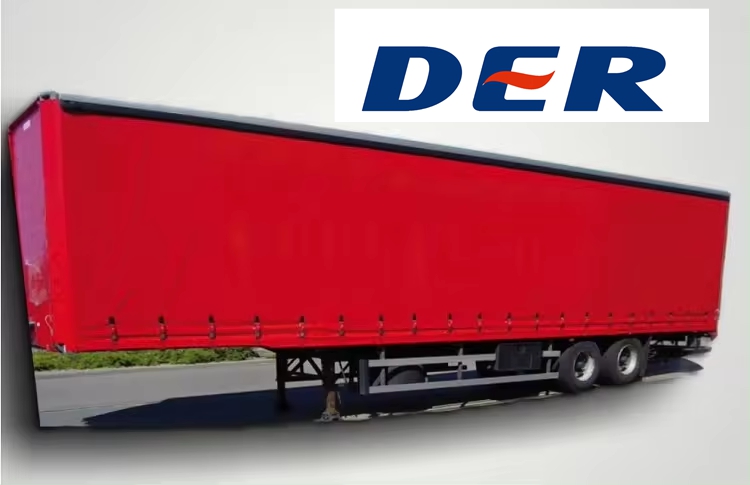
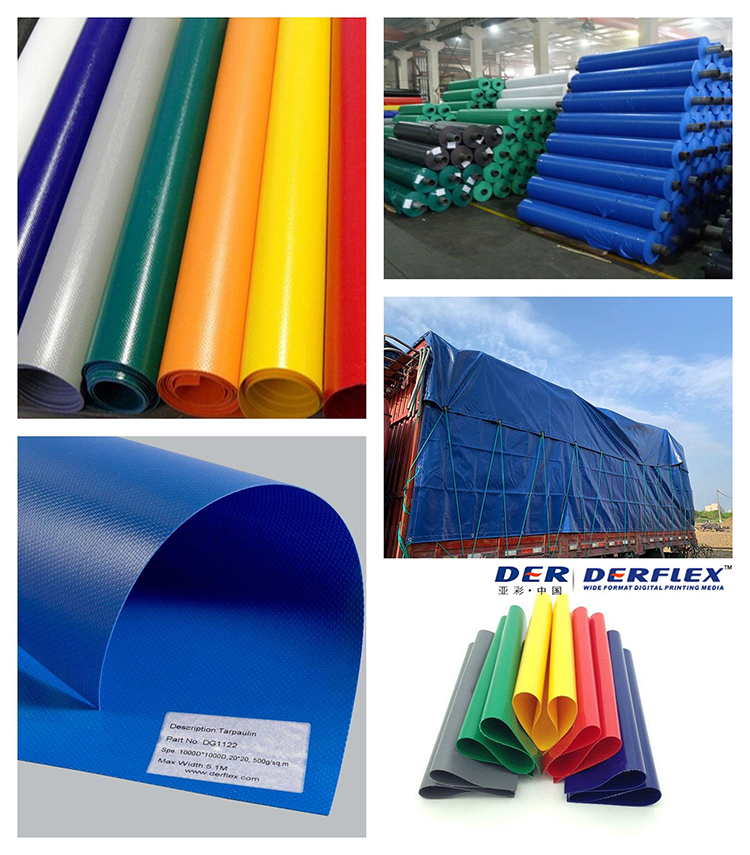
DERFLEX PVC tarpaulin fabric rolls and truck cover applications
650 GSMBalanced handling and duty level
900 GSMHigher mass for demanding service
250 g/m²Difference in nominal fabric mass
38.5% heavier900 GSM versus 650 GSM by area
Not 38.5% strongerStrength still depends on yarn and construction
Application firstSelect from load, abrasion and handling needs
The practical answer

650 GSM suits balanced heavy-duty work; 900 GSM suits harsher, more repetitive loading.

Choose 650 GSM PVC tarpaulin when operators need a waterproof coated fabric that can be folded, welded, handled and installed without unnecessary mass. It is commonly specified for general truck covers, trailer covers, outdoor equipment protection, warehouse curtains and many standard OEM tarp programs.

Choose 900 GSM PVC tarpaulin when the cover faces repeated tensioning, road vibration, more abrasive cargo, larger panels, long-haul transport or a longer service-life target. It is often considered for curtain-side trailers, reinforced flatbed covers, industrial partitions and demanding transport systems.

The heavier option is not automatically the better purchase. A 900 GSM sheet adds material cost, shipping mass, fold volume and manual handling effort. A well-engineered 650 GSM construction may be the more efficient choice where abrasion and structural loading are moderate.

Side-by-side selection

650 GSM vs 900 GSM PVC Tarpaulin at a Glance

The comparison below assumes both materials use suitable high-tenacity polyester base cloth and controlled PVC coating. Final performance must be confirmed against the supplier’s technical data sheet and sample testing.

Buyer consideration 650 GSM PVC tarpaulin 900 GSM PVC tarpaulin Procurement implication
Nominal mass 650 g per square meter 900 g per square meter 900 GSM adds 250 g/m², affecting freight, installation and daily handling.
Handling and folding Easier to lift, fold, roll and reposition Heavier hand feel and larger folded volume For frequently removed covers, operator effort can be a major cost factor.
Abrasion reserve Suitable for normal industrial and transport contact when correctly reinforced Usually offers more coating mass for demanding wear zones Confirm abrasion test method rather than relying on GSM alone.
Tensile and tear performance Can be strong with 1000D base cloth and suitable weave density Can support higher-duty structures, but values vary by yarn and weave Request actual warp/weft tensile and tear data for both options.
Welding and fabrication Good balance for hot-air or high-frequency fabrication Requires suitable welding settings because of added material thickness and heat demand Test seams, lacquer compatibility and peel strength before bulk production.
Typical fit General truck covers, equipment covers, warehouse curtains, agriculture covers Side curtains, long-haul flatbed tarps, reinforced cargo covers, heavy industrial curtains Match the grade to load movement, abrasion and replacement risk.
Initial material cost Usually lower Usually higher Compare cost per service cycle, not only price per square meter.
Cold-weather handling Often easier to fold because of lower mass Can become more difficult to handle without an appropriate cold-flex formulation Specify target low-temperature performance and request a cold-crack reference.

Important: GSM measures mass per unit area. It does not independently define thickness, tear strength, tensile strength, UV life, flame-retardant grade or coating adhesion. Two products with the same GSM can perform differently.

Material profiles

Where Each Weight Creates Real Value

The most efficient specification is the lightest construction that reliably meets the required service conditions, fabrication method and safety margin.

650 GSM: the versatile working grade

A practical balance of coated mass, flexibility, weldability and procurement cost.

  • Suitable for general freight covers and outdoor equipment protection
  • More convenient where covers are manually folded or removed
  • Useful for distributors serving several standard applications
  • Can be reinforced at edges, corners and contact zones instead of increasing the entire sheet weight
  • Often selected for 1000D × 1000D coated polyester constructions
Duty reserve
High
Handling ease
Higher

900 GSM: the demanding-service grade

Added coated mass for applications where wear, tension and replacement risk dominate.

  • Better aligned with repeated road use and high-cycle curtain systems
  • Useful where rough cargo and frame contact increase abrasion
  • Supports heavier edge reinforcement and load-control hardware programs
  • Often selected where fleets prioritize durability over manual handling convenience
  • May use denser constructions such as 30 × 30 in specific product designs
Duty reserve
Higher
Handling ease
Moderate
What GSM cannot tell you

Six Specifications That Matter Alongside Fabric Weight

A useful quotation should describe the complete construction. Comparing only “650” and “900” can hide differences that have a larger effect on field performance.

01

Base yarn denier

1000D × 1000D is common for heavy-duty coated fabrics, but denier alone still does not define weave density or finished strength.

02

Thread construction

A 20 × 20, 23 × 23 or 30 × 30 structure changes yarn count, dimensional behavior and tear propagation. Ask how the density is measured.

03

Coating method

Knife coating, hot-melt coating and lamination create different adhesion, surface and cost profiles. The process must suit the end use.

04

Tear and tensile data

Request warp and weft values with the test method. The higher-GSM option should be supported by measurable performance, not appearance alone.

05

Surface treatment

Acrylic lacquer, PVDF direction, matte finish, anti-wicking or print treatment can affect cleaning, welding, UV resistance and fleet graphics.

06

Compliance target

Flame-retardant, REACH, RoHS or market-specific requirements should be agreed before sampling. Documentation must match the supplied formulation.

Handling cost calculation

The Weight Difference Becomes Significant on Large Covers

Calculate fabric mass before confirming a grade. The result helps buyers estimate manual handling, freight, storage and installation requirements.

Simple fabric mass formula

Use the finished cover area and nominal GSM. Hardware, reinforcement webbing, hems, overlaps and moisture are not included.

Fabric mass (kg) = area (m²) × GSM ÷ 1,000

Because 900 GSM is 250 g/m² heavier, every 100 m² of finished fabric adds approximately 25 kg before accessories. For fleets or large industrial panels, this changes how a cover is lifted, stored and serviced.

Application decisions

Which Grade Fits Common Industrial Uses?

These are starting directions for specification discussions. Final selection should consider panel size, reinforcement layout, climate, fabrication and the consequences of failure.

Application Likely starting grade Why Upgrade trigger
General truck cover650 GSMBalanced protection, folding and fabrication for routine cargoUpgrade when sharp cargo, long-haul use or frequent replacement is a concern
Curtain-side trailer900 GSM or engineered 650–900 GSM systemRepeated movement, rail tension, branding and road vibration demand a system approachUse higher strength when panel size, wind loading or cycle frequency increases
Flatbed steel or lumber tarp900 GSM for severe duty; reinforced 650 GSM for moderate dutyLoad edges and tie-down zones create concentrated wearUpgrade when abrasion cannot be controlled with wear patches and edge reinforcement
Machinery cover650 GSMGood balance for custom shapes and frequent accessUpgrade for exposed sharp edges, fixed long-term outdoor use or chemical contact
Warehouse divider curtain650 GSMLower handling mass and adequate separation for many indoor projectsUpgrade for impact zones, frequent movement, acoustic layering or heavy hardware
Outdoor industrial enclosure650 or 900 GSMSelection depends on span, wind exposure, fixing pattern and durationUpgrade when panels are large, exposed or difficult to replace
Agriculture and storage cover650 GSMFlexible, weldable and practical for seasonal handlingUpgrade for permanent installations or high abrasion against stored materials
Real product context

Transport Applications Show Why Construction Matters

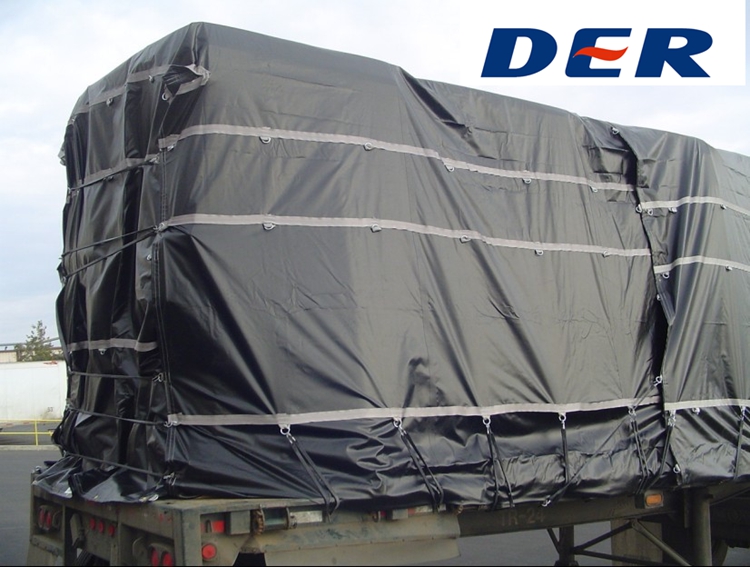
Truck covers and trailer curtains place different stresses on the material. A removable top cover needs manageable folding; a moving curtain panel needs repeated-cycle stability and a reliable printable surface.

01

Describe the application and operating cycle

State whether the fabric will be fixed, folded, rolled, slid, tensioned or removed every day.

02

Provide finished dimensions and panel layout

Large panels may require different yarn construction, seam placement, reinforcement and handling methods.

03

Identify abrasion and sharp-edge exposure

Photos of the frame, cargo and failure zones help determine whether to increase GSM or add targeted wear patches.

04

State climate and compliance requirements

Include operating temperature, UV exposure, flame-retardant target, environmental documentation and intended market.

05

Confirm fabrication and printing method

Specify hot-air, high-frequency or other welding direction, plus ink system, surface finish and logo requirements.

06

Request measurable acceptance criteria

Agree GSM tolerance, color tolerance, roll width, tensile strength, tear strength, adhesion, packaging and inspection documents.

,
DERFLEX material support

Compare complete constructions before committing to bulk supply.

DERFLEX supplies PVC coated polyester tarpaulin for transport, industrial protection and OEM fabrication. Buyers can discuss weight, base fabric, weave density, width, color, lacquer, printing, low-temperature direction, UV resistance and flame-retardant requirements according to the project.

For an efficient evaluation, request samples of both grades with the intended surface and base-cloth construction. Fabricate test seams, install the material on the actual frame and review handling as well as mechanical data.

650 GSM and 900 GSM development directions
Roll goods for cutting and welding
Custom color and surface finish
OEM packaging and repeat-order control
Truck, trailer and industrial applications
Sample-based specification confirmation
Buyer FAQ

Frequently Asked Questions

Is 900 GSM PVC tarpaulin always stronger than 650 GSM?

No. A 900 GSM construction contains more mass per square meter, but actual tensile strength, tear resistance and adhesion depend on base yarn, weave density, coating formulation and production control. Compare technical values and samples, not only GSM.

Which weight is more suitable for a general truck cover?

650 GSM is a common starting point for general truck and trailer covers because it balances durability, flexibility and handling. Consider 900 GSM when the cover faces heavy abrasion, sharp loads, frequent long-haul use or costly replacement downtime.

Why is 900 GSM harder to handle?

It adds 250 grams per square meter compared with 650 GSM. On a 48 m² cover, the nominal fabric alone is approximately 12 kg heavier. Reinforcement, hems and hardware add further finished weight.

Can both 650 GSM and 900 GSM PVC tarpaulin be welded?

Both can be suitable for hot-air or high-frequency welding when the coating and surface finish are compatible. Welding temperature, dwell time and pressure should be tested on the actual production sample.

What should be checked on a PVC tarpaulin technical data sheet?

Check nominal GSM and tolerance, base yarn, thread density, total thickness, tensile and tear values, adhesion, temperature range, surface treatment, flame-retardant target, color, width and test methods.

Can DERFLEX customize the construction rather than only the GSM?

DERFLEX can discuss base-fabric structure, weight, width, color, surface finish, UV direction, low-temperature flexibility, flame-retardant requirements, printing and OEM packaging according to the application and order agreement.

Send Your Application and Compare Both Grades

Share the cover size, operating environment, load type, fabrication method, destination market and expected quantity. DERFLEX can prepare a practical 650 GSM and 900 GSM comparison for your project.

Consulting Services
+86-021-54361792 / 54361798
Email
sales@derflex.com