Painting crews and maintenance teams
Use manageable sheets or runners to protect defined work zones. Specify folding frequency and whether small paint drips must be absorbed or simply kept away from the floor.



 Industrial coated textiles
Protect the work area with a material specified for the way your crews actually paint, clean and reuse it. DERFLEX offers related PVC-coated polyester rolls and fabricated protective-sheet programs for contractors, converters, distributors and OEM buyers. Define the floor, liquid exposure, handling and finished dimensions first; then review the proposed material and construction against an approved sample.
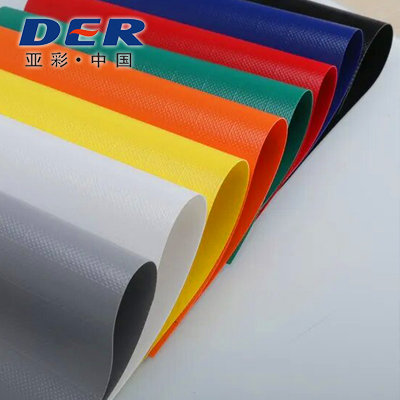
A painting drop cloth separates the work from the surface below. Reinforced PVC-coated fabric is useful when a reusable, liquid-blocking sheet and a wipe-clean face are priorities. Its coated face does not soak up paint, and neither traction nor compatibility with a particular floor is automatic.
For jobs with frequent drips or wet foot traffic, consider an absorbent material above the barrier and a floor-compatible layer below it. Approve the complete arrangement on the actual substrate; a waterproof sheet by itself is not a complete slip-control or spill-management system. For a broader introduction, see the drop cloth for painting guide.
The options below describe common material approaches. They are not claims that every structure is a stocked DERFLEX product.
| Approach | Where it helps | What to check |
|---|---|---|
| Reinforced PVC-coated polyester | Reusable liquid-blocking sheet, custom panel fabrication and wipe-clean surface. | Paint remains on the surface; assess both sides for movement, floor contact and compatibility. |
| Unbacked canvas | Absorbs many drips and has a textile hand for routine decorating. | Liquids may soak through; lint, cleaning and drying depend on construction. |
| Thin plastic film | Lightweight temporary shielding for furniture and low-traffic areas. | Movement, tear resistance and repeated-use life depend on the film and installation. |
| Layered absorbent / barrier system | Combines an absorbent work face with a separate liquid barrier. | Layer bonding or securing, wet traction and underside compatibility need joint evaluation. |
On a narrow screen, scroll the table sideways to read every column.
For a closer look at textile and coated-barrier trade-offs, read canvas versus vinyl tarps. If an absorbent face is essential, specify it explicitly rather than assuming a standard PVC surface will behave like canvas.
Start with the work pattern, then determine the size, fastening and surface requirements.
Use manageable sheets or runners to protect defined work zones. Specify folding frequency and whether small paint drips must be absorbed or simply kept away from the floor.
Plan for repeated setup, tools, edges and the likely cleanup method. Keep overlaps controlled; select the whole floor-protection system for the actual traffic and liquids.
Cover equipment or staging surfaces where dust and incidental splash are concerns. Confirm whether the covered item needs ventilation and whether the sheet can contact the finish.
Specify rolls for local conversion or discuss finished panels, size tolerances, folding, labels and unit packing. Agree on the approved sample and repeat-order identifiers.
For general construction and maintenance traffic, compare the related floor protection tarp. For vertical panels and overspray control, see painting containment tarps.
A single barrier layer may suit equipment covering; a floor system may require additional materials. The diagram is a selection schematic, not a representation of a stocked laminated product.
Keep any edge treatment low-profile in a walking area. Hardware, abrasive debris or a folded ridge can create contact or trip problems. For vertical work zones, coordinate the floor sheet with the surrounding enclosure and the site's own ventilation and safety plan.
These are inquiry fields and construction choices, not guaranteed stock dimensions or test results. Match the final grade, tolerance and finishing method to the approved order.
| Specify | Tell DERFLEX | Why it matters |
|---|---|---|
| Material structure | PVC-coated polyester, desired surface and any separate top or underlay. | Controls barrier, handling and contact behavior; absorbent components require separate review. |
| Weight and thickness | Target g/m² or oz/yd²; thickness in mm or mil only if required. | Weight alone does not define flexibility, friction, puncture resistance or thickness. |
| Roll format | Usable width, roll length, core, side orientation and acceptable tolerances. | Determines cutting yield, handling, freight and converter setup. |
| Finished geometry | Finished length × width, seam positions, overlap and dimensional tolerance. | Cut size and finished size differ after hems and joining. |
| Edge and joining | Cut edge, sewn or welded hem, reinforcement and placement of any fixing points. | Influences folding, contact with the floor, wear and liquid-blocking performance. |
| Exposure and verification | Floor type, footwear, paint, cleaner, contact time, handling and desired test documentation. | A sample and test conditions are needed to confirm the proposed system for the worksite. |
| Commercial details | Quantity by size, color, labeling, packaging, destination and required delivery date. | Changes material yield, conversion work and the quotation. |
On a narrow screen, scroll the table sideways to read every column.
Learn more about the material family in PVC coated fabric manufacturing and tarpaulin fabric roll supply. Their published ranges are not acceptance values for a new paint-drop-cloth order.
For an illustrative finished size of 1.20 × 4.00 m, adding 25 mm to each edge gives a preliminary cut rectangle of 1.25 × 4.05 m, or about 5.06 m². This is a planning example, not a production pattern. Actual hem construction, seams, orientation, tolerances and cutting waste must be agreed before ordering.
Identify the floor finish and its age, top and underside of the sheet, underlay, footwear and expected traffic. Assess movement on the actual surface in dry conditions and with representative paint or dust contamination; agree on a suitable test method and acceptance criteria.
List the actual paint, reducer, remover and cleaning products, including concentration, temperature and expected contact time. Examine a representative sample for softening, tackiness, swelling, staining or loss of coating after exposure and cleaning.
For a finish-sensitive paint process, assess lint and particulate transfer after folding, handling and cleaning. A coated face can be wiped, but lint performance is not established without the agreed sample and test conditions.
Check dimensions, seam and hem position, foldability, edge quality and labeling. If the finished sheet must block liquids at a joint, agree how that joint will be tested; a waterproof fabric does not automatically make sewn seams leak-tight.
Record the clear coverage length and width, obstacles and access points. Add the overlap needed for the layout, then specify finished dimensions and tolerance separately from cut dimensions.
Compare a large joined sheet with several manageable panels. Locate seams and overlaps away from concentrated drips and walking routes where practical; secure edges without damaging the substrate.
Clean the substrate and underside before placement. Remove or contain wet paint promptly using the site’s approved method; prevent pickup on footwear and replace damaged or contaminated layers.
Use cleaning products verified for the selected material and follow the product safety information and local disposal practices. Dry before folding and inspect for cuts, tackiness, seam damage and trapped grit before reuse.
These images show related coated textiles, fabricated tarps and industrial protection. They are references for material and construction, not photographs of a verified paint-drop-cloth SKU or an installed painting project.
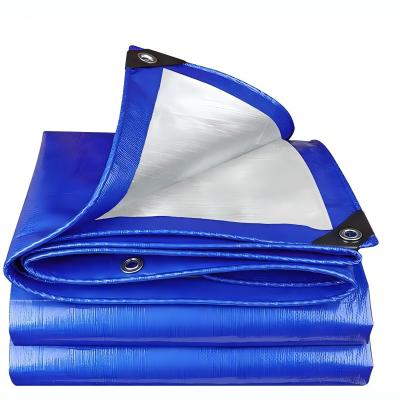
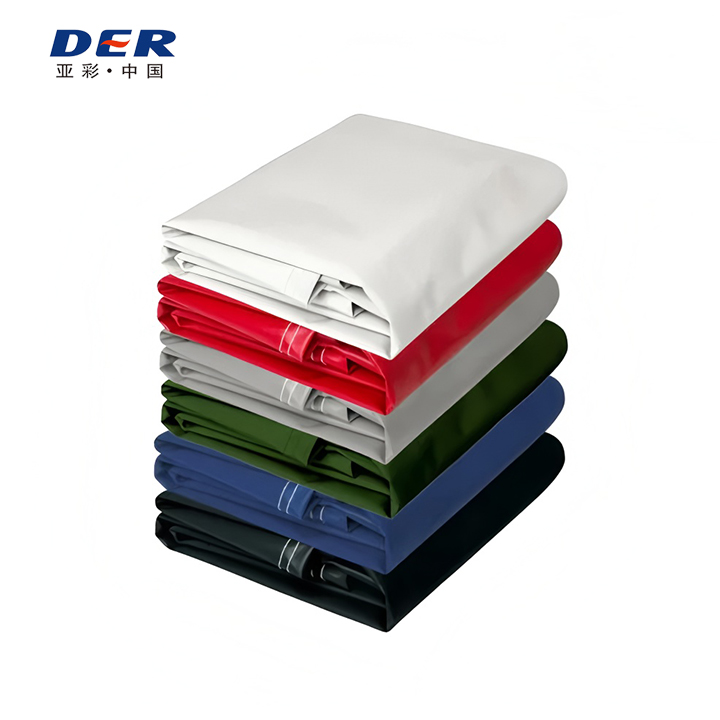
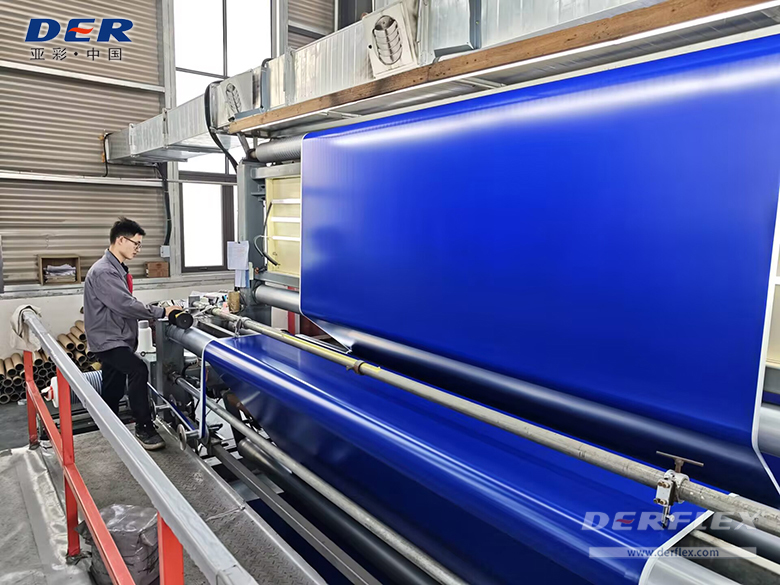
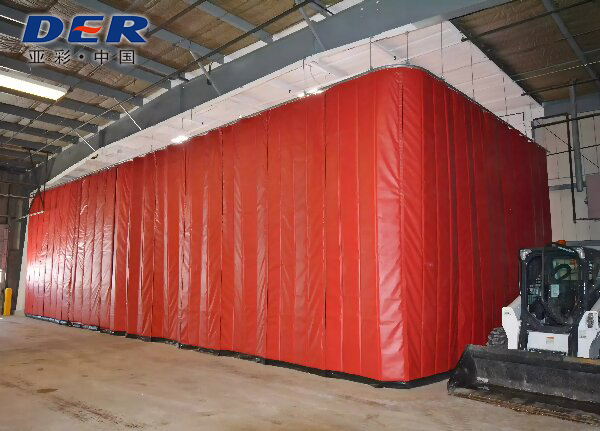
Review the broader PVC-coated tarpaulin family and selection considerations.
Use the inquiry page to describe the surface, liquids and tests you need to evaluate.
A continuous PVC-coated surface is generally a barrier, not an absorbent face. For drip-heavy work, consider a separately specified absorbent layer and test the full assembly for floor contact, movement and paint exposure.
No. Traction depends on the actual top surface, underside, floor, footwear and contamination. Test the proposed combination under relevant dry and contaminated conditions before approving it for foot traffic.
Compatibility depends on the exact PVC grade, liquid, concentration, temperature and contact time. Identify the products in the inquiry and evaluate a sample; do not assume that every solvent or cleaner is suitable.
DERFLEX offers related coated-fabric roll and fabricated-tarp programs. Discuss the required roll width or finished sheet, edge details, quantity and packing so the proposed construction can be confirmed for your order.
Provide the required finished length and width, allowable tolerance, intended overlap, floor type, traffic, liquids, cleaning method and quantity. Identify whether dimensions are finished dimensions or cut sizes.
Send the application, surface to be protected, anticipated paints and cleaners, required sizes or roll width, quantity, target market and any test or packaging requirements. A photo or simple sketch is useful if a drawing is not available.
Tell us what needs protection and how the sheet will be used. A photo or simple sketch is a useful starting point.