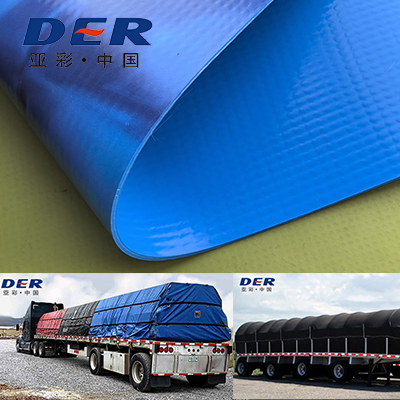
Compare heavy duty tarps by application, material, GSM, reinforcement and finish. DERFLEX supplies custom PVC tarp rolls and finished tarps for transport, construction, agriculture, industrial storage and OEM programs.
A heavy duty tarp should be specified around the job it must survive—not selected by thickness, color or weight alone.
DERFLEX supplies PVC coated polyester tarp material, fabricated panels and finished custom tarps for transport, construction, agriculture, machinery, storage, marine, warehouse and OEM programs. This page helps buyers translate real operating conditions into a practical tarp specification.
Finished heavy duty tarp construction can include welded seams, reinforced hems, webbing, corner patches, eyelets or D-rings according to the loading and tie-down method.
PVC Coated PolyesterCore reusable heavy-duty material direction
450–900gsmVerified DERFLEX heavy-duty range; custom structures available
Rolls → Finished CoversMaterial, panels and fabricated tarp supply
OEM / CustomSize, color, hardware, reinforcement, logo and packing
Quick Answer
What makes a tarp heavy duty?
A heavy duty tarp is a reinforced protective cover engineered for repeated mechanical stress, outdoor exposure and secure fastening. The useful definition is not one fixed thickness or GSM. Performance comes from the combination of base fabric, coating, tear and tensile behavior, seam design, edge reinforcement, hardware placement and the way the finished cover is installed.
For reusable industrial service, PVC coated polyester is widely used because it combines textile reinforcement with a waterproof, weldable and cleanable surface. PE tarps can be practical for lighter or price-sensitive programs, canvas is useful where breathability matters, and mesh is chosen when airflow or lower wind pressure is more important than full rain blocking.
Application Selector
Choose the Heavy Duty Tarp Around the Failure Risk
The same tarp construction should not be used for every job. Wind, abrasion, sharp edges, UV, water pooling, folding cycles and attachment loads change the design priorities.
Transport & Logistics
Truck, Trailer & Cargo Tarps
Long-haul covers face wind flutter, road spray, cargo edges, frequent folding and strong tie-down loads. Prioritize tear performance, abrasion zones, seam layout and reinforced attachment points.
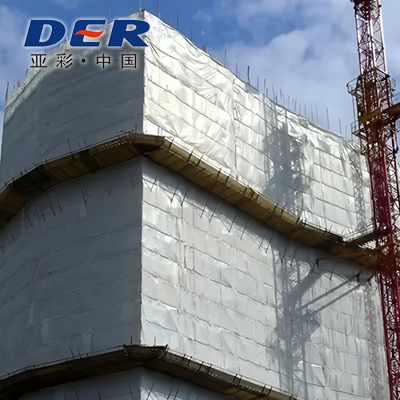
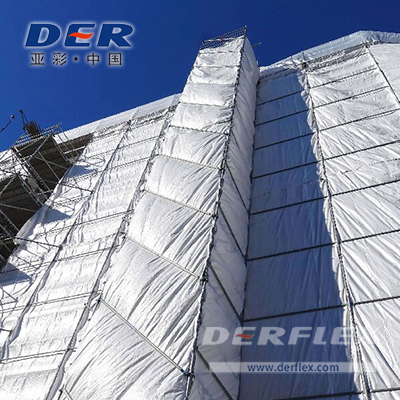
Construction tarps are exposed to rough surfaces, changing fixing points, debris and weather. Define whether the cover is for temporary roofing, materials, scaffolding, equipment or containment.
Farm tarps must balance weather protection, UV exposure, large-format handling and seasonal reuse. Reinforcement and drainage matter as much as the material weight.
Equipment covers often fail at protrusions, sharp corners and frequently opened access points. Custom fit, wear pads, straps and local reinforcement can be more valuable than simply increasing GSM.
Storage applications should be designed around cover duration, drainage, wind exposure, material contact and how often the tarp will be removed. Large panels need controlled seam and anchor layouts.
Pallets and raw materials
Steel, timber and bulk goods
Yard and warehouse overflow storage
Waste & Recycling
Containers, Scrap & Debris Control
Recycling and waste transport can create high abrasion, irregular edges and repetitive opening cycles. Mesh may suit airflow/debris control; solid PVC is preferable when weather blocking is required.
Roll-off and container covers
Scrap and recycling yards
Dust and debris containment
Mining & Oilfield
Remote-Site & Harsh-Environment Covers
Remote projects may combine UV, dust, abrasion, large temperature swings and difficult replacement logistics. Define service temperature, handling method, chemical exposure and critical wear zones before sampling.
Equipment and material covers
Temporary work zones
Site storage and containment support
Marine & Port
Boat, Dock & Coastal Storage Covers
Marine environments add moisture, UV, wind and salt-laden air. A cover should shed water, avoid uncontrolled pooling and use fastening points that do not concentrate loads into single grommets.
Boat and equipment covers
Dockside cargo protection
Coastal outdoor storage
Shelter
Tents, Canopies & Temporary Enclosures
Large tensioned surfaces require stable fabric, controlled seams, compatible welding and attention to wind. Flame-retardant directions may be relevant when required by a project or local code.
Worksite shelters
Commercial canopies
Temporary structures and sidewalls
Engineering Logic
“Heavy Duty” Is a Complete Cover System
A strong raw fabric can still fail early if seams, edges, corners or hardware are not designed for the real load path.
01
Base Fabric
Polyester yarn and weave provide tensile strength, tear behavior and dimensional stability.
02
PVC Coating
Coating contributes waterproofing, surface durability, weld response and weather resistance.
03
Seams
Hot-air, hot-wedge, RF welding or sewing must match the material and finished geometry.
04
Reinforcement
Hems, webbing, patches and wear pads spread force away from vulnerable edges and corners.
05
Hardware
Eyelets, D-rings, straps and spacing should reflect the tie-down direction and expected load.
Material Comparison
PVC vs PE vs Canvas vs Mesh for Heavy Duty Use
There is no single “best” tarp material for every application. Start with the protection problem, then select the material family.
Material
Main Strength
Water / Air Behavior
Fabrication
Typical Heavy-Duty Applications
Selection Caution
PVC coated polyester
Reusable, reinforced, weldable, abrasion-resistant direction
Waterproof covering direction when seams and penetrations are correctly designed
Define openness, shade rate, perimeter reinforcement and UV exposure.
For buyers who specifically need waterproof, reusable and weldable heavy duty PVC covers, see DERFLEX PVC tarps.
Specification Overview
Start With a Verified Range, Then Build the Final Spec
DERFLEX's existing heavy duty tarp range is based on PVC coated polyester constructions. The figures below are selection directions already used on DERFLEX's current heavy-duty tarp page; the final specification should be confirmed against the actual product code, application and approved sample.
A buyer should never approve a tarp only from one number. A 650gsm tarp with a suitable base fabric, reinforcement and seam design may outperform a heavier sheet that is poorly matched to the job.
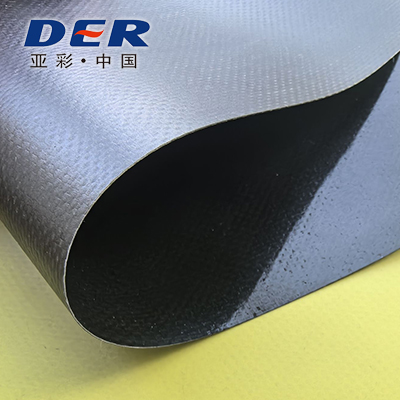
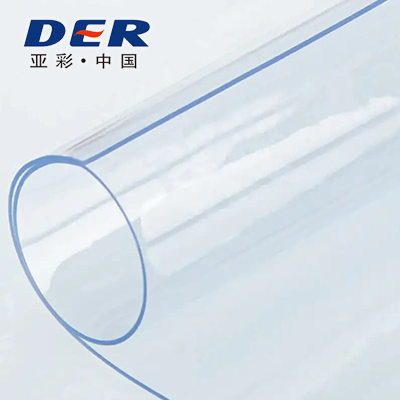
PVC coated polyester material close-up. Base fabric and coating work together; both should be evaluated when specifying a heavy duty tarp.
Specification Item
DERFLEX Heavy-Duty Direction
Buyer Decision Point
Material
PVC coated polyester fabric
Confirm coated vs laminated construction and the intended fabrication route.
Weight
450–900gsm; custom heavy-duty structures available
Choose by stress, service cycle and handling—not by GSM alone.
Thickness
Approx. 0.35–0.85mm depending on construction
Use thickness together with base fabric, coating and mechanical properties.
Base Fabric
1000D × 1000D / 18×18, 20×20 or customized constructions
Higher stress applications may require stronger yarn/weave directions.
Width
1.02m / 1.5m / 2.04m / 3.2m / custom roll width
Wider rolls can reduce seam count, but equipment and handling should be considered.
Roll Length
30m / 50m / customized
Match conversion equipment, container loading and production planning.
Finished details should be drawn and approved before repeat production.
Optional Performance Direction
UV, flame-retardant, anti-mildew and cold-flexible formulations according to project requirements
State the target market, exposure and test requirement before sampling.
Selection Matrix
Match the Tarp to the Duty Profile
This matrix is designed for procurement conversations. It identifies the performance priorities that should drive material and fabrication decisions before a final grade is selected.
Use Condition
Primary Risks
Specification Direction
Finishing Priorities
Questions to Ask
Static outdoor storage
Rain, UV, pooling, wind at edges
Waterproof PVC direction; verify UV and service duration
Can local reinforcement solve the problem without over-weighting the entire tarp?
Failure Analysis
Why Heavy Duty Tarps Fail in the Field
Most premature failures start at concentrated stress points or from a mismatch between the tarp specification and the real operating environment.
Failure Mode 1Grommet Pull-Out
A strong sheet can tear around a small eyelet if tie-down force is concentrated. Wider reinforcement, webbing, corner patches or D-rings can spread the load.
Failure Mode 2Abrasion at Edges
Cargo corners, rails and machinery contact points can wear through the coating before the rest of the tarp ages. Add wear pads or adjust fit and tension.
Failure Mode 3Seam Failure
Large finished covers depend on welded or sewn seam design. Seam direction, overlap, equipment settings and material compatibility should be validated.
Failure Mode 4Wind Flutter
Loose coverage repeatedly flexes the tarp and hardware. Correct sizing, tension, tie-down geometry and reduced unsupported spans help control fatigue.
Failure Mode 5UV / Weather Aging
Long-term sunlight and climate exposure can change flexibility and surface condition. Specify the expected outdoor duration and destination climate.
Failure Mode 6Water Pooling
A waterproof material cannot compensate for poor geometry. Standing water adds weight and can overload seams, anchors or supporting structures.
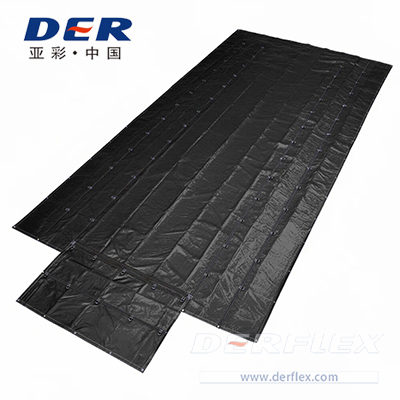
Finished tarp form with eyelet reinforcement. Hardware layout should be matched to the actual tie-down method.
Custom Manufacturing
Specify the Finished Tarp, Not Just the Fabric
DERFLEX can support roll material, cut panels and custom finished tarps. For B2B programs, the strongest purchasing specification includes the finished dimensions, reinforcement map, attachment hardware, seam direction, print/branding and packaging—not only the raw material weight.
Do not start with “I need the thickest tarp.” Start with cargo geometry, highway wind, tie-down points, fold frequency, abrasion zones and the replacement cycle.
A useful specification discussion can then compare suitable PVC coated polyester structures within the DERFLEX heavy-duty range, define welded seam direction, reinforce the perimeter and cargo-contact zones, select D-ring or eyelet spacing based on tie-down geometry, and confirm a sample before repeat production.
Product & Application Images
Heavy Duty Tarp Construction and Use at a Glance
Clear, descriptive images help buyers compare material structure, finished reinforcement and application context.
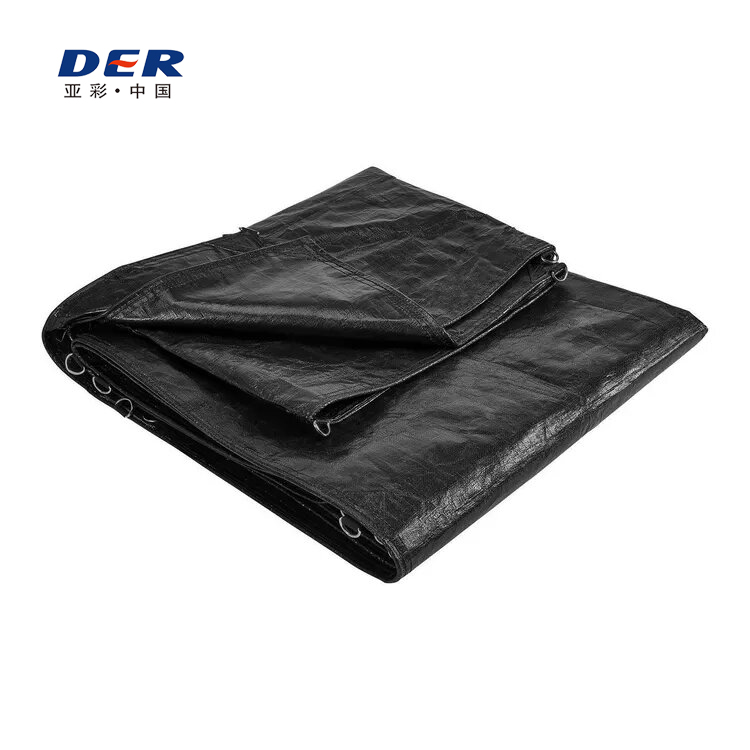
Reinforced Heavy Duty Truck TarpD-rings, reinforced perimeter and flexible PVC coated fabric for repeated tie-down use.
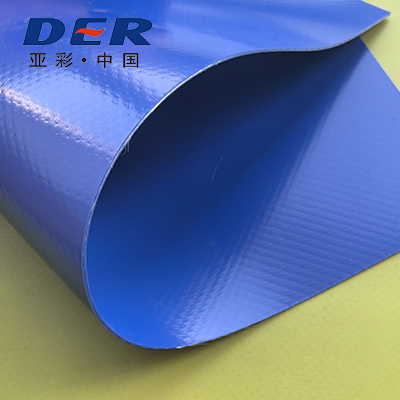
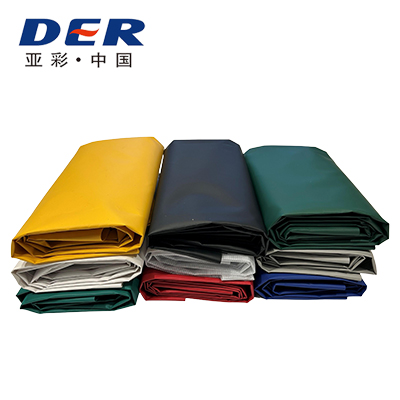
PVC Coated PolyesterMaterial structure for waterproof and weldable industrial tarp fabrication.
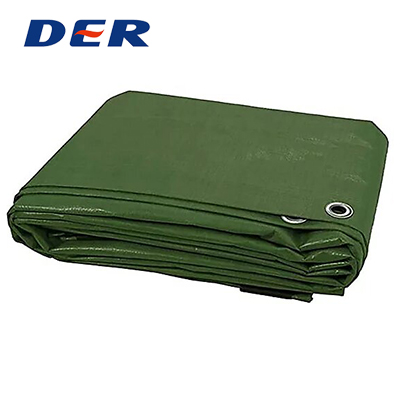
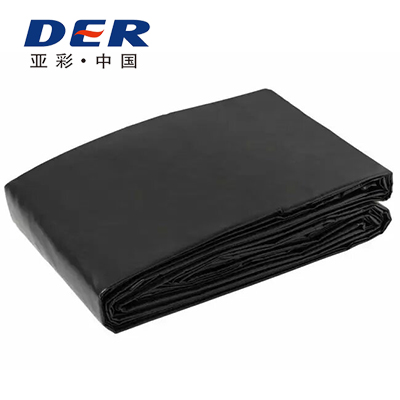
Finished Waterproof CoverReinforced edge and eyelet finishing for general heavy-duty coverage.
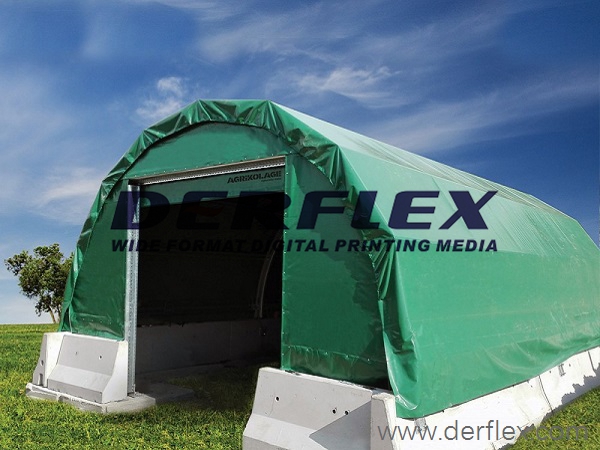
Agricultural Shelter ApplicationLarge-format weather protection where UV, wind and installation geometry matter.
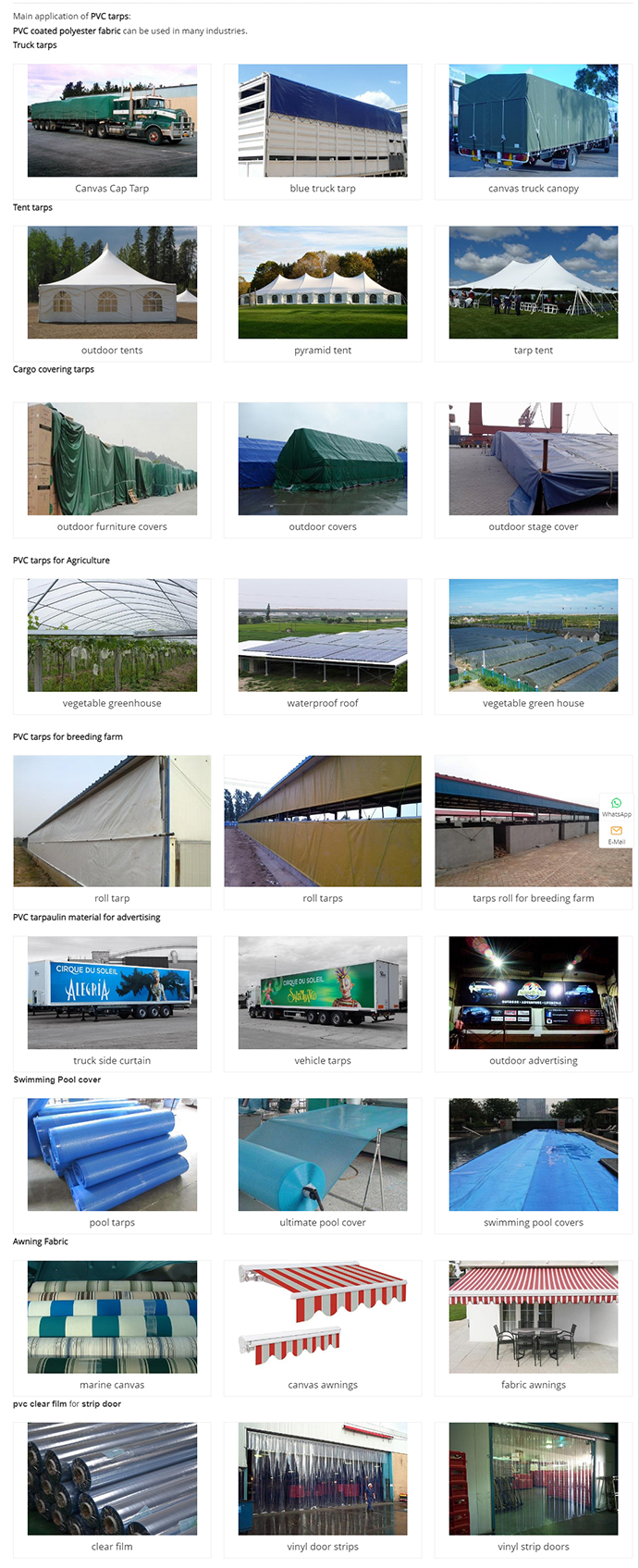
Application board: truck covers, tents, cargo storage, agriculture, pool covers, awnings and industrial partitions. One material family can support many end uses, but the final structure should be application-specific.
Procurement Guide
Send These Details for a More Useful Heavy Duty Tarp Quote
The fastest way to reduce back-and-forth is to send the working environment and finished-cover details before the material is locked.
Minimum RFQ Information
Use this list for custom tarps, private-label programs, project supply or roll material.
8. LogisticsDestination, packing preference, labeling, carton marks and loading considerations.
Why DERFLEX
Heavy Duty Tarp Supply Built Around Repeatable Specifications
The value for B2B buyers is not a long product list. It is the ability to convert an application into a material, fabrication and quality-control brief that can be sampled and reordered.
60,000㎡Integrated production area
450+Employees supporting manufacturing and export operations
25+Senior engineers
120+Countries and regions served
Material + Finished Cover
Source PVC coated polyester tarp material, panels or finished custom covers from one manufacturing-oriented supply chain.
Application Engineering
Discuss GSM, base fabric, coating, UV/cold direction, welding, reinforcement and hardware around the actual working environment.
OEM Repeatability
Approve color, dimensions, reinforcement layout, logo, packing and reference samples for repeat programs and distributor lines.
Direct answers to common material, thickness, waterproofing, durability and custom-order questions.
What is considered a heavy duty tarp?
A heavy duty tarp is a reinforced cover intended for higher stress, repeated handling or longer outdoor exposure than a light temporary sheet. It should be evaluated by the complete construction: base fabric, coating, GSM/thickness, tensile and tear behavior, seams, reinforcement, attachment hardware and the intended application.
What material is best for a heavy duty tarp?
PVC coated polyester is a strong choice when waterproofing, repeated use, weldability, abrasion resistance and custom fabrication are important. PE is often selected for lighter or cost-sensitive coverage, canvas for breathable protection, and mesh for shade or debris control where airflow is required.
What GSM is considered heavy duty?
There is no universal heavy-duty GSM across all tarp materials. DERFLEX's current PVC heavy-duty range includes 450–900gsm directions, but the right grade depends on base fabric, coating, wind, abrasion, handling frequency, reinforcement and the expected service environment.
Are heavy duty PVC tarps waterproof?
PVC coated polyester is used for waterproof covering applications, but a finished tarp is a system. Water protection also depends on welded or sewn seams, penetrations, eyelets, installation tension and drainage. Poorly designed seams or water pooling can create failure even when the raw fabric is waterproof.
How thick should a heavy duty tarp be?
Thickness alone should not determine the choice. DERFLEX's current heavy-duty PVC directions include approximately 0.35–0.85mm depending on construction. Compare thickness together with GSM, base fabric, tear/tensile requirements, coating adhesion, reinforcement and the way the tarp will be used.
How can I stop tarp grommets from ripping out?
Reduce concentrated load at the eyelet. Use reinforced hems, webbing, larger patches or D-rings where appropriate, increase the number of attachment points, align the hardware with the real pull direction and avoid loose installation that causes repeated wind shock.
Can DERFLEX make custom heavy duty tarps?
Yes. Custom options can include finished size, roll width, color, material weight, surface finish, welded seams, hems, rope edges, reinforced corners, webbing, eyelets, D-rings, straps, pockets, printing, private labels and export packaging according to an approved specification.
What information should I send for a quotation?
Send the application, dimensions or roll size, quantity, target material/GSM if known, destination climate, exposure duration, reinforcement details, eyelet or D-ring spacing, color, printing/branding, packaging and any required testing direction. Photos or drawings are especially useful for fitted covers.
Build the Tarp Around the Application
Send DERFLEX the use case, finished dimensions, expected exposure, quantity and reinforcement method. The team can help translate those requirements into a practical PVC tarp construction for sampling and quotation.