


Tarp for Agriculture Built for Weather Protection, Crop Security, Storage Control, and Farm Efficiency
DERFLEX supplies tarp for agriculture applications developed for farms, ranches, distributors, agricultural supply companies, feed operations, and project buyers who need durable covering materials that perform in real outdoor conditions. Whether your focus is hay cover, silage protection, grain and feed storage, farm equipment cover, livestock area separation, or multi-purpose seasonal farm protection, the goal is the same: keep products, materials, and assets protected while maintaining practical handling and dependable supply.
A well-designed agricultural tarp is not just a sheet placed over stored material. It is part of a broader farm management system. It helps reduce spoilage, protect feed value, shield equipment from sun and rain, keep harvested materials dry, maintain cleaner storage zones, and support more predictable operations during changing weather. As an agricultural tarp manufacturer and custom farm tarp supplier, DERFLEX works with buyers who need more than standard commodity stock. Many customers want consistent material quality, custom sizing, OEM packaging, repeat-order stability, and a solution that fits local agricultural practices instead of forcing every farm or every distributor into the same product format.
From broad-area farm covers to reinforced agricultural tarpaulin for repeated handling, DERFLEX supports solutions for agricultural storage and protection where waterproofing, UV resistance, tear strength, finishing quality, and supply flexibility all matter. The page below is structured for buyers who need a commercial-grade answer, including product definition, technical direction, application guidance, comparison logic, and a practical path to quotation.
- Waterproof Farm Protection
- UV Resistant Tarp Options
- OEM / Private Label Ready
- Custom Size / Color / Finishing
- Bulk Supply & Repeat Orders
- Quality & Documentation Support
Why Serious Buyers Choose a Professional Agricultural Tarpaulin Supplier
Agriculture is highly exposed to weather, storage pressure, and seasonal timing. A tarp that fails too early can lead to moisture damage, feed loss, grain contamination, equipment deterioration, and unnecessary replacement cost. That is why many buyers move beyond low-end covers and source from a manufacturer that understands field conditions, handling methods, and custom requirements.
- Suitable for crop cover, hay cover, silage protection, grain cover, and farm storage
- Custom size, weight, color, eyelets, hems, reinforcement, and packaging options
- Supports OEM, private label, and distributor-specific product programs
- Works for farms, ranches, importers, wholesalers, and agricultural supply channels
- Can be developed around quality expectations, delivery planning, and market-specific requirements
Built for Outdoor Agriculture
Designed for rain, sunlight, wind, dust, storage turnover, and repeated handling across real farm and rural supply environments.
Custom for Farm Use
Available for custom size, weight, reinforcement, eyelets, hemming, branding, and OEM packaging for distributors and brands.
Focused on Crop & Asset Protection
Supports hay cover, silage cover, grain storage cover, equipment shielding, and general agricultural storage management.
Supply with Planning in Mind
Suitable for repeat ordering, project-based procurement, seasonal preparation, and structured private-label farm tarp programs.
What Is a Tarp for Agriculture?
A tarp for agriculture is a protective cover used across farming, livestock operations, feed management, crop storage, agricultural logistics, and rural infrastructure to shield crops, feedstocks, harvested products, farm machinery, input materials, and work areas from rain, UV exposure, wind, dust, debris, and general environmental stress. Depending on the application and the buyer’s market, it may also be described as an agricultural tarp, agricultural tarpaulin, farm tarp, hay cover tarp, silage cover tarp, grain protection tarp, or waterproof farm cover.
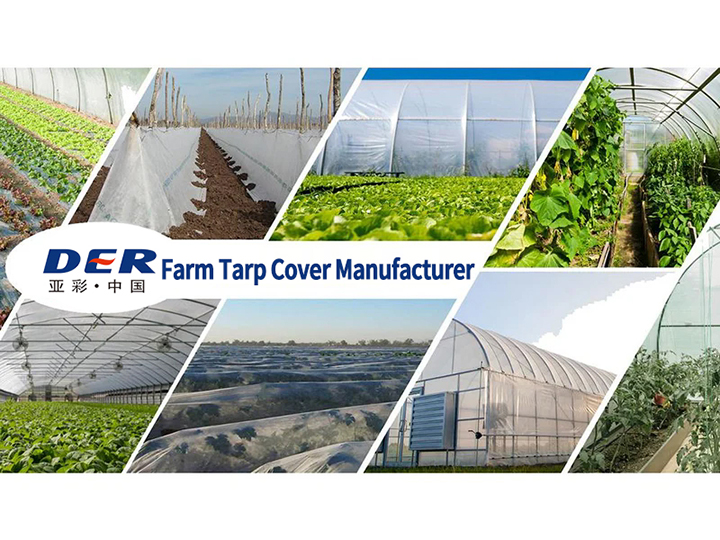
In practical farm operations, tarps are used where exposure creates measurable cost. Hay and forage lose value when moisture penetrates storage. Grain quality can decline if it is poorly protected during temporary storage or transfer. Fertilizer, seed, and feed can be damaged by water or contamination. Farm equipment exposed to long-term UV and rain often suffers from accelerated surface wear, corrosion risk, and general deterioration. Even when a tarp is considered a supporting item rather than a core agricultural input, its performance influences waste rate, labor efficiency, storage quality, and operational continuity.
Many buyers first encounter agricultural tarps through a narrow use case such as hay cover or equipment protection, but the category is much broader. Tarps are used over silage bunkers, hay bales, feed piles, harvested produce areas, temporary grain stock, irrigation accessories, greenhouse support zones, fence-side storage areas, pond-adjacent assets, and even temporary shelters or working areas during seasonal operations. This wide application range is why the best sourcing approach is not to treat all agricultural covers as interchangeable. A tarp used for short-term harvest staging is not the same as a tarp meant for long-duration outdoor feed protection or repeated deployment in a windy environment.
A professional agricultural tarp manufacturer helps buyers match the right material to the right farm task. This usually involves looking beyond length and width alone. Material structure, fabric reinforcement, coating behavior, UV balance, foldability, waterproof performance, edge finishing, eyelet spacing, and packaging format all influence whether the tarp works effectively in the field. A low-cost sheet may appear acceptable at first glance, but if it tears during handling, deforms under repeated tie-down, or fails during a wet season, the apparent savings disappear quickly.
In agriculture, timing matters. Weather windows are narrow, harvest schedules can be compressed, and storage problems grow quickly once moisture enters the chain. That is why reliability matters as much as price. A tarp that arrives late, lacks consistency, or does not suit the handling method can create more disruption than its invoice value suggests. Buyers who source through a professional farm tarp supplier usually do so because they want better predictability in both product and delivery.
Another reason agricultural tarpaulins remain important is their role in farm efficiency. A good tarp reduces rework and helps workers move faster. It keeps stored materials cleaner, supports better site organization, protects items waiting for transport or use, and reduces the need for emergency replacement or repeated repositioning. For distributors, a better tarp also means fewer complaints, clearer product differentiation, and a more attractive private-label or house-brand offer.
Why Agricultural Tarpaulin Is a Purchasing Category, Not Just an Accessory
In many operations, covers are still purchased as if they were incidental. However, agricultural professionals increasingly recognize that storage protection is part of product preservation. Feed, hay, silage, grain, seed, and farm equipment all represent capital. When these assets are left exposed or covered with unsuitable material, the result can be measurable quality loss. This is particularly important in regions with heavy rainfall, intense summer sun, long storage periods, or strong seasonal wind.
A better agricultural tarp is not just about surviving the weather. It is about supporting the storage strategy. Hay and feed covers need to help manage moisture risk. Equipment covers need to balance durability with handling ease. Temporary grain protection needs a material that provides real barrier performance without slowing operations. Pond-side or livestock-area uses may require additional attention to abrasion, cleaning behavior, or installation style. Once these details are considered, tarp sourcing becomes a serious procurement decision rather than a simple add-on purchase.
For this reason, many buyers look for an agricultural tarpaulin supplier that can support both standard supply and custom development. A farm distributor may want retail-ready sizes and branded cartons. A large agricultural wholesaler may need roll goods or repeat finished cover programs. A regional importer may want product tiers by application and price point. A professional supplier can support these models much more effectively than a generic stock trader.
Why Reinforced PVC and Similar Structures Are Often Preferred
While there are many tarp materials on the market, reinforced coated tarpaulin structures are often selected when the buyer wants a stronger mix of waterproof performance, tear resistance, field durability, and customization flexibility. This is especially true for agricultural environments where the tarp may be dragged across rough surfaces, fixed to supports, folded and reused, or exposed for longer periods than originally planned. A more robust structure usually delivers better life-cycle value than extremely light commodity covers that need frequent replacement.
A product that lasts longer, handles better, and performs more consistently can reduce indirect costs such as labor time, spoilage risk, and complaint management. For many serious buyers, this is the real value of sourcing from an experienced manufacturer rather than only comparing the cheapest available sheet.
Need an agricultural tarp matched to your exact farm or distribution application?
Send your target use, dimensions, quantity, color, finishing requirements, and destination market. DERFLEX can help you move from a general request to a workable product specification.
Key Features Buyers Expect from a Competitive Tarp for Agriculture
1. Reliable Waterproof Protection for Farm Storage
Waterproof performance is usually the first requirement in agricultural covering. Hay, forage, feed, grain, seed, and farm input materials can lose value quickly when water penetrates the storage system. A high-quality agricultural tarp creates a dependable barrier that helps protect stored goods from direct rain, splash, runoff, and incidental exposure during transport, loading, or field storage. This matters not only for preserving quality, but also for reducing waste and protecting margins across the farm or the supply chain. For buyers sourcing a waterproof farm tarp, performance consistency under real outdoor use is far more important than a basic water-resistance claim on paper.
2. UV Resistance for Long Outdoor Exposure
Agriculture takes place outdoors, and outdoor exposure is rarely gentle. Strong sunlight, temperature shifts, dust, and seasonal weather put continuous pressure on covering materials. A tarp that degrades too fast under UV can become brittle, lose appearance, and fail structurally before the storage cycle ends. That is why many buyers prioritize UV-resistant agricultural tarpaulin for crop and feed protection, equipment covering, and other exposed applications. The goal is not simply to survive a short spell of sun, but to maintain usable performance across the realistic exposure period of the farm task.
3. Tear Strength for Repeated Handling
Farm tarps are often pulled, folded, dragged, tied, loosened, rolled, stacked, and redeployed. A cover that tears too easily at the center panel or at the edges creates frustration and extra cost. Reinforced material structure helps the tarp withstand routine farm handling while reducing the chance that a small snag becomes a major failure. This is especially important for repeated-use covers on feed piles, machinery, bales, irrigation accessories, and storage zones that are opened and closed frequently.
4. Practical Flexibility and Easy Field Use
A tarp can be technically strong but still frustrating in daily use if it is too stiff, too heavy, or poorly finished. Good agricultural tarp design balances strength with handling practicality. Workers need to spread it quickly, fold it with reasonable effort, and secure it without unnecessary struggle. This matters on farms where labor is limited and operations must move quickly in narrow weather windows. A practical tarp is often the one that gets used consistently and correctly.
5. Strong Edge Finishing and Fixing Options
Many tarp failures begin at the edge. Eyelets, hems, rope edges, reinforced corners, and seam integrity all matter when the cover is fixed under wind, attached to supports, or moved repeatedly. Agricultural storage areas may be rough, and temporary fastening methods can place significant stress on finishing details. A better agricultural tarp manufacturer understands that edge design is not an accessory issue but a major durability factor. Stronger finishing helps reduce grommet pull-out, edge splitting, and early failure in active farm use.
6. Multi-Season Weather Tolerance
Agricultural tarps often remain in service longer than buyers expect. What begins as a short-term cover may stay in place through a seasonal transition or become part of a repeat-use inventory item. Temperature swings, wind, rain, condensation, dust, and sunlight all affect performance over time. A more reliable tarp supports operational continuity when weather turns variable and the storage cycle becomes longer than planned. This is one reason serious buyers evaluate the product by expected working conditions rather than unit price alone.
7. Customization for Real Farm Needs
No two agricultural operations are exactly the same. One buyer may need large-area silage and feed covers. Another may want custom-finished equipment covers. A distributor may need standardized retail sizes. An importer may want specific colors and branded packaging. A custom agricultural tarp supplier helps buyers move from generic stock to a solution that fits the task better. Size, color, weight, finishing, logo, label, and packaging customization all help create stronger usability and stronger commercial value.
8. Better Protection for Feed and Forage Value
In forage and feed management, cover quality directly affects asset preservation. Water intrusion and poor storage protection can reduce feed value, increase spoilage risk, and complicate farm planning. A stronger tarp helps protect hay, silage, feed ingredients, and other stored materials by limiting exposure and improving the overall storage environment. For buyers working in livestock or dairy supply chains, this often makes the tarp a meaningful part of feed-management strategy rather than a minor expense.
9. Cleaner Storage Areas and Better Farm Organization
A good agricultural tarpaulin helps create cleaner, more controlled storage zones. It keeps materials off direct exposure, limits dirt and debris contamination, and supports a more organized staging area for harvest, feed, seed, fertilizer, or equipment. Better organization also means faster daily work. Workers spend less time replacing damaged materials, cleaning wet surfaces, or improvising temporary protection when weather changes suddenly.
10. OEM and Private Label Value for Distributors
Agricultural tarps are strong products for distribution channels because they serve many customer types: farms, ranches, feed operations, greenhouse businesses, irrigation dealers, rural contractors, and hardware-style ag supply stores. A manufacturer that supports OEM and private label development enables buyers to build differentiated product lines rather than compete only on commodity price. Branded packaging, consistent color systems, grade segmentation, and repeatable specifications all help distributors sell with greater clarity and stronger margin control.
11. Quality Stability and Repeat Supply
In seasonal agricultural markets, repeatability matters. Buyers need consistent weight, color, finish, and packaging from one order to the next. An inconsistent tarp line creates confusion in the market and weakens customer trust. DERFLEX approaches the category with repeat-order discipline in mind, helping buyers stabilize their specification so reordering becomes simpler and product identity remains consistent across batches. This is particularly important for importers, distributors, and contract supply programs.
12. Better Life-Cycle Cost Rather Than Lowest Upfront Cost
The cheapest tarp is often the most expensive over time if it fails during storage, tears during handling, or needs frequent replacement. Agriculture is a margin-sensitive industry, so total use cost matters. A more durable tarp can lower replacement frequency, reduce spoilage risk, and save labor time. Buyers increasingly evaluate agricultural covers by usable performance and operational impact rather than by price per sheet alone. This is where a stronger product often wins in the long run.
What Makes These Features Commercially Important
Every farm and every distribution channel has cost pressure, but cutting cover quality too far often shifts the burden elsewhere. Moisture damage, UV degradation, repeated repurchasing, storage disorder, and early complaints all carry hidden expense. Buyers who step back and evaluate the tarp by use case often discover that a better agricultural tarpaulin improves overall efficiency. For a farm, that may mean better stored feed quality and less weather-related loss. For a distributor, it may mean stronger customer satisfaction and repeat sales. For a private-label brand, it may mean fewer returns and clearer product positioning in the market.
This is why the best feature set is never just a list. It is a way of aligning the tarp with the economics of the farm task. A serious farm tarp manufacturer should understand that connection and be able to guide the buyer toward the right balance of strength, practicality, and commercial value.
Technical Specifications for Agricultural Tarpaulin Projects
Technical selection is one of the most important steps in agricultural tarp procurement. A cover that looks acceptable in a sample room may perform poorly in the field if the specification does not match the storage method, exposure conditions, fixing style, or handling pattern. That is why buyers should treat the technical profile as part of the solution rather than as a generic checklist.
The following table outlines common reference points used when discussing an agricultural tarp supplier or custom farm tarp manufacturer. Final specifications can be adjusted according to actual application, climate, project size, and commercial target.
| Material Structure | PVC coated polyester, PVC laminated agricultural tarpaulin, reinforced industrial farm cover fabrics, or other application-oriented constructions depending on use intensity and budget. |
|---|---|
| Common Weight Range | Approx. 300 gsm to 900 gsm depending on whether the tarp is intended for light crop cover, general farm protection, repeated use, hay and feed storage, or heavier outdoor agricultural duty. |
| Width Options | Standard and custom roll widths available based on production capability and end-use requirement. Finished sheet dimensions can be tailored to storage area, pile geometry, bale coverage, or equipment size. |
| Color Options | Blue, green, gray, white, black, silver, dual-tone, or custom colors depending on quantity and market positioning. Private-label color strategies can also be discussed. |
| Surface Finish | Gloss, matte, embossed, or application-specific finish selected according to appearance, fold behavior, cleaning preference, and practical handling needs. |
| Waterproof Performance | Designed for strong water barrier performance when correctly specified, fabricated, and installed. Suitable for hay cover, feed cover, grain protection, crop storage, and multi-purpose farm use. |
| UV Consideration | UV resistance level can be discussed according to exposure period and climate. Longer outdoor exposure generally calls for a stronger outdoor-performance balance. |
| Finishing Options | Heat sealed hems, stitched hems, grommets/eyelets, reinforced corners, rope-in-hem designs, welded seams, cut-size sheets, and packaged finished covers. |
| Customization | Custom size, color, logo, item marking, labels, retail packaging, pallet organization, bundle packing, and OEM/private-label program development. |
| Application Types | Hay cover, silage cover, feed and grain protection, farm equipment cover, irrigation area protection, crop staging cover, livestock area separation, pond-side material cover, and general agricultural storage use. |
| Documentation Support | Product discussion can include weight reference, dimensional expectations, packaging details, and documentation or certification-related alignment according to destination market needs. |
| Order Format | Roll goods, finished tarps, bundled sheets, custom-packed sets, private-label retail formats, or repeat supply programs for farms, importers, wholesalers, and distributors. |
| Lead Time Factors | Lead time depends on specification complexity, customization depth, order quantity, packaging needs, and production scheduling. Early confirmation of details helps shorten the cycle. |
How Buyers Should Evaluate the Specification
A professional RFQ for agricultural tarpaulin should answer several practical questions. What exactly will the tarp cover? How long will it remain outdoors? Will it be tied down permanently, repositioned frequently, or folded after each use? Is appearance important for resale or retail packaging? Does the product need to support a distributor’s own brand? Are there specific quality, documentation, or certification-related expectations in the destination market? Once these points are clear, the supplier can recommend more accurately and the quotation becomes more meaningful.
For example, a tarp for hay bales stored through a wet season may need stronger outdoor balance and robust edge finishing. A tarp used over machinery during short idle periods may prioritize easier handling and better drape. A distributor product line might require multiple grades with clean visual differentiation and consistent packaging. A silage application may emphasize waterproof coverage and stable finishing over repeated open-close cycles. Even when the material family is similar, the best commercial specification can change significantly by use case.
This is why working with an experienced agricultural tarpaulin manufacturer often leads to better procurement outcomes. The supplier is not just offering a fabric. The supplier is helping align material, finishing, performance, packaging, and delivery around the actual working environment.
Looking for OEM size lists, branded packaging, or finished farm tarp sets?
Share your target dimensions, quantities, packaging direction, and end-use details. DERFLEX can help build a practical quote for distribution, farm supply, or private-label programs.
Applications for Tarp for Agriculture Across Real Farm and Rural Supply Scenarios
One of the greatest strengths of the agricultural tarp category is its range. A single material family can serve crop management, feed protection, machinery care, farm storage, livestock support, and distribution channels. The more clearly the application is defined, the easier it becomes to match the correct product structure. Below are some of the most common ways buyers use agricultural tarpaulins in practice.
Hay Cover and Bale Protection
Hay is one of the most common agricultural tarp applications because moisture damage can quickly reduce feed quality and sale value. A strong hay cover tarp helps protect stacked bales from rain, surface wetting, and excessive exposure. The tarp may be used for short-term field storage, farmyard stacking, or distribution staging. In these cases, waterproof performance and durability under repeated installation are especially important.
Silage Cover and Forage Storage
Silage protection is a critical area where tarps support feed preservation and storage discipline. A suitable silage cover tarp helps shield the stored mass from water intrusion and external contamination while supporting a more controlled storage environment. Buyers generally look for a strong barrier performance, reliable finishing, and practical handling across large coverage areas.
Grain and Feed Protection
Temporary grain storage, feed cover, and commodity management often require rapid, broad-area protection. Agricultural tarps help maintain drier and cleaner conditions during transport, staging, or farm storage. The right specification depends on whether the tarp is laid once, repositioned regularly, or used in a recurring seasonal cycle.
Farm Equipment and Machinery Cover
Tractors, harvesters, balers, trailers, pumps, generators, and field equipment often remain outdoors between use periods. A custom farm equipment cover or general-purpose agricultural tarp helps reduce direct sun and rain exposure, supporting cleaner storage and slower surface deterioration. For irregular shapes and repeated use, custom dimensions and better finishing can significantly improve field convenience.
Crop and Harvest Staging Protection
During harvest, sorting, drying, temporary staging, or packaging preparation, agricultural tarps can help protect products and work zones from weather or contamination. This is especially useful when operations are moving quickly and a practical temporary cover is needed between field and storage steps.
Seed, Fertilizer, and Input Storage Cover
Seed bags, fertilizer pallets, additives, farm chemicals in appropriate packaging, and other agricultural inputs can benefit from protective covering in storage or staging areas. A tarp helps reduce direct weather exposure and maintain better organization in warehouses, rural depots, and farmyards.
Livestock Area Separation and Temporary Protection
In some agricultural settings, tarps are used to create temporary separation, local weather shielding, or cleaner operational boundaries near livestock areas. Here the priority may be more about practical barrier use, basic weather protection, and ease of installation rather than long-span structural performance.
Pond-Side and Aquaculture Support Use
Agricultural operations that include fish farming, irrigation ponds, or mixed farm systems often need covers for nearby materials, feed, equipment, and maintenance zones. In these cases, tarps help keep stored items clean and dry while supporting a more controlled working area around water-related assets.
Greenhouse Support and Peripheral Covering
While greenhouse coverings are a specialized category of their own, tarpaulins are often used around greenhouse operations for material storage, side protection, work-area shielding, and temporary coverage. A tarp that resists weather and handles repeated movement can support more efficient greenhouse logistics.
Rural Logistics and Loading Protection
Farm materials are frequently exposed during loading, unloading, and short-duration transport or staging. An agricultural tarp helps maintain protection continuity during these transitions, reducing the risk that rain or dust affects products waiting for storage or shipment.
Farm Infrastructure and General Storage Cover
Tarps are widely used over wood, pipes, irrigation hoses, spare parts, fencing materials, and rural maintenance inventory. This is one of the simplest but most valuable applications because it protects stock and reduces clutter at the same time. Buyers often need durable all-purpose tarps for exactly this reason.
Distributor and Retail Product Lines
Agricultural tarps are suitable for wholesalers, importers, ag supply stores, hardware channels, and rural distributors. A product family with clear grades, custom labeling, and stable packaging is easier to sell and easier for end users to understand. For many buyers, this is the commercial reason to move toward a structured OEM or private-label tarp program.
Why Application Matching Improves Results
A tarp used for hay cover should not necessarily be specified the same way as a tarp used for machinery, feed cover, or retail resale. The expected exposure period, the need for waterproof performance, the frequency of movement, the edge-finishing stress, and the importance of appearance all change by use case. Matching the tarp to the real farm job reduces complaint risk and improves overall value.
That is why buyers looking for a dependable agricultural tarp supplier should discuss actual end use instead of only asking for a standard width and color. The result is usually a smarter price-to-performance balance and a product that works better in the field.
OEM and Custom Agricultural Tarp Programs with Lead Time, Quality, and Certification-Focused Coordination
Buyers in the agricultural market often need more than a standard off-the-shelf tarp. Their customers may have preferred sizes, local storage practices, brand expectations, color preferences, or packaging requirements. This is why OEM and custom development are central to modern agricultural tarpaulin sourcing. A customized program helps the buyer build a more useful and more differentiated product line while reducing direct price-only competition.
DERFLEX works with importers, wholesalers, farm supply distributors, industrial resellers, and project-oriented agricultural buyers who need a product structure that matches their commercial model. Some need finished covers. Some need roll goods for local conversion. Some need retail packaging. Some need private-label cartons, item coding, or logo printing. Some need more robust edges or custom sizes because their end users work in high-wind, high-exposure, or repeated-use conditions.
Common Customization Areas
- Custom Size and Format: Tailored dimensions for hay stacks, silage protection, feed cover, equipment cover, storage lanes, or distributor size programs.
- Weight and Structure: Light, medium, or heavy duty agricultural tarp configurations aligned with durability target and price level.
- Color Strategy: Standard or market-specific color options for farm use, private label identity, or product line segmentation.
- Edge Finishing: Heat sealed hems, stitched hems, rope reinforcement, corner patches, eyelet spacing, and special fixation-oriented finishing.
- Branding and Private Label: Logo print, grade coding, labels, carton marking, and packaged presentation for stronger market identity.
- Packing System: Roll packing, folded cover sets, pallet-ready shipment, master carton structure, and retail-ready packaging.
Lead Time Matters in Agriculture
Agricultural purchasing is highly seasonal. Buyers often need inventory before weather shifts or before the harvest and storage cycle begins. This makes lead time a major commercial issue. The most effective way to shorten supply cycles is to confirm the specification early. When application, dimensions, finishing, branding, and packaging are clear from the start, quotation becomes faster and production planning becomes more stable.
Buyers who intend to place repeat orders also benefit from standardizing the specification. Instead of changing details with every purchase, they can build a stable product code or grade system. This reduces internal confusion and helps maintain consistent supply from season to season. For distributors, this is often the key step in moving from reactive buying to structured procurement.
Quality Control as a Commercial Advantage
Agricultural tarp quality should be understood in practical terms: does the tarp match the use? Is the weight stable? Are the dimensions consistent? Is the finishing suitable for the installation method? Is the surface behavior acceptable for handling and storage? Does the product arrive packed and identified in a way that supports resale or field use? A supplier that treats quality as part of the buyer’s workflow—not only as a generic factory claim—creates stronger long-term value.
DERFLEX supports this kind of quality discussion by focusing on specification clarity and use-case alignment. When the product is defined more carefully at the quotation stage, the risk of mismatch and complaint later is reduced. This is especially important for buyers building their own brand or supplying demanding farm customers who rely on the tarp during critical weather periods.
Documentation and Certification-Related Coordination
Different markets may have different expectations around documentation, product identification, and certification-related communication. Some buyers only need stable commercial quality and straightforward packaging details. Others may require more structured product information or need the supplier to discuss documentation and compliance expectations as part of the order process. These points should be raised early, especially when the tarp will enter formal distribution channels or cross-border markets with clearer purchasing controls.
DERFLEX can discuss documentation alignment, packaging data, and certification-related expectations based on the destination market and the project or channel requirement. This approach helps buyers avoid late-stage surprises and build a more reliable supply relationship.
Why OEM Development Strengthens Market Position
Generic tarps are easy to compare and often hard to differentiate. An OEM agricultural tarp program changes that. By controlling size sets, grades, colors, packaging, and product identity, the buyer can build a line that is more recognizable and more useful to end users. This helps protect margins and encourages repeat purchasing because the product becomes something customers can specifically request rather than a generic item they shop only by price.
For farm-supply brands and distributors, this can be the difference between selling a commodity and building a dependable line of storage and protection products. For importers, it can create clearer segmentation across economy, standard, and premium ranges. For large farms or service groups, it can simplify reordering and on-site usage because the product is designed around actual operational needs.
Want a private-label or distributor-ready agricultural tarp line?
We can discuss custom size lists, branded packaging, eyelet and hem options, repeat order planning, and farm-application material direction for your market.
Why Choose DERFLEX as Your Agricultural Tarp Manufacturer or Supplier
Application-Driven Product Logic
DERFLEX approaches farm tarps by real use case: hay cover, silage protection, grain cover, machinery shielding, storage organization, and distributor product development. This helps buyers avoid generic mismatch and source a tarp that fits the actual job more closely.
Strong OEM and Custom Capability
Custom size, color, weight, finishing, branding, private label, and packaging can be discussed according to your market and business model. This allows importers, farm suppliers, and distributors to create more differentiated product programs.
Built for Repeat Orders
Many agricultural buyers need seasonal replenishment or recurring stock. DERFLEX works with repeat-order stability in mind, supporting product definition that can be reordered more efficiently once approved.
Quality Conversation Based on End Use
Product direction is tied to application rather than to broad generic claims. This makes it easier to align the tarp with weather exposure, storage method, handling intensity, and customer expectations.
Supports Both Direct Farm Use and Distribution Channels
DERFLEX agricultural tarpaulin solutions are suitable for farm groups, agricultural supply houses, importers, wholesalers, and private-label brands. This channel flexibility helps buyers scale without constantly changing supplier base.
Commercially Useful Customization
Customization is not only about production convenience. It is a sales tool. Better packaging, clear grade identity, useful size sets, and product labeling all make the tarp easier to sell and easier to reorder.
Attention to Lead Time and Planning
Agricultural demand often rises before specific seasons or harvest windows. DERFLEX encourages early spec confirmation so production planning and delivery scheduling can be handled more effectively.
Open to Documentation and Certification-Related Discussion
When the market requires stronger product information, documentation clarity, or certification-related communication, those requirements can be raised at quotation stage so the supply path is aligned earlier.
A Supplier Mindset for Serious Agricultural Buyers
Buyers who work seriously in agriculture usually look for more than a low price. They want a tarp that is practical in the field, stable in supply, and commercially useful in their market. They want clear communication, workable lead times, and a product that helps them reduce loss rather than create new problems. DERFLEX is positioned around that buyer mindset.
The value is not only in the material itself. It is in the combination of product direction, custom flexibility, repeat-order stability, and documentation awareness. That is what helps transform a simple agricultural cover into a product that better supports farm operations and stronger long-term business results.
Agricultural Tarp Comparison: Reinforced PVC Tarpaulin vs Other Common Cover Options
| Comparison Item | Reinforced PVC Agricultural Tarp | Light PE Tarp | Canvas Cover | General Uncoated Fabric | Mesh Material |
|---|---|---|---|---|---|
| Waterproof Protection | Strong waterproof performance for many farm storage and protection uses | Common for light-duty cover, often shorter service life under heavier use | Can absorb moisture unless specially treated | Usually limited without specific coating | Not suitable for full waterproof coverage |
| Durability | Good balance of strength, handling, and repeated-use suitability | Works for economical applications but may tear sooner in harsh conditions | Can be durable but often heavier and less practical in some farm uses | Varies widely and is often not ideal for outdoor agriculture | Useful for airflow or shading, not full protection |
| UV and Weather Resistance | Better option for exposed outdoor agricultural work when specified correctly | Can suit lighter-duty short exposure | Selective use depending on treatment | Usually weaker for prolonged outdoor use | Application-specific only |
| Customization Potential | High: size, eyelets, hems, logo, packaging, private label, grade structure | Moderate, often more price-led and less differentiated | Moderate but less efficient for broad industrial-style programs | Depends on converter capability | Limited to specialized functions |
| Field Handling | Good balance when selected correctly for the use case | Often light and easy, but weaker under stress | Can be bulky or less convenient when wet | Highly variable | Used for different purpose |
| Commercial Value for OEM Lines | Strong platform for distributor, importer, and private-label programs | Usually more difficult to differentiate at higher-value levels | Niche depending on market | Less consistent for broad product programs | Limited to specific categories |
| Overall Farm Use | One of the most versatile options for crop, feed, equipment, and storage protection | Useful for budget entry-level applications | Selective traditional use | Usually secondary or improvised use only | Best where airflow is needed, not total cover |
Why Many Buyers Upgrade from Low-End Covers
PE tarps remain common because they are easy to buy and inexpensive. However, many agricultural buyers eventually discover that low-end covers do not always match their real operating conditions. Frequent tearing, poor finishing durability, limited outdoor stability, and inconsistent repeat performance can undermine the initial savings. This is especially true when the tarp is protecting higher-value agricultural materials.
Reinforced PVC agricultural tarpaulin offers a stronger foundation for buyers who want better waterproofing, stronger edge finishing, deeper customization, and more reliable performance under farm handling. It also supports private-label development much more effectively, which is important for distributors and importers building a long-term market presence.
The correct comparison is therefore not simply “cheap versus expensive.” It is “short-term sheet price versus real-use cost and performance.” In many serious farm and distribution settings, the stronger option delivers better value once storage protection, replacement rate, and customer satisfaction are considered together.
Representative Project Case: Custom Agricultural Tarp Program for Feed, Hay, and Farm Equipment Protection
The following case is presented as a representative agricultural supply scenario that reflects the way many distributors and large farm-service buyers approach tarp sourcing. It shows how a more structured procurement strategy can improve both field performance and commercial value.
Background
A regional agricultural supply company served dairy farms, livestock feed operations, and mixed crop producers across a climate zone with strong summer sun and frequent seasonal rainfall. The company had been reselling generic tarps from multiple sources, but the line lacked consistency. Some customers used the covers for hay bales, some for feed piles, some for machinery, and others for temporary grain staging. Complaints were increasing because the products looked similar but behaved differently in the field. Eyelets failed under tension, some covers degraded too quickly in sunlight, and packaging did not clearly distinguish different grades.
The distributor wanted to create a better tarp line under its own brand. It needed a supplier that could support a more organized product system, not just offer opportunistic stock. The goal was to build a clearer range for agricultural users, reduce complaints, and improve repeat purchasing through stronger product identity.
Challenges Identified
- Inconsistent product quality from multiple sources
- No clear grade separation for different farm applications
- Frequent edge-related complaints on repeated-use covers
- Need for better UV and waterproof performance for exposed storage
- Packaging too generic for retail and warehouse management
- Seasonal lead time pressure before peak agricultural demand
Solution Approach
Rather than forcing one tarp to cover every application, the program was divided into three practical categories. The first category targeted short-term agricultural storage and light protective use. The second category focused on day-to-day farm tarp requirements such as hay cover, general feed protection, and equipment shielding. The third category was positioned as a premium heavy-duty agricultural tarpaulin for buyers who needed longer outdoor use, stronger edge finishing, and better confidence in repeated deployment.
The distributor also requested specific color assignments for each grade, clear printed markings, and private-label carton labeling. This helped warehouse teams pick the correct product faster and allowed farm customers to understand the grade differences more easily. Eyelet layout and hem design were adjusted because many complaints had originated from finishing failure, not from the central panel alone.
Field Review
Samples were reviewed not only by the purchasing office but also by actual farm users. This was essential. The office team focused on price, appearance, and packaging. The farm users focused on how the tarp spread over hay stacks, how it folded after use, whether the edge held under tie-down, and whether the material felt reliable enough for outdoor storage. The final specification was improved based on this feedback, particularly in the mid-grade and premium-grade products.
Implementation and Supply Planning
Once the specification set was approved, the distributor standardized its order program around a defined range rather than changing details every season. This supported better forecasting and simplified replenishment planning. The buyer was able to prepare inventory ahead of the main demand period, reducing rush-order pressure. The more consistent product definition also improved communication between sales, warehouse, and purchasing teams.
Results
The new program delivered multiple benefits. Complaint rates dropped because the products more closely matched actual agricultural use. Customers understood the grade system better, which reduced incorrect product selection. Private-label identity strengthened the distributor’s market position, and repeat sales improved because farms could reorder the same tarp line with more confidence. Warehouse handling became easier because carton labels and product coding were clearer.
Most importantly, the company shifted from selling undifferentiated commodity tarps to selling a structured agricultural protection product line. This supported better value communication and reduced direct price comparison against low-end alternatives. Instead of competing only on cost, the distributor could explain which tarp was appropriate for hay, which for machinery, which for more demanding outdoor feed protection, and why.
Buyer Takeaway
The case shows that the best agricultural tarp strategy is not simply about finding the cheapest material or the heaviest material. It is about matching the product to farm reality. When tarp structure, finishing, packaging, and grade logic all align with end use, the result is better performance, fewer complaints, and stronger long-term commercial value.
Frequently Asked Questions About Tarp for Agriculture
1. What is the best tarp for agriculture?
The best tarp for agriculture depends on the application. Hay, silage, grain, feed, farm equipment, and general storage each place different demands on the cover. Buyers usually choose a reinforced agricultural tarp when they need better waterproofing, durability, and customization for outdoor use.
2. What is the difference between a farm tarp and a general tarp?
A farm tarp is typically selected with closer attention to storage protection, outdoor exposure, repeated handling, and seasonal use. It is expected to perform in rain, sun, wind, dust, and daily agricultural operations. A general tarp may work for light tasks, but it may not provide the same level of consistency or life-cycle value in agricultural settings.
3. Can agricultural tarps be customized?
Yes. Custom size, weight, color, logo printing, label, edge finishing, eyelets, packaging, and private-label options can be discussed depending on quantity and product direction. Customization is very common in agricultural distribution and OEM projects.
4. Are agricultural tarps waterproof and UV resistant?
They can be developed with waterproof and UV-resistant performance depending on the material structure and use requirement. Buyers should describe expected exposure time and weather conditions so the supplier can guide the most suitable product direction.
5. Can I use agricultural tarpaulin for hay cover and silage cover?
Yes. Hay cover and silage protection are among the most common uses. The exact recommendation depends on storage format, coverage area, handling pattern, and how long the tarp will remain in place.
6. Can DERFLEX support OEM and private-label agricultural tarp orders?
Yes. DERFLEX can discuss OEM and private-label supply including branding, labels, custom colors, packaging, and structured product ranges for distributors, importers, and agricultural supply companies.
7. What details should I send for a quote?
Please send application, size, target weight or performance expectation, quantity, color, finishing, branding requirement, packaging direction, destination market, and desired delivery timing. This helps the quotation become faster and more accurate.
8. Can I order roll goods instead of finished tarps?
Yes. Depending on the supply model, agricultural tarpaulin can be discussed as roll material or finished covers. This is useful for converters, distributors, and buyers who want local finishing flexibility.
9. How do I choose between lighter and heavier agricultural tarps?
Start with the use case. Short-term light storage cover may allow a lighter product. Longer outdoor use, rough handling, or repeated deployment typically calls for a stronger or heavier-duty specification. The correct balance should consider durability, handling ease, and budget together.
10. Can the product be discussed with documentation or certification-related expectations?
Yes. If your market or channel requires specific product information, documentation clarity, or certification-related communication, those requirements should be shared early so the quotation and supply path can be aligned more effectively.
Final Buying Perspective
A professional agricultural tarp supplier helps buyers source more intelligently before the order is placed. The tarp should be selected for what it must protect, how it will be handled, how long it will remain outdoors, and how it fits the farm or distribution model. When those questions are answered clearly, the result is usually stronger performance and better commercial value.
DERFLEX supports buyers who want that more structured approach. Whether your requirement is hay cover, silage cover, grain and feed protection, farm equipment cover, or a private-label agricultural tarp line, the next step is to define the application and build the specification around it.
Ready to source a better tarp for agriculture?
From waterproof farm covers and crop protection tarps to custom heavy-duty agricultural tarpaulins for distribution and OEM programs, DERFLEX is ready to discuss your requirement.
Related Agricultural and Protection Solutions
The following internal links are reserved for pages closely related to agricultural tarp applications. If your live site uses different URLs, replace the links below with your actual internal pages while keeping the anchor intent consistent.
Tell us your farm application, quantity, and customization needs
Whether you need an agricultural tarp manufacturer for long-term OEM supply or a farm tarp supplier for immediate quotation, DERFLEX is ready to discuss the right direction.