


Asphalt Truck Tarps — Heat-Resistant Dump Truck Covers
Asphalt truck tarps are specialized covers for dump trucks and trailers hauling hot mix asphalt from the plant to the paving site. The correct cover is selected around actual load temperature, direct-contact risk, haul time, weather, tarp-system geometry, reinforcement and repeat deployment—not by fabric weight alone.
What Is an Asphalt Truck Tarp?
An asphalt truck tarp is a purpose-selected dump truck or dump trailer cover used over hot mix asphalt during transport. Its main jobs are to reduce exposure to wind and rain, help limit temperature loss, contain the load and operate reliably with the truck's tarp system. If the tarp can touch the hot mix, the cover material must have a verified heat capability for the actual working temperature.
The best specification therefore starts with four questions: How hot is the load? Will the tarp touch it? How long is the haul? What tarp system is installed? These answers determine material direction, coverage, reinforcement, pocket layout and handling weight.
Why Hot Asphalt Needs a Different Tarp Specification
General dump-truck tarps are usually selected around containment, waterproofing, UV exposure and abrasion. Asphalt hauling adds another critical variable: elevated load temperature. That changes the material decision and makes fit, coverage and surface behavior more important.
Heat Exposure
The cover may be suspended above the load or may sag into direct contact. Those are different design conditions. A heat rating that is adequate for indirect exposure may not be adequate for direct contact.
Temperature Retention
A properly fitted cover helps reduce wind and weather exposure during transport. Coverage geometry matters: gaps at the sides or tailgate can allow airflow under the tarp and accelerate cooling.
Daily Tarp-System Cycling
Paving fleets repeatedly deploy and retract the cover. Pocket construction, edge reinforcement, weight, flexibility and dimension control affect how smoothly the tarp operates and where fatigue develops.
Choose Asphalt Truck Tarp Material by Real Working Condition
The table below is a purchasing framework, not a universal temperature claim. Final DERFLEX material selection must be confirmed from the actual hot-mix temperature, contact condition, haul profile and tarp system.
| Operating Condition | Recommended Starting Direction | What the Buyer Must Confirm | Main Risk if Under-Specified |
|---|---|---|---|
| Direct contact with hot mix asphalt is possible | Heat-capable asphalt tarp structure with verified contact-temperature performance | Maximum contact temperature, exposure duration, surface-release requirement, haul cycle | Softening, sticking, coating damage, burn-through or premature failure |
| Tarp is kept above the load by bows / arms | Application-specific high-temperature truck tarp direction | Distance from load, radiant heat, expected sag, ambient temperature, system tension | Assuming indirect heat is low enough without verification |
| Long haul or cold / windy weather | More complete coverage with controlled side and tailgate overlap | Haul time, route speed, ambient temperature, rain exposure, desired coverage | Accelerated surface cooling and crusting caused by airflow or weather |
| Electric front-to-back tarp system | Heat-appropriate cover with controlled weight and reinforced working pockets | Roller width, arm spacing, crossbar diameter, travel length, motor/system limits | Excess load on system, poor retraction, rubbing or pocket failure |
| Manual crank or pull system | Flexible heat-capable tarp with practical handling weight | Operator deployment method, pocket layout, pull direction and field frequency | Stiff handling, unsafe manual effort, accelerated crease damage |
| Distributor / replacement-tarp program | Standardized SKUs built around verified system families and duty levels | Finished sizes, pocket standards, labeling, packaging, heat-grade identification | Mixing ordinary dump tarps with asphalt-rated replacements |
Asphalt Dump Truck Tarp Specifications to Confirm Before Production
DERFLEX can develop the finished-cover direction around the actual truck and hauling program. Where a verified numeric value is not available, the specification should remain project-specific rather than using an invented universal number.
| Specification Item | DERFLEX Supply / Confirmation Direction | Why It Matters for Asphalt Hauling |
|---|---|---|
| Product Type | Asphalt truck tarp, dump truck asphalt tarp, dump trailer cover, replacement tarp or OEM finished cover | Defines vehicle, deployment geometry and replacement logic. |
| Material Structure | Heat-capable technical coated fabric or project-specific asphalt tarp structure; confirm with DERFLEX | Ordinary PVC/vinyl and general mesh should not be assumed suitable for hot-load contact. |
| Required Heat Capability | Specified from actual maximum tarp-contact temperature and exposure time | Temperature rating is the primary difference between an asphalt tarp and many general dump-truck covers. |
| Finished Width & Length | Custom according to dump body, roller, arm geometry, desired side / tailgate coverage and replacement drawing | Correct coverage helps reduce gaps, wind entry and system interference. |
| Pocket / Sleeve Layout | Roller pocket, crossbar pocket, pull-bar pocket, spline or customer-specified construction | Pockets are repeated stress zones and must fit hardware accurately. |
| Reinforcement | Webbing, double layers, reinforced hems, wear patches, corners and hardware backing where required | Repeated deployment concentrates stress at edges, pockets and connection points. |
| Side Flaps / Coverage | Optional according to truck body and required coverage | Additional side coverage can help shield the load from wind and weather when compatible with the system. |
| Attachment Hardware | Grommets, D-rings, straps, cord, labels or customer-specific attachment details | Layout should follow actual load direction and deployment system, not a generic pattern. |
| Branding / Packaging | Custom label, SKU identification, carton mark, private-label packaging and distributor instructions | Important for replacement channels where asphalt-grade tarps must be clearly distinguished from standard covers. |
| Supply Form | Finished tarps, semi-finished panels or material program depending on the project | Supports fleets, tarp-system companies, distributors, converters and truck-body OEMs. |
Design the Asphalt Tarp Around the Failure Points
For high-cycle truck applications, extra fabric weight alone does not solve every problem. A more useful specification maps the points that roll, pull, rub, heat, flex and contact hardware during each hauling cycle.
Roller Pocket
Confirm roller diameter, insertion method, seam direction and reinforcement. A pocket that is too tight increases installation stress; excess slack can create rubbing and uneven rolling.
Rear Crossbar / Pull Zone
This zone sees repeated tension at full deployment. Reinforcement should spread load beyond the immediate bar or attachment line.
Side Edges
Side edges can rub against dump-body rails, bows and hardware. Correct finished width and wear-zone reinforcement can be more valuable than simply increasing overall GSM.
Heat & Sagging
Even when a tarp is intended to remain above the load, system movement or a peaked load can cause contact. Specify for the worst credible operating condition, not only the ideal geometry.
Seams & Transitions
Material joins, hems and pocket transitions should be placed where they will not create rigid tear points or concentrate repeated flexing.
Operator Handling
A tarp that is unnecessarily heavy or stiff can increase system load and manual effort. Heat capability, durability and handling weight should be balanced together.
Asphalt Truck Tarp vs Standard Dump Truck Tarp
| Decision Factor | Asphalt Truck Tarp | Standard Solid PVC / Vinyl Dump Tarp | Mesh Dump Truck Tarp |
|---|---|---|---|
| Main purpose | Hot mix coverage, heat-aware transport and load shielding | Weatherproof cargo protection and general loose-load coverage | Breathable containment of debris, aggregate, mulch and similar loads |
| Heat requirement | Must be selected to the actual hot-load exposure and contact condition | Not automatically asphalt-contact capable | Not automatically asphalt-contact capable |
| Temperature retention priority | High | Secondary unless used in a verified asphalt application | Low because airflow is inherent to mesh construction |
| Water protection | Depends on selected construction and seam/coverage design | Solid PVC/vinyl surface can provide waterproof material protection | Not waterproof |
| System fit | Critical: heat, weight, pockets, arms and coverage must work together | Critical for replacement and roll-tarp applications | Critical for airflow, pocket wear and repeated deployment |
| Best starting use | Hot mix asphalt, paving fleets, roadwork and asphalt delivery | Rain-sensitive bulk goods and general waterproof hauling | Gravel, waste, branches, landscape material and loose debris |
For non-asphalt cargo and general transport protection, see DERFLEX heavy duty truck tarps. For retractable dump-body applications, compare the roll tarp for dump truck guide.
Coverage Matters as Much as Material
An asphalt tarp should not be treated as a small cap placed loosely on top of the load. Wind can move underneath incomplete coverage and increase heat loss. In rainy conditions, inadequate overlap can also allow water to reach the mix.
For that reason, buyers should define the intended side and tailgate coverage together with the tarp-system travel. The cover should deploy securely without interfering with the body, arms, roller, tailgate or unloading sequence.
- Confirm actual covered width and travel length, not only nominal bed dimensions.
- Define side and rear coverage needed for wind and rain shielding.
- Check that the tarp remains tensioned rather than ballooning or sagging excessively.
- Confirm safe deployment and retraction before the truck reaches the paver.
Procurement Question to Ask
"Will the tarp ever touch the hot asphalt in normal or abnormal operation?"
This single question separates many general dump-tarp specifications from true asphalt-hauling requirements. If contact is possible, send the expected maximum contact temperature and exposure time with the RFQ.
How to Measure an Asphalt Dump Truck Tarp
Truck-bed length alone is not enough. A replacement tarp must reproduce the working geometry of the roller, arms, crossbar, pockets and required coverage.
Identify the System
Record whether it is electric or manual, front-to-back, arm style, roll tarp, side-roll, cable or pull-style.
Measure Working Coverage
Measure required tarp width and travel length, including the desired side / rear overlap and remaining material on the roller.
Record Pocket Details
Provide roller diameter, crossbar diameter, pocket flat width, spline or insertion details and reinforcement layout.
Map Hardware
Mark grommets, straps, cords, flaps, hems, notches, labels and any body or arm clearance that affects installation.
Photograph Wear Points
Send wide photos of the truck plus close-ups of old-tarp failures, pocket wear and edge abrasion.
Add Heat Data
State asphalt temperature, direct-contact possibility, typical haul time, climate and daily tarp cycles.
Six Asphalt Tarp Sourcing Errors That Cause Early Failure
Buying "18 oz vinyl" without a heat rating
Weight describes mass per area, not verified hot-asphalt capability. Heat performance must be separately confirmed.
Assuming waterproof means heat-resistant
Waterproofing and temperature capability are different material properties. A waterproof surface may still be unsuitable for direct hot-load contact.
Using a breathable mesh where heat retention is critical
Mesh is excellent for airflow and loose-load containment, but airflow works against the heat-retention goal of hot mix transport.
Ignoring the roller and crossbar pockets
Many failures start at working pockets, hems and attachment points rather than in the center of the tarp.
Ordering by truck-bed length only
Actual tarp travel, roller position, side overlap, arm geometry and hardware determine the correct finished dimensions.
Not stating the real asphalt temperature
Without the working temperature and contact condition, a supplier cannot responsibly confirm a high-temperature tarp specification.
OEM Asphalt Tarp Options for Fleets, Distributors & Tarp-System Companies
DERFLEX can support project-specific tarp covers and repeat supply programs where the buyer needs more control than a standard retail replacement SKU.
Finished-Cover Customization
- Custom width, length and cover geometry
- Roller, spline, crossbar and pull-bar pocket layouts
- Reinforced side hems and high-wear zones
- Optional side flaps or extended coverage
- Grommets, D-rings, cords, straps and webbing
- Custom labeling, carton marks and SKU identification
Repeat B2B Program Control
- Standardized replacement dimensions by truck / system family
- Separate grade identification for asphalt vs general dump tarps
- Approved drawing or sample before repeat production
- Packaging for distributor stock and fleet maintenance
- Material-to-finished-tarp coordination
- Export packing and order documentation support
DERFLEX Truck Tarp, Material & Manufacturing Visuals
The images below are hosted on DERFLEX and can support image search, product understanding and buyer confidence. They are representative visuals; the final asphalt-grade material should still be confirmed for the actual heat requirement.
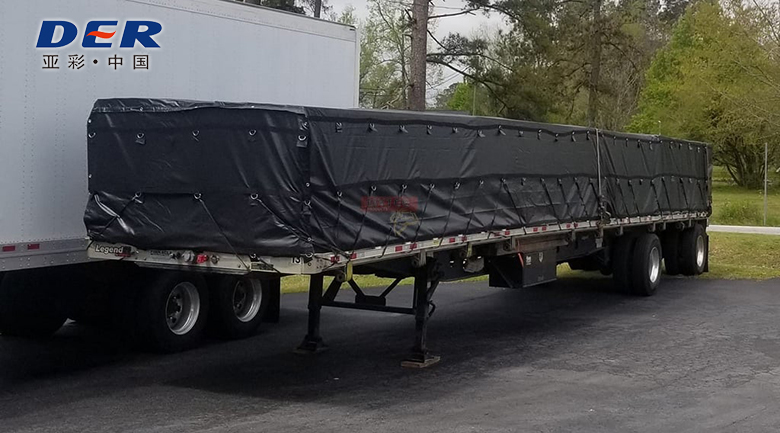
Truck Tarp Application
Representative covered-truck application for transport tarp and system-fit discussion.
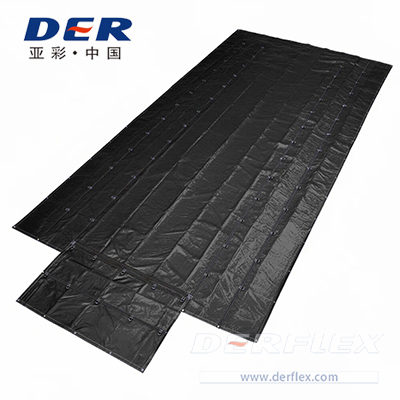
Finished Dump Truck Tarp
Shows the importance of finished geometry, long-edge construction and repeatable replacement layout.
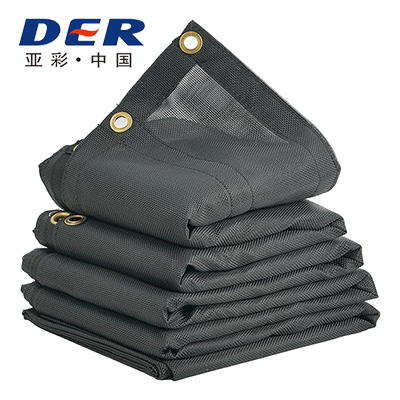
Reinforcement Detail
Representative edge and hardware details for truck tarp programs. Asphalt material selection remains application-specific.
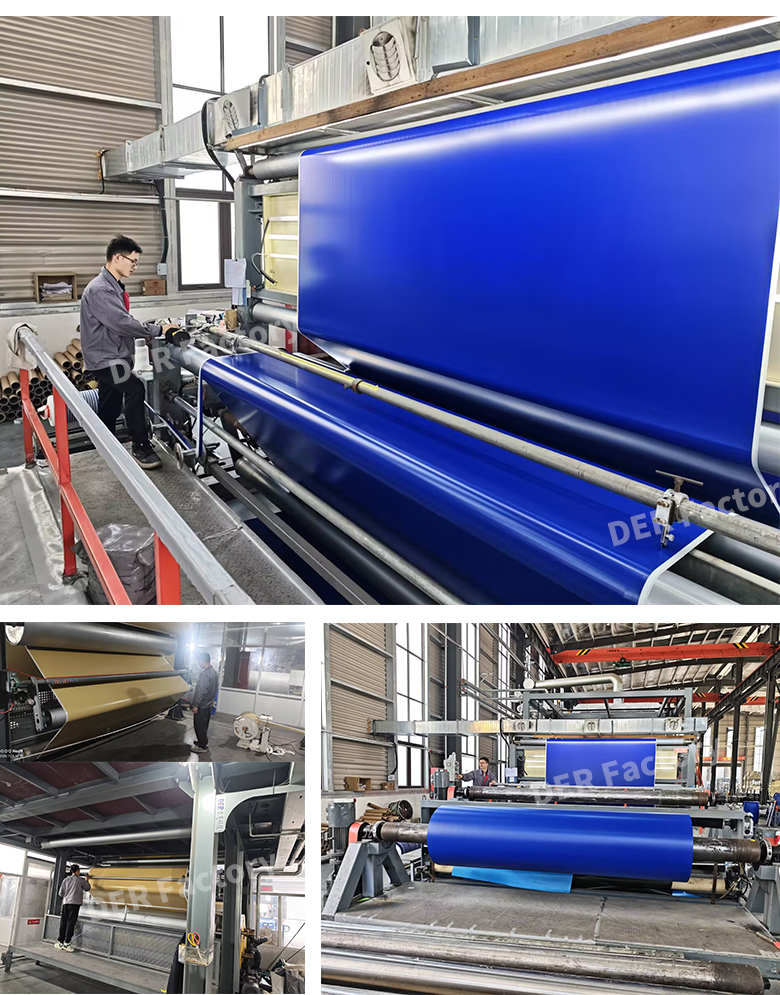
Coated Fabric Manufacturing
DERFLEX manufacturing visual connecting material production with finished truck-tarp development.
Why Source an Asphalt Truck Tarp as a Specification, Not Just a Size
Ready-stock tarp stores are useful when a fleet needs a fast replacement in a known standard size. B2B buyers, however, often need control over material grade, heat requirement, pocket geometry, reinforcement, labels and repeat-order consistency.
DERFLEX approaches truck tarp supply from the material and finished-cover side. Buyers can provide an existing tarp, drawing, system photos or target SKU program, then align the finished construction with the actual hauling environment before production.
For Paving Fleets
Standardize replacement sizes, heat-grade identification and wear-zone details across similar truck bodies.
For Distributors
Build clear product families for asphalt, general vinyl and mesh tarp applications with distinct labels and packaging.
For Tarp-System OEMs
Develop system-compatible covers from drawings with controlled pockets, dimensions, reinforcement and repeat supply.
Questions Buyers Commonly Ask About Asphalt Truck Tarps
Asphalt Truck Tarp Frequently Asked Questions
What tarp is used for hot asphalt?
Hot mix asphalt should use an application-specific asphalt truck tarp selected for the actual heat exposure. If the cover can touch the mix, the tarp material needs a verified direct-contact temperature capability. The final material should also match the truck's tarp system, finished size, pocket layout and hauling cycle.
Can a standard vinyl tarp touch hot asphalt?
Do not assume that a general-purpose vinyl or PVC dump truck tarp can safely touch hot asphalt. Standard truck tarp specifications are often developed around waterproofing, UV and abrasion rather than direct high-temperature contact. Confirm the actual material rating and working temperature before use.
Do asphalt tarps help retain heat?
A well-fitted cover can reduce exposure to wind and weather during transport, which helps limit heat loss from the load. Coverage matters: large gaps or incomplete side / tailgate protection can allow airflow under the tarp and reduce the benefit.
Are mesh tarps suitable for asphalt hauling?
Mesh tarps are mainly selected for airflow and containment of gravel, debris, mulch and similar loads. They are not the normal first choice when heat retention is the main goal. If a mesh or other open structure is being considered for a hot-load application, the specific heat capability and operating method must be reviewed.
How should an asphalt dump truck tarp be sized?
Measure the actual working coverage, roller width, travel length, pocket dimensions, crossbar or pull-bar details and desired side / tailgate overlap. Also provide the truck-body dimensions and photos of the installed tarp system. Do not order from nominal bed length alone.
What temperature rating should I request for an asphalt tarp?
There is no responsible universal rating for every truck and every asphalt load. Provide the maximum expected tarp-contact temperature, whether direct contact can occur, exposure duration and ambient conditions. DERFLEX can then discuss the required material direction and confirm the project specification.
Can DERFLEX manufacture replacement asphalt truck tarps?
DERFLEX can review replacement and OEM tarp requirements from an existing tarp, drawing, truck photos and measured system details. Finished size, pockets, reinforcement, labels and packaging can be developed around the project after the heat requirement is confirmed.
What information is needed for an asphalt tarp quotation?
Send truck or trailer type, tarp system, finished width and length, roller and crossbar dimensions, pocket layout, typical asphalt temperature, direct-contact possibility, haul time, reinforcement requirements, quantity, packaging and destination market. Photos of the old tarp and system are strongly recommended.
Request a Custom Asphalt Truck Tarp Specification
Send the real heat condition and tarp-system geometry first. DERFLEX can then discuss a practical finished-cover direction for fleet replacement, distributor stock or OEM supply.
- Truck / trailer type
- Tarp system type
- Finished width & length
- Roller / crossbar dimensions
- Maximum asphalt temperature
- Direct-contact possibility
- Typical haul time & climate
- Quantity & destination