- tarp
- PVC coated fabrics
- Tarpaulin
- Sunscreen Fabric
- Flexible Ventilation Duct
- TPU coated fabric
- Frontlit banner
- PVC flex backlit
- Blockout banner
- PVC vinyl sticker
- PVC mesh banner
- PVC preformated vinyl
- Reflective vinyl
- Dye Sublimation fabric
- PVC Stretch Ceiling Film
- Super clear pvc film
- TPO coated fabric
- Automotive Protection Film
- Inkjet media
- Textile banner
- Mesh banners
- New Products
- customized PVC tarps products
- PVC Foam Board Sheet
- Profile download

- Services Hotline
+86-021-54361792 / 54361798 - Email
sales@derflex.com

|
|
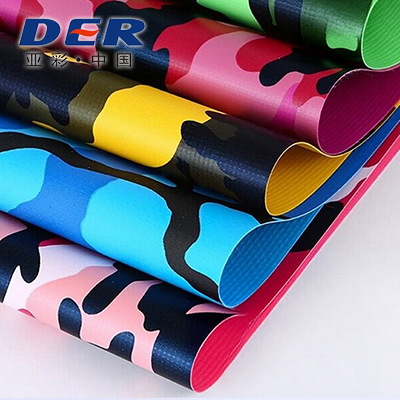
Camouflage Tarp
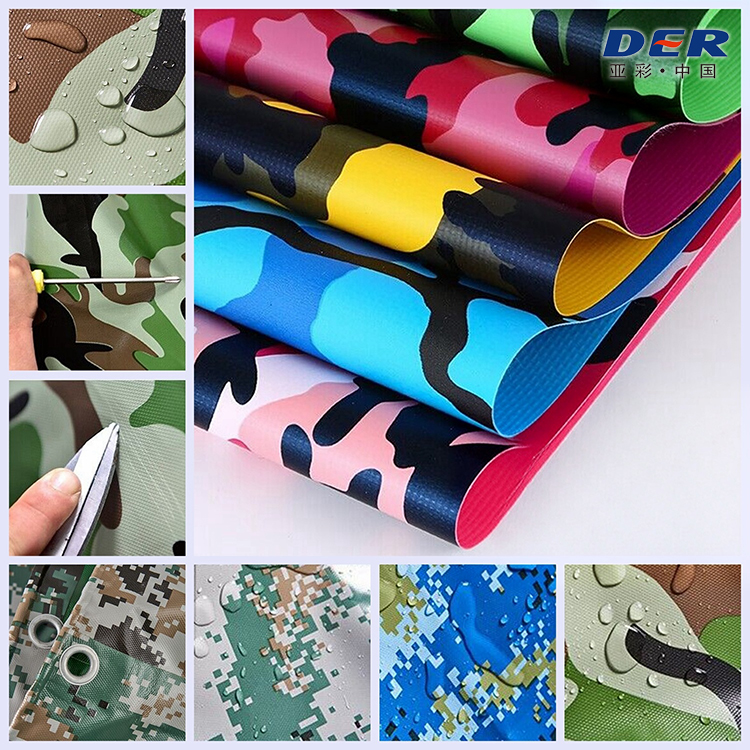
DERFLEX is a camouflage tarp manufacturer and supplier offering custom OEM camouflage tarp solutions for military-style cover, hunting blinds, transport protection, equipment shelter, outdoor applications, and industrial concealment projects.
|
|
||||||||||||||||||||
Custom OEM Camouflage Tarp Supply
Camouflage Tarp Manufacturer for Outdoor Cover, Equipment Protection, Field Shelter, and OEM Custom ProjectsDERFLEX supplies camouflage tarp solutions for buyers who need more than a generic cover with a printed pattern. We support distributors, outdoor equipment brands, project contractors, tactical-style gear developers, vehicle cover buyers, hunting blind manufacturers, and industrial procurement teams that need a camouflage tarp manufacturer able to deliver custom size control, stable material quality, waterproof protection, strong reinforcement, reliable lead time, and commercially realistic OEM support. Whether the requirement is a heavy duty camouflage tarp for equipment storage, a waterproof camouflage tarp for field use, a camouflage tarpaulin for transport shielding, or a custom camouflage tarp program for branded resale, the real purchasing decision usually depends on material structure, long-term durability, pattern consistency, eyelet and hem quality, fabrication compatibility, shipment predictability, and how confidently the supplier can turn an inquiry into a repeatable supply system. That is where DERFLEX positions this page: not as a decorative product brochure, but as a decision-making page for serious B2B buyers. OEM / Custom Waterproof Constructions Heavy Duty Options Pattern & Size Customization Project Delivery Support Documentation On Request Application-Led DevelopmentWe do not treat every camouflage tarp as the same product. Outdoor concealment, transport cover, field shelter, and industrial equipment protection require different balance points in fabric weight, flexibility, reinforcement, and finishing. OEM & Private Label ReadyCustom pattern layout, accessory selection, packing logic, carton marking, and commercial labeling can be aligned with distribution, brand, or project requirements. Lead Time AwarenessBuyers care about delivery certainty as much as material performance. Sampling, confirmation, production planning, and shipment communication all influence project success. Quality Documentation FocusWhere required, projects can be developed around requested performance data, market-specific compliance expectations, flame-retardant pathways, or other documentation needs depending on the order specification. What Is a Camouflage Tarp?A camouflage tarp is a protective covering designed to combine weather resistance with a lower-visibility surface appearance. In practical buying terms, this means the tarp is not only expected to resist rain, dirt, sunlight, and handling stress, but also to present a camouflage pattern or subdued visual profile that blends better into outdoor, agricultural, woodland, logistics, or field-use environments than a plain blue or plain silver tarp. The most common misunderstanding in this category is to think that a camouflage tarp is only a normal tarp with a camouflage print. Experienced buyers know the requirement is broader. The real value comes from how the construction works as a total system: base fabric strength, coating or lamination type, waterproof level, edge reinforcement, eyelet placement, seam logic, foldability, abrasion resistance, and the stability of the camouflage effect after repeated handling and outdoor exposure. A camouflage tarpaulin that looks attractive in a catalog but fails at tie-down points, cracks in cold weather, or loses surface integrity after storage does not perform commercially. Camouflage tarp products are used in a wide range of markets. Outdoor brands use them for shelters, blinds, and camp cover programs. Distributors use them as retail or wholesale products for end users who want practical low-visibility outdoor protection. Contractors may use camouflage-style coverings in landscape, temporary shielding, site storage, or visual screening situations. Agricultural operators may use camouflage-pattern covers when visual integration matters around recreational land or mixed-use properties. Transport and equipment users may need custom camouflage tarp solutions where standard bright-color covers are unsuitable. Some buyers need roll goods; others need finished tarps with hems, ropes, grommets, webbing, or bundled kits. For many commercial buyers, the more important question is not “Do you sell camouflage tarps?” but “Can you make the right camouflage tarp for the actual job?” That includes choosing whether the project needs lightweight flexibility or heavy duty protection, whether the surface should prioritize concealment or easy cleaning, whether the tarp must be folded often or held under continuous tension, and whether the order is a standard-stock type program or a fully custom OEM camouflage tarp supply model. DERFLEX approaches camouflage tarp manufacturing from that practical perspective. Instead of reducing the discussion to pattern alone, we focus on matching end-use performance to structure, finish, and delivery. That gives buyers a better route to a camouflage tarp supplier relationship that can scale beyond a one-time order. Need a camouflage tarp supplier that can support OEM, custom sizing, and dependable production communication?Send your target dimensions, fabric preference, application, reinforcement requirement, and quantity plan. DERFLEX can review the project direction and help structure a more commercially workable supply option. Key Features Buyers Expect from a Competitive Camouflage Tarp Manufacturer1. Waterproof Protection That Matches Real UseA camouflage tarp is often purchased because the end user needs both concealment and weather protection. That means water resistance is not a side note. Buyers should review the full construction, including coating method, seam direction, edge finish, and whether the tarp is intended for draped cover, tensioned shelter use, temporary ground protection, or repeated folding. A waterproof camouflage tarp should perform in actual working conditions, not only in simple product claims. 2. Heavy Duty Strength Where It MattersA heavy duty camouflage tarp should resist tearing at tie-down points, protect equipment under wind exposure, and survive repeated handling during transport or storage cycles. Fabric weight alone is not enough. Buyers should look at reinforcement logic, base cloth stability, weldability or sewing compatibility, and the overall balance between strength and usability. 3. Pattern Consistency and Surface QualityFor camouflage tarp programs, appearance is not just cosmetic. Inconsistent print, poor pattern registration, or obvious batch variation can reduce resale value and create quality complaints. Commercial buyers usually need a cleaner, more repeatable visual result across lots, especially in OEM or distribution business. 4. Customization Beyond Standard SizesSerious buyers often need custom camouflage tarp sizes, special hemming, eyelet spacing, reinforced corners, webbing points, or specific folding logic. A supplier that can only offer standard retail sizes is not the same as a manufacturer that can translate custom requirements into scalable production. 5. Outdoor Durability and Storage StabilityOutdoor tarp performance depends on UV resistance, coating behavior, abrasion tolerance, and how the material reacts after folding, transport compression, and temperature variation. The right camouflage tarpaulin structure should fit the service life expectation instead of simply chasing the lowest initial cost. 6. Supply Reliability for Repeat BusinessMany importers and project buyers discover that the biggest problem is not product discovery but repeated execution. A usable camouflage tarp supplier should be able to communicate clearly, support samples, align details, and keep quality more stable from order to order. That matters far more than a low first quotation that becomes difficult to repeat. Why this matters commerciallyBuyers searching for terms such as camouflage tarp manufacturer, camouflage tarp supplier, custom camouflage tarp, waterproof camouflage tarp, or heavy duty camouflage tarp are usually already beyond the casual browsing stage. They are comparing reliability, not just browsing patterns. They need a product that can be specified, quoted, delivered, and sold or used without avoidable quality arguments later. That is why the strongest pages in this category must speak to procurement reality: customization, documentation, durability, lead time, and repeatability. Technical SpecificationsThe following ranges are typical customization references for camouflage tarp development. Exact values depend on material selection, end use, finishing method, and order specification.
Note: specification ranges shown here are intended for inquiry evaluation and product planning. Final values should be confirmed against approved samples and production requirements. Applications of Camouflage Tarp in Commercial and Project SupplyOutdoor Shelter and Camp CoverCamouflage tarp is commonly used for temporary shelters, shade cover, outdoor camp protection, rainfly systems, and field-side weather barriers. In these situations, buyers often need a balance between portability, waterproof behavior, fast deployment, and acceptable concealment aesthetics. Equipment and Vehicle ProtectionEquipment stored outdoors often needs cover systems that reduce visual contrast while protecting against rain, dust, and UV exposure. A heavy duty camouflage tarp can be used for generators, transport equipment, trailers, tools, machinery, and staged project materials. Hunting Blind and Outdoor Gear ProgramsOutdoor product brands and distributors may use custom camouflage tarp materials in blinds, screen walls, temporary hide systems, and shelter kits where appearance and practical durability must both serve the final customer. Transport and Storage ShieldingSome logistics and transport buyers want a tarp that reduces visibility of covered cargo or creates a more suitable appearance in outdoor operations. In these cases, customization of cut size, fixation points, and reinforcement is often more important than retail-style standard sizing. Land Management and Site ScreeningCamouflage tarpaulin products can also be used for temporary screening, material zoning, outdoor storage control, and visual separation in projects where low-profile appearance is preferred over bright industrial colors. OEM and Distribution ProgramsImporters, wholesalers, and private label brands may require an OEM camouflage tarp manufacturer to develop repeatable lines with packaging control, accessory consistency, and commercially correct product positioning for their target market. Application fit is more important than product namingOne of the most common procurement mistakes is selecting a tarp by keyword alone. A buyer may search for military camouflage tarp, waterproof camouflage tarp, camouflage tarpaulin supplier, or custom camouflage tarp manufacturer, but the right solution depends on how the tarp will be fixed, folded, tensioned, cleaned, stored, and shipped. A product intended for light outdoor shelter is not automatically the same as one intended for equipment storage or distribution resale. DERFLEX works best with buyers who specify the job first and the naming second. Looking for a custom camouflage tarp with OEM finishing, packaging, or project dimensions?Share your target application, quantity estimate, size plan, and whether you need finished tarps or roll material. That lets the project be quoted more accurately from the start. Why Choose DERFLEX as Your Camouflage Tarp SupplierWe Think in Terms of Supply Systems, Not Single PiecesMany buyers do not need a one-off tarp. They need a supply path that works for repeat orders, resale, project delivery, or OEM integration. DERFLEX focuses on converting inquiry details into a structured product plan, which is more useful to commercial buyers than offering only a small list of fixed stock items. We Support OEM and Custom DevelopmentCustom size, finished details, roll goods supply, accessory arrangements, packing format, and private label preparation can all influence the commercial value of a camouflage tarp line. DERFLEX supports these details because they are often the difference between a usable sourcing program and a generic commodity purchase. We Understand Material Performance Trade-OffsEvery buyer wants strong performance, but different applications prioritize different things. Some need easier handling and foldability. Others need a heavier construction for long-term cover. Others prioritize appearance consistency across batches. We help structure the product around the use case instead of forcing the use case into one standard product. We Value Lead Time Control and CommunicationThe real sourcing experience depends on how well details are confirmed and how clearly timelines are managed. Buyers often return to a supplier not only because the product was acceptable, but because the process was understandable, responsive, and repeatable. We Can Work Toward Market-Specific Documentation NeedsDepending on the project, buyers may need support around requested performance data, flammability direction, chemical compliance pathways, or other application-related documents. These should be discussed early so the product structure aligns with the intended market instead of being corrected later. We Help Buyers Build a More Defensible ProductWhen a camouflage tarp is being sold onward by a distributor or used in a visible commercial project, product consistency, packaging control, finish quality, and reasonable technical positioning all matter. DERFLEX supports buyers who want a stronger product story and a more dependable fulfillment model. Common buyer concerns we are prepared to discussDERFLEX vs. Generic Online Tarp SellersDERFLEX Manufacturing ApproachGeneric Seller or Basic Stock ModelBuyers who compare suppliers carefully often realize that the strongest commercial option is not always the lowest first quote. A camouflage tarp supplier becomes valuable when they can help avoid rework, limit complaints, stabilize delivery, and make the product easier to resell or use. That is especially true when the order includes non-standard size requirements, accessory integration, or brand-specific packaging. This is also why buyers often review adjacent pages before finalizing their sourcing decision. If your camouflage tarp project overlaps with transport, industrial cover, or high-strength outdoor shielding, you may also want to compare related solutions such as truck tarp manufacturer, waterproof tarp, or PVC tarp material references. These internal links help procurement teams understand which construction logic belongs to which use case. Case Study: Custom Camouflage Tarp Program for an Outdoor Equipment Distribution ProjectA buyer serving an outdoor equipment distribution channel needed a custom camouflage tarp program that could sit between low-end retail tarps and expensive niche shelter fabrics. The target was clear: the product needed to be commercially attractive, visually consistent, and practical enough for real outdoor use. The buyer was not just sourcing a tarp. They were building a product line that needed dependable cost control, marketable appearance, and repeat order confidence. The first challenge was specification drift. Early samples from several sources looked acceptable in photos but varied too much in handling feel, edge finishing, and pattern presentation. Some materials folded well but felt too light for the intended sales positioning. Others had enough weight but lost flexibility and made the final packed product feel bulkier than the market expected. Eyelet layout and corner reinforcement also differed widely from supplier to supplier, which created packaging and performance concerns. The project was restructured around a more application-based review. Instead of asking only for “camouflage tarp,” the buyer clarified the target use profile: outdoor seasonal cover, moderate handling frequency, good waterproof confidence, stronger-than-basic edge finish, and a camouflage appearance suitable for wholesale resale. Once the end-use logic was clearer, the product direction became easier to define. The buyer could evaluate where to position the line between portability, strength, and price. The final development pathway focused on a custom configuration that balanced practical weather resistance with a more dependable finishing standard. The project also required packaging and labeling adjustments because the buyer intended to sell through multiple channels. That meant the tarp itself was only part of the job; the program also had to fit freight planning, warehouse handling, and onward merchandising requirements. What made the project commercially workable was not one dramatic technical feature. It was the combination of better material-fit judgment, clearer sample alignment, and stronger execution discipline. The buyer gained a camouflage tarp solution that was easier to quote, easier to communicate to their customers, and better positioned for follow-up orders. That is a typical reason procurement teams prefer a manufacturer-style sourcing relationship over a purely transactional seller model. For similar buyers, the lesson is simple: the best camouflage tarp project usually starts with a structured requirement discussion rather than a rushed price comparison. Once dimensions, use environment, reinforcement expectations, packaging goals, and distribution logic are clear, the product becomes far easier to optimize. How to Choose the Right Camouflage Tarp ManufacturerBuyers looking for a camouflage tarp manufacturer often search by keywords first, but the supplier decision should be made by process quality. An experienced buyer usually asks: Can this supplier understand the real job? Can they recommend the correct structure instead of blindly quoting? Can they communicate fast enough to keep the project moving? Can they deliver repeatable quality instead of a one-time good sample followed by unstable bulk production? Start with application clarity. Is your tarp meant for field shelter, equipment cover, hunting use, transport cover, or resale? What is the exposure pattern: long-term outdoor placement, repeated folding, short seasonal use, or frequent loading and unloading? These questions determine what “good performance” really means. Without that clarity, quotations become difficult to compare because each supplier may be assuming a different product level. Then review customization capacity. If you need only a stock tarp, many sources may be acceptable. But if your business requires specific dimensions, reinforcement points, camouflage appearance control, private label packaging, bundled accessories, or custom carton information, you need a supplier with actual manufacturing flexibility. A supplier that can develop a workable OEM camouflage tarp program gives you more control over market positioning and customer experience. Documentation and compliance planning should also be considered early. Some buyers need only basic performance confidence. Others need documented pathways related to outdoor use, flame-retardant requests, chemical compliance expectations, or region-specific import requirements. Even when these requirements are not final at the beginning, they should be discussed up front so the chosen material system does not create later obstacles. Finally, judge reliability by responsiveness and detail discipline. A supplier that asks the right questions about use, finish, quantity, and delivery is often more valuable than one that answers immediately with a low but generic number. The right camouflage tarp supplier helps reduce decision risk. Over time, that is often what creates better margins and fewer problems for the buyer. Have a camouflage tarp inquiry with custom size, OEM packaging, or application-specific performance targets?DERFLEX can review your specification direction and help you move from a broad request to a more actionable product plan. Frequently Asked QuestionsWhat is a camouflage tarp used for?A camouflage tarp is used for concealment-oriented cover and weather protection in outdoor, transport, equipment storage, field shelter, hunting, land management, and project shielding applications. The exact use determines what material weight, finish, and reinforcement structure are appropriate. Can DERFLEX customize camouflage tarps for OEM orders?Yes. DERFLEX can support custom camouflage tarp development including dimensions, pattern direction, material level, edge finish, eyelets, reinforcement, packaging, and private label considerations. The best results come when the intended application and quantity plan are shared early. Are camouflage tarps always waterproof?Not every camouflage tarp should be treated as identical. Waterproof performance depends on the chosen construction, coating quality, seam or panel structure, and use condition. If waterproofing is a key requirement, it should be clearly stated during product planning. What is the best material for a heavy duty camouflage tarp?For many heavy duty camouflage tarp requirements, reinforced constructions such as PVC coated polyester are a practical option because they can provide strong tear resistance, good outdoor durability, and flexible fabrication possibilities. However, the best material still depends on weight target, handling frequency, and project budget. Can camouflage tarps be used for transport or equipment cover?Yes. Camouflage tarpaulin products are often used for transport shielding, equipment cover, machinery protection, and outdoor storage. In such cases, buyers should pay particular attention to tie-down stress, abrasion zones, reinforcement design, and size fit. Do you offer finished tarps as well as material supply?Projects may be structured as finished tarps, semi-finished components, or roll material depending on the buyer’s manufacturing model. This should be confirmed with the inquiry so the quotation and production pathway match the actual purchasing need. How can I choose the right camouflage tarp supplier?Review the supplier’s ability to understand the application, offer useful customization, maintain communication quality, support sampling, manage delivery, and align product details with your commercial objective. The strongest supplier is the one that helps reduce sourcing risk while keeping the program scalable. Related Internal LinksIf your camouflage tarp inquiry overlaps with transport cover, high-strength outdoor protection, or material selection decisions, the following related pages can be used as internal link expansion points within your site structure: These links are intentionally close to the core purchase intent of a camouflage tarp page. They help support both user navigation and broader site-level topical relevance around tarp manufacturing, custom supply, transport cover, and material selection. |
||||||||||||||||||||