Abrasion & Surface Wear
High-contact seat zones should be reviewed for rubbing, grain retention and visible surface change under the buyer’s selected test method.



 Automotive Interior Material Program
Customizable PU leather for car seats, side bolsters, headrests, armrests, door inserts and coordinated cabin trim.
DERFLEX helps automotive interior suppliers, seat-cover manufacturers, distributors and product developers define the surface, backing, hand feel, color, processing behavior and test pathway before bulk roll production.
Center panels, bolsters, headrests, armrests, door inserts and seat covers.
Nappa-inspired, pebbled, smooth, matte, perforated or custom embossed directions.
Review for cutting, sewing, quilting, lamination, wrapping and foam bonding.
Sample development, color matching, bulk rolls, labels and export packaging.
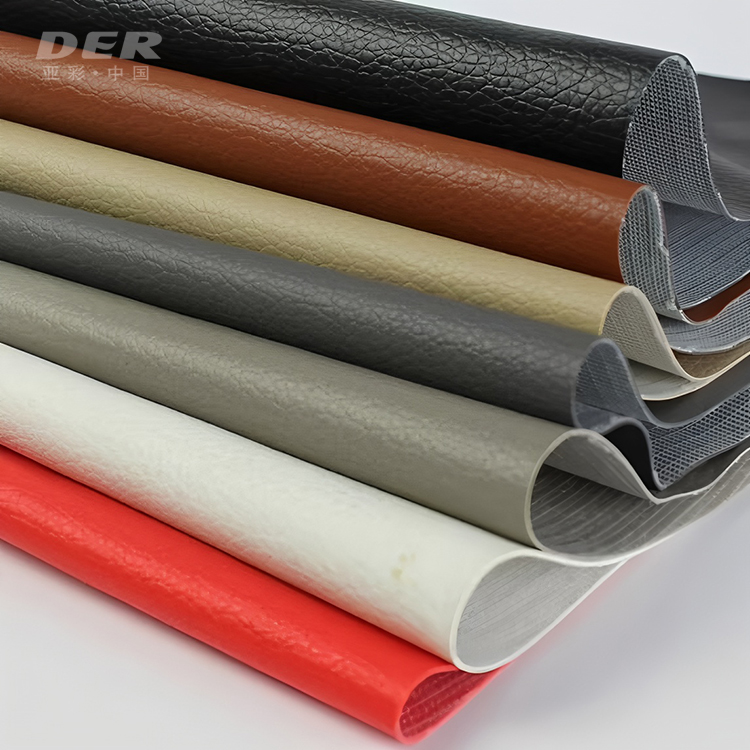
Car seat PU leather is repeatedly compressed, stretched, rubbed, heated, cooled, cleaned and exposed to body oils. The same seat may also combine tightly curved bolsters, stitched seams, perforated center sections, bonded foam and decorative panels. A material that looks acceptable on a small swatch can behave differently after sewing, stretching or repeated cabin use.
For this reason, PU leather for car seats should be selected around the complete production route. Surface chemistry affects touch and cleanability. Backing construction affects stretch, seam retention and dimensional stability. Thickness and foam pairing affect the visual profile of quilting. Grain depth and gloss affect how color appears under cabin lighting.
DERFLEX approaches automotive PU leather as an engineered roll-material program. Buyers can discuss the visual target, process method, intended vehicle category, test requirements and repeat-order expectations before confirming a commercial specification.
“PU leather” describes a broad material category rather than one fixed construction. Two rolls can have similar grain and color but different elongation, seam behavior, resistance to visible deformation and suitability for tight-radius upholstery.
Seat centers may need a softer touch or perforation route. Side bolsters may require stronger abrasion and stretch control. Door inserts may prioritize wrapping behavior and surface appearance. Commercial vehicle seating may place more emphasis on cleanability and frequent-use durability.
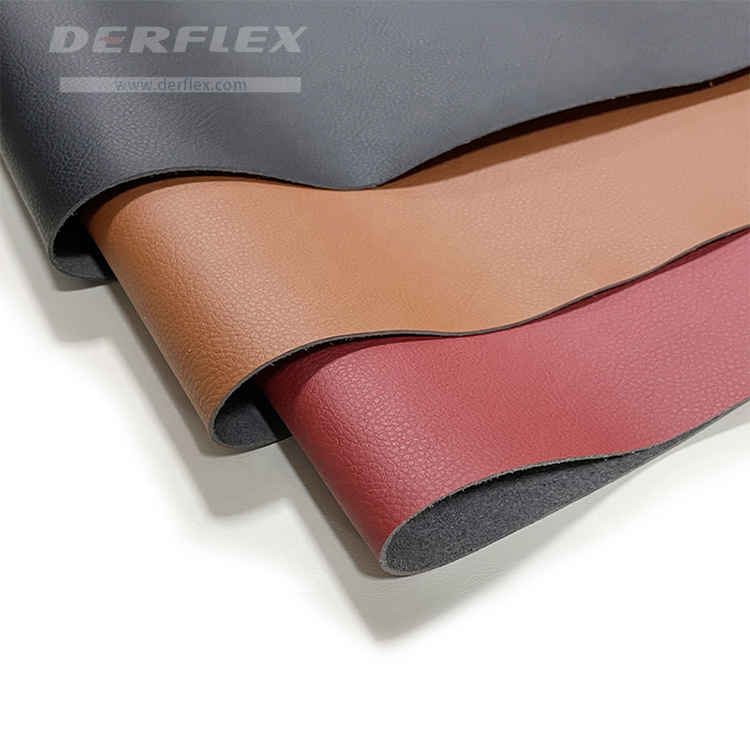
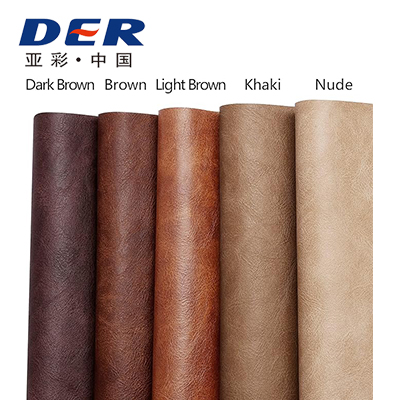
The images below show DERFLEX synthetic leather material directions. Final color, grain, backing and performance specification should be confirmed through samples and project documents.

Each point below is a specification route, not a universal claim for every grade. Required values and test methods should be agreed before production.
High-contact seat zones should be reviewed for rubbing, grain retention and visible surface change under the buyer’s selected test method.
Repeated folding and movement can expose weakness in the coating or backing. Flex targets should reflect seat geometry and climate.
Heat and humidity can affect some PU constructions over time. The formulation and aging route should match the market environment.
Interior materials can receive prolonged sunlight through glass. Color change and surface aging should be evaluated when relevant.
Enclosed cabin programs may require defined odor, volatile-emission or fogging tests. The exact method must be provided by the buyer.
Backing choice influences cutting, stitching, perforation and seam retention, especially around bolsters and tensioned cover sections.
Approved cleaners, contact time and cleaning frequency should be considered rather than relying on a general “easy-clean” description.
Target-market or customer-specific requirements should be confirmed in writing. Testing applies to the approved material construction.
The table is designed to prepare a technical inquiry. Final values depend on the intended seat zone, manufacturing process, quantity, market and testing requirements.
| Product Description | Car seat PU leather, automotive PU synthetic leather, faux leather roll material for seat and interior trim programs. |
|---|---|
| Surface Direction | Nappa-inspired, pebbled, smooth, matte, semi-matte, low-gloss, perforation-ready, two-tone or custom embossed options. |
| Backing Options | Knitted, woven, nonwoven, polyester, microfiber or application-specific backing selected around processing and performance needs. |
| Thickness & Hand Feel | Custom direction for soft seating, firmer trim wrapping, quilted cover construction or selected high-contact zones; confirm by sample. |
| Color Development | Standard colors, custom color matching, coordinated interior palettes, sample-based matching and repeat-order color control. |
| Processing Routes | Cutting, sewing, stitching, quilting, perforation, foam bonding, lamination, embossing, wrapping and upholstery fabrication. |
| Performance Routes | Abrasion, flexing, hydrolysis, UV/color fastness, tear/tensile, seam strength, cleanability, odor/VOC/fogging, flammability or restricted-substance testing by project. |
| Applications | Seat center panels, side bolsters, headrests, armrests, seat backs, door inserts, console trim and aftermarket seat covers. |
| Supply Form | Sample swatches, development rolls, bulk roll goods, custom roll length, labels, carton marks and export-oriented packaging. |
| Approval Basis | Approved master sample, signed specification, color standard, test report requirements, packaging standard and order confirmation. |
Seat and trim zones experience different stress, shaping and appearance requirements. Material development can be organized by component rather than forcing one roll specification across every surface.
Comfort-oriented hand feel, visual consistency, optional perforation route and compatibility with quilting or foam layers.
High-contact rubbing zones where abrasion, stretch control, seam layout and visible deformation require attention.
Touch, cleanability, smooth wrapping and repeatable grain appearance for close-contact cabin components.
Wrapping behavior, backing stability, bonding compatibility and coordinated color with seat upholstery.
Cut-and-sew efficiency, color range, decorative stitching, stock or custom programs and packaging requirements.
Frequent-use seating for taxis, buses, trucks or fleet interiors where cleaning and durability routes may take priority.
Low-gloss surfaces, contrast colors, perforated patterns and small-batch visual development for specialist projects.
Related surface families for seats, panels, consoles and headrests with controlled grain and color direction.
The suitable option depends on cabin position, touch target, processing route, durability expectations, compliance pathway and project budget.
| Selection Factor | PU Leather | PVC Leather | Microfiber PU | Silicone Leather |
|---|---|---|---|---|
| Typical Direction | Balanced soft touch, design flexibility and upholstery processing. | Practical cleanability, durable surface direction and cost control. | More structured backing and refined synthetic-leather positioning. | Advanced surface story for selected high-visibility or easy-clean programs. |
| Hand Feel | Can be developed from soft and supple to firmer trim grades. | Often firmer, depending on coating and backing. | Can offer a fuller, more leather-like structure. | Often evaluated for smooth, low-gloss and refined touch. |
| Processing Focus | Sewing, quilting, perforation, foam bonding and wrapping. | Cutting, sewing and high-volume upholstery or trim applications. | Premium cut-and-sew, wrapping and selected molded or structural uses. | Project-specific processing and bonding should be validated. |
| Buyer Priority | Comfort, appearance, color range and application-matched structure. | Durability direction, maintenance and commercial cost. | Strength, stability and upgraded tactile expectations. | Cleanability, low-odor direction and differentiated material narrative. |
| Important Note | Hydrolysis, aging and cabin test route should be specified. | Plasticizer, touch and cold-flex expectations should be reviewed. | Construction and performance vary widely by microfiber system. | Do not assume all silicone-labelled materials share one composition. |
A staged process helps connect the approved visual sample with manufacturing behavior, test requirements and future repeat orders.
Define seat zone, vehicle category, use environment, processing route and expected order volume.
Align grain, color, gloss, touch, perforation and visual relationship with other cabin materials.
Select backing, softness, thickness, stretch and lamination route around the manufacturing method.
Review appearance, cutting, sewing, wrapping, bonding and required physical or chemical tests.
Use a development or pilot roll when needed to check upholstery behavior before commercial production.
Control approved sample, specification, color standard, roll packing and reorder documentation.
Automotive upholstery programs can reveal small differences across adjacent panels, repeated seat sets and later production batches. A practical quality plan should define what is visually checked, what is measured and which signed reference controls production.
DERFLEX supports project discussions around surface inspection, color direction, backing condition, thickness, roll presentation and test-document requirements. The agreed control plan should reflect the purchased grade and application rather than generic catalogue language.
These related pages help purchasing teams compare material systems, upholstery directions and technical selection factors before finalizing car seat PU leather.
Practical answers for automotive upholstery buyers, seat-cover producers and synthetic leather distributors.
PU leather can be suitable for car seats, seat covers, headrests, armrests and interior trim when the construction is matched to the application. Buyers should confirm backing, abrasion, flexing, aging, color stability, cabin-material requirements and the final upholstery process rather than selecting only by appearance.
Automotive-use material may require a more specific combination of surface wear, flexing, hydrolysis resistance, UV or color stability, odor/VOC/fogging route, flammability pathway and seam performance. The exact requirements depend on the vehicle program and target market. Ordinary furniture upholstery specifications should not automatically be treated as automotive specifications.
DERFLEX can discuss custom color matching, embossed grain, matte or low-gloss finish, hand feel, backing, thickness direction, perforation route, roll size, labels and packing. Custom development is subject to sample review, order quantity and production feasibility.
Common project discussions may include abrasion, flexing, tear, tensile, seam strength, hydrolysis or heat-aging, UV/color fastness, cleaning response, odor, VOC, fogging, flammability and restricted substances. Buyers should provide the exact test method, conditioning and target value because different standards are not interchangeable.
Any coated leather can fail if the structure, formulation, backing or use environment is unsuitable. Heat, humidity, repeated flexing, aggressive cleaners, abrasion and poor upholstery design can influence aging. A suitable grade, written test route and sample validation help reduce risk, but no material should be judged only from a small visual swatch.
Please send the vehicle or product type, seat position, reference sample or photo, desired grain and color, backing or stretch requirement, thickness direction, roll width, estimated quantity, required test methods, destination and packaging needs. A physical sample is useful when matching an existing interior collection.
Share your seat application, reference surface, processing method, performance requirements and expected quantity. DERFLEX can review a suitable PU leather construction and sampling path for your project.
Product suitability and compliance depend on the final approved grade, written specification, test method, processing conditions and end-use environment.