A hard-wearing woven cover
Natural cotton duck offers a familiar soft textile feel, can be stitched and repaired, and suits jobs where a fully sealed sheet is not necessary. Moisture, shrinkage and cleaning still need attention.



 Industrial textile knowledge
Yes—manufacturers still make canvas tarps. Cotton duck, treated woven canvas and polyester canvas continue to serve machinery, construction, farm and storage applications. They have not disappeared: buyers simply have more material choices. The real decision is whether you need a breathable textile cover, a water-repellent finished canvas tarp or a reliably waterproof PVC/vinyl barrier. This guide explains the differences, shows where canvas remains useful and helps distributors and industrial buyers specify a repeatable order.
Industry & procurement guide · Updated November 6, 2026
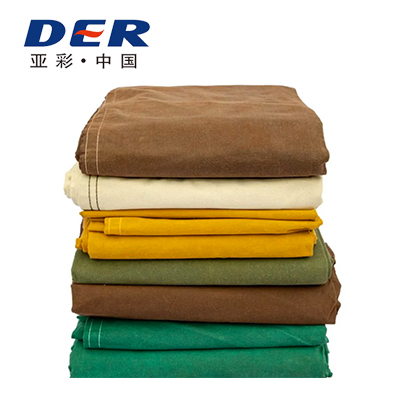
Short answer: yes, cotton canvas tarps are still being made and sold. Modern suppliers also offer water-repellent treated cotton, cotton/polyester blends and polyester canvas. Buyers choose them primarily for textile handling, breathable cover design and abrasion-prone jobs—not because canvas is automatically the best waterproof material.
Canvas once served as a general-purpose cover for wagons, equipment and loads. The arrival of inexpensive polyethylene sheets and coated PVC fabrics expanded the market rather than eliminating woven canvas. Today, a contractor might use a light polyethylene sheet for one-time protection, a wax-treated canvas cover for reusable breathable storage, and a welded PVC cover where consistent water resistance is essential.
Current suppliers still offer untreated cotton duck and treated canvas products. The continued availability of both standard and made-to-order tarps is useful evidence that canvas remains an active commercial category. But the word canvas alone is not a technical specification: polyester canvas can look much like cotton duck, and a coated canvas cover behaves differently from an uncoated textile.
Natural cotton duck offers a familiar soft textile feel, can be stitched and repaired, and suits jobs where a fully sealed sheet is not necessary. Moisture, shrinkage and cleaning still need attention.
Modern B2B orders specify fiber, dry or finished weight, treatment, grommet positions, finished dimensions, packing and acceptance samples—not just the label “heavy duty canvas.”
Different coverings are often marketed under the same canvas name. Distinguish the textile and the treatment before comparing cost or performance.
| Cover construction | What it offers | Main limitation | Where to start |
|---|---|---|---|
| Untreated cotton duck canvas | Woven textile feel; absorbs moisture; can be sewn. | Not a reliable rain barrier; may shrink and mildew if stored damp. | Indoor dry dust covers, general protective textiles. |
| Waxed, oiled or water-repellent canvas | Traditional handling plus improved initial resistance to rain and splashes. | Finish can wear, transfer or require care; seams and ponding remain concerns. | Reusable equipment, machinery and covered outdoor storage. |
| Polyester or blended canvas | Canvas-style woven material with properties depending on fiber and finish. | Do not assume cotton, breathability, shrinkage or water resistance. | Cost- and handling-sensitive industrial cover programs. |
| PVC-coated polyester / vinyl tarp | Coated waterproof fabric; suitable for fabricated, weldable barriers. | Typically lower vapor permeability; ventilation may be needed underneath. | Repeated rain exposure, transport covers, waterproof industrial protection. |
Material differences are general design characteristics, not test results for a specific DERFLEX SKU. Waterproof performance of a finished cover depends on seams, penetrations and installation as well as the main sheet.

Fabric appearance alone cannot establish the fiber content or waterproofing. In this tarp photograph, the hem and metal eyelets are visible; those details are relevant because finished covers commonly fail first at fastening interfaces, poorly supported corners or seams.
For actual sourcing options, review DERFLEX canvas tarps, canvas tarpaulin and its oiled canvas tarp range.
One common purchasing mistake: comparing an “18 oz treated” tarp to a “12 oz untreated” tarp as if both figures describe identical base fabrics. Ask whether the mass was measured before or after treatment.
Canvas is worth considering when repeated handling, fabric-like drape and some air exchange are more important than creating a fully sealed rain barrier. The way the cover is installed still matters: a breathable textile wrapped tightly around a wet object can trap moisture, so leave suitable airflow paths and keep sensitive materials off wet ground.
| Use case | First material to evaluate | Critical approval question |
|---|---|---|
| Workshop machines and stored equipment | Untreated or treated canvas | Is air movement needed, and could a finish leave residue on sensitive surfaces? |
| Lumber, tools and covered construction materials | Treated canvas | Can water drain, and are seams, edges and sharp-contact points protected? |
| Farm equipment under intermittent exposure | Treated canvas or PVC, depending on climate | How long will the cover be wet, and can it be dried before storage? |
| Outdoor cargo exposed to sustained rain | Engineered PVC/vinyl tarp | Are seam waterproofing and the full tie-down configuration specified? |
| Economical short-term site covering | PE/poly tarp | Will the expected use be temporary enough for its wear and UV performance? |
Useful for selected stored equipment or lumber applications where vapor accumulation is a concern. The storage layout must still allow ventilation.
For continuous rain, weldable joints or wash-down, investigate PVC tarpaulin with a documented fabrication plan.
Fabric selection is only the start. Hem design, grommets, tension, support, drainage and cleaning can change service performance.
For a deeper comparison, see the DERFLEX canvas tarps vs. vinyl tarps guide. For a broader overview of protective sheet families, explore the industrial tarp selection page.
In U.S. catalogs, “10 oz canvas” often means 10 ounces per square yard, approximately 339 g/m². This is area mass, not a thickness measurement. Confirm whether quoted weight includes treatments, added layers or backing.
A cut-size tarp can become smaller after hemming, seams and finishing. Ask the supplier to state both cut size and finished size, with tolerance and any predicted post-wetting dimensional change.
Two canvas tarps with the same nominal weight may have different fiber blends, weave densities, tear behavior and flexibility. For repeat orders, approve an identified reference sample and define the measurement method before asking competing suppliers to quote the same size mix.
Water-repellent treatment is another variable, not a permanent guarantee. The proofing may change with folding, surface abrasion, washing and weathering. Ask for a method and acceptance criterion relevant to your actual exposure instead of relying on generic “waterproof,” “mildew-proof,” “fireproof” or “all weather” labels. Where a flame-retardant claim is required, request the relevant report for the exact material and finished configuration.
For area-weight terminology used in a related textile category, DERFLEX's canvas weight guide explains oz/yd²-to-GSM conversion; note that painter's drop cloths and treated outdoor tarps have different performance requirements.
You can still buy canvas tarps in standard or custom programs. The useful question is how to turn an imprecise product name into a measurable, repeatable purchase specification.
Before you order: avoid long-term standing water on canvas, allow wet covers to dry fully before folding and check whether wax, oil, pigments or cleaning agents could transfer onto the items being protected. Test against your intended contact surface. For suspended covers, engineer load support separately; eyelets alone are not structural suspension certification.
DERFLEX publishes canvas tarp and canvas tarpaulin product information alongside PVC-coated industrial fabric programs. For buyers, this makes a useful starting point for discussing which textile construction and finishing route fit their application. A material shown on the website is not proof that every size, fiber composition, treatment or hardware combination is immediately available as inventory; final supply scope should be agreed for the requested order.
Explain your target fiber, weight basis, water-repellent treatment, colors, seams, hem details, hardware and finished dimensions. Confirm the material and fabrication route against a sample.
If seam sealing, repeatable rain protection or weldable panels are the priority, review DERFLEX PVC-coated fabric and PVC tarpaulin supply instead.
Distributors building a mixed line can source specifications around the role of each cover: breathable canvas for selected storage and equipment work; PVC/vinyl for verified waterproof functions; and lighter temporary tarpaulins where unit cost and handling are more important than long-term service. The goal is not to replace every tarp with one material, but to keep the product promise aligned with real use.
Paint protection is a separate category: canvas drop cloths for painting are designed around absorbency, floor contact and reusable sheet handling, rather than wax-treated outdoor cargo coverage.
Yes. Cotton duck canvas tarps are still manufactured, including untreated textile covers and water-repellent treated versions. A product called “canvas” is not necessarily cotton, so check the declared fiber composition and approved sample.
Woven canvas offers a textile feel, abrasion resistance and the potential for air movement beneath a cover. It can be useful for equipment and stored materials when condensation control matters, but airflow also depends on how the cover is installed.
Not automatically. Untreated cotton canvas can absorb and transmit water. Waxed or otherwise treated canvas may repel rain, but prolonged wet exposure, ponding and seams can still allow leakage. Use a properly designed PVC/vinyl cover when a waterproof barrier is essential.
It may be, but compare the same measurement basis. Canvas weight is often stated in ounces per square yard, and some sellers quote the base fabric while others quote the treated finished fabric. Request the final GSM or oz/yd², treatment description and tolerance.
Natural-fiber canvas can change dimensions with wetting, drying and cleaning. Confirm shrinkage allowance on a sample, dry the tarp fully before storage, inspect seams and eyelets, and follow the specific treatment care instructions.
DERFLEX publishes canvas tarp, treated canvas and PVC tarpaulin ranges. For a B2B quotation, submit the intended application, desired fiber or coating, finished dimensions, edge construction, quantity and destination. Confirm the available production route and sample before committing to a particular specification.