


 Industrial Tarp Material Selection · Buyer Guide
Is a Canvas Tarp Better Than a Plastic Tarp?
A canvas tarp can be better for breathable equipment and material protection, but not necessarily for keeping out prolonged rain. A lightweight PE plastic tarp is usually the convenient choice for economical, short-term waterproof coverage; reinforced PVC vinyl tarp fabric is often a better starting point for reusable industrial covers, welding and reinforced edges. The right choice depends on moisture control, weather exposure, abrasion, handling cycles and the finished cover design—not the material name alone.
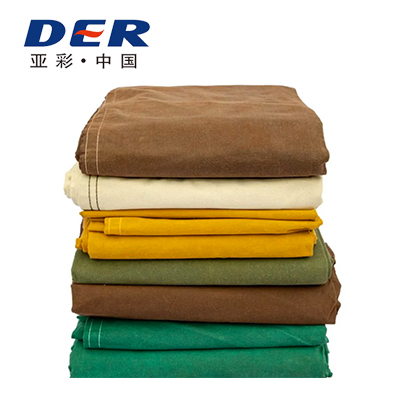
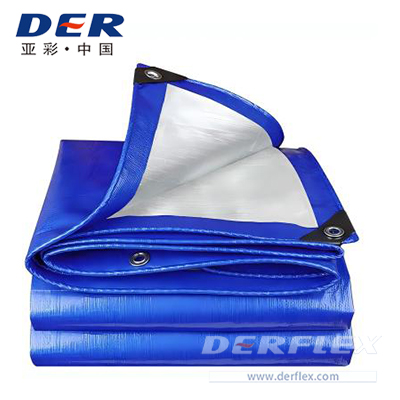
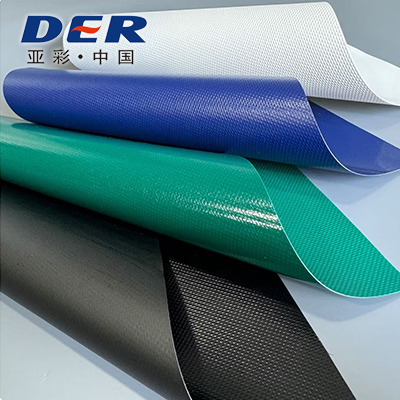
What Does “Plastic Tarp” Actually Mean?
In tarp purchasing, “plastic” often means polyethylene (PE) in consumer catalogs, but industrial buyers may also mean PVC-coated polyester. Those are different constructions. Comparing only canvas with a generic “plastic tarp” hides the most important distinction.
Canvas tarp
Canvas is a tightly woven cotton, cotton-blend or synthetic fabric. Untreated canvas breathes and can absorb water; waxed, oiled or otherwise treated canvas may shed rain for a limited period. The finish can change odor, color transfer, breathability and cleaning requirements. A PVC-coated canvas construction should not be assumed to behave like traditional breathable cotton duck.
PE / poly plastic tarp
Poly tarps typically combine woven polyethylene tape with a polyethylene film or lamination. They provide a non-breathable water barrier when the sheet remains intact. Quality varies widely with weave density, laminate thickness, UV stabilization and the reinforcement at hems and eyelets.
PVC / vinyl tarp
Most industrial vinyl tarps use a woven polyester reinforcement with PVC coating or lamination. The coated material is designed for water protection and can support welded panels, reinforced edges and hardware. Performance depends on the base fabric, coating formula, finish and fabrication—not all PVC products are identical.
Important distinction: a material being waterproof does not mean its entire installed cover is leak-free. Stitch holes, seams, fasteners, low spots and punctures can still admit water. For more detail, see the waterproof vs water-resistant tarp guide.
Canvas vs Poly vs PVC Tarp: Side-by-Side Buying Comparison
This table compares typical material families, not verified test results for any individual SKU. Actual outcomes can change with fabric weight, coating, construction and use conditions.
On narrow screens, swipe horizontally to read all four columns.
| Purchase factor | Canvas tarp | PE / poly plastic tarp | PVC / vinyl tarp |
|---|---|---|---|
| Typical structure | Woven cotton, blend or synthetic textile; treatment optional | Woven polyethylene with a plastic laminate | Polyester scrim with a PVC coating or laminate |
| Rain protection | Usually water-resistant when treated; prolonged wetting needs care | Waterproof sheet when intact; seams and punctures still matter | Waterproof coated sheet; welded seams can support sealed fabrication |
| Breathability | Usually higher, unless blocked by heavy coating | Low | Low in solid-coated grades; add ventilation if needed |
| Abrasion and handling | Good in suitable heavy woven grades; wear and shrinking are grade-dependent | Economy grades can be vulnerable to repeated dragging and wind flap | Often suited to repeated industrial handling with a properly specified grade |
| Weight and wet handling | Often substantial; absorbent grades get heavier when wet | Often light and easy to deploy | Often heavier than economy PE; depends on GSM and construction |
| Fabrication | Sewn hems, patches, textile reinforcement and grommets | Laminate-compatible seams and reinforcements depending on grade | Suitable PVC grades can be hot-air welded; sewing and hardware also possible |
| Outdoor UV exposure | Sun aging depends on fiber, dye, treatment and environment | Depends strongly on stabilization and laminate grade | Can be formulated for outdoor use; inspect supporting weathering data |
| Maintenance | Dry before storage; check treatments and mildew risk | Wash and dry; monitor edge stress and laminate deterioration | Wipe and inspect coating, seams, edge reinforcements and hardware |
| Typical procurement fit | Breathable equipment and selected material covers | Temporary, budget-sensitive, light-duty protection | Reusable truck, construction, storage and OEM industrial programs |
Need a deeper comparison of only the two plastic categories? See vinyl tarps vs poly tarps.
Which Tarp Is Better for Your Application?
Start with the failure you need to prevent: trapped moisture, water entry, tearing, excessive handling weight or early replacement. These practical cases help buyers screen material directions before sample testing.
Breathable canvas may fit
For sheltered machinery or tools, a breathable textile can reduce the chance of trapping condensation. Provide air gaps and avoid tight contact with damp or corrosion-sensitive surfaces. Confirm: treatment, contact compatibility and fabric drying behavior.
PE is often efficient
A poly tarp can give lightweight rain protection when it can be removed soon after use. Do not expect inexpensive grades to tolerate constant wind whipping or sharp projections. Confirm: UV grade, finished size, grommet reinforcement and anchoring.
Consider reinforced PVC
Frequent tension, folding, road spray and edge abrasion favor a tested coated-textile system with reinforced hems and well-placed attachment points. Confirm: wear zones, tie-down layout, seam construction and required compliance documents.
Ventilation is the deciding factor
Canvas can allow moisture to escape, but prolonged rain can saturate the textile. A plastic rain cap with open, ventilated sides may work better than wrapping an entire wet stack. Confirm: drainage slope, side clearance and storage duration.
Specify the whole waterproof cover
PVC can be a practical direction for a durable rain barrier, but add ventilation, drainage and abrasion protection where required. Confirm: sealed seams, geometry, fixing tension, surface contact and periodic inspection.
Canvas or purpose-made drop cloth
Reusable textile covers can suit surface protection and absorb some spills, while non-porous PE may let liquid remain on the surface. Select based on leakage requirements and potential staining. Confirm: clean-contact suitability, absorbency and slip resistance.
For a broader decision process, use DERFLEX’s industrial tarp buying guide.
Four Details That Matter More Than the Word “Heavy-Duty”
1. Moisture path and condensation
Canvas may breathe, but untreated or saturated fabric can also let rain through. Solid PE or PVC blocks air exchange and may require deliberate vent openings. When covering sensitive equipment, assess the temperature and humidity difference, not only the external rainfall.
2. Seams, edges and tie-down loads
Water and mechanical failure often start at a hem, stitch line, grommet or sharp corner. Ask whether size is a cut size or a finished size, whether the edge is reinforced and how the tie-down load is distributed. A strong sheet is not a substitute for a suitable fastening design.
3. Sun, flexing and storage
Unprotected polymer films can become brittle, while coatings and textiles can age or weaken in sun and repeated wet/dry cycles. Compare relevant test methods and exposure conditions; do not translate a lab UV test directly into a promised number of outdoor years. Review UV-resistant tarp selection.
4. Treatment, contact and cleaning
Treated canvas may have an odor, residue or color-transfer risk. Some synthetic coatings require compatibility checks around oils, cleaning agents or hot surfaces. Never assume a treated canvas tarp is safe for food contact, hot work or delicate finishes without the appropriate evidence.
What Should Buyers Compare Before Ordering?
Two tarps with the same nominal weight or advertised thickness may behave differently. Use a comparable specification sheet rather than a single adjective such as “premium” or “extra heavy-duty.”
Material and finished-cover data
- Base material: cotton canvas, polyester blend, PE laminate or PVC-coated polyester.
- Weight: g/m² (GSM) or oz/yd²; 1 oz/yd² is approximately 33.906 g/m². This measures mass per area, not thickness.
- Thickness: specify millimeters or mil separately; 1 mil = 0.0254 mm. GSM cannot be reliably converted to mil from weight alone.
- Dimensions: distinguish cut size from finished size; allow for hems, overlaps, shrinkage or fabrication losses.
- Finish: water repellent, coating type, surface color and treatment behavior where relevant.
Performance and order acceptance
- Mechanical: tensile and tear results with method, direction and units where the application needs them.
- Weathering: outdoor exposure requirement, UV stabilization and cold flexibility conditions.
- Fabrication: seam style, reinforcement, eyelets, D-rings, webbing and connection spacing as applicable.
- Protection goal: water-resistant versus fully sealed, ventilation needs and expected maintenance.
- Commercial: trial sample, quantities per size, colors, label and packaging requirements; confirm supply mode before assuming finished goods.
Do not infer certification: flame-retardant treatments, tested water performance and declared compliance must be matched to the actual material, method and report. A coated-fabric test does not certify a complete installed cover.
Is Canvas or Plastic More Cost-Effective?
Polyethylene commonly wins on initial price and portability. Canvas may deliver value where its textile handling and breathability solve the actual problem. PVC can justify a higher material and fabrication cost when the same cover is deployed, cleaned and reused repeatedly.
Compare price on the same scope
Before judging quotations, normalize the finished area, edge details, grommet layout, packing and delivery terms. A cut-size quote is not equivalent to a finished-size quote, and roll material prices cannot be compared directly with fully fabricated covers.
For fabricators, the usable yield of a material roll, offcuts, welding or sewing time and hardware can matter more than a small difference in base material cost.
Use a replacement-cycle calculation
Indicative cost per use = (purchase + necessary fabrication + planned maintenance + expected replacement costs) ÷ actual uses. Include downtime or cargo risk separately when those costs can be evidenced; do not assume one tarp family always lasts longer.
A supplier that offers the lowest upfront price may still be expensive if the grade is unsuitable. Equally, buying heavy PVC for one disposable task may over-specify the job.
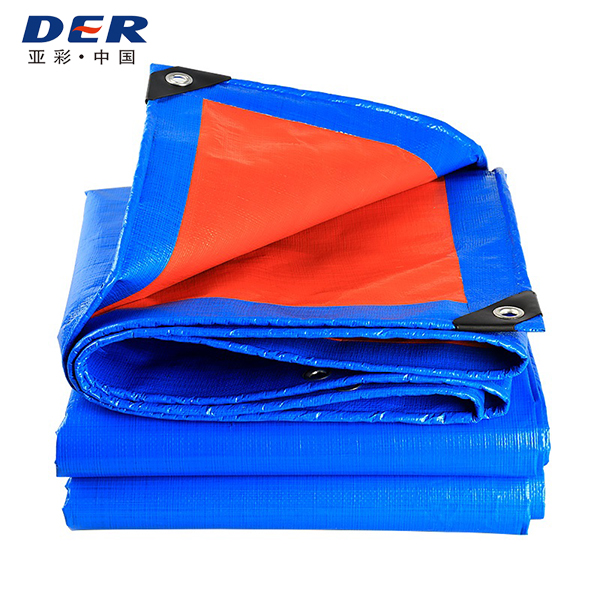
See Real DERFLEX Tarp Materials
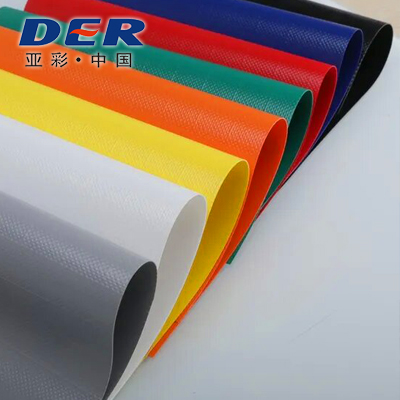
These photographs are existing DERFLEX website materials. They illustrate product families and possible finishing, not guaranteed performance or a particular buyer’s completed project.

How DERFLEX Helps Buyers Select the Right Material
DERFLEX supplies coated-fabric and tarp material options and discusses canvas or treated-canvas cover requirements according to the end use. For repeat procurement, the aim is to agree on one measurable construction and finishing scope before an order is approved.
Match the application
Share whether the job needs a breathable textile, economical PE rain barrier or a reinforced PVC fabrication. A specification for truck movement should not be copied uncritically to a sheltered equipment cover. See DERFLEX canvas tarp supply and PVC tarpaulin fabric options.
Confirm how material will be supplied
Ask about roll goods, cut panels, custom-finished covers and OEM packaging separately. Fabric availability does not mean a frame, installation service or complete structural system is included. Select the dimensions, roll layout and edge work needed for your own conversion process.
Verify the production sample
Review appearance, hand feel, finished size and the intended seam or reinforcement. If the cover must be water-sealed or pass a specified test, approve an appropriate sample or laboratory record for that grade and construction.
Build a repeatable buying brief
Keep the agreed material composition, dimensions, color reference, finish, tolerances, acceptance criteria and packaging together. Changes to treatment or base fabric can affect handling and should be documented for later orders.
A Simple RFQ Checklist for Canvas, PE and PVC Tarps
- Describe what the tarp covers and whether the object is indoors, under a roof or outdoors.
- State the rain, sun, wind and abrasion exposure, including whether the cover is repeatedly removed.
- Send a sketch or photo with finished length, width, shape, openings and planned overlap.
- Confirm whether ventilation or water-tight seams are more important for this job.
- Indicate your preferred material family or ask for a comparison sample set.
- List any edge reinforcement, eyelets, webbing, ropes or D-rings and their positions.
- Provide estimated quantity per size, color, packing style and destination.
- Identify any mandatory test report or compliance requirement before quoting.
For canvas requiring water repellency, also consider the differences between untreated fabric and oiled canvas tarp materials. Supply and approved treatment must be confirmed for the exact specification.
Frequently Asked Questions
Material selection answers for importers, distributors, custom-cover fabricators and end users.
Is a canvas tarp better than a plastic tarp?
Canvas can be better for breathable equipment or material covers where condensation and surface abrasion matter more than complete rain sealing. Polyethylene plastic tarps suit economical temporary waterproof coverage; PVC-coated polyester suits reusable, fabricated heavy-duty waterproof covers. Compare the specific grade and the full cover construction.
Are canvas tarps waterproof?
Untreated canvas is not a dependable waterproof barrier. Water-repellent treatments may improve rain shedding, but seams, prolonged exposure and ponding can allow leakage. Waterproof-coated canvas products exist, although coating choices can reduce the breathability buyers expect from canvas.
Does a plastic tarp cause condensation?
An impermeable PE or PVC sheet can trap moisture when warm, damp air contacts a cooler surface beneath it. Condensation also depends on temperature, humidity, airflow and installation. Use ventilation, stand-offs or a suitable breathable cover when moisture must escape.
Which is stronger: canvas, polyethylene or PVC tarpaulin?
There is no universal winner. Woven canvas can handle abrasion well, heavy reinforced PVC often suits repeated tie-down and fabrication, and polyethylene performance varies greatly by weave and laminate grade. Compare tensile and tear test results under the same methods, plus edge and seam construction.
Which tarp lasts longest outside?
Outdoor lifespan cannot be ranked reliably by the material label alone. UV stabilization, fabric construction, climate, abrasion, wind movement, maintenance and exposure hours all matter. Request comparable weathering evidence and inspect the attachment points before choosing a grade.
Is canvas or plastic better for covering machinery?
Breathable canvas can suit sheltered machinery when condensation control is important and direct water exposure is limited. For fully exposed equipment that needs a sealed rain barrier, consider a fitted PVC cover with planned ventilation and drainage. Avoid direct rubbing on sharp metal edges.
What information should I send for a custom tarp quotation?
Share the application, exposure conditions, required finished dimensions, quantity, expected reuse, water-protection target, fabric or coating preference, edge and fastening design, color, packing requirements and destination. A sketch or photo can help clarify unusual shapes.
Need to Compare Tarp Material Samples for a Project?
Send DERFLEX the application, drawings or finished size, material preference, expected exposure, quantity and finishing requirements. Our team can review the material direction and discuss the appropriate supply format without assuming every tarp type meets the same requirements.