Seat Centers
Soft-touch direction, controlled stretch, perforation or quilting compatibility, color stability and user-comfort considerations.
Focus: touch · sewing · perforation · aging


 EV Cabin Surface Material Program
Custom polyurethane synthetic leather developed around the way modern electric-vehicle interiors are designed, converted, validated and repeated in production.
DERFLEX supports EV interior suppliers, seat manufacturers, trim converters, distributors and OEM-oriented development teams with color, grain, low-gloss touch, backing, thickness, perforation, roll format and project-specific performance routes. Instead of treating every cabin part as the same upholstery problem, we help define the material by interior zone, process method and validation requirement.
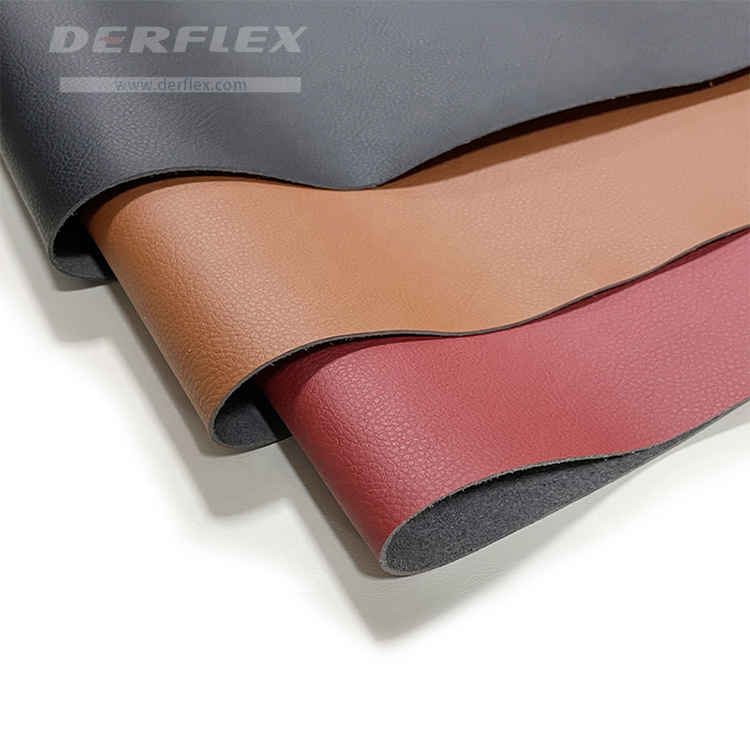
In a conventional sourcing process, “automotive leather” can be treated as one broad category. EV interior development is usually more specific. Large displays, simplified dashboards, open center consoles, ambient lighting and lounge-style seating create more uninterrupted surfaces and more close-contact areas. Small differences in gloss, grain scale, color tone or surface tension are easier to notice.
That changes how EV interior PU leather should be specified. The buyer is no longer choosing only a leather-look upholstery. The team is coordinating a surface material with seat geometry, acoustic expectations, visual design, assembly processes, cleaning routines and cabin-material requirements.
EV powertrains reduce many of the mechanical noises that traditionally mask other cabin impressions. Buyers may therefore pay closer attention to perceived material quality, odor, squeak/rub interaction between adjacent parts and the tactile consistency of frequently touched zones. PU leather development should be reviewed together with the foam, backing, adhesive, seam and substrate systems used in the finished component.
Door cards, console sides, instrument-panel inserts and decorative trim may use long, continuous wrapped areas. A suitable material needs stable surface appearance and a backing that behaves predictably around radii, edges and bonding zones. A soft seat material is not automatically the right material for a trim-wrapping component.
Color, material and finish teams often coordinate seats, door panels, armrests, console surfaces and decorative accents as one family. DERFLEX can discuss matched or deliberately contrasted grain, matte level, color direction and hand feel so that different constructions still support one visual language.
A useful EV material program separates high-contact upholstery, wrapped trim and decorative surfaces instead of forcing one specification onto every component.
Soft-touch direction, controlled stretch, perforation or quilting compatibility, color stability and user-comfort considerations.
Focus: touch · sewing · perforation · agingHigh-rub areas where abrasion, deformation, seam location, coating flexibility and backing stability deserve closer review.
Focus: wear · flex · seam behaviorClean grain presentation and predictable wrapping or lamination around broad molded surfaces and edge transitions.
Focus: wrapping · bonding · appearanceFrequent hand and body contact calls for suitable touch, cleaning response, visual consistency and low-gloss styling.
Focus: touch · cleaning · close-view qualityFirmer construction can be considered for wrapping, bonding and shape definition near displays, switches and center-console structures.
Focus: dimensional control · low glare · bondingColor-family development, fine grain, embossed patterns and selected contrast effects can help create a coherent EV cabin identity.
Focus: CMF · color repeat · embossing“PU leather” does not describe one fixed construction. The top finish controls visual character and part of the cleanability behavior; the PU surface system influences touch and flex; the selected textile or microfiber base affects stretch, sewing, lamination and dimensional stability.
For EV interior programs, the better question is: what should this specific part do during converting, assembly and cabin use? DERFLEX can then discuss an appropriate structure around that answer.
“Low VOC,” “wear resistant” or “flame retardant” are incomplete purchasing descriptions unless the method, sample construction and target value are defined. DERFLEX recommends confirming the required route during sampling.
These DERFLEX product visuals show material and application directions. EV programs should confirm the final grain, color, backing, touch and validation targets through samples.
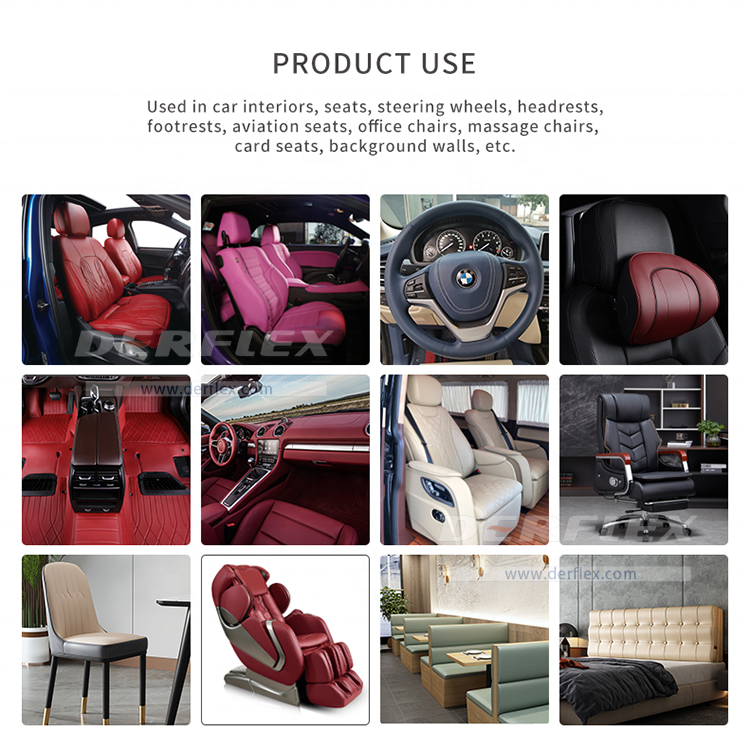
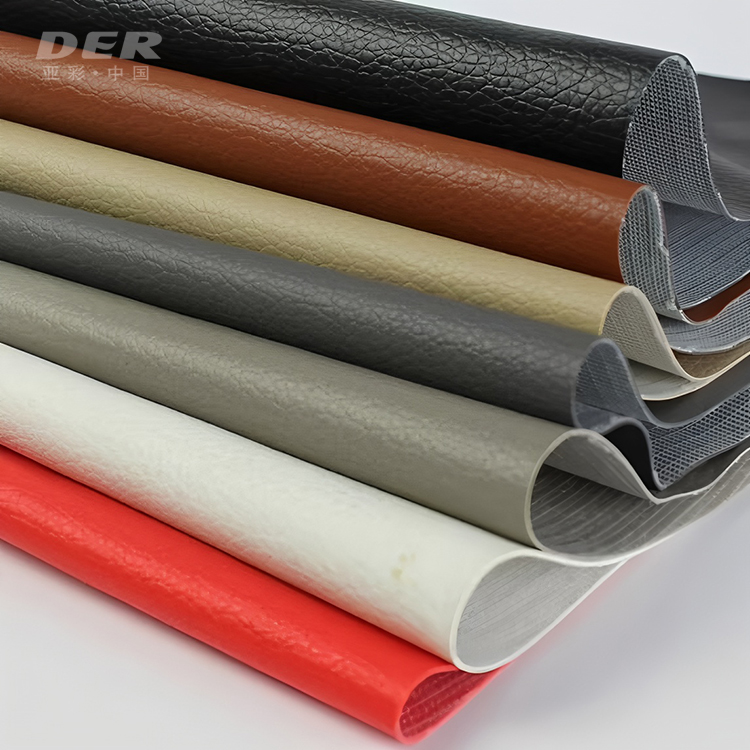
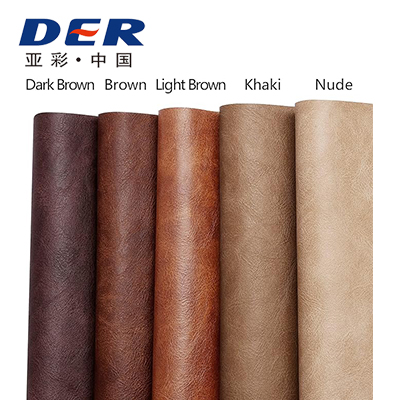
The table below is designed for quotation and sample-development discussions. It intentionally avoids universal performance promises because EV interior requirements vary by component, vehicle program, region and test method.
| Specification Item | Customizable Direction | EV Interior Purchasing Note |
|---|---|---|
| Product Description | EV interior PU leather, automotive PU synthetic leather, polyurethane leather roll material, custom faux leather for electric vehicle cabins | Define the cabin component before finalizing construction. |
| Surface Style | Fine grain, Nappa-inspired, pebbled, smooth, matte, low-gloss, semi-matte, perforation-ready, two-tone or custom embossing | Low-gloss and fine-grain directions are often evaluated for modern cockpit styling; final appearance should be sample-approved. |
| Color Development | Standard colors, sample matching, interior palette development and repeat-order color standards | Keep an approved master and agree viewing/measurement conditions when color consistency is critical. |
| Backing Options | Knitted, woven, nonwoven, polyester, microfiber-oriented or application-specific support structures | Backing affects stretch, seam behavior, lamination, wrapping and dimensional control. |
| Thickness & Hand Feel | Custom direction for soft seating, firmer trim, quilted covers, wrapped panels or selected high-contact zones | Confirm by physical sample and processing trial rather than by thickness alone. |
| Processing Routes | Cutting, sewing, stitching, quilting, perforation, embossing, foam bonding, lamination and wrapping | Share your converting process and substrate/foam details for better material matching. |
| Performance Routes | Abrasion, flexing, hydrolysis/aging, light/color stability, tear/tensile, seam, cleaning, odor, VOC, fogging, flammability and restricted-substance testing as required | Buyer should provide the exact method, conditioning and target values. |
| Roll Supply | Sample swatches, development rolls, bulk roll goods, custom roll length, labeling and export-oriented packing | Width and roll plan can be coordinated around nesting, cutting efficiency and warehouse handling. |
| Approval Basis | Master sample, signed specification, color standard, test requirements, packing standard and order confirmation | A controlled approval package helps reduce sample-to-bulk and repeat-order ambiguity. |
A staged workflow reduces the gap between a beautiful sample swatch and a material that actually performs on the customer's production line.
Define seat, door, armrest, console or cockpit trim position, vehicle level and use environment.
Align color, grain, gloss, touch, embossing and visual relationship with adjacent materials.
Select backing, thickness, softness, stretch and bonding route around conversion and assembly.
Review appearance, cutting, sewing, perforation, wrapping and requested physical/chemical tests.
Where needed, use development rolls for component trials before commercial-scale production.
Keep approved sample, color target, specification, identification and reorder records aligned.
DERFLEX structures the discussion around how each buyer uses the material, which helps reduce irrelevant samples and unclear quotations.
Prioritize sewing, quilting, stretch, seam appearance, seat-zone wear, backing stability, perforation and repeat color control.
Often focus on wrapp, ing, lamination, bonding, substrate compatibility, dimensional behavior and defined automotive test requirements.
Need controllable grain scale, gloss, touch, color family, embossing and coordinated surface options across multiple cabin zones.
Need clear grade positioning, repeatable roll supply, sample books, practical stock/custom choices and responsive replenishment planning.
May prioritize visual upgrade, sewing efficiency, broad color selection, custom textures and manageable order quantities.
Need a specification that connects appearance, tests, manufacturing fit, MOQ, lead time, packing and repeat-order control.
There is no universal “best” synthetic leather. The correct direction depends on cabin zone, tactile target, test requirements, converting process, cost level and brand strategy.
| Material Direction | Typical Strength Direction | Where EV Buyers Usually Evaluate It |
|---|---|---|
| PU Leather | Broad design flexibility, soft-touch options, color/grain customization and familiar upholstery processing | Seats, headrests, armrests, door inserts, selected wrapped trim and aftermarket interior programs |
| Microfiber PU | More structured synthetic-leather base and premium tactile direction depending on construction | Higher-positioned seating, close-touch trim and applications that benefit from increased backing structure |
| PVC Leather | Practical cleanability, commercial durability direction and cost control | Selected commercial interiors, protective upholstery, panels or programs with different cost/performance priorities |
| Silicone Leather | Distinct surface chemistry and premium cleanability/touch positioning in selected applications | High-visibility or differentiated cabin surfaces when the project supports its cost and validation route |
EV interior sourcing becomes inefficient when a supplier only sends visually similar swatches without asking how the material will be used. DERFLEX approaches the inquiry from the opposite direction: component, process, appearance target, test route, production volume and repeat-order expectations first; material recommendation second.
This makes the project easier to discuss for automotive upholstery factories, interior converters, distributors and OEM-oriented buyers that need a clear path from sample idea to commercial roll supply.
Use these related pages to compare material families, seat-specific requirements and broader automotive PU leather sourcing considerations.
EV interior PU leather is a polyurethane-based synthetic leather material developed for electric-vehicle cabin surfaces such as seats, bolsters, headrests, armrests, door panels, console trim and selected smart-cockpit surfaces. The suitable construction depends on the cabin zone, backing, conversion process, appearance target and required automotive tests.
EV programs may place more emphasis on coordinated low-gloss CMF, close-view surface consistency, cabin odor/VOC/fogging routes, automotive aging, light stability, abrasion, flexing, flammability and component-specific processing. Ordinary furniture upholstery grades should not automatically be treated as EV automotive grades.
DERFLEX can discuss material directions around odor, VOC and fogging requirements, but the buyer should provide the exact test method, conditioning and target values. Any performance statement should apply to the tested and approved grade rather than to every PU leather product.
Many PU leather constructions can be evaluated for perforation, quilting, stitching and foam bonding. Suitability depends on the surface system, backing, hole pattern, seam design, tension and final component process, so production trials are recommended before bulk approval.
Send the vehicle or product type, cabin position, reference swatch or photo, color standard, grain/gloss/touch direction, backing or stretch requirement, thickness direction, processing method, required test methods and target values, roll width, estimated quantity, destination, labeling and packing requirements.
Compare by component position, touch target, durability route, processing method, required emissions/chemical tests, design language and project budget. A seat center, door panel and console wrap may benefit from different constructions even when they share a similar color and grain.
Share a reference sample, application photo, seat/trim zone, color target, grain, backing, processing route, test requirements, quantity and delivery plan. DERFLEX can review a practical PU leather sampling direction for your project.
Component + reference swatch + CMF target + backing/process + required tests + quantity + destination.
Request A Quote