News
Company News

Flexible Ventilation Duct Factory | Custom PVC Duct | DERFLEX

Update:2026/8/22 18:32:35 Views:
Project-configured duct manufacturing

Flexible Ventilation Duct Factory

Custom PVC-coated flexible ventilation ducting built around the fan, pressure direction, route geometry and connection system—not around a generic hose description.

DERFLEX supports mine, tunnel, industrial blower, exhaust and temporary ventilation programs with finished duct fabrication, selectable reinforcement, welded construction, custom cuffs and project-defined material options. Final dimensions and performance claims are confirmed against the approved construction and requested test method.

Positive-pressure layflat Wire-reinforced suction duct PVC-coated polyester Custom couplings OEM / private label FR / antistatic options by requirement
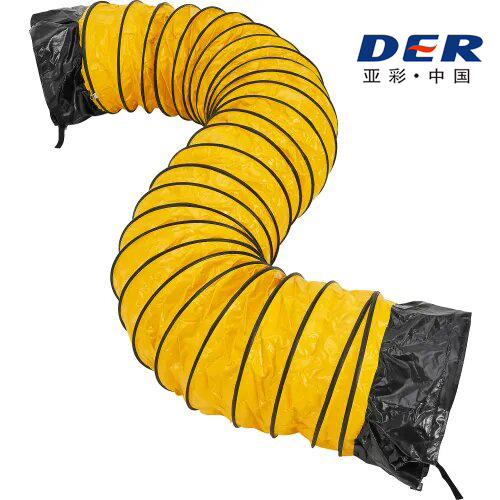
DERFLEX flexible ventilation duct factory product - yellow spiral reinforced PVC duct
Finished flexible duct example. Diameter, length, helix, cuffs, color and performance options are confirmed for the selected project construction.
Factory RFQ principle Start with airflow direction and fan data before choosing fabric weight or accessories.
Product formats Layflat, spiral reinforced, shaped & custom sections
Reference diameter Approx. 300–3000 mm, project reviewed
Reference section length Approx. 1–100 m depending on handling
Buyer profile Contractors, mines, fan brands, distributors & OEMs
What buyers should expect from a factory

A flexible ventilation duct is a working airflow assembly, not only coated fabric.

The duct wall matters, but field performance also depends on seam layout, reinforcement, fan connection, suspension and section handling. A flexible ventilation duct factory should be able to translate operating data into a repeatable finished-product specification.

DERFLEX combines coated-textile knowledge with finished duct fabrication. That allows the PVC-coated body material, weldability, reinforcement and end interfaces to be discussed within one procurement process.

  • Match layflat or shape-supported construction to pressure direction.
  • Review diameter against airflow, fan pressure, route length and bends.
  • Define the exact flame or antistatic test route when the project requires it.
  • Approve couplings, suspension, identification and packing before repeat production.
Do not approve flexible ventilation ducting from GSM alone.

Fabric weight is useful for describing construction direction, but it does not by itself define pressure capability, air leakage, flame behavior, static performance or service life.

A practical factory quotation should connect the material specification to the complete duct assembly and the actual operating condition.

Select by airflow duty

Three duct structures for different ventilation routes

Flexible ducting should first be separated by pressure direction and installation geometry. Accessories and optional treatments are selected after the basic structure is correct.

01

Layflat Positive-Pressure Duct

Collapsible duct sections for forcing fresh air through tunnels, mine headings, construction zones and other temporary routes.

  • Inflates under blower or fan pressure
  • Compact for transport and storage
  • Ring, zipper, cuff or custom connection
  • Reinforced hanging fin or suspension points
02

Spiral Wire-Reinforced Duct

Shape-retaining flexible hose for extraction, suction, exhaust, tight bends and equipment interfaces.

  • Helical reinforcement supports the bore
  • Suitable for negative-pressure routing
  • Custom wire pitch and end cuffs
  • Optional wear strips for handling zones
03

Custom / Low-Headroom Duct

Shaped, oval, transition and accessory sections where a round duct conflicts with clearance, vehicles or equipment.

  • Oval or route-specific geometry
  • Reducers, bends and Y/T branches
  • Fan adapters and replacement sections
  • Project-specific suspension layout
Material & finished construction

Build the duct from the air barrier outward

DERFLEX can coordinate the coated textile and fabricated components so the finished duct is quoted as one assembly.

01 · Surface

PVC-Coated Air Barrier

Flexible coated surface selected for weldability, moisture resistance, handling and the intended air stream.

02 · Core

Polyester Reinforcement

Knitted or woven textile structure provides the tensile and tear framework for fabricated ducting.

03 · Seam

Welded Construction

Seam design is coordinated with diameter, section length, leakage control and repeated site handling.

04 · Support

Wire / Ring Reinforcement

Continuous helix, rings or local reinforcement may be added where suction or geometry requires shape support.

05 · Interface

Cuffs & Suspension

Zippers, rings, drawstring cuffs, straps, eyelets, hanging fins and project-specific interfaces complete the assembly.

Reference specification framework

Flexible ventilation duct factory specification range

The ranges below are for early procurement discussion. The approved datasheet, sample and required test documents should govern the final order.

Finished product Fabricated flexible ventilation duct section with welded body, selected suspension system, end connections and optional reinforcement.
Base construction Knitted or woven polyester technical textile with PVC coating on both sides; formulation and textile structure selected by application.
Typical fabric weight Approx. 400–900 g/m2 reference range, or project-specific after pressure, handling and abrasion review.
Reference diameter Approx. 300–3000 mm; non-standard sizes can be reviewed against airflow, fan interface and available clearance.
Section length Approx. 1–100 m; practical length depends on diameter, packed volume, installation method and route maintenance.
Duct structures Layflat positive-pressure duct; spiral wire-reinforced supply/exhaust hose; shaped/oval duct; custom transitions and fittings.
Connection options Steel ring, zipper, drawstring cuff, hook-and-loop, belt/strap, fan adapter or project-specific coupling.
Suspension Reinforced fins, eyelets, straps, loops or custom hanging geometry according to route and installation practice.
Color & identification Yellow, orange, black and custom colors subject to material and production confirmation; OEM labels, airflow arrows and section IDs can be discussed.
Optional performance direction Flame-retardant, antistatic, abrasion-focused, cold-weather or other formulations can be developed against a named requirement and test route.
Accessories Reducers, bends, Y/T branches, transition pieces, repair sections, fan connections and other fabricated components by drawing or measured interface.

Reference values are not universal guarantees. Final pressure, flame, static, temperature and service performance depend on the confirmed construction, manufacturing tolerances, test method and complete ventilation system.

Factory workflow

From fan data to repeatable production specification

A controlled workflow reduces fitting errors, avoids mixing positive- and negative-pressure structures and makes later replacement orders easier to reproduce.

STEP 01

Application Review

Confirm mine, tunnel, blower, exhaust, confined-space or industrial duty and identify the governing project requirements.

STEP 02

Fan & Route Data

Review outlet diameter, pressure direction, airflow target, total run, bends, clearance and section handling length.

STEP 03

Material Matching

Select coated-textile structure, weight direction and optional formulation according to pressure, abrasion and requested testing.

STEP 04

Mechanical Design

Freeze wire or ring reinforcement, seams, cuffs, couplings, hanging geometry, fittings and identification.

STEP 05

Sample / Drawing Approval

Confirm dimensions, interface compatibility, workmanship and documentation before repeat-volume production where required.

STEP 06

Fabrication & Inspection

Produce the approved duct construction and check agreed fields such as dimensions, seams, fittings, reinforcement and labels.

STEP 07

Packing & Section Control

Organize bag, carton or pallet packing, section numbering and project marks for transport, storage and site distribution.

STEP 08

Repeat-Order Control

Use the approved specification as the reference for future replacement sections and OEM production programs.

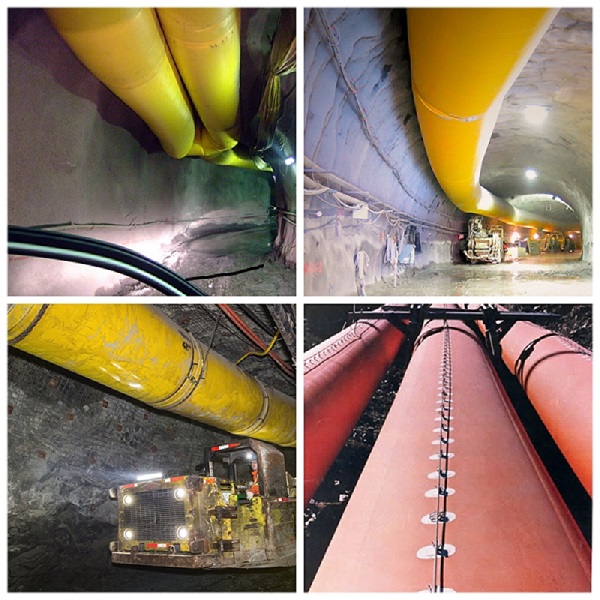
Flexible ventilation duct installed in mine and tunnel applications
Project reality

Long duct routes amplify small specification mistakes.

Undersized diameter, excessive bends, leaking joints, weak suspension or the wrong duct structure can consume available fan pressure and create repeated maintenance work.

That is why DERFLEX recommends defining the complete duct route and acceptance requirements before freezing a factory quotation.

Quality & documentation

Control the fields that can be checked

For industrial and underground procurement, quality control should be tied to the approved specification rather than broad marketing claims.

Material Verification

Confirm the selected coated textile construction, color, reinforcement direction and ordered material option.

Fabrication Check

Inspect dimensions, seam condition, wire/ring placement, cuff details, hanging points and accessories.

Test-Route Control

When flame or antistatic performance is required, identify the exact method, acceptance criterion and applicable construction before production.

Traceability Fields

Project codes, section numbers, airflow arrows, OEM markings, packing labels and agreed inspection records can support site control.

Applications

Flexible ventilation ducting for changing industrial air routes

The same search term can describe very different operating conditions. The duct structure should be matched to the actual ventilation task.

Underground

Mine Auxiliary Ventilation

Forced fresh-air supply, localized extraction and advancing duct routes where diameter, suspension and site safety requirements must be coordinated.

Infrastructure

Tunnel Construction

Long temporary duct runs for road, rail, metro, hydropower and civil engineering work, including branches and low-clearance routing.

Portable equipment

Industrial Blower Duct

Flexible sections matched to portable axial fans and blowers for cooling, drying, fresh-air delivery and controlled work zones.

Extraction

Fume & Exhaust Routing

Shape-supported hose for welding fumes, process-air removal and industrial extraction where suction requires the bore to remain open.

Maintenance

Confined-Space Ventilation

Ducting for tanks, vessels, manholes, utility vaults and service areas, configured to the blower interface and work route.

OEM

Ventilation Equipment Programs

Repeat-specification duct kits, custom cuffs, private markings and packing for distributors, fan brands and rental fleets.

Customization

Configure the duct around your equipment and installation method

A custom ventilation duct manufacturer should make interface and field-use details part of the product specification, not leave them as last-minute accessories.

DERFLEX can review drawings, existing samples or fan outlet measurements to define the finished duct configuration for a project or OEM program.

?

Diameter & Section Length

Size sections around airflow, fan pressure, handling weight, packed volume and installation sequence.

?

Connections & Adapters

Zippers, rings, cuffs, belts, reducers, branches, fan adapters and replacement interfaces.

?

Reinforcement

Helical wire, rings, reinforced edges, wear strips and suspension details based on pressure and route geometry.

ID

OEM Identification

Color, labels, section IDs, airflow arrows, buyer codes, packaging and private-label details by agreement.

FR

Flame Requirement

Material direction can be discussed against the exact standard and report scope required by the project.

Ω

Antistatic Requirement

When required, state the resistance limit and test method separately rather than assuming it from a flame-retardant description.

Procurement checklist

Send a useful RFQ, not only “flexible ventilation duct”.

More complete operating data allows a factory to select the correct duct structure and reduces revision cycles after quotation or sampling.

Request A Project Quote
  • Application / installation location
  • Positive or negative pressure
  • Fan outlet diameter
  • Airflow target / static pressure
  • Total duct route length
  • Number and radius of bends
  • Preferred duct diameter
  • Preferred section length
  • Connection / cuff method
  • Suspension method & spacing
  • Temperature / abrasion exposure
  • Flame test requirement
  • Antistatic requirement
  • Quantity & delivery destination
  • OEM marks / packaging
  • Drawings or existing sample photos
FAQ

Flexible ventilation duct factory questions

Short answers for contractors, mine operators, industrial buyers, fan suppliers, distributors and OEM procurement teams.

What should I send to a flexible ventilation duct factory for quotation?

Send the application, airflow direction, fan outlet size, available pressure or airflow data, route length, bends, preferred diameter and section length, coupling, suspension method, any flame or antistatic requirement, quantity, destination and available drawings or photos.

Should I choose layflat or spiral wire-reinforced ducting?

Layflat duct is commonly selected for positive-pressure air delivery because fan pressure inflates the duct. Spiral wire-reinforced duct is generally used when the hose must retain its bore during suction, extraction or tighter routing. Final selection should consider the complete fan and ro, ute data.

What diameter range can DERFLEX discuss?

DERFLEX currently uses approximately 300–3000 mm as a reference range for flexible ventilation duct products. Final size should be reviewed against airflow, fan pressure, route length, clearance and duct structure; non-standard requirements can be discussed separately.

Can DERFLEX make flame-retardant and antistatic ventilation duct?

These performance directions can be discussed when the project identifies the required test method and acceptance limit. Flame and antistatic performance are separate fields, and the final claim should correspond to the approved construction and applicable test evidence.

Can the duct be customized for an existing blower or fan?

Yes. Fan outlet measurements, connection photos, drawings or an existing sample can be reviewed so the cuff, adapter, diameter and section format are developed around the actual equipment interface.

Does DERFLEX support OEM flexible duct programs?

DERFLEX can discuss repeat specifications for distributors, ventilation-equipment brands and project suppliers, including dimensions, cuffs, colors, markings, section identification and packaging subject to the approved order specification.

Flexible duct project support

Build the quotation around your fan and airflow route.

Send your pressure direction, fan interface, route, duct size, connections and required test criteria. DERFLEX can review a suitable finished-duct structure for quotation and sampling.

Request A Quote

Product information is provided for procurement discussion. Final suitability, pressure capability, temperature range, flame behavior, antistatic performance, regulatory compliance and safe operation depend on the confirmed product configuration, applicable test methods and the complete ventilation system used at the site.

Consulting Services
+86-021-54361792 / 54361798
Email
sales@derflex.com