News
Industry News

Demolition Tarp Manufacturer | Custom Heavy Duty Tarps | DERFLEX

Update:2026/8/22 18:59:06 Views:
Construction · Debris · Hauling · OEM Supply

Demolition Tarp Built Around the Job, Not Just the Weight

DERFLEX supplies custom demolition tarp solutions for jobsite debris containment, waterproof covering, roll-off transport and application-specific fabrication using PVC coated polyester and related industrial tarp materials.

For crane or mechanical lifting of debris, a general tarp must not be treated as lifting equipment. Load-rated lifting configurations require separate engineering, verification, labeling and written approval for the intended use.

01 · COVERWaterproof Site Protection

Solid PVC demolition tarps for materials, openings, equipment, staged waste and temporary weather shielding.

02 · CONTAINDebris & Dust Control

Solid or mesh configurations selected according to particle size, airflow, wind pressure and enclosure requirements.

03 · HAULRoll-Off & Dumpster Coverage

Custom finished covers for demolition debris transport, container systems and repeated opening, closing and tensioning.

04 · SPECIALEngineered Lifting Projects

Separate project category requiring defined WLL, reinforced load paths, suitable lifting points and validation before use.

What Buyers Mean by Demolition Tarp

One Search Term, Several Very Different Jobsite Products

A demolition tarp is a heavy-duty protective fabric used around demolition, renovation, roofing tear-off, building strip-out, debris handling and site cleanup. The term is broad: on one project it may mean a waterproof sheet covering broken materials; on another it may mean a scaffold or perimeter screen that controls dust and loose debris; in waste hauling it may describe a reinforced cover for a roll-off container.

This distinction matters because the failure modes are different. A tarp laid over a dumpster experiences wind, tension and abrasion. A scaffold screen must manage wind pressure and airflow. A floor-laid cleanup sheet sees dragging and puncture risk. A lifting tarp, if specifically designed for that function, is part of a load-handling system and therefore needs much more than heavy fabric alone.

Heavy duty should describe the construction, not just the GSM

For professional demolition use, buyers should look at the base fabric, coating structure, seam method, edge reinforcement, hardware layout and repeated handling conditions together. A heavier sheet with weak corners can still fail early. A more balanced custom demolition tarp uses reinforcement where the actual stresses occur.

A useful RFQ begins with the failure point. Tell DERFLEX whether the tarp is most likely to abrade on concrete, tear at a corner, flex through a roll system, hold back dust, resist rain or be handled repeatedly by a crew. That information is more useful than requesting “the heaviest tarp available.”

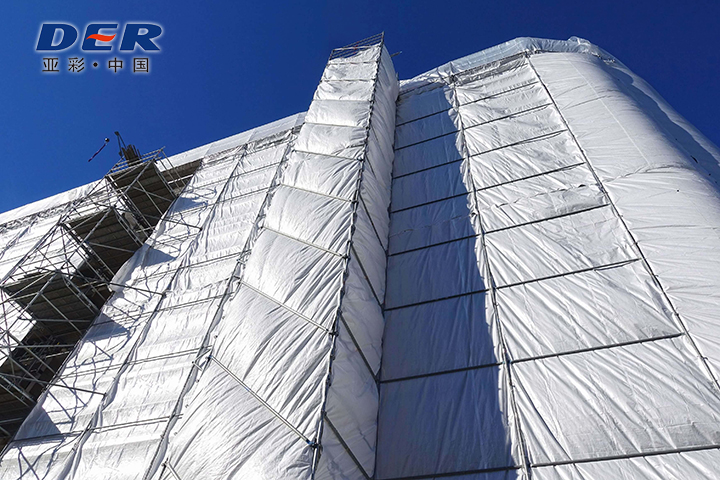
DERFLEX construction tarp used for jobsite enclosure and protection
DERFLEX jobsite tarp application image

Shown as a construction-site enclosure reference. Demolition-specific dimensions, reinforcement and finishing should be defined according to the actual job.

Choose the Product Family First

Solid PVC, Mesh Debris Tarp, or Load-Rated Lifting Tarp?

Search results often place these products together, but they solve different problems. Separating them early helps contractors, distributors and procurement teams avoid specifying the wrong tarp.

Waterproof protection

Solid PVC Demolition Tarp

A practical direction where weather protection, fine-debris containment, cleanability and repeat handling are more important than airflow.

  • PVC coated polyester structure
  • Welded or sewn fabrication by design
  • Reinforced hems, webbing and hardware
  • Suitable for covers, partitions and transport-related use
Airflow & screening

Mesh Debris / Scaffold Tarp

Used when air passage and lower wind pressure are needed while helping contain dust, chips and airborne particulates around demolition or renovation zones.

  • Breathable open structure
  • Perimeter reinforcement and tie points
  • Useful on scaffolds, fences and work-zone separation
  • Not a full waterproof barrier
Special-purpose load handling

Engineered Lifting Demolition Tarp

This is not simply a thicker waterproof tarp. If a tarp will suspend debris, its complete assembly must be engineered and validated as a lifting product for the stated working load.

  • Defined load path and rated lifting points
  • Reinforcement sized for the intended load
  • Documented inspection and use instructions
  • No overhead lifting with an unrated general tarp
Performance Architecture

How a Heavy Duty Demolition Tarp Is Built for Real Site Stress

DERFLEX can develop the fabric and finished configuration around the work cycle instead of relying on one stock specification for every demolition environment.

01

Abrasion Resistance

Demolition debris creates hard contact points. Surface formulation, fabric weight and reinforcement layout should reflect rubbing against container rails, masonry, timber and rough ground.

02

Tear & Tensile Stability

High-strength polyester scrim supports dimensional stability and helps the tarp resist propagation of damage during pulling, tying, folding and repeated jobsite handling.

03

Waterproof PVC Options

Solid PVC coated structures can be specified where rain protection is needed. Seam method, drainage slope and installation details must also be considered for a finished waterproof demolition tarp.

04

Stress-Point Reinforcement

Hems, corners, webbing, D-rings, grommets, straps and pockets can be positioned according to the actual fixing method so that forces are not concentrated into weak zones.

05

UV & Weather Direction

Outdoor formulations can be discussed for sunlight, humidity, mildew or cold conditions. Any required test standard should be identified before production.

06

Repeat-Order Control

For distributors and contractors, repeatability matters as much as initial strength. Material, size, color, hardware layout, labels and packing can be documented for recurring programs.

ProductDemolition Tarp / Custom Demolition Tarp / Heavy Duty Jobsite Tarp / Debris Containment Cover
Material DirectionHigh-strength PVC coated polyester for waterproof heavy-duty use; mesh structures can be discussed where airflow and screening are required.
Reference Weight RangeApprox. 500–1050 gsm is a practical discussion range for many solid heavy-duty PVC construction and debris applications. Other weights can be developed according to use, handling and cost target.
SurfaceMatte, glossy, lacquered or application-matched finish depending on material grade and production requirement.
FabricationHot-air welding, high-frequency welding or stitching according to seam design, material and finished product requirements.
ReinforcementReinforced hems, webbing, corner patches, rope-in-hem, center reinforcement and other stress-point structures according to drawing.
HardwareGrommets, D-rings, straps, sleeves, pockets and custom fixing details can be discussed for non-lifting applications; load-bearing lifting points require separate engineering approval.
Functional OptionsWaterproof, UV-resistant, anti-mildew, cold-resistant, abrasion-resistant and flame-retardant directions can be discussed subject to the required material and test standard.
CustomizationFinished size, shape, color, reinforcement layout, logo, technical markings, labels, packaging and private-label presentation.
Supply FormatRoll material, cut panels, semi-finished sheets or finished custom demolition tarps according to buyer requirements.
Lifting RatingNo generic load rating is assigned to a standard demolition cover. If the intended use is suspended lifting, the complete product must be separately designed, tested, rated and labeled for that purpose.

Specification values above are procurement reference directions, not a universal product guarantee. Final values should be confirmed against samples, drawings, application conditions, destination requirements and the agreed test plan.

Custom Demolition Tarp Manufacturing for B2B Programs

A custom demolition tarp is more than a non-standard size. The useful design starts with the debris type, handling cycle, securing method, expected exposure and the way the tarp will be stored or deployed.

  • Finished dimensions from drawing, sample or site measurement
  • Solid PVC or mesh material direction according to the application
  • Custom seams, hems, edge reinforcement and stress-point patches
  • Grommet, D-ring, strap, webbing, pocket and sleeve layouts
  • Color matching, logo printing, labels and private-label packaging
  • Roll goods or finished products for converters, wholesalers and contractors
Edge Reinforcement

Webbing, folded hems, rope-in-hem or multi-layer edge construction selected around tie-down stress and repeated handling.

Attachment Layout

Grommet spacing, D-rings, straps and pockets can be placed from a drawing instead of relying on fixed retail spacing.

Seam Strategy

Welded seams are useful for many waterproof PVC covers; stitched zones may be selected where the finished design requires sewing or reinforced hardware integration.

Identification

Printed logos, project codes, product labels, warning markings and private-label packaging can be discussed for wholesale and fleet programs.

Handling Balance

The heaviest material is not automatically the best. Weight, stiffness, foldability and deployment method should be balanced against abrasion and service-life targets.

Compliance Planning

If a project requires FR, chemical, environmental or other test documentation, define the target standard before material selection and quotation.

Applications

Demolition Tarp Uses Across Cleanup, Containment and Waste Handling

The same project may use more than one tarp type. Waterproof covers, mesh screens and roll-off covers can work together, provided each one is specified for its actual job.

Building Strip-Out & Interior Demolition

Temporary separation of work zones, covering staged debris, protecting adjacent materials and helping organize cleanup routes inside active projects.

Roofing Tear-Off Staging

Heavy-duty sheets can be used for ground collection, temporary covering and movement planning. Any suspended lifting use requires a separately rated lifting product.

Scaffolding & Perimeter Debris Control

Mesh or solid enclosure tarps can reduce loose-particle escape, provide screening and separate demolition activity from surrounding areas.

Roll-Off Containers & Dumpsters

Waterproof or application-matched covers help contain debris during storage and transport while dealing with wind, tension and repeated deployment cycles.

Material & Equipment Weather Protection

Solid PVC covers can protect tools, machines, salvageable components and staged materials from rain, splash, dust and jobsite contamination.

Demolition Tarp Wholesale Programs

Distributors, industrial suppliers and private-label brands can build coordinated product tiers by material weight, finished size, reinforcement and packaging.

Procurement Guide

How to Choose a Demolition Tarp Supplier Without Over-Specifying the Product

For contractors and importers, the best quotation usually comes from a precise application brief rather than a request for “heavy duty” alone.

1
Define the operation

State whether the tarp covers, screens, contains, drags, rolls over a container or will be part of a separately engineered lifting system.

2
Describe the debris

Concrete chunks, masonry, roofing shingles, timber, metal scrap and fine dust produce different abrasion, puncture and containment demands.

3
Measure finished size and fixing points

Provide the final dimensions, attachment spacing, edge geometry, pockets, sleeves and any cut-outs. A sketch is often more useful than a generic size label.

4
Set the weather requirement

If full water blocking matters, select a solid PVC direction and confirm seam design. If wind pressure and airflow matter more, consider mesh.

5
Specify the duty cycle

A temporary one-project cover can be optimized differently from a tarp that is opened, rolled, folded and transported every day.

6
Separate load rating from fabric strength

Tensile strength, GSM and heavy webbing do not by themselves create a safe lifting product. If suspended lifting is intended, request engineering and rating documentation for the complete assembly.

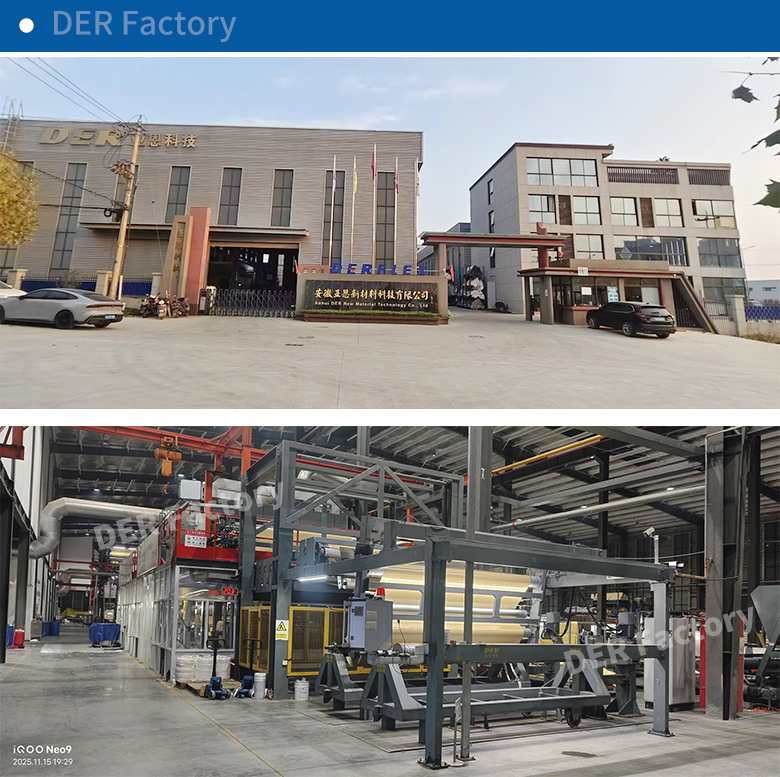
DERFLEX coated fabric manufacturing facility and production equipment
Engineering & Manufacturing Capability

Why DERFLEX for Demolition Tarp Manufacturing?

DERFLEX works from the industrial coated-fabric side of the tarp supply chain. That allows a demolition tarp manufacturer conversation to include the fabric structure, coating direction, width, finishing, reinforcement and downstream fabrication details instead of stopping at a list of ready-made sizes.

For B2B buyers, the advantage is specification control. A distributor may need repeatable colors and packaging. A contractor may need a special hem and hardware pattern. A roll-off equipment buyer may need a cover that fits a defined deployment system. A converter may prefer roll goods or cut panels rather than finished tarps.

Quality discussions can be organized around the agreed product: material inspection, dimensions, seam layout, reinforcement placement, surface appearance, hardware location and packing checks. Where testing or compliance documentation is required, the target standard should be confirmed before production.

Material & weight verification
Dimension & seam review
Reinforcement placement
Hardware layout check
Surface & workmanship review
Packing / label consistency
B2B Supply Models

From One Project Specification to a Repeatable Demolition Tarp Wholesale Program

DERFLEX can support different purchasing models without forcing every buyer into the same finished product format.

Contractors & Project Buyers

Application-matched finished tarps for demolition, roofing, renovation, debris containment and temporary weather protection.

Distributors & Wholesalers

Tiered demolition tarp wholesale programs with controlled size, material, color, reinforcement, labels and packaging.

Tarp Fabricators

PVC coated tarp rolls, cut panels and semi-finished material for local conversion and custom fabrication.

OEM / Private Label

Custom branding, technical markings, packaging and documented repeat-order specifications for regional product lines.

Important: A Waterproof Demolition Tarp Is Not Automatically a Lifting Tarp

Some demolition tarps sold in the market are specifically manufactured as load-rated debris lifting products with reinforced webbing and defined lifting points. That does not mean a general heavy duty demolition tarp, dumpster cover or waterproof PVC sheet can safely be used the same way.

If the tarp will suspend debris from a crane, telehandler, forklift attachment or other lifting device, the complete assembly should have an application-specific design, stated working load, suitable lifting-point construction, validation/testing, inspection criteria and operating instructions. Never place people under a suspended tarp load, and remove damaged lifting equipment from service according to the applicable safety procedure.

FAQ

Demolition Tarp Questions from Contractors, Distributors and Importers

What is a demolition tarp used for?

A demolition tarp can be used for debris containment, temporary weather covering, jobsite separation, scaffold screening, cleanup staging and roll-off or dumpster coverage. The correct material and finished construction depend on whether the priority is waterproofing, airflow, abrasion resistance, repeated transport or another specific work method.

What material is suitable for a heavy duty demolition tarp?

PVC coated polyester is a common direction for heavy-duty waterproof demolition tarps because it combines a reinforced base fabric with a durable, weldable coating. Mesh may be more appropriate for scaffold screening and debris containment where airflow is important. Material weight should be selected around actual duty cycle rather than by GSM alone.

Can DERFLEX supply a waterproof demolition tarp?

Yes. DERFLEX can discuss solid PVC coated polyester structures for waterproof demolition tarp applications. Finished water resistance also depends on seam construction, openings, edge details, installation and drainage, so those elements should be confirmed during specification.

Can a demolition tarp be customized with webbing, D-rings and grommets?

DERFLEX supports custom size, seam design, reinforced hems, webbing, corner patches, grommets, D-rings, straps, sleeves, pockets, logo printing, labels and packaging for suitable non-lifting tarp applications. If any attachment point is intended to carry a suspended load, that requirement must be separately engineered and validated.

Can a standard heavy duty demolition tarp be used to lift debris?

No general-purpose tarp should be assumed safe for suspended lifting. A lifting demolition tarp is a special-purpose load-handling product that requires a defined working load, reinforced load path, suitable lifting points, testing or validation, labeling and operating instructions. State the lifting requirement explicitly before quotation.

What should I send a demolition tarp manufacturer for a quotation?

Send the application, debris type, finished dimensions or drawing, quantity, preferred, material direction, weather exposure, reinforcement and hardware layout, color, branding, packaging and any required testing. If the product is expected to lift or suspend material, clearly state that requirement so it is not treated as a standard cover.

Build the Demolition Tarp Around Your Work Cycle

Send DERFLEX the application, size, debris type, material direction, reinforcement layout, quantity and destination requirements. The quotation can then be developed around a practical specification instead of a generic tarp description.

Consulting Services
+86-021-54361792 / 54361798
Email
sales@derflex.com