


 Industrial textile solutions · OEM supply
Heavy Duty Canvas & Tarpaulin
Choose the right heavy duty canvas tarp or industrial tarpaulin for the job—not just the heaviest fabric on the list. DERFLEX helps distributors, cover fabricators and project buyers compare breathable woven canvas with waterproof PVC-coated polyester. Discuss roll materials, reinforced finished covers and specification-led OEM supply for trucks, construction, equipment and outdoor storage.
The key decisions are moisture control, exposure, abrasion, handling frequency, finished size and attachment design. Grade-specific performance and supply scope are confirmed during quotation.
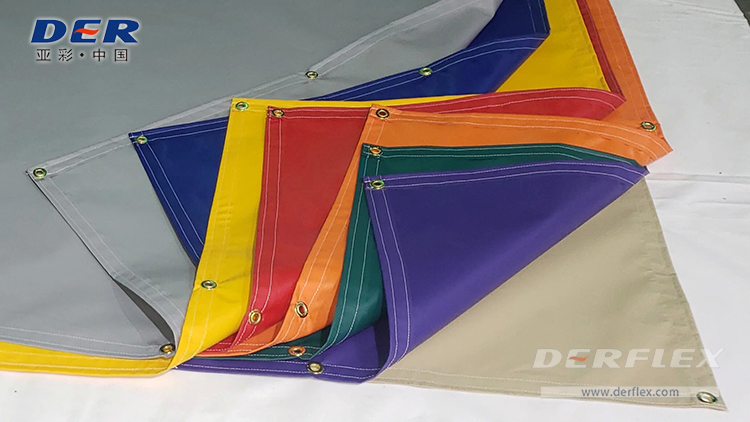
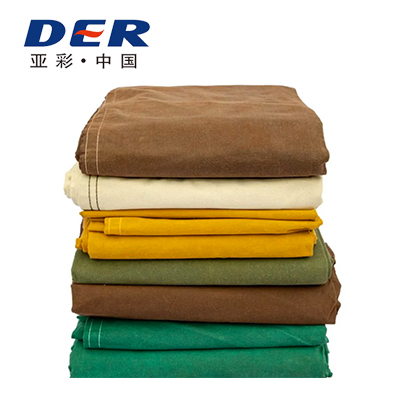
What counts as a heavy duty canvas tarp or tarpaulin?
“Heavy duty” describes the intended service, not a universal grade. A canvas tarp and a PVC-coated tarpaulin can both be robust, but their construction changes how the cover breathes, sheds water and is fabricated.
Woven cotton or blended canvas
Traditional canvas covers are built from tightly woven cotton duck, polyester canvas or blends. Treated versions can resist incidental rain, while untreated versions favor clean textile contact where treatments or odors are undesirable. Canvas can help moisture escape, but it can absorb water, shrink or change dimensions after weathering depending on the grade.
Typical discussion points: treated or untreated, nominal dry weight versus finished treated weight, woven structure, washing limitations, hem construction and contact-surface suitability. Explore DERFLEX canvas tarp material options and canvas tarpaulin specifications.
PVC-coated polyester tarpaulin
A polyester base fabric provides reinforcement; a PVC coating or laminate creates a more continuous water-blocking surface. Compatible coatings can be joined using suitable welding processes, and finished covers can include reinforced hems, eyelets or D-rings. The result is suited to many outdoor transport, industrial and construction uses—provided seams and attachments are designed for the load.
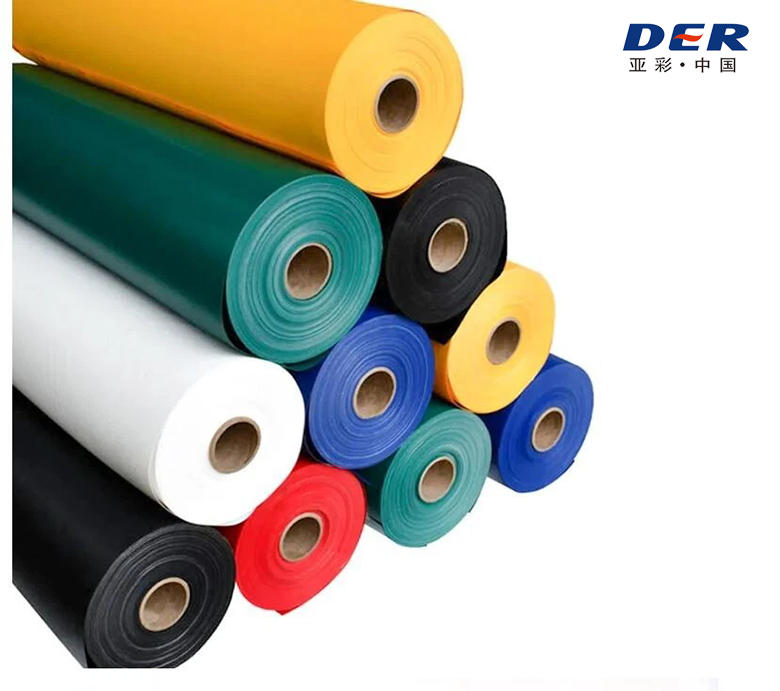
For roll goods and heavy-duty tarp fabrication, review heavy-duty PVC tarpaulin and PVC-coated fabric construction.
Canvas vs PVC tarpaulin: which is better for your project?
Use the matrix for a first material shortlist. It is not a substitute for the final grade data sheet, sample verification or load-specific design.
| Buyer requirement | Canvas direction | PVC tarpaulin direction | Confirm before purchase |
|---|---|---|---|
| Condensation-sensitive equipment or timber | Breathable treated/untreated canvas may be preferable. | Waterproof surface may retain moisture unless vented. | Air gaps, contact sensitivity and ventilation details. |
| Transport in sustained rain and road spray | Water-repellent only unless a specific sealed grade is proven. | Often preferred with compatible welded/engineered seams. | Seam design, fit, wind loading and fastening positions. |
| Construction site equipment covers | Works where breathability and flexible protection matter. | Works where weather blocking and washability dominate. | Abrasion, edges, puncture hazards and use duration. |
| Repeated folding and tensioning | Check shrinkage, treatment transfer and stitching. | Check flex behavior, coating integrity and fold lines. | Handling cycles, low-temperature use, reinforcement. |
| Economy / short duration | Potentially heavier and more labor-intensive to dry. | Higher fabrication requirements for finished systems. | Total cost including replacement, labor and freight. |
Canvas and PVC are general material families. Performance varies by grade, coating, weight, test method and actual construction. For a dedicated side-by-side explanation, see canvas tarps vs vinyl tarps.
Specification checklist for heavy duty tarp fabric and finished covers
One procurement sheet should describe the fabric, fabrication and intended environment. A headline “18 oz” or “900 gsm” is not a complete specification.
| Specification field | What to state in your RFQ | Why it matters |
|---|---|---|
| Material construction | Cotton duck / polyester canvas / PVC-coated or laminated polyester; treatment or coating side. | Controls moisture response, seaming and handling. |
| Fabric mass | Nominal gsm or oz/yd², including whether canvas weight is before or after treatment. | Avoids comparing unequal measurement bases. |
| Strength and durability | Request tensile and tear data by test method and warp/weft direction; ask about abrasion where relevant. | Weight alone does not prove resistance to tearing. |
| Weather and temperature | Water exposure, UV location, low-temperature handling and cleaning environment. | Material aging and flexibility depend on conditions. |
| Finished dimensions | Exact finished width × length; fitted panel shape, seam allowances and tolerance expectations. | Cut size and finished size may differ. |
| Perimeter construction | Hem, webbing, rope-in-hem, reinforced corners, eyelet or D-ring spacing. | High pull concentrations can fail at attachments. |
| Supply format | Roll goods, cut panels, made-to-drawing cover; expected quantity and packaging. | Clarifies what is actually being quoted. |
Useful unit check: 1 oz/yd² ≈ 33.906 gsm, so 16 oz/yd² ≈ 542 gsm as a unit conversion only—not a DERFLEX product rating. Thickness in mil or mm is different from areal weight; 1 mil = 0.0254 mm. Always match methods and states before comparing products.
Materials, finished tarp geometry and real-use context
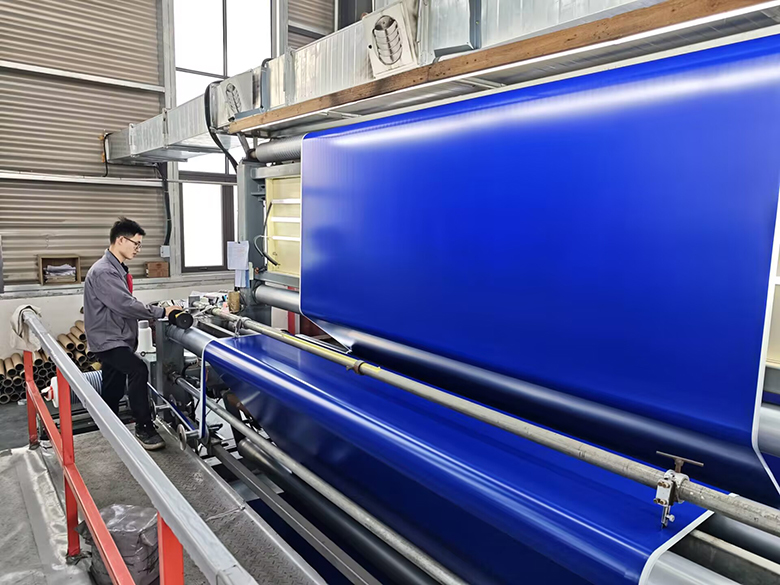
These are DERFLEX images from the existing up/pro/ directory. They are shown at their natural aspect ratios without cropping the subject. Each image represents the item described, not a fabricated customer case study.
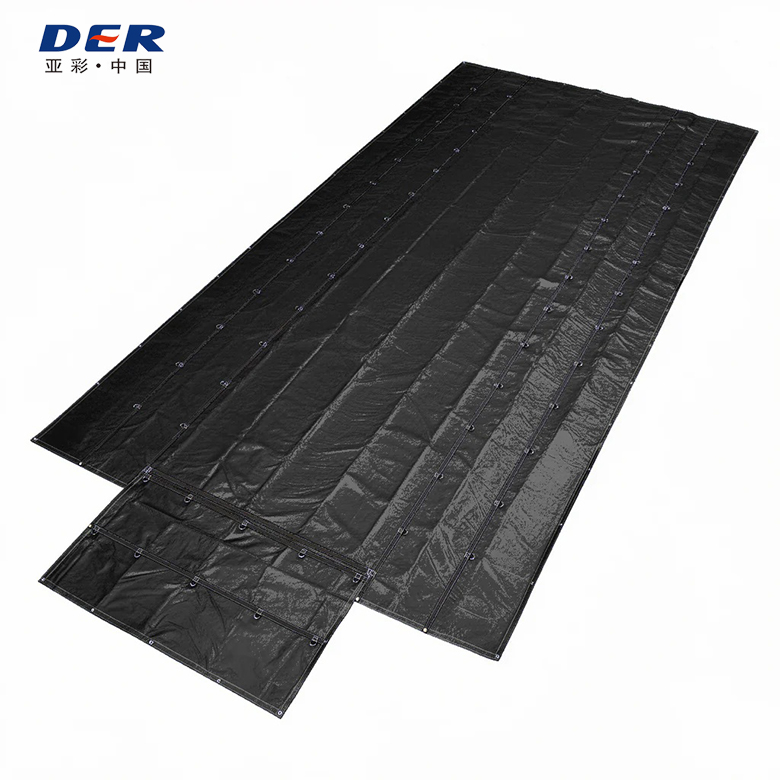
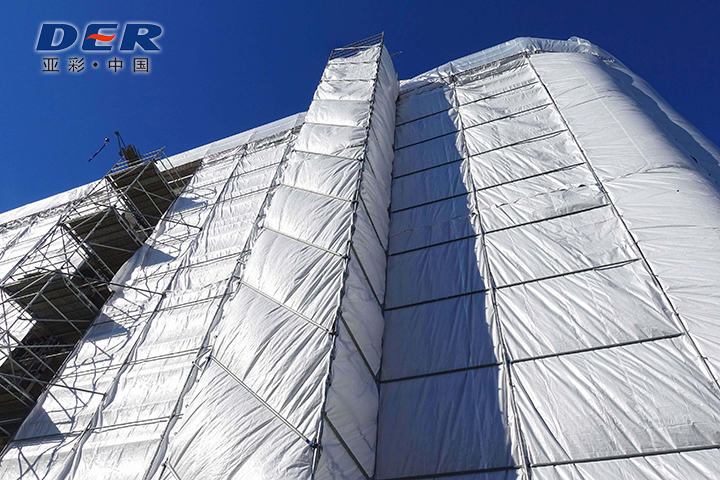
Where heavy duty canvas and tarpaulin are specified
Buyers often face mixed conditions within one order. A series can include breathable covers, water-blocking covers and replaceable reinforced panels. Separate those functions before choosing fabric.
Trucks, trailers and cargo
Road spray, repeated tie-down cycles and rubbing against cargo corners make reinforcement as important as material weight. For long-distance logistics, provide the tarp geometry, tie-down points and expected duty cycle. A PVC-coated truck tarp is often the more practical starting point for sealed weather exposure.
Machinery and warehouse storage
Breathable canvas can help with humidity exchange around selected stored materials. For damp or washdown environments, a PVC cover may simplify cleaning, but moisture-sensitive equipment may still require air gaps or vents. State whether the tarp directly touches painted, polished or coated surfaces.
Construction and temporary roofing
Heavy-duty tarpaulin can cover materials, scaffolding and temporary work zones. Material selection must be combined with safe anchoring and drainage, not inferred from fabric strength alone. Installation loads and applicable safety requirements are project decisions.
Farming and outdoor storage
Hay, bulk goods, agricultural equipment and shelters create different moisture and sunlight conditions. Plan for water runoff, ground contact, access points and periodic inspection. Consult the heavy-duty tarp application range for additional material directions.
The edge, seam and fixing system can determine tarp serviceability
A heavy base fabric does not compensate for a weak attachment or incompatible seam. Ask the converter to treat material choice and finished-cover design as one specification.
Measure actual coverage
Record the protected object dimensions, overlap, drops, folds, obstructions and the distinction between cut size and finished size. Confirm a drawing for fitted covers.
Choose seams and edges
For traditional canvas, discuss stitched hems and finishing. For weldable PVC fabric, discuss compatible welded seams. Reinforce corners, abrasion zones and attachment lines.
Approve the working sample
Check dimensions, color, eyelet/D-ring location, fit, water behavior and fold handling. Sample suitability depends on actual site use, not only a laboratory material label.
Before you order: build an RFQ that suppliers can quote accurately
DERFLEX can discuss roll materials and customized tarp solutions. The quotation should specify whether the order includes textile or coated fabric only, cut panels, finished reinforced covers or any separately sourced hardware; do not assume installation or a whole mechanical system is included.
Send these six essentials
- Application: equipment, cargo, agriculture, construction or industrial use.
- Conditions: rain, UV, abrasion, ventilation needs, handling and chemicals if relevant.
- Dimensions: finished cover drawing or required roll width and length.
- Fabric preference: treated cotton canvas, blend or PVC-coated polyester.
- Finishing: seam type, reinforced hem, corners, eyelets or D-rings.
- Commercial brief: volume, color, packaging, delivery market and requested documentation.
What changes the quotation?
Raw-material construction, fabric weight, roll utilization, the number of panels and seams, custom reinforcement, hardware density, print or color matching, packaging and total order volume. Freight and delivery terms should be discussed separately rather than assumed in a unit price.
For complex fabric choices, a sketch and use photograph are enough to start. Review the broader industrial tarp buying guide before approving production.
Frequently asked questions
Answers to common specification and purchasing questions for heavy-duty canvas and coated tarpaulin programs.
What is the difference between heavy duty canvas and PVC tarpaulin?
Canvas is a woven textile, often cotton or a blend, chosen when breathability and textile handling matter. PVC tarpaulin generally uses a polyester reinforcement with a continuous PVC coating for a water-blocking surface and weldable fabrication. Choose by the application, not the label alone.
Are heavy duty canvas tarps completely waterproof?
Not necessarily. Treated canvas can be water-repellent or water-resistant, but prolonged rain, standing water and stitched seams may allow water to enter. Ask for a specific tested construction if water-tightness is essential; PVC-coated tarpaulin with validated seams is often a better starting point.
What weight should I choose for a heavy duty tarp?
Start with the handling cycle, covered-object geometry, abrasion, weather exposure and fixing method. State canvas weight in oz/yd² or gsm and PVC material weight in gsm, then compare actual fabric specifications and test results. GSM alone does not prove tear strength, and it cannot be converted directly into thickness.
Can DERFLEX supply custom sizes and reinforced edges?
DERFLEX offers custom tarp material and finishing discussions. Share the required finished dimensions, seam layout, corner reinforcement, grommets or D-rings, quantity and drawings. Confirm the exact finishing scope and sample approval before bulk production.
Can I buy fabric rolls instead of finished covers?
Yes, discuss roll-material supply or finished tarp requirements separately. PVC-coated fabric rolls are relevant to converters, while a finished cover requires additional decisions about cutting, seams, hems, hardware, inspection and packing.
What information is needed for a wholesale quotation?
Provide the intended use, environment, material preference, finished size or roll width, estimated quantity, color, fastening details, packaging requirements, destination and any required supporting documents. A sketch or application photograph is useful if a technical specification is not ready.
Specify the cover. Quote the right material.
Share your drawing or application, material preference, dimensions, finishing and expected volume. DERFLEX can review a suitable specification direction for a canvas tarp or coated PVC tarpaulin program.