



Marquee Tent Covers & PVC Fabric for Commercial Events
A marquee tent creates a flexible enclosed venue for weddings, exhibitions, corporate functions and seasonal gatherings. DERFLEX supports marquee builders, fabricators and commercial buyers with PVC-coated tent fabrics and project-defined roof and sidewall cover options. Compare opaque roofs, daylight-transmitting sections, transparent walls and welded panel details before choosing a specification. Material supply is not the same as a certified frame-and-installation package: the exact components, performance documents and services included in an order are agreed in the quotation.

What is a marquee tent?
A marquee tent is a temporary or relocatable event shelter that typically uses a supporting frame or pole system and a fabric enclosure. Unlike a small instant canopy, a commercial marquee is usually planned as an assembly: roof, sidewalls, openings, joining details, drainage and anchoring all affect usability.
Quick answer: For commercial event marquees, PVC-coated polyester is often selected for opaque roof and wall covers because it combines weather protection, cleanable surfaces and fabrication flexibility. The right cover cannot be chosen by GSM alone; verify the structure drawing, event conditions, fabric test data, seam method and maintenance cycle together.
Roof cover materials
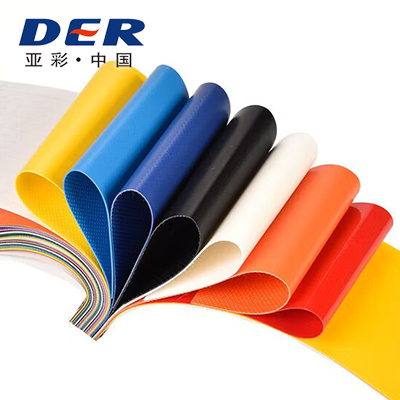
Opaque white, colored or light-control membranes selected around appearance, light transmission, outdoor exposure and the joining technique.
Sidewalls & openings
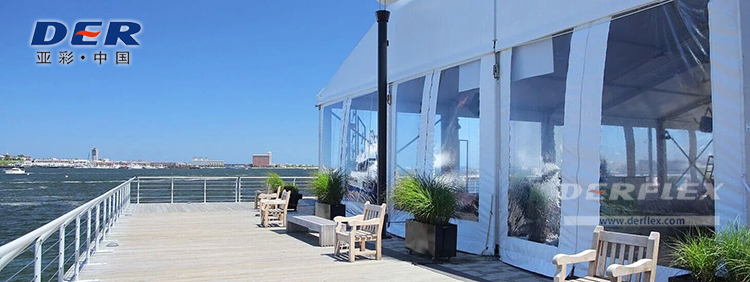
Removable solid panels, clear sections, door openings, valances and joining flaps planned with the actual bay layout.
Project-defined supply
Start with roll fabric or an approved cover drawing. Finished cover sets, frames, fixings and installation must be explicitly itemized.
Marquee tent styles, from weddings to exhibitions
Choose the enclosure around the activity and venue. An attractive photo is a starting point; a workable project brief must also identify circulation, access, climate and re-use requirements.

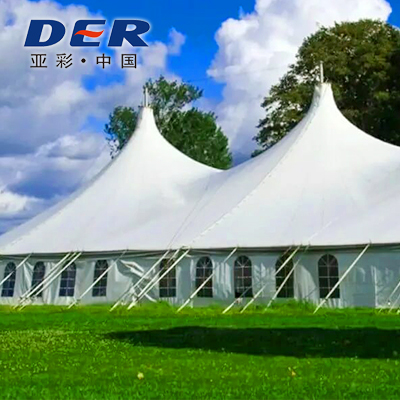
Wedding & banquet marquees
Prioritize a clean interior finish, daylight, privacy, rain management and removable wall layouts.
Corporate & exhibition tents
Plan sign placement, lighting, service access, temporary partitions and repeated installation cycles.
Temporary venue extensions
Coordinate entrances, drainage, ventilation and the adjacent building without assuming a fabric cover provides a certified building envelope.
Specify the PVC roof and walls as separate components
Commercial marquee systems mix materials for different jobs. The roof handles rain, daylight and surface cleaning; the walls manage access, visibility, privacy and wear. Choose their construction and test requirements independently.
| Cover component | Selection priorities | Questions to resolve |
|---|---|---|
| Opaque PVC-coated polyester roof | Coating quality, dimensional stability, UV exposure, whiteness or color, weld compatibility. | Required light transmission or blackout? Roof slope and drainage? Applicable fire requirements? |
| Opaque PVC sidewall | Flexibility, repeated folding, cleaning, edge strength, printing and panel interchange. | Door and window positions? Fastening method? Inside/outside orientation? |
| Clear PVC sections | Optical clarity, aging, cleanliness, thickness and compatible joints. | Condensation control? Fire requirements? Transparent roof vs clear wall use? |
| Reinforced valance & edge details | Load transfer, wear protection, compatible hardware and seam design. | Exact profile, keder or tension interface? Reinforcement width and fabrication method? |
Material mass in g/m² (GSM) is one input, not a measure of complete marquee strength. Compare verified tensile and tear results using the same test methods and directions; test reports should identify the actual supplied grade. For broader PVC constructions, explore tent fabric selection and tent membrane materials.
Marquee tent cover selection matrix
Use this table to shortlist material choices before requesting specific grade data. Every recommendation depends on the structure and approval requirements of the installation.
| Project condition | Useful cover direction | Review before production |
|---|---|---|
| Wedding venue needing natural light | Light-colored roof with selected transparent wall zones | Solar gain, privacy, night lighting, panel clarity and condensation |
| Event rental fleet with frequent assembly | Cleanable coated panels and repairable interface details | Fold cycles, abrasion points, repeat color lots and packing labels |
| Branded trade exhibition | Opaque printable valances or detachable logo panels | Print compatibility, orientation, artwork proofs and replacement inventory |
| Outdoor high-exposure site | Project-specified PVC membrane and suitable reinforcements | Frame engineering, anchoring, weather forecast policy, drainage and approved test data |
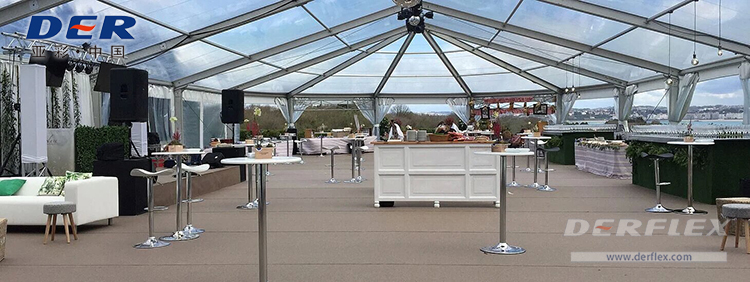
| Transparent event hall concept | Clear panel package with separately engineered structure | Clarity retention, heat, glare, seam design, cleaning and fire compliance |
See the enclosure. Plan the actual material package.
These images illustrate marquee configurations and material appearances from DERFLEX's published image directory. They are not presented as project test evidence or proof that a complete framed tent is included in a standard supply package.
Read the imagery correctly
The photographs show several shelter forms, not one universal specification. Wedding and exhibition roof geometries differ, and clear panel photographs do not establish a tested material grade.
For installation planning, compare the printed entrance, transparent-panel openings, reinforced edge and roof drainage layouts before asking for a matching cover pattern.
Measure the cover system before asking for production
Panels that fit the wrong frame create more cost than a careful measurement review. For replacement marquees, obtain the original frame drawing and a dimensioned panel pattern where possible.
Map the footprint
Record external dimensions, bay spacing, ridge height, eave height and roof geometry using consistent units.
Define openings
Mark doorways, clear windows, removable wall panels, overlaps, gutters and circulation routes.
Specify the joint
Provide keder, sleeve, rope, hook-and-loop or other attachment interface drawings and allowable tolerances.
Approve the sample
Review fabric grade, color, edge reinforcement, weld samples and a panel drawing before bulk release.
What can change a marquee cover quotation?
- Approved fabric grade, finish and project-specific test reports.
- Panel sizes, available roll widths and cutting utilization.
- Number and geometry of welded seams, reinforcements and doors.
- Clear window areas, print treatments, matching hardware and packing.
- Quantity, repeat-order planning and delivery destination.
What does the quotation need to itemize?
- Raw fabric rolls, precut sections or finished roof/wall covers.
- Material test data and quality acceptance checkpoints.
- Whether frames, gutters, fixing parts or bags are included.
- Applicable packaging and any prototype or sample approval stage.
- Which engineering, erection or site activities are excluded.
Separate fabric properties from whole-tent approvals
A good cover starts with correct use conditions and a defined responsibility split among fabric supplier, fabricator, frame engineer and installer.
Weather and water management
PVC coating can provide a waterproof material surface, but welded joints, gutters, entrances, ground interfaces and penetrations determine whether rain stays outside. Snow and wind ratings refer to an engineered assembled system, not to a standalone fabric roll.
Flame performance
Ask for the exact test method and current report matching the proposed material. A flame-retardant fabric is not noncombustible and does not automatically satisfy local venue or temporary-structure permits.
Cleaning, folding and storage
For rental operations, confirm cleaning agents, contact abrasion, fold method and storage dryness. Protect clear PVC from scratching and sticking; prevent wet fabric from being packed long term. Repair and replacement procedures should be specified by the approved fabricator.
Frames and safe use
Have qualified parties confirm frame loads, ties, anchors, egress and weather operating limits for the exact site. Do not infer a usable wind speed or maximum span from a general material description.
A more practical path from fabric selection to repeat orders
DERFLEX's published material range covers PVC-coated textiles for tents and other flexible structures. For a marquee project, prioritize a documented specification, drawing approval and traceable communication rather than relying only on a catalog photograph.
Define the fabric grade
Identify the target construction, coating finish, color and necessary test documents before confirming sample suitability.
Control the interfaces
Discuss weld behavior, section orientation, clear-panel compatibility and edge details against the actual pattern.
Make reorders repeatable
Keep revision identifiers, artwork, approved samples and packing descriptions together for future production discussions.
Review related DERFLEX pages on event tent fabric, tent tarpaulin and large outdoor tent material for additional material-level details.
Marquee tent quotation checklist
Even a concise sketch is useful. A clear quotation request explains the venue, material expectation and component boundary, allowing both sides to identify missing drawings and documentation early.
Project & geometry
- Use: wedding, rental, exhibition or semi-permanent venue.
- Roof style, span, total length, bay dimensions and height.
- Existing frame drawing or pictures of attachments.
- Number of roof panels, wall sections, doors and windows.
Material & commercial needs
- Opaque, translucent or clear visual requirements.
- UV, weather and site-specific fire-test expectations.
- Colors, printing, quantity and destination.
- Fabric rolls or finished cover package; expected timeline.
Related DERFLEX materials & applications
Use these established pages for deeper questions about coated fabrics, outdoor shelter uses and brand presentation.
Marquee tent FAQs
Answers for commercial buyers comparing tent materials, clear roofs and cover-system sourcing.
What is the difference between a marquee tent and a pop-up canopy?
A marquee tent generally refers to a larger temporary event enclosure, often assembled from modular bays and designed around a defined roof-and-wall system. A pop-up canopy is normally smaller and designed for rapid deployment. The frame, anchoring and weather limits must be assessed for each actual design.
Which material is commonly used for commercial marquee tent covers?
PVC-coated polyester is a common choice because the coating provides a waterproof material surface and the reinforced textile can be cut, welded and fabricated. Final suitability depends on the fabric grade, weld design, anchoring details and the project environment.
Are clear marquee roofs and transparent sidewalls available?
Transparent roof or wall concepts can use clear PVC or compatible clear panel systems. Confirm optical clarity, thickness, UV aging, fire requirements, panel joints, cleaning and condensation control with the fabricator before specifying a final assembly.
Does a waterproof marquee fabric make the whole tent waterproof?
No. A waterproof fabric does not automatically make an installed marquee weatherproof. Rainwater can enter at seams, doorways, gutters, penetrations or poorly tensioned panels. Review drainage and water-management details for the complete installation.
Can DERFLEX provide a full marquee tent with frame and installation?
DERFLEX publicly describes PVC tent fabrics and OEM cover-material solutions. Frame supply, anchoring hardware, erection services and any full-system package should be treated as separate quotation items, not assumed to be included.
What information is needed for a marquee tent quotation?
Send the intended application, roof style, footprint or bay drawing, required roof and wall sections, preferred fabric appearance, weather exposure, quantity, delivery destination and any applicable test or project documentation. Photos and a sketch are useful when detailed CAD drawings are not yet available.
Build a clearer marquee tent specification.
Share your application, existing frame or cover drawing, preferred materials and estimated quantity. DERFLEX can discuss the material and quoted cover scope without assuming unapproved structure or installation services.
Procurement note: Ask the team to identify fabric grade, test documentation, sample approval and components explicitly included in the offer.