



Canopy Sun Tent Fabric & Custom Shade Covers
A canopy sun tent creates an open-air shaded area for camping, beach use, markets and outdoor events. DERFLEX helps shelter brands, converters and distributors evaluate canopy roof materials and compatible custom covers. Compare waterproof coated textile, lightweight printable fabric and breathable shade constructions against the actual frame, weather exposure and packing cycle. Start with the cover shape, shade objective, fixing points and purchasing scope—not a generic “heavy-duty” claim.
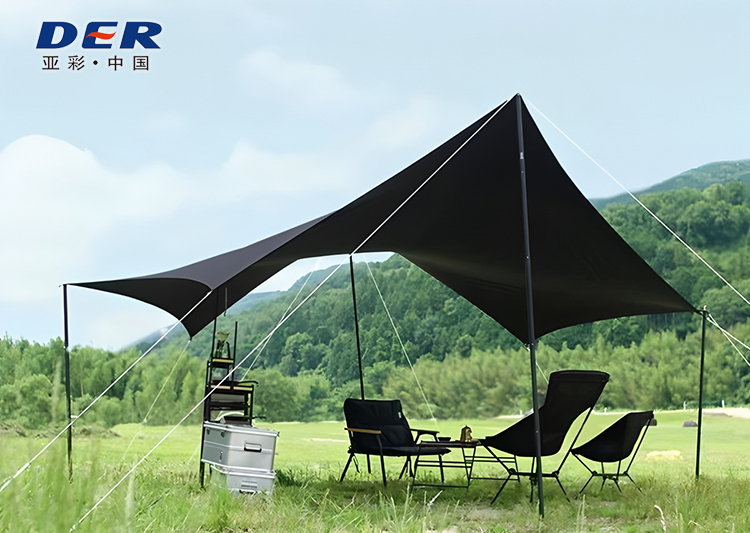
What is a canopy sun tent?
A canopy sun tent is a portable or semi-portable overhead shade shelter. It uses a fabric roof on poles, a pop-up frame or an anchored support system. Many designs have open sides for airflow; others add removable walls. Its main purpose is daytime shade, which does not automatically mean rainproofing, sleeping-tent protection or certified UV performance.
Define the product before asking for a price
Are you sourcing coated fabric rolls for a local sewing plant, a replacement roof for an existing frame, or a finished canopy assembly? These are different bills of materials. Frame hardware, poles, stakes, anchors and engineered wind resistance must be explicitly included if required.
Three fabric directions. Different priorities.
Choose fabric around a measurable shelter requirement. No single textile is the best choice for every canopy sun tent.
PVC-coated polyester
Useful when a more closed, cleanable roof and weldable panel construction are desired. Review mass, stiffness, coating adhesion, seam process and packed volume against the frame. A water-resistant coating alone does not validate the finished seams.
Printable polyester textile
A candidate for lighter portable event or branded roofs when the identified coating, printing route and seams meet the use case. Request a printed sample and folding test; do not assume the material has the same rain barrier or service life as a heavier PVC construction.
Open-weave shade mesh
Prioritizes ventilation and a selected shade level for hot, dry settings. Openness also lets some sunlight and rain pass through. Ask for construction-specific solar and UV data instead of treating a shade percentage as a waterproof or UPF rating.
Match the canopy to its operating environment.
Use these conditions as a procurement starting point, then approve a physical fabric and representative assembled roof.
| Use case | Primary fabric decision | What must still be checked |
|---|---|---|
| Beach / picnic sun shelter | Shade coverage, portability, ease of cleaning, heat and airflow | Sand or salt exposure, anchoring, UV test basis, packed weight and ventilation |
| Camping tarp canopy | Rain-shedding surface when wet-weather use is expected; reliable edge loops | Roof angle, pooled-water risk, guy-line layout, folds and seam leakage |
| Pop-up market / promotional tent | Color and print repeatability, frame-fit roof, reasonable folded bulk | Valance dimensions, corner pockets, frequent deployment and accessory compatibility |
| Outdoor hospitality shade | Visual finish, cleanability, light control and project maintenance plan | Drainage, installation geometry, fire requirements and system-level approvals |
| Replacement roof programs | Pattern and dimensional match to an identified frame model | Attachment layout, shrinkage allowance, tolerance, pack labeling and fit trial |
For larger commercial shelter roofs, see large outdoor tent material planning; that application has different loads and system responsibilities.
Shade, UV protection and cooling are not interchangeable.
A canopy can look dark, feel comfortable and still require separate evidence before making a quantified UV-protection claim.
Visible shade
Define how much direct sunlight the roof should block, and whether occupants require a translucent or opaque appearance. Color alone is not a calibrated protection rating.
UV transmittance / UPF
Ask for a report on the selected material and relevant test method if numerical protection is a purchasing requirement. Coverage, open sides and sun angle also affect real exposure.
Thermal comfort
Review solar absorption, reflectance and ventilation. A waterproof, nonporous cover may need open sides or a vented geometry to release hot air.
Rain management
Review the actual seam method, roof slope, drainage routes and pooling points. Material waterproofness cannot by itself establish the weather resistance of the installed shelter.
Explore the shelter shape and fabric surface.
Existing DERFLEX image references help clarify cover silhouettes and material handling. They do not prove the availability of a particular assembled SKU.
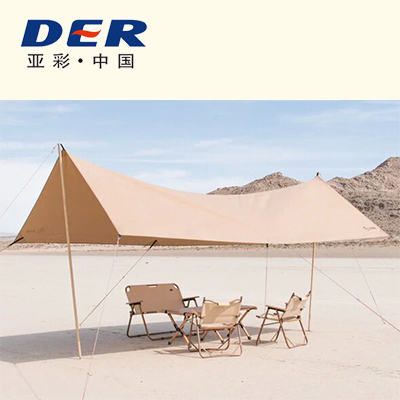
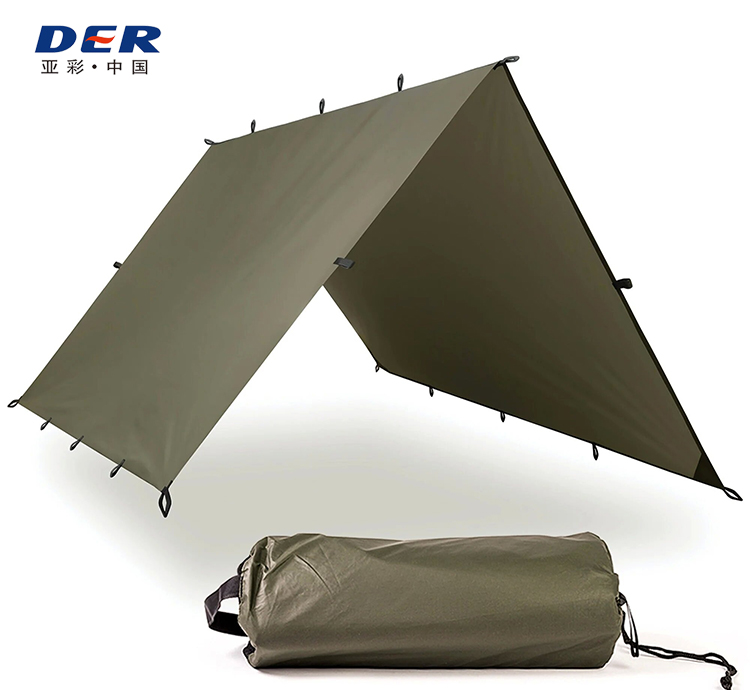

The details that decide whether the cover fits.
Inspect these points on the actual frame or sample roof. A roll-goods datasheet cannot replace a prototype fit check.
Canopy outline and roof pitch
Provide plan view, ridge height, peak or corner geometry, sag allowance and drainage direction. Confirm finished dimensions after seam allowances.
Edge reinforcement
Mark high-stress corners, hems and pole-contact zones. Specify webbing, folded reinforcement or additional layers only where the conversion process supports them.
Attachment system
Identify loops, eyelets, pockets, straps, hook-and-loop or other frame-specific interfaces. Confirm positions on a measured reference sample.
Storage and folding
Evaluate creasing, surface blocking, wet storage, bag size and frame abrasion during repeat deployment. Avoid packing damp fabric for prolonged periods.
What to specify for a canopy sun tent.
The list below is an RFQ worksheet, not a claim that one DERFLEX model automatically meets every option. Ask for a grade-specific technical datasheet and sample.
| RFQ field | Selection to state | Evidence / approval |
|---|---|---|
| Supply scope | Roll goods, cut panels or fitted replacement top | Itemized drawing and quote inclusions |
| Material construction | Coated polyester, printable textile or ventilated shade fabric | Actual sample, construction description |
| Mass / thickness | State target only if needed by frame and handling design | Grade-specific nominal value, method and tolerance |
| Roll width / pattern | Finished dimensions, seams, nesting and usable roll width | Cutting plan, pattern revision, fabric direction |
| Shade / UV | Coverage target and any required quantified protection | Material-specific report, stated test method |
| Weather protection | Dry-weather shade or rain-shedding design | Seam prototype and drainage trial |
| Surface / print | Color, opacity, finish, graphic locations if relevant | Approved color or print strike-off |
| Anchorage / fit | Corner geometry, pockets, loops, eyelets and interfacing | Prototype fit on designated frame |
| Compliance | Required flame, UV, chemical or market standard if applicable | Report for the selected grade and target market |
What can your purchase order cover?
Match the scope to your own converting or distribution model; confirm the exact fabrication options for the chosen grade before approval.
Fabric rolls
For tent makers and fabricators who manage their own patterns, cutting and sewing or welding. Discuss usable roll width, packing format and repeat material identity.
Prepared canopy panels
For converters seeking agreed panel geometry or processing assistance. Confirm seam direction, cutting tolerances, edge reinforcement and inspection responsibility in the quotation.
OEM replacement roof
For distributors replacing fabric on an identified frame. Supply a physical sample or dimensioned pattern and validate every connection before volume production. Frame supply is not assumed.
For broader fitted-cover requirements, visit DERFLEX custom canopy tarp and replacement-cover planning.
From concept to repeatable shade-cover orders.
Approval records matter as much as a first attractive fabric swatch. Establish the item specification and revision control before bulk repeat orders.
Brief and geometry
Send use photos, frame drawings, exposure conditions, target market, quantities and delivery destination.
Material shortlist
Review coating or textile route, shade requirements, approximate fabric use, color and processing method.
Sample and fit trial
Check surface, seam strength, corners, waterproofness where required, and prototype alignment on the actual support.
Order definition
Lock drawing revision, material identification, tolerance, print, packing, QC points and acceptance documentation.
Five questions that prevent an expensive mismatch.
- How is the shelter anchored? Describe poles, frame model, base plates, stakes, ropes and expected deployment setting.
- Will rain be expected? State wet-weather duty and how water exits the roof rather than asking only for waterproof fabric.
- How often will it be packed? Share fold frequency, available storage volume and abrasion-prone contact points.
- What shade evidence is needed? Specify any tested UV or shading criteria, not just a preferred fabric color.
- What is included? Distinguish fabric, sewn or welded top, replacement sidewalls, accessories and complete frame system.
What influences canopy sun tent pricing?
Material construction and finish; roof geometry and fabric utilization; number and type of seams; reinforcement and hardware interfaces; artwork complexity; order quantity; packing format; and agreed shipping terms. Without a confirmed grade and drawing, any universal price per tent would be misleading.
Start with photos or a sketch if you do not yet have a finished technical drawing. For projects requiring public-use certification or structural calculations, involve the responsible system designer and obtain the relevant test evidence.
Sun canopy, pop-up gazebo or enclosed tent?
These names can overlap in retail searches, but the roof and system specifications are different.
| Format | Primary function | Important buying distinction |
|---|---|---|
| Canopy sun tent / tarp sun shelter | Open-air overhead shade | Fabric shape, pitch, anchors, exposed edges and ventilation |
| Pop-up canopy / gazebo | Quick-deploy roof on collapsible frame | Exact frame compatibility, corner pockets, valances and packing cycles |
| Enclosed camping tent | Sleeping enclosure and occupant protection | Inner tent, flysheet, floor, vents, doors and condensation behavior |
| Architectural shade canopy | Fixed or engineered tensile shade system | Project loads, structural calculations, membrane detailing and approvals |
For structural membrane projects, use the separate architectural canopy fabric resource. For a graphic-heavy trade-show roof, see custom branded event tents.
Technical and procurement references.
Use the related DERFLEX resources for more detail on specific fabric families and larger shelter formats.
Canopy sun tent questions from OEM buyers.
What is the best fabric for a canopy sun tent?
The best fabric depends on the job. PVC-coated polyester may suit a more closed, cleanable and weldable roof; selected polyester textiles can suit portable printed covers; open shade mesh offers better airflow but does not provide a continuous rain barrier. Approve the exact grade against shade, weight, folding, installation and local requirements.
Is a sun shade canopy waterproof?
Not necessarily. A coated or laminated roof material can form a water barrier, but an assembled canopy can still leak at stitches or edges, or collect water if the slope is wrong. Ask for material and seam evidence and test a fitted roof under the intended rain conditions.
Does darker canopy fabric provide better UV protection?
Color alone cannot establish a UV-protection rating. Fiber, fabric openness, coatings and exposure all matter. For a numerical UPF or UV transmittance requirement, request test results for the selected construction and account for unshaded sides and sun angle.
Can DERFLEX support custom canopy roof shapes and colors?
DERFLEX offers relevant tent and canopy material programs, with custom material and fabricated-cover requirements subject to quotation review. Send a roof pattern or sample, dimensions, target color, edge details and order quantity so feasibility and approval steps can be confirmed.
What measurements are needed for a replacement canopy top?
Identify the frame model, peak height, roof slope, finished edge lengths, valance depth, corner-pocket or strap positions, seam layout and any shrinkage or tension allowance. A physical old cover can help, but measurements should be checked against the actual frame.
Does a fabric quotation include poles, frame and anchoring hardware?
No complete-kit inclusion should be assumed from a fabric quotation. Request an itemized scope that explicitly identifies roll material, processed roof, side panels, frame, poles, ropes, stakes, anchors, packing and required documentation.
Turn your canopy concept into a clear OEM RFQ.
Share the shelter format, drawing or photo, target fabric properties, quantity, country of use, preferred colors and delivery destination. DERFLEX can review the material direction and discuss what can be included in the supply scope.